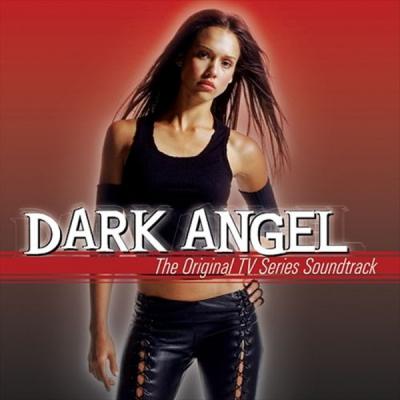
"Dark Angel" Soundtrack Lyrics
Movie • 2002
Track Listing
Chuck D/MC Lyte
Khia
John Forte/Tricky
MC Lyte
Samantha Cole
Q-Tip
Foxy Brown
Damizza/Shade Sheist/N.U.N.E.
Mystic
Abstract Rude & Tribe Unique
Spooks
Niki Haris
Samantha Cole (Dark Angel remix)
"Dark Angel (The Original TV Series Soundtrack)" Soundtrack Description
Overview
What happens when a near-future neo-noir gets a hip-hop backbone and a cinematic orchestral brain? Dark Angel (The Original TV Series Soundtrack) answers: it welds club-floor swagger to thriller muscles. Released in 2002 to accompany the James Cameron/Charles H. Eglee TV series (2000–2002), the album pulls from hip-hop and R&B while the score threads an industrial-tinged orchestral pulse. The mix doesn’t just decorate scenes; it sets the show’s moral humidity—humid, electric, a little volatile.
Across the series, Joel McNeely’s score (with that recurring end-title cue “Bicycle Ride”) wraps tension in rumbling percussion and glassy strings, while the theme by Chuck D and Gary G-Wiz kicks in like a manifesto. The commercial album leans harder into contemporary hip-hop/R&B (Q-Tip, Foxy Brown, Mystic, Niki Haris), mirroring the show’s street-level view of post-Pulse Seattle. Think: synth grit for surveillance chases, boom-bap for bike-messenger bravado, and the occasional classical needle-drop to cut against the grain.
FAQ — Questions & Answers
- Is there an official soundtrack album?
- Yes. Dark Angel: The Original TV Series Soundtrack was released in 2002 on Artemis Records, featuring hip-hop/R&B cuts alongside material associated with the show.
- Who composed the series score and the main theme?
- Joel McNeely composed the series score; the main theme was created by Chuck D and Gary G-Wiz.
- Does the album include “Dark Angel Theme”?
- Yes—the theme (with Public Enemy & MC Lyte credited on commercial releases) headlines the compilation.
- Are classical pieces used in the series?
- Occasionally. Notable drops include Chopin in “The Berrisford Agenda” and a melancholy Sibelius cue used uncredited in “Blah Blah Woof Woof.”
- Where can I hear the recurring end-credits music?
- The end credits frequently use McNeely’s cue known as “Bicycle Ride.” While not a pop single, it’s widely recognized by fans from every episode’s close.
- Is the 2002 album tied to a movie?
- No—it’s tied to the TV series (Dark Angel, 2000–2002). The album arrived in 2002 during/after the show’s run.
Notes & Trivia
- The compilation emphasizes women artists and perspectives—mirroring Max’s agency on screen.
- Music supervisor Randy Gerston steered clear of giant radio hits to preserve a “near-future” feel.
- McNeely’s end-title cue “Bicycle Ride” became a subtle sonic signature at episode close.
- A few episodes sneak in classical cues (Sibelius, Chopin) for irony and contrast.
- The album charted on Billboard’s Top Independent Albums, a tidy feat for a TV tie-in.
Genres & Themes
Hip-hop & R&B power the show’s street-level energy—courier bikes, warehouse stings, coded meetups. The beats speak to Max’s velocity and the city’s broken infrastructure.
Hybrid orchestral score: low thunder (timpani, bass drum), sharp brass, skittering electronics. This palette equals surveillance anxiety, memory fragments, and chase physics.
Classical needle-drops surface to underline memory, loss, or to throw a sly grin at high/low culture collisions (a refined aria over a grungy alley is very Dark Angel).
Tracks & Scenes
“Dark Angel Theme” — Public Enemy & MC Lyte
Scene: Non-diegetic main titles across the series. The theme’s martial drums and MC Lyte’s hook lay out the show’s defiant posture from second zero.
Why it matters: It primes the “mission briefing” energy before every episode while signaling the show’s hip-hop spine.
“Bicycle Ride (End Title)” — Joel McNeely
Scene: Non-diegetic end credits cue recurring throughout the run. A wistful line over dark percussion lets episodes exhale without fully relaxing.
Why it matters: It’s the series’ sonic aftertaste—bittersweet, reflective, unresolved.
“Etude in E” (Chopin) — solo piano
Scene: The Berrisford Agenda (S2). Alec sits at a piano and recalls training and loss; the cue returns later as memory haunts him.
Why it matters: A rare classical spotlight that humanizes Alec and widens the show’s emotional register beyond adrenaline.
“Valse triste” (Sibelius)
Scene: Heard (uncredited) in the episode “Blah Blah Woof Woof” as a somber underscore.
Why it matters: Its elegiac waltz floats over grit—a useful Dark Angel contrast trick.
Hip-hop cuts from the 2002 album (Q-Tip, Foxy Brown feat. Kelis, Mystic, Niki Haris)
Scene: Club interiors, Jam Pony hangouts, and ride-outs often lean on contemporary tracks to color movement and social space (diegetic in venues; non-diegetic in transitions).
Why it matters: These cues place Max’s world squarely in youth culture while keeping one boot in futurism.
Music–Story Links
Max’s bike-messenger rhythm maps neatly onto hip-hop’s percussive drive; when the beat drops out and strings take over, the show is telling us to pay attention to memory or moral weight. Alec’s Chopin moment reframes a cocky exterior as trauma-literate. Meanwhile, the end-title cue acts like an episode epilogue: not closure, just a breath.
How It Was Made
Composer Joel McNeely was encouraged to go “free-form and weird,” blending orchestral muscle with electronic textures and occasional female vocal color. The theme, built by Chuck D and Gary G-Wiz, was pushed “crazier” by producers to match the show’s intensity. Music supervisor Randy Gerston curated tracks that felt “future-facing” by avoiding the biggest radio smashes and spotlighting under-the-radar artists—especially women.
Reception & Quotes
Critics treated the album as a better-than-expected TV tie-in, noting its stylistic coherence and the choice to foreground women in hip-hop/R&B.
“Many of the songs are quite impressive… it exceeds your expectations for a television show soundtrack.” AllMusic
“Orchestral elements meet urban grit to sketch action arcs and memory scars.” Contemporary TV-music commentary
The album reached the Top Independent Albums chart and picked up steady fan affection thanks to the theme’s punch and McNeely’s moody end titles.
Additional Info
- Label: Artemis Records; US CD release in 2002 with multiple pressings.
- Standout contributors include Q-Tip, Foxy Brown (feat. Kelis), Mystic, and Niki Haris.
- Classical cameos (Sibelius, Chopin) are not on the commercial album but appear in-episode.
- End-title cue “Bicycle Ride” originates from the pilot score and recurs throughout the series.
- Theme music authorship: Chuck D & Gary G-Wiz; commercial theme version credits Public Enemy & MC Lyte.
- Music supervision by Randy Gerston across episodes.
- The compilation favors female perspectives to mirror protagonist Max.
Technical Info
- Title: Dark Angel (The Original TV Series Soundtrack)
- Year: 2002
- Type: TV series soundtrack compilation (not a movie)
- Composers (score): Joel McNeely (series score); theme by Chuck D & Gary G-Wiz
- Music Supervision: Randy Gerston
- Label: Artemis Records
- Notable in-episode placements: Chopin (“Etude in E”) in “The Berrisford Agenda”; Sibelius (“Valse triste,” uncredited) in “Blah Blah Woof Woof”
- Release context: Issued during the show’s 2000–2002 run; album release in 2002
- Availability/Formats: CD (multiple pressings), digital traces via re-sellers/archives
Canonical Entities & Relations
| Subject | Relation | Object |
|---|---|---|
| Dark Angel (TV series) | created by | James Cameron; Charles H. Eglee |
| Dark Angel (TV series) | music by (score) | Joel McNeely |
| Dark Angel (TV series) | theme music by | Chuck D; Gary G-Wiz |
| Dark Angel (Original TV Series Soundtrack) | record label | Artemis Records |
| Randy Gerston | role | Music Supervisor (TV series) |
| Jessica Alba | portrays | Max Guevara / X5-452 |
| “Bicycle Ride” | is part of | Dark Angel (pilot score); used as end-title cue |
| “Etude in E” (Chopin) | featured in | Episode “The Berrisford Agenda” (S2) |
Sources: AllMusic, Discogs, IMDb, Wikipedia.
October, 30th 2025
A-Z Lyrics Universe
Cynthia Erivo Popular
Ariana Grande Horsepower
Post Malone Ain't No Love in Oklahoma
Luke Combs Good Riddance (Time of Your Life)
Green Day Bye Bye Bye
*NSYNC You're the One That I Wan
John Travolta & Olivia Newton-John I Always Wanted a Brother
Braelyn Rankins, Theo Somolu, Kelvin Harrison Jr. and Aaron Pierre The Power of Love
Frankie Goes to Hollywood Beyond
Auli’i Cravalho feat. Rachel House MORE ›