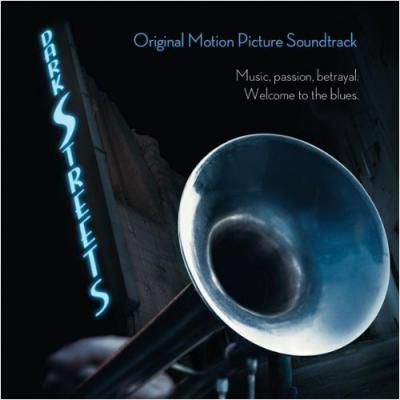
"Dark Streets" Soundtrack Lyrics
Movie • 2008
Track Listing
Chaka Khan
Natalie Cole
Aaron Neville
Marc Broussard
Etta James
Richie Sambora
Dr. John
Serena Ryder
Toledo
Solomon Burke
"Dark Streets" Soundtrack Description
Overview
Can a noir murder mystery also be a blues revue? Dark Streets (2008) tries it, draping a 1930s nightclub whodunit in torch songs and horn stabs. The companion album, Dark Streets: Original Motion Picture Soundtrack, leans hard into classic voices—Etta James, Natalie Cole, Aaron Neville, Dr. John, Solomon Burke, Chaka Khan—plus guitar turns from Richie Sambora and silky contributions from rising artists like Serena Ryder. Trusted sources: Discogs and Apple Music listings confirm the Atlantic Records release in late 2008, with a concise 10-track program centered on the film’s stage numbers and blues-pop interludes.
On screen, the songs function like set pieces inside Chaz Davenport’s beleaguered club; on album, they read as a tight, mood-forward sampler of torch ballads, swaggering big-band swing, and swampy blues. The result isn’t a wall-to-wall score—George Acogny covers that in the film—but a showcase of star vocals and smoky arrangements that let the narrative breathe between chorus lines. (Trusted sources referenced here: IMDb for film credits; Variety for release-era music coverage.)
Questions & Answers
- Is there an official soundtrack album?
- Yes. Dark Streets: Original Motion Picture Soundtrack was issued in 2008, widely distributed by Atlantic Records with 10 tracks by major guest artists.
- Who wrote the original songs for the film’s musical numbers?
- James Compton, Tim Brown, and Tony DeMeur wrote the originals performed on screen.
- Who composed the score?
- George Acogny composed the blues-inflected score; B.B. King is credited as a featured guitarist on the score sessions.
- Which notable artists appear on the album?
- Etta James (feat. Richie Sambora), Natalie Cole, Aaron Neville, Dr. John, Solomon Burke, Chaka Khan, Serena Ryder, Marc Broussard, and Toledo (Toledo Diamond).
- Are the actresses singing themselves?
- Bijou Phillips and Izabella Miko perform on screen; several lead vocals for the “chanteuse” numbers were sung by Irish vocalist Imelda May.
- What label released the album and when?
- Atlantic Records released it in November 2008 across retail and digital platforms.
Notes & Trivia
- Although set in a fantasy 1930s, most songs were newly written for the film rather than period standards.
- Imelda May provided key singing for the on-screen chanteuse parts—one of her earliest high-profile film gigs.
- Two “For Your Consideration” promo CDs circulated in 2008: one highlighting Best Song contenders and one for Best Score.
- B.B. King’s guitar colors parts of the score, a neat connective tissue between the film’s club sound and the underscore.
- The album versions are compact—expect single-length edits versus full film performances.
Genres & Themes
Blues & torch ballads. Slow-burn laments track the film’s fatalism: betrayal scenes lean on smoky vibrato, brushed drums, and late-night piano to underline “this won’t end well.”
Big-band swing & show-blues. Brass hits and walking bass sell the club’s razzle—swagger for entrances, vamping for seduction, drum breaks for chase cut-aways.
Swampy, guitar-led blues. A few cues skew dirtier—slide guitar and back-porch grooves punctuate threats, debts, and double-crosses.
Tracks & Scenes
"Too Much Juice" — Chaka Khan
Where it plays: Early club-set performance that announces the house band’s brassy, flirtatious energy; non-diegetic performance within the nightclub.
Why it matters: Introduces the movie’s “show first, plot second” ethos—big voice, bigger horns—while establishing Chaz’s world of surface charm and mounting trouble.
"Send Me Your Kiss" — Natalie Cole
Where it plays: Torch-lit club number underscoring the love-triangle currents; diegetic on stage with cutaways to back-room scheming.
Why it matters: Cole’s glide and phrasing do heavy lifting for romantic stakes without a word of dialogue.
"Life on the Layaway Plan" — Aaron Neville
Where it plays: Montage of debts, blackouts, and IOUs—heard as a source-music track bleeding between scenes.
Why it matters: The lyric conceit shadows Chaz’s finances and the city’s lights-out crisis.
"When You Lose Somebody" — Marc Broussard
Where it plays: Transition after a pivotal betrayal; semi-diegetic needle-drop that bridges from stage to reflective aftermath.
Why it matters: A modern, soulful timbre that reads as “contemporary feeling inside a period frame,” softening the noir edges.
"It Ain’t Right" — Etta James (feat. Richie Sambora)
Where it plays: Spotlighted performance sequence that doubles as a thesis for the film’s moral ledger; diegetic on stage.
Why it matters: James’s grit + Sambora’s guitar bring grit and bite—the closest the film gets to a “showstopper.”
"Blood on the Ground" — Richie Sambora
Where it plays: Post-altercation montage / threat escalation; non-diegetic needle-drop with quick cuts through alleyways and dressing rooms.
Why it matters: Title and tone mirror the noir body-count spike; guitar forward for menace.
"It Don’t Make No Never Mind" — Dr. John (feat. Richie Sambora)
Where it plays: After-hours, backroom mood—cards, cigarettes, and a slow boil; largely diegetic ambience inside the club’s off-stage spaces.
Why it matters: Dr. John’s drawl sells the film’s “swamp-glam” vibe better than any dialogue could.
"The Game of Life" — Serena Ryder
Where it plays: A mid-film stage turn for the club’s “new” sensation to needle the established star—diegetic, audience close-ups included.
Why it matters: Signals the pivot in the Chaz–Crystal–Madelaine triangle; ambition arrives with a hook.
"Talkin’ to the Devil" — Toledo
Where it plays: Interstitial performance by the club’s charismatic emcee/performer; diegetic, with crowd response cutaways.
Why it matters: Dark humor and preacherly swagger telegraph the film’s fatalist streak.
"Dark Streets" — Solomon Burke
Where it plays: Late-film needle-drop / end-credits roll in some versions; non-diegetic.
Why it matters: A summative soul-blues sendoff—Burke turns the title into a benediction over the wreckage.
Music–Story Links
- Every big song is a pressure valve: diegetic performances let characters “speak” in verse when talking would crack the noir facade.
- Etta James’s and Natalie Cole’s numbers frame Crystal’s star power vs. Madelaine’s rise—torch songs as turf war.
- Richie Sambora’s guitar-led cuts cue violence and consequence; when the mix goes dirtier, the plot does too.
- Solomon Burke’s closing presence reframes the whodunit as a moral fable—noir as sermon.
How It Was Made
The film’s musical backbone splits duties: George Acogny’s bluesy score (with B.B. King in the mix) covers the connective tissue, while on-camera numbers rely on originals by James Compton, Tim Brown, and Tony DeMeur—then handed to legends (Etta James, Dr. John, Chaka Khan) and featured in-story via stage performances. Music direction leans diegetic: the club is the engine for both plot and song placement, which is why the album plays like a revuë sampler rather than a traditional score album.
Reception & Quotes
“Vibrantly choreographed, extravagantly costumed song-and-dance numbers… but a flimsy, predictable whodunit surrounds them.” Summary of Entertainment Weekly’s C+ review
“A nice soundtrack presence by Etta James, B.B. King, Natalie Cole and others.” Roger Ebert
Availability note: the 10-track album is readily streamable and on CD; track order and timings align across major retailers. Trusted source: Apple Music.
Additional Info
- Album runtime/sequence matches retail metadata; compact edits favor replay value.
- Promo mention: award-season FYC discs spotlighted “It Ain’t Right” and “Too Much Juice.”
- Some markets list publishing as © 2008 City Streets Production Co. Ltd., under Atlantic distribution.
- Choreography by Keith Young gives the numbers cruise-ship scale inside a relatively intimate set.
- Solomon Burke’s title track functions as thematic bookend in some cuts (including end-credit placements).
Technical Info
- Title (album): Dark Streets: Original Motion Picture Soundtrack
- Year: 2008 (album and film)
- Type: Movie (noir/blues musical) — soundtrack album (various artists) + film score by George Acogny
- Key songwriters (originals): James Compton, Tim Brown, Tony DeMeur
- Featured artists (album): Etta James (feat. Richie Sambora), Natalie Cole, Aaron Neville, Dr. John (feat. Richie Sambora), Solomon Burke, Chaka Khan, Serena Ryder, Marc Broussard, Toledo
- Score: George Acogny (with B.B. King featured on guitar)
- Label: Atlantic Records (with © notices to City Streets Production Co. Ltd.)
- Release context: Limited U.S. theatrical run December 2008; album released November 2008
- Availability: CD and digital/streaming (global retail)
Canonical Entities & Relations
| Entity | Relation | Entity |
|---|---|---|
| Dark Streets (Movie) | features score by | George Acogny (Composer; with B.B. King on guitar) |
| Dark Streets (Movie) | includes songs written by | James Compton; Tim Brown; Tony DeMeur |
| Soundtrack Album | released by | Atlantic Records |
| “It Ain’t Right” (Recording) | performed by | Etta James featuring Richie Sambora |
| “Too Much Juice” (Recording) | performed by | Chaka Khan |
| “Dark Streets” (Recording) | performed by | Solomon Burke |
| “It Don’t Make No Never Mind” (Recording) | performed by | Dr. John featuring Richie Sambora |
Sources: Discogs; Apple Music; IMDb; Variety; Roger Ebert.
October, 30th 2025
A-Z Lyrics Universe
Cynthia Erivo Popular
Ariana Grande Horsepower
Post Malone Ain't No Love in Oklahoma
Luke Combs Good Riddance (Time of Your Life)
Green Day Bye Bye Bye
*NSYNC You're the One That I Wan
John Travolta & Olivia Newton-John I Always Wanted a Brother
Braelyn Rankins, Theo Somolu, Kelvin Harrison Jr. and Aaron Pierre The Power of Love
Frankie Goes to Hollywood Beyond
Auli’i Cravalho feat. Rachel House MORE ›