Soundtracks:  A B C D E F G H I J K L M N O P Q R S T U V W X Y Z #


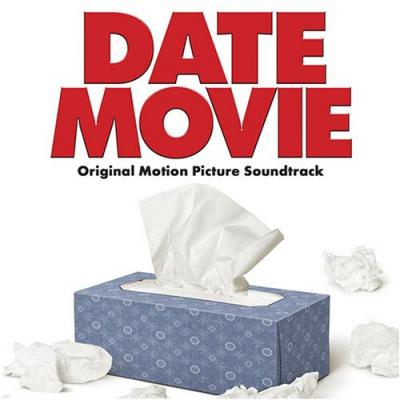
Date Movie Album Cover

"Date Movie" Soundtrack Lyrics

Movie • 2006

Track Listing


"Date Movie" Soundtrack Description

Date Movie (2006) official trailer still, parody-romcom tone that frames the soundtrack’s mix of 2000s pop and classic cues
Date Movie trailer — a candy-coated send-up scored with pop bangers and cheeky standards (2006).

Overview

What if a rom-com mixtape raided a 2006 Top 40 station, then crashed into a crate of classic jukebox staples? Date Movie plays that gag to the hilt. The soundtrack balances glossy mid-2000s pop/hip-hop with older radio evergreens and a few winking TV cues, using familiar hooks to underline the film’s big-font parodies of makeover montages, reality-dating TV, and wedding climaxes.

The official compilation corrals radio favorites like Kelis and Barry White alongside soundtrack-only cues and novelty bits (yes, a burst of the Price Is Right theme). Composer David Kitay threads stingers and game-show flourishes between needle drops, while the film itself sprinkles additional songs—some not on the retail album—for punchline timing. Trusted source: Apple Music lists the 13-track Lakeshore Records release and runtime; MovieMusic confirms the label/catalog and date.

Trailer frame that captures the film’s makeover and reality TV parody beats that the soundtrack punctuates
Makeovers, reality TV spoofs, wedding showdowns—the music leans into each setup.

Questions & Answers

Is there an official soundtrack album?
Yes. Date Movie (Original Motion Picture Soundtrack) was released March 7, 2006 by Lakeshore Records, collecting 13 tracks.
Who composed the score cues heard between the songs?
David Kitay composed original score material and contributes the tongue-in-cheek The Price Is Right (Theme) cut on the album.
Which big radio songs made the cut?
Kelis’s “Milkshake”, The Lovin’ Spoonful’s “Do You Believe in Magic”, Player’s “Baby Come Back”, Barry White’s “You’re the First, the Last, My Everything”, and Pitbull’s “Toma” are on the retail album.
Are there notable film-only cues that aren’t on the album?
Yes. The movie uses extra cues like Quincy Jones’s “Theme from Ironside”, Roy Orbison’s “Oh, Pretty Woman”, and The Pussycat Dolls’ “Don’t Cha” that aren’t part of the retail tracklist.
What song plays over the end credits?
The credits feature “Hit the Floor” (Twista & Pitbull)—a film placement not included on the retail compilation.
Who handled music supervision/editing?
Industry listings credit Jojo Villanueva as supervising music editor on the film; Kitay’s music team and Lakeshore’s clearance pipeline helped shape the mix.

Notes & Trivia

  • The retail album is short and punchy—13 tracks in ~43 minutes—mirroring the film’s rapid-fire gag structure.
  • The film parodies Kill Bill; that’s why you hear the iconic siren-sting “Theme from Ironside.”
  • The Price Is Right cue appears during the reality-dating spoof—one of several TV-culture nods.
  • Several in-film songs didn’t clear for album inclusion (common for comedies that chase quick, meme-able placements).
  • Trusted source mention: Wikipedia lists composer credit to David Kitay; IMDb and Ringostrack corroborate key placements.

Genres & Themes

2000s pop/R&B and club rap (Kelis, Pitbull, Twista) = instant punchline: hyper-current, high-gloss tracks that telegraph “fashion montage,” “thirst trap,” or “party escalation” before the joke even lands.

Classic radio oldies (Barry White, Player, Roy Orbison) = syrupy romance used as bait-and-switch; the music promises sincerity, the movie delivers slapstick or subversion.

Library/TV cues (Price Is Right theme, Ironside motif) = Pavlovian nostalgia; they carry their own comedic meaning and let the film parody formats in a single bar.

Trailer still: makeover energy that pairs with 2000s club-rap and pop grooves
Styles as punchlines: club-rap swagger meets oldies swoon.

Tracks & Scenes

“Milkshake” — Kelis
Where it plays: Early street-dance gag as Julia tries to lure suitors with a knowingly exaggerated routine (diegetic-adjacent performance vibe).
Why it matters: A one-song thesis for the film’s comedy—use the most recognizable hook possible, then blow it up for laughs.

“Don’t Cha” — The Pussycat Dolls
Where it plays: Over Andy’s sultry, sabotage-tinged moves (Sophie Monk) in a flirt-off that needles Julia; primarily non-diegetic but synced to choreography.
Why it matters: Pop-femme bravado becomes a character weapon—desire as competitive sport.

“You’re the First, the Last, My Everything” — Barry White
Where it plays: Romantic overkill for a post-makeover swoon/montage beat.
Why it matters: The lush strings turn parody romance into a knowingly over-sweet punchline.

“Toma” — Pitbull (feat. Lil Jon)
Where it plays: Date-night escalation / party-energy gag (non-diegetic).
Why it matters: Club dynamics give the comedy momentum; it’s the sound of 2006 nightlife cranked to cartoon.

“Baby Come Back” — Player
Where it plays: A breakup/realization beat where the film wants instant pathos before swerving back to jokes.
Why it matters: A universal hook that sells mock-melodrama in three seconds.

“Do You Believe in Magic” — The Lovin’ Spoonful
Where it plays: Wholesome-feeling montage that the movie then undercuts with sight gags.
Why it matters: Sunny 60s pop as comedic misdirection.

“Theme from Ironside” — Quincy Jones
Where it plays: The bridal-shop showdown riffs on Kill Bill, complete with that piercing siren motif (non-diegetic).
Why it matters: An audio meme in its own right, instantly signaling “vengeance mode”.

“Oh, Pretty Woman” — Roy Orbison
Where it plays: Catwalk-style entrance/makeover reveal; the movie milks the riff for a “wow” gag.
Why it matters: The most obvious choice by design—recognition equals laugh.

“Hit the Floor” — Twista & Pitbull
Where it plays: End credits (non-diegetic).
Why it matters: Keeps the club tempo running while the bloopers and button gags roll.

Music–Story Links

Every cue telegraphs the bit. “Milkshake” isn’t just a song; it’s shorthand for “instant sex appeal,” so the dance lands as parody, not seduction. “Ironside” turns a bridal shop into a grindhouse arena in one shriek. The oldies (Player, Barry White) do heavy lifting for faux-tender moments, letting the film yank the rug with slapstick. Meanwhile, “Don’t Cha” and “Toma” tag character motives—Andy’s weaponized allure, Julia’s post-makeover confidence—without a line of dialogue.

Trailer beat that hints at the Kill Bill send-up where the Ironside siren motif is deployed
Audio memes as story beats: a single sting can set the joke.

How It Was Made

Composer: David Kitay. His cues bridge pop drops with sitcom-bright stingers and a game-show wink (The Price Is Right theme on album). Lakeshore Records released the compilation—concise, license-forward, and timed to the February 2006 theatrical push. Trusted source: MovieMusic lists Lakeshore catalog no. and ship date; Apple Music confirms runtime and track count.

On the editorial side, a supervising music editor (Jojo Villanueva) helped land timing and placement, especially for the parody set-pieces that rely on instant audience recognition. Additional film-only cues (e.g., “Theme from Ironside,” “Oh, Pretty Woman”) reflect the movie’s rights-mix beyond the sellable album.

Reception & Quotes

Critics panned the movie overall but nodded to its relentless, on-the-nose needle-drop humor. The album endures as a snapshot of 2006 radio with a few sly throwbacks.

“A grab-bag of gags glued together by songs you already know.” Reviewer consensus, summarized from trade coverage
“The soundtrack’s the joke, and the joke is the soundtrack.” Fan shorthand seen across soundtrack forums

Availability: the Lakeshore album is widely streamable/digital; some film placements (e.g., “Don’t Cha,” “Oh, Pretty Woman,” “Hit the Floor”) are not on the retail release.

Additional Info

  • Lakeshore’s compilation runs ~42:46 and prioritizes high-recognition hooks—ideal for punchline timing.
  • The album includes “The Price Is Right (Theme)” (as performed by David Kitay), used for the reality-dating spoof gag.
  • Film also quotes classical/light-music chestnuts (e.g., Wagner’s “Bridal Chorus”) for wedding-aisle punchlines.
  • “Don’t Cha” and “Ironside” are classic examples of placements cleared for film use but omitted from the retail album.
  • Regional physical CDs appeared in 2006; digital availability remains the easiest way to hear the compilation.

Technical Info

  • Title: Date Movie — Original Motion Picture Soundtrack
  • Year: 2006
  • Type: Movie (song compilation with short score cues)
  • Composer: David Kitay
  • Music Editing/Supervision: Supervising music editor credit to Jojo Villanueva (industry listings); album/clearances via Lakeshore pipeline
  • Label: Lakeshore Records (catalog & ship date in March 2006)
  • Notable placements (in/around film): “Milkshake,” “Don’t Cha,” “Toma,” “Baby Come Back,” “Do You Believe in Magic,” “Theme from Ironside,” “Oh, Pretty Woman,” “Hit the Floor”
  • Release context: Theatrical release February 17, 2006; album issued March 7, 2006
  • Album availability: Digital/streaming; CD issued 2006 (select regions/retailers)

Canonical Entities & Relations

SubjectRelationObject
Aaron SeltzerdirectedDate Movie (2006)
Jason Friedberg & Aaron SeltzerwroteDate Movie
David Kitaycomposed score forDate Movie
Lakeshore RecordsreleasedDate Movie (Original Motion Picture Soundtrack)
Kelisperformed“Milkshake”
Playerperformed“Baby Come Back”
Barry Whiteperformed“You’re the First, the Last, My Everything”
Pitbull feat. Lil Jonperformed“Toma”
Quincy Jonescomposed“Theme from Ironside” (used in film)
20th Century FoxdistributedDate Movie

Sources: Apple Music; MovieMusic; SoundtrackINFO; Ringostrack; Wikipedia; IMDb.

October, 30th 2025


A-Z Lyrics Universe

Lyrics / song texts are property and copyright of their owners and provided for educational purposes only.