Soundtracks:  A B C D E F G H I J K L M N O P Q R S T U V W X Y Z #

List of artists: A B C D E F G H I J K L M N O P Q R S T U V W X Y Z #


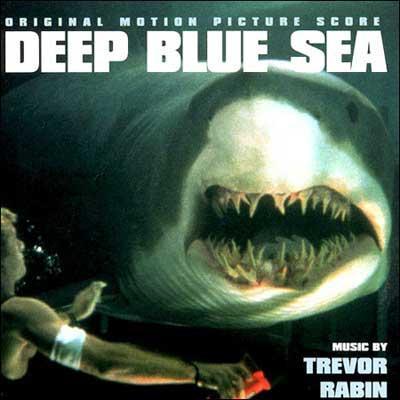
Deep Blue Sea Album Cover

"Deep Blue Sea" Lyrics

Movie • Soundtrack • 1999

Track Listing

Deepest Bluest Lyrics

LL Cool J

Sokeman Lyrics

Smokeman

I Found Another Man Lyrics

Natice

Remote Control Soul Lyrics

Bass Odyssey

Mega's on His Own Lyrics

Cormega f/ Carl Thomas

Come Home With Me Lyrics

Amyth

Say What Lyrics

LL Cool J

Burn Baby Burn Lyrics

Simone Starks

Just Because Lyrics

F.A.T.E.

Get tha Money Lyrics

Hi-C f/ Dj Quick

I Can See Clearly Now Lyrics

Chantel Jones

El Paraiso Rico Lyrics

Deetah

Good' N Plenty Lyrics

Divine

Deep Blue Sea Montage Lyrics

Trevor Rabin


"Deep Blue Sea (Music From the Motion Picture)" Soundtrack Description

Overview

What does an R&B/hip-hop compilation have to do with a hard-charging shark thriller? In Deep Blue Sea (1999), the answer is: branding, personality, and a wink. The official album leans urban and late-’90s sleek—LL Cool J bookends it with franchise-defining cuts—while the film itself rides Trevor Rabin’s muscular, hybrid action score. The two halves meet at the credits and in the movie’s swaggering attitude.

Composer Trevor Rabin keeps the onscreen tension tight with orchestral-meets-electronic cues and a bold main theme, while the commercial soundtrack (Warner Bros. Records) collects hip-hop and R&B tracks from LL Cool J, Cormega feat. Carl Thomas, Hi-C feat. DJ Quik, Bass Odyssey, and more. The result: a “storm surge” score for the flooding-facility set pieces, plus an album that let the studio market a shark movie with radio-ready hooks. As Variety and other trades noted at the time, Rabin’s score did much of the in-film heavy lifting; the compilation gave the project extra pop reach.

Questions & Answers

Is there an official soundtrack album?
Yes—Deep Blue Sea (Music From the Motion Picture) was released in 1999 by Warner Bros. Records; a separate Original Motion Picture Score by Trevor Rabin was also issued that summer.
Who composed the score?
Trevor Rabin, delivering a hybrid orchestral/electronic action score tailored to the flooding-lab thriller structure.
Which songs roll over the end credits?
LL Cool J’s “Deepest Bluest (Shark’s Fin)” and his track “Say What” appear in the end-credit rotation.
Does the commercial album match what you hear during the movie?
Partly. Most dramatic scenes use Rabin’s score; the compilation supplies credit cuts and brand-forward selections, with several tracks functioning as album inclusions rather than featured set-pieces.
What labels released the albums?
The songs compilation came via Warner Bros. Records; the score album was issued (widely) the same season and is available on major digital platforms today.
Was “Deepest Bluest” written for the film?
Yes. It was created for the movie and became its signature tie-in single and music video.

Notes & Trivia

  • LL Cool J appears in the film and contributes two album tracks—an old-school tie-in that doubled as marketing.
  • The compilation skews hip-hop/R&B; the actual set pieces lean on Trevor Rabin’s score.
  • The album includes a Chantel Jones cover of “I Can See Clearly Now,” a reggae-soul classic often associated with Johnny Nash.
  • A track titled “Deep Blue Sea Montage” on the album is by Rabin and reflects action material from the score.
  • The soundtrack charted modestly on U.S. R&B/Hip-Hop Albums; “Deepest Bluest” later gained cult status thanks to its knowingly camp music video.

Genres & Themes

Hip-hop & R&B (album) → cool factor and brand voice: LL Cool J’s presence lends swagger and pop-culture “stickiness,” aligning the movie with late-’90s radio textures.

Hybrid action score (film) → claustrophobia and propulsion: Rabin’s orchestral/synth blend underlines corridors filling with water, alarms, and “chess match vs. shark” beats.

Reggae-soul coloration (album cut) → ironic sunlight: “I Can See Clearly Now” appears on the album as tonal counterpoint to the storm-soaked thriller.

Tracks & Scenes

“Deepest Bluest (Shark’s Fin)” — LL Cool J
Where it plays: End credits; also the film’s flagship tie-in single with a Renny Harlin–directed video.
Why it matters: A tongue-in-cheek anthem that became the movie’s cultural calling card long after release.

“Say What” — LL Cool J
Where it plays: End-credit rotation alongside “Deepest Bluest.”
Why it matters: Extends the LL Cool J imprint across the back half of the credits, reinforcing the album’s hip-hop frame.

“Deep Blue Sea Montage” — Trevor Rabin
Where it plays: Score material reflecting the facility-flooding action (album presentation).
Why it matters: Captures the film’s “steel corridors vs. rising water” energy; the score is what you hear during most set pieces.

“I Can See Clearly Now” — Chantel Jones
Where it plays: Included on the commercial soundtrack; not a prominent set-piece in the final cut.
Why it matters: A sun-splashed classic reframed on an otherwise nocturnal, rain-lashed album—contrast by design.

“Mega’s on His Own” — Cormega feat. Carl Thomas
Where it plays: Album inclusion (not foregrounded onscreen).
Why it matters: Adds late-’90s NYC rap/R&B cred to the compilation’s lineup.

“Get tha Money (Dollar Bill)” — Hi-C feat. DJ Quik
Where it plays: Album inclusion (not foregrounded onscreen).
Why it matters: West Coast bounce that broadens the set’s stylistic map beyond East-Coast heavies.

“Remote Control Soul” — Bass Odyssey
Where it plays: Album inclusion (not foregrounded onscreen).
Why it matters: A dancehall-flavored pivot that supports the shoreline/party textures implied by the marketing.

Music–Story Links

Credits as catharsis: After the last jump scare, “Deepest Bluest” flips dread into grinning release—an explicit tonal reset for the audience.

Score as survival clock: Rabin’s ostinatos and synth pulses act like a pressure gauge; when doors jam or water levels rise, the cue shapes our breath.

How It Was Made

Director Renny Harlin leaned on composer Trevor Rabin for a clean, propulsive action identity—string-led motifs fused with electronics and occasional choir. The commercial album gathered new and label-affiliated tracks to position the movie in the late-’90s hip-hop/R&B lane, with LL Cool J both starring and contributing the lead single. The split approach (score for the film; songs for the end credits and marketing) was deliberate—and typical of studio genre films of the era.

Reception & Quotes

The compilation’s sales were modest, but the tie-in single endured as a cult favorite. Critics covering the film often praised Rabin’s “big-screen action” scoring instincts. Outlets such as Billboard and Variety documented the album/score releases and personnel in 1999.

“Rabin’s theme is a heroic string-and-synth affair… when the choir enters, my back got chills.” Movie Music UK
“The soundtrack’s identity lives in the end credits; the film’s identity lives in the score.” Album retrospectives

Additional Info

  • The songs album arrived July/August 1999; the score album followed later that month via a specialty soundtrack label.
  • LL Cool J’s “Deepest Bluest” video was directed by the film’s director—rare even among ’90s tie-ins.
  • Several compilation tracks function primarily as album cuts rather than featured scenes.
  • The soundtrack’s genre blend (hip-hop/R&B, dancehall, pop-soul) contrasts sharply with the movie’s steel-and-storm aesthetic—by design.
  • Streaming editions today mirror the original 14-track CD sequence, including the Rabin “Montage.”

Technical Info

  • Title: Deep Blue Sea (Music From the Motion Picture) / Deep Blue Sea (Original Motion Picture Score)
  • Year / Type: 1999 / Movie
  • Score Composer: Trevor Rabin
  • Lead single (songs album): “Deepest Bluest (Shark’s Fin)” — LL Cool J
  • Selected notable placements: “Deepest Bluest” & “Say What” (end credits); “Deep Blue Sea Montage” (album presentation of action material); “I Can See Clearly Now” (album cut)
  • Labels: Warner Bros. Records (songs album); score issued the same season and available on digital platforms
  • Availability: Streaming/download widely (Apple Music, Spotify); original CDs circulate on the secondary market.

Canonical Entities & Relations

EntityRelationTarget
Trevor Rabincomposed score forDeep Blue Sea (1999)
LL Cool Jperformed“Deepest Bluest (Shark’s Fin)”; “Say What” (album inclusion/end credits)
Warner Bros. RecordsreleasedDeep Blue Sea (Music From the Motion Picture) (1999)
Varèse Sarabande / digital platformsreleased / distributeDeep Blue Sea (Original Motion Picture Score) (1999)
Renny HarlindirectedDeep Blue Sea (film); directed the “Deepest Bluest” music video

Sources: Wikipedia; IMDb; Discogs; Apple Music; Spotify; SoundtrackCollector; Movie Music UK; Den of Geek.

November, 04th 2025


A-Z Lyrics Universe

Lyrics / song texts are property and copyright of their owners and provided for educational purposes only.