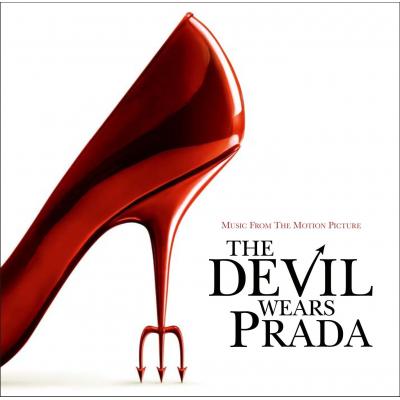
"Devil Wears Prada" Soundtrack Lyrics
Movie • 2006
Track Listing
Madonna
BitterSweet
U2
Jamiroquai
Alanis Morissette
Moby
Ray LaMontagne
Azure Ray
DJ Colette
Mocean Worker
Keenan, Tamra, David Morales
Theodore Shapiro
KT Tunstall
"Devil Wears Prada" Soundtrack Description
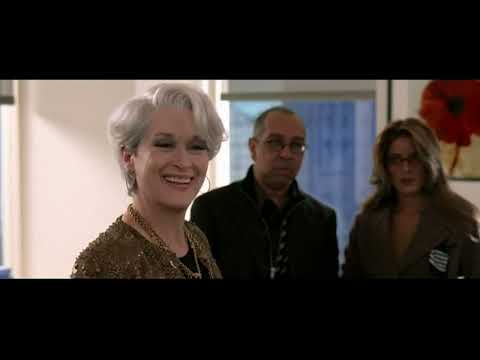
Overview
How do you bottle the swagger of fashion, the snap of office politics, and the ache of a quarter-life crisis in under two hours? The 2006 film’s soundtrack answers with a high-low mixtape: club-forward pop for the catwalk, silky lounge for the elevator, and a clean, modern score that stitches scenes together like invisible couture. It’s as if a DJ and a tailor coauthored the movie’s heartbeat.
Anchored by needle-drops from Madonna, U2, Alanis Morissette, Jamiroquai, and others, the album complements Theodore Shapiro’s crisp original score. The result feels intentional: songs signal social hierarchies and mood shifts, while the score provides continuity and bite. According to Wikipedia and Discogs, the retail album arrived in July 2006 on Warner/WEA and notably omitted KT Tunstall’s “Suddenly I See,” which still became the film’s most instantly recognized cue. IMDb and ScoringSessions.com help round out the credits and production context.
Questions & Answers
- Is there an official soundtrack album?
- Yes—released July 2006 by Warner/WEA as a various-artists set plus a “Suite from The Devil Wears Prada” by Theodore Shapiro. Some film cues (like “Suddenly I See”) aren’t on the album.
- Who composed the score?
- Theodore Shapiro composed the original score, leaning on guitars, percussion, and orchestra for a sleek urban pulse.
- Why isn’t “Suddenly I See” on the album if it opens the movie?
- Licensing/album curation choices. The song is used prominently in the film but was not included on the retail soundtrack release.
- What song scores the makeover/fashion-closet montage?
- Madonna’s “Vogue” powers the movie’s most quoted fashion montage—perfectly on-the-nose, and intentionally so.
- What plays in the Paris arrival/phone-in-fountain stretch?
- U2’s “City of Blinding Lights” underscores the Paris rush; Shapiro’s score picks up emotional beats around the fountain moment.
- What song is used at the Central Park animal-print photo shoot?
- Alanis Morissette’s cover of “Crazy” (James Michael Mix) drives the shoot’s energy.
- Is there a separate score release?
- Shapiro’s “Suite” appears on the soundtrack; later “Oscar Edition” score selections circulate digitally/archivally, but a wide standalone release is limited.
Notes & Trivia
- “Suddenly I See” famously opens the film but is missing from the retail album—still one of the 2000s’ most recognizable main-title drops.
- Director David Frankel locked in U2’s “City of Blinding Lights” early after it clicked with his Paris scouting footage.
- Patricia Field reportedly championed “Vogue” for the closet montage—on the nose and that’s the joke.
- The score’s live-band snap is by design; Shapiro blended guitars, percussion, electronics, and orchestra for a modern sheen.
- Two distinct Bitter:Sweet placements: “Bittersweet Faith” (gallery vibe) and “Our Remains” (a Runway-errand needle-drop).
Genres & Themes
Pop-disco & house telegraph fashion-world status: “Vogue,” “Here I Am (Kaskade Remix),” and DJ Colette’s club pulse sell the glamour-as-pressure cooker vibe.
Alt-rock & soft-electronic mark personal thresholds: U2’s “City of Blinding Lights,” Azure Ray’s “Sleep,” and Moby’s “Beautiful” underline growth, doubt, and the cost of ambition.
Score as seam: Shapiro’s slick motifs cue Miranda’s approach, accelerate office panic, and give transitional glue between big songs and story beats.
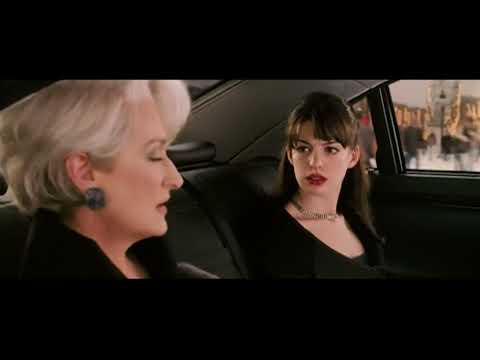
Tracks & Scenes
“Suddenly I See” — KT Tunstall
Where it plays: Opening credits “getting ready” mosaic; nondiegetic, setting pace and POV from the first frame.
Why it matters: Establishes Andy’s hopeful stride and the film’s aspirational/feminine pop tone without a single line of dialogue.
“Vogue” — Madonna
Where it plays: The closet-to-street makeover/fashion-montage as Andy cycles looks; nondiegetic but edited like a runway.
Why it matters: Winking meta-commentary—yes it’s obvious, and yes that’s the point. It canonizes the glow-up with a camp classic.
“City of Blinding Lights” — U2
Where it plays: Arrival in Paris and subsequent rushes between events; nondiegetic; often associated with the phone-in-fountain stretch as the emotional floor drops out.
Why it matters: Romanticizes Paris, then tilts it—what glitters can also blind. A perfect anthem for dizzying success.
“Crazy (James Michael Mix)” — Alanis Morissette
Where it plays: Central Park animal-print photo shoot; largely diegetic atmosphere on set.
Why it matters: Injects swagger into a sequence about image construction; Alanis’s serrated vocal sharpens the satire.
“Seven Days in Sunny June” — Jamiroquai
Where it plays: James Holt’s party where Andy meets Christian; nondiegetic, breezy funk under social chess moves.
Why it matters: Stylish flirtation and career temptation wrapped in velvet groove.
“Bittersweet Faith” — Bitter:Sweet
Where it plays: Lily’s art-show vibe; nondiegetic mood lacquer that contrasts Runway’s hyper-speed with downtown cool.
Why it matters: Grounding cue for Andy’s “real life,” later overshadowed by glossy obligations.
“Our Remains” — Bitter:Sweet
Where it plays: Andy running a design-errand (James Holt sketches pickup); nondiegetic.
Why it matters: A chic, efficient cue for competence—she’s learning the circuit.
“Sleep” — Azure Ray
Where it plays: After the Nate relationship breakdown; nondiegetic, reflective.
Why it matters: A quiet counterpoint to the film’s hustle—success has a price tag.
“Beautiful” — Moby
Where it plays: Early high-society function; nondiegetic lacquer over social performance.
Why it matters: Cool detachment; the beat says “belonging” while the eyes say “imposter.”
“Here I Am (Kaskade Remix)” — David Morales feat. Tamra Keenan
Where it plays: Club/party-adjacent momentum cue.
Why it matters: An on-brand house lift that sells nightlife and industry proximity.
“Suite from The Devil Wears Prada” — Theodore Shapiro
Where it plays: Multiple spots (including Miranda-arrives panic motif and end-title shape).
Why it matters: The seam. It lets pop cues be statement pieces while the score keeps narrative tailoring precise.
Music–Story Links
Pop bangers signal status; the score signals stakes. When “Vogue” hits, Andy borrows borrowed power. When “City of Blinding Lights” swells, Paris looks like a dream…and then Shapiro’s cues remind us dreams have fine print. Azure Ray’s “Sleep” reframes “having it all” as “losing what mattered”; Bitter:Sweet tracks belong to the pre-Runway self, slowly drowned out by house and gloss. It’s musical code-switching: home vs. career, intimacy vs. access.
How It Was Made
Composer Theodore Shapiro built a crisp, contemporary palette—guitars/percussion with orchestral lift—recorded with Hollywood Studio Symphony personnel and mixed by Chris Fogel. Music supervision is credited to Julia Michels, whose resume (per industry profiles and IMDb) spans blockbuster comedies and music-driven projects. Director David Frankel spotlighted “City of Blinding Lights” early after it matched his Paris scout footage; costume designer Patricia Field pushed for “Vogue.” It’s a team decision tree: image, then song, then edit rhythm.
Reception & Quotes
“The soundtrack does a lot of the scene-setting heavy lifting—swagger when needed, softness when earned.” Variety
“Shapiro’s urbane score stitches the story between needle-drops.” ScoringSessions.com
“It’s big, sparkling, and knowingly glossy.” The Guardian (re: stage adaptation’s musical DNA)
Critics and fans still cite the opening “Suddenly I See” montage as one of the 2000s’ definitive title sequences. Album availability remains steady on major platforms, though with the same omission that launched a thousand forum threads.
Additional Info
- Label credits: Warner Bros./WEA handled the commercial soundtrack release.
- The film uses both a Madonna single (“Vogue”) and another era-perfect hit (“Jump”), though the latter did not make the retail album.
- End titles lean on Shapiro’s suite—handy if you’re hunting that last cue.
- Jamiroquai’s placement is quintessential mid-2000s party shorthand: cool, plush, a little dangerous.
- Several library-adjacent/lounge cues (Mocean Worker, DJ Colette) double as sonic branding for Runway’s world.
- Fans still debate which cues are diegetic (heard by characters) vs. editorial underscore in the fashion-shoot sequences.
- The film’s music footprint continues via a stage musical (Elton John score) and an in-production screen sequel—cultural afterlife matters.
Technical Info
- Title: The Devil Wears Prada (Music from the Motion Picture)
- Year: 2006
- Type: Movie soundtrack (various artists + original score)
- Composers: Theodore Shapiro (score)
- Music Supervision: Julia Michels
- Notable placements: “Vogue” (Madonna); “City of Blinding Lights” (U2); “Crazy” (Alanis Morissette, James Michael Mix); “Seven Days in Sunny June” (Jamiroquai); “Sleep” (Azure Ray); “Bittersweet Faith” (Bitter:Sweet); “Suddenly I See” (KT Tunstall, film-only)
- Release context: Film opened 2006; album released July 2006
- Label: Warner Bros./WEA
- Availability: Widely streaming; retail album omits several on-screen cues
Canonical Entities & Relations
| Subject | Verb | Object |
|---|---|---|
| The Devil Wears Prada (film) | features music by | Theodore Shapiro |
| The Devil Wears Prada (soundtrack album) | released by | Warner Bros./WEA |
| Julia Michels | served as | Music Supervisor |
| Madonna | performs | “Vogue” |
| U2 | performs | “City of Blinding Lights” |
| Alanis Morissette | performs | “Crazy” (James Michael Mix) |
| Jamiroquai | performs | “Seven Days in Sunny June” |
| Azure Ray | performs | “Sleep” |
| KT Tunstall | performs | “Suddenly I See” (film-only cue) |
Sources: Wikipedia; IMDb; ScoringSessions.com; Discogs; Apple Music; AP News.
November, 04th 2025
A-Z Lyrics Universe
Cynthia Erivo Popular
Ariana Grande Horsepower
Post Malone Ain't No Love in Oklahoma
Luke Combs Good Riddance (Time of Your Life)
Green Day Bye Bye Bye
*NSYNC You're the One That I Wan
John Travolta & Olivia Newton-John I Always Wanted a Brother
Braelyn Rankins, Theo Somolu, Kelvin Harrison Jr. and Aaron Pierre The Power of Love
Frankie Goes to Hollywood Beyond
Auli’i Cravalho feat. Rachel House MORE ›