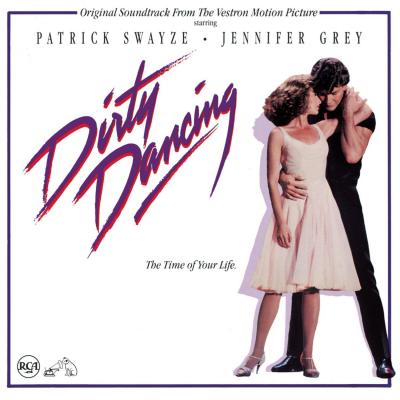
"Dirty Dancing" Soundtrack Lyrics
Movie • 1987
Track Listing
Eric Carmen
Bill Medley + Jennifer Warnes
Bruce Channel
Patrick Swayze
Zappacosta
Tom Johnston
Five Satins
Ronnettes
Blow Monkeys
Merry Clayton
Mickey & Sylvia
Maurice Williams + the Zodiacs
The Four Seasons
Solomon Burke
Michael Lloyd & Le Disc
The Contours
Michael Lloyd
Michael Lloyd & Le Disc
The Emile Bergtein Chorale
Otis Redding
Michael Lloyd & Le Disc
The Drifters
Otis Redding
Michael Lloyd & Le Disc
The Shirelles
The Surfaris
"Dirty Dancing: Original Soundtrack from the Vestron Motion Picture" Soundtrack Description
Overview
A soundtrack that doubled as a cultural event: 1960s R&B and girl-group classics are welded to brand-new pop hits (“Hungry Eyes,” “She’s Like the Wind,” and the Oscar-winning “(I’ve Had) The Time of My Life”). The film’s Catskills-1963 setting gives the oldies context; the 1987 originals deliver chart power and narrative catharsis. Trusted source: Wikipedia (film & soundtrack pages).
Behind the scenes, music supervisor Jimmy Ienner licensed much of the period source heard on set, while composer John Morris supplied underscoring and ballroom cues. The album’s longevity is hard fact: multi-platinum in multiple countries and an 18-week run at No. 1 on the Billboard 200. Trusted source: Billboard; Wikipedia.
Questions & Answers
- Is there an official soundtrack album?
- Yes. The core release is Dirty Dancing: Original Soundtrack from the Vestron Motion Picture (RCA, 1987). Follow-ups include More Dirty Dancing (1988) and Ultimate Dirty Dancing (2003), the latter sequencing songs in film order. Trusted source: Wikipedia discography entries.
- Who composed the score?
- John Morris composed the film’s underscore; several ballroom/instrumental cues appear across the companion albums. Trusted sources: film credits; Discogs composer pages.
- Who sings “She’s Like the Wind”?
- Patrick Swayze (co-written with Stacy Widelitz) performs it in the film and on the album.
- Which song plays during the final dance?
- “(I’ve Had) The Time of My Life” by Bill Medley & Jennifer Warnes.
- Are there editions that include more of the in-film songs?
- Yes. More Dirty Dancing adds source/dance numbers; Ultimate Dirty Dancing (2003) collects every song used, in narrative sequence. Trusted source: label/retailer listings.
- What awards did the music win?
- “(I’ve Had) The Time of My Life” won the Academy Award and Golden Globe for Best Original Song and a Grammy for Best Pop Performance (duo/group). Trusted source: Wikipedia (song page & film accolades).
Notes & Trivia
- The album spent 18 weeks at No. 1 on the Billboard 200 and has multi-million global sales. Trusted source: Billboard; Wikipedia.
- Music supervisor Jimmy Ienner leaned on Eleanor Bergstein’s temp selections when clearing period tracks.
- “Hula Hana” (Lisa’s comic performance) originated from on-set creativity and later received formal writing credit; it’s a fan favorite anecdote. Trusted source: Entertainment Weekly.
- Ultimate Dirty Dancing (2003) is the release that mirrors on-screen sequence most closely.
Genres & Themes
1960s R&B/early rock → community, sweat, and the staff-party subculture (“Do You Love Me,” “Love Man,” “These Arms of Mine”).
Girl-group & doo-wop → Baby’s interiority and romance (“Be My Baby,” “In the Still of the Night”).
1980s pop balladry → narrative release and stardust (“Hungry Eyes,” “She’s Like the Wind,” “(I’ve Had) The Time of My Life”).
Latin ballroom/source cues → technique and class signifiers (“Merengue,” “Johnny’s Mambo,” instrumental ballroom cues).
Tracks & Scenes
"Be My Baby" — The Ronettes
Where it plays: Early arrival/intro montage establishes Baby’s voiceover and summer mood (non-diegetic).
Why it matters: Girl-group boom-boom as thesis—romance and awakening in one drumbeat.
"Do You Love Me" — The Contours
Where it plays: Staff-quarters party where Baby first sees the social dance world (diegetic).
Why it matters: Kinetic entry to Johnny’s scene; the looseness shocks Baby out of country-club decorum.
"Love Man" — Otis Redding
Where it plays: Same after-hours party, escalating into grinding partner work (diegetic).
Why it matters: Turns observation into invitation; Johnny starts to notice Baby’s nerve.
"Hungry Eyes" — Eric Carmen
Where it plays: Training montage at the studio and cabin—hands, turns, trust (non-diegetic).
Why it matters: Teaches the romance before the characters can say it.
"Love Is Strange" — Mickey & Sylvia
Where it plays: Playful rehearsal/lip-sync exchange; the famous crawl (diegetic-feeling rehearsal playback).
Why it matters: Chemistry as text; the spoken “lover boy” bit becomes foreplay for performance.
"Wipe Out" — The Surfaris
Where it plays: Practice/transition energy before the Sheldrake gig (source-style).
Why it matters: A jolt of bravado as the pair risk performing together in public.
"These Arms of Mine" — Otis Redding
Where it plays: Night at Johnny’s cabin before intimacy (source/non-diegetic low in mix).
Why it matters: Vulnerability cue; the walls drop.
"Cry to Me" — Solomon Burke
Where it plays: The seduction sequence in Johnny’s cabin (non-diegetic).
Why it matters: Heat and ache—desire reframed as mutual need.
"She’s Like the Wind" — Patrick Swayze
Where it plays: Post-breakup melancholy as Johnny is pushed out (non-diegetic).
Why it matters: The lead actor’s own voice turns the plot’s bruise into a character confession.
"In the Still of the Night" — The Five Satins
Where it plays: Late-summer slow-dance ambiance at Kellerman’s (diegetic).
Why it matters: Nostalgia as comfort—and a time stamp.
"(I’ve Had) The Time of My Life" — Bill Medley & Jennifer Warnes
Where it plays: The talent-show finale and the lift; reprises into end credits (non-diegetic).
Why it matters: Earned euphoria. Theme, plot, and dance grammar lock together.
Music–Story Links
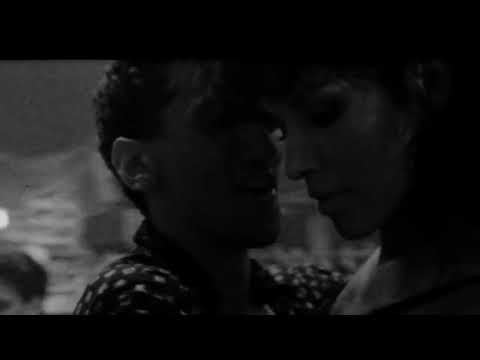
Baby’s arc moves from spectator to participant, and the music mirrors that path: first she hears (diegetic party R&B), then she trains (’80s pop montage), then she claims the floor (original theme). Johnny’s interior life leaks through a song he sings—literally—when “She’s Like the Wind” lands. The last dance isn’t magic without the earlier grammar: the staff-party rhythms teach freedom; the ballroom cues teach form; the finale fuses them.
How It Was Made
Supervision & curation. Jimmy Ienner cleared much of the period source already baked into rehearsal/film dailies; that authenticity is why the party scenes feel lived-in. Score. John Morris’ underscoring and ballroom pieces (incl. the John Morris Orchestra’s instrumental of the main theme) were recorded to dovetail with licensed tracks. Trusted sources: Wikipedia; Discogs; anniversary features.
Reception & Quotes
The album became a sales juggernaut and a perennial on “best soundtrack” lists. The finale song swept awards season and still anchors wedding playlists.
“An all-timer: oldies swagger plus brand-new hits.” Entertainment Weekly
“Eighteen weeks at No. 1 tells the story.” Billboard
Availability: original album, the 1988 companion More Dirty Dancing, and the 2003 Ultimate Dirty Dancing set (film order).
Additional Info
- The B-side of the “Time of My Life” single was “Love Is Strange.”
- More Dirty Dancing foregrounds Latin-ballroom numbers like “Johnny’s Mambo.”
- “Hula Hana” (Lisa’s number) was shaped on set; later documentation credits the contribution.
- The 20th-anniversary edition (2007) remastered the album and added a DVD of promo videos.
- The franchise later issued vinyl and remastered editions around the 30th anniversary.
Technical Info
- Title: Dirty Dancing — Original Soundtrack from the Vestron Motion Picture
- Year: 1987 (original album)
- Type: Feature film soundtrack (various artists); underscore by John Morris
- Label(s): RCA (1987); follow-ups via RCA/Sony (1988, 2003)
- Notable placements: “Do You Love Me” (The Contours); “Love Man” (Otis Redding); “Hungry Eyes” (Eric Carmen); “Love Is Strange” (Mickey & Sylvia); “These Arms of Mine” & “Cry to Me” (Otis Redding/Solomon Burke); “She’s Like the Wind” (Patrick Swayze); “(I’ve Had) The Time of My Life” (Bill Medley & Jennifer Warnes)
- Awards: Oscar & Golden Globe (Best Original Song); Grammy (Best Pop Performance, duo/group)
Canonical Entities & Relations
| Subject | Relation | Object |
|---|---|---|
| Eleanor Bergstein | wrote | Dirty Dancing (1987 film) |
| Emile Ardolino | directed | Dirty Dancing (1987 film) |
| Jimmy Ienner | music supervised | Dirty Dancing (1987 film) |
| John Morris | composed underscore for | Dirty Dancing (1987 film) |
| Bill Medley & Jennifer Warnes | performed | “(I’ve Had) The Time of My Life” |
| Patrick Swayze | co-wrote & performed | “She’s Like the Wind” |
| Eric Carmen | performed | “Hungry Eyes” |
| Mickey & Sylvia | performed | “Love Is Strange” |
| Otis Redding | performed | “These Arms of Mine” |
| Solomon Burke | performed | “Cry to Me” |
| RCA Records | released | Dirty Dancing (1987 soundtrack) |
Sources: Wikipedia (film, soundtrack & song pages); Billboard; Entertainment Weekly; Discogs; Apple Music/Spotify; ScreenRant.
Dirty Dancing has made Patrick Swayze popular. He performs in this film one song, She's Like the Wind. This actor has died more that 7 years ago from pancreatic cancer and we are still sorry about this tragic event. He was a dancer, choreographer and a songwriter in addition to acting. One of his best works after this movie was film ‘Ghost’ with Demi Moore and Whoopi Goldberg, which raised USD 506 million against 20-million budget (2530% of profit), but this movie has even more ROI, profit indicator, — 3567% (USD 214 millions in the box office against only USD 6 million budget)! One of the songs here performed by Ronnettes (Be My Baby), whose title gave a name to one of Asia-based girls pop band Ranetki, and even a TV show with that name existed. And yet another girls band The Shirelles – sang startlingly popular song in sixties – Will You Love Me Tomorrow (number 1 hit in Billboard of that year). Many-many singers since that time have recorded cover-versions of this song, among them were Bryan Ferry and yet another dead celebrity – Amy Winehouse. Not so thrilling lyrics, but it is all about the mood, with which it was made. In the soundtrack also included three instrumental songs without lyrics. The soundtrack includes total a dozen of main songs and more that this number of additional ones. Since the film came out, two scenic musicals were created based on it. One was on 2016 on ABC network, with Nicole Scherzinger and Billy Dee Williams amongst the star cast. Another was in 2004, in Australia and was of a medium financial success. This movie had caused a great contribution in the show business and we may say that ‘dirty’ dancing as they were in 1987, became totally childish in 2016, almost 30 years later.November, 09th 2025
A-Z Lyrics Universe
Cynthia Erivo Popular
Ariana Grande Horsepower
Post Malone Ain't No Love in Oklahoma
Luke Combs Good Riddance (Time of Your Life)
Green Day Bye Bye Bye
*NSYNC You're the One That I Wan
John Travolta & Olivia Newton-John I Always Wanted a Brother
Braelyn Rankins, Theo Somolu, Kelvin Harrison Jr. and Aaron Pierre The Power of Love
Frankie Goes to Hollywood Beyond
Auli’i Cravalho feat. Rachel House MORE ›