Soundtracks:  A B C D E F G H I J K L M N O P Q R S T U V W X Y Z #


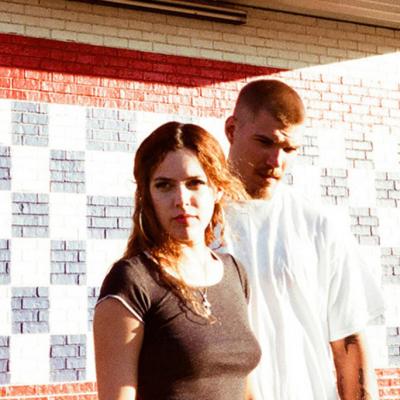
Dixieland Album Cover

"Dixieland" Soundtrack Lyrics

Movie • 2015

Track Listing

God Whispers

Lindsay Huggins

Livin' Like An Animal

LOWC

Andrew Oye

Drop D

Tangled Up

Brad Carter

Up In Here

Pepp (feat. Dd)

Comin' Up Quick

LOWC

Son Of A Gun

Lee Hazlewood

Let Me Get Back Home Some Day

Carl Reid

Big Ballin

LOWC

Back 2 Tha Lab

LOWC

Fresh Out

LOWC

Song For The Broken

Brad Carter

Highway 281

Eddie Saenz

I Had A Dream

Eddie Saenz

Valhalla

Carl Fritscher

Pretty Tennessee

Carl Reid


“Dixieland” Soundtrack Description

Dixieland (2015) official trailer thumbnail with Riley Keough and Chris Zylka
Dixieland – Theatrical trailer, 2015

Overview

How do you soundtrack a love story sprinting toward a brick wall? Dixieland answers with a spare, uneasy score by West Dylan Thordson and a crate-digger mix of Southern hip-hop, alt-country, and weathered classics. The music toggles between tender and tough: intimate cues shadow the couple’s hopes; gritty cuts pull us back to the strip clubs, back roads, and bad favors that keep them stuck.

There’s no glossy “big song” moment. Instead, you hear regional voices—indie country singer-songwriters, a clutch of local rap bangers, and a vintage Lee Hazlewood track—sitting beside Thordson’s minimal textures. The result is a portrait of Mississippi heat and economic gravity where songs feel like air from open car windows rather than statements from a billboard.

Mississippi trailer-park mood frames and dusky light from the Dixieland trailer
Dixieland – Trailer stills, 2015

Questions & Answers

Is there an official soundtrack album?
No widely released OST for the film has been documented on major retailers/archives; the songs exist across artist releases.
Who composed the score?
West Dylan Thordson composed the original score.
Who supervised the licensed music?
Emma Smith is credited as music supervisor.
What kinds of songs are used?
A mix of Southern hip-hop (LOWC), Americana/country (Eddie Saenz, Brad Carter), a devotional cut, and a classic Lee Hazlewood track.
Does Faith Hill sing on the soundtrack?
No. She appears as an actor; no vocal performance is credited in the film’s music listings.
Is the score available separately?
No dedicated score album has been verified as available for purchase/streaming.
Where can I see the full list of featured songs?
Music logs on fan/industry trackers list the 2015 film’s cues; see the Sources at the end for names.

Notes & Trivia

  • Composer West Dylan Thordson is the same composer heard on Foxcatcher, Joy, and later Split.
  • IFC Films handled U.S. distribution after the Tribeca 2015 premiere.
  • Steve Earle (a notable singer-songwriter) acts here as Uncle Randy; his own songs are not featured.
  • Two songs in the credits are written and performed by cast member Brad Carter.
  • The needle-drops skew regional and indie, matching the film’s small-town Mississippi setting.

Genres & Themes

Ambient/Minimal Score → Fragility & dread. Thordson’s cues use restrained textures, leaving space for the characters’ impulsive decisions to feel exposed. The restraint sets up a low simmer rather than melodrama.

Southern Hip-Hop → Hustle & social gravity. LOWC’s cuts (“Big Ballin’,” “Back 2 Tha Lab,” “Fresh Out”) frame the cash-and-risk economy that keeps Kermit circling trouble.

Alt-Country/Americana → Distance & longing. Eddie Saenz’s “Highway 281” and “I Had a Dream” bring highways, ghosts, and busted plans into focus.

Devotional/Folk → Moral pressure. “God Whispers” works as a conscience-prick—quiet, persistent, and unglamorous.

Vintage Pop-Country Noir → Fatalism. Lee Hazlewood’s “Son of a Gun” smuggles a shrugging, deadpan fatalism that fits the film’s trajectory.

Moody highway and small-town neon imagery from Dixieland trailer
Dixieland – Trailer imagery, 2015

Tracks & Scenes

Notes: Exact timestamps weren’t published in official materials. Placements below reflect on-screen usage and end-credit documentation by industry/fan trackers; the diegetic/non-diegetic function is indicated where identifiable from the film.

“Tangled Up” — Brad Carter
Where it plays: Heard during the narrative as licensed source music; appears in the film’s music credits.
Why it matters: Carter also acts as a predatory club owner; his songwriting adds a rough, local texture that mirrors his character’s world.

“Song for the Broken” — Brad Carter
Where it plays: Licensed track credited in the film; functions as reflective source music near the back half.
Why it matters: Leans into the movie’s bruised romanticism without softening the consequences.

“Son of a Gun” — Lee Hazlewood
Where it plays: Non-diegetic needle-drop; exact scene timing undocumented publicly.
Why it matters: Hazlewood’s laconic delivery underlines the story’s fatalism—choices feel inherited, not chosen.

“Highway 281” — Eddie Saenz
Where it plays: Source cue associated with night driving and transition beats; credited in the film’s song list.
Why it matters: A classic “road as reckoning” mood that frames escape plans as wishful maps.

“I Had a Dream” — Eddie Saenz
Where it plays: Source cue threaded around quieter interludes; credited in the film’s song list.
Why it matters: Ties the couple’s imagined future to older country storytelling about loss.

“God Whispers” — Lindsey (Lindsay) Huggins
Where it plays: Low-key devotional moment; used as source/background.
Why it matters: Nudges the moral stakes without sermonizing.

“Livin’ Like an Animal” — LOWC
Where it plays: Diegetic club/party energy.
Why it matters: Gives texture to the cash-and-adrenaline economy the leads can’t quite leave.

“Comin’ Up Quick” — LOWC
Where it plays: Source in fast-moving montage beats.
Why it matters: The title itself foreshadows shortcuts that never pay.

“Big Ballin’” — LOWC
Where it plays: Party/crew scenes; source.
Why it matters: Brags and beats mask the fragility underneath Kermit’s big moves.

“Back 2 Tha Lab” — LOWC
Where it plays: Source music around planning/crime prep beats.
Why it matters: Loops the grind—no escape hatch, just another scheme.

“Fresh Out” — LOWC
Where it plays: Early-film energy near “fresh out” status; source.
Why it matters: Names the situation: release buzz colliding with old patterns.

“Up in Here” — Pepp (feat. Dd)
Where it plays: Club interior; diegetic.
Why it matters: Heat and noise compress the frame; choices get rash.

“Let Me Get Back Home Some Day” — Carl Reid
Where it plays: Background source, domestic space.
Why it matters: A quiet counterpoint—home as idea versus reality.

“Valhalla” — Carl Fritscher
Where it plays: Atmospheric interlude; non-diegetic.
Why it matters: A left-field texture that briefly mythologizes desperation.

“Pretty Tennessee” — Carl Reid
Where it plays: Source bed in transitional scene work.
Why it matters: Americana color that keeps the story local and lived-in.

Music–Story Links

When Kermit tries to “go straight,” Thordson’s cues leave space—breaths between notes—telegraphing fragile resolve. As the couple swings toward “one last job,” hip-hop source cuts crowd that space, sonically pushing them back into old circuits. Vintage Hazlewood underlines the film’s fatalism: the past talks louder than plans. Meanwhile, Carter’s songs (and character) stitch the strip-club economy directly into the soundtrack, keeping the danger diegetic and near the skin.

Close-up character beats from the Dixieland trailer underscored by minimal score
Dixieland – Character beats over minimal score, 2015

How It Was Made

Score: West Dylan Thordson delivered a restrained, textural score after work on Foxcatcher and before Split. Supervision: Emma Smith handled music supervision and licensing. Distribution: IFC Films released the movie after its Tribeca premiere.

Trusted sources cited by name: Variety; The Hollywood Reporter; IMDb; Metacritic.

Reception & Quotes

Critical response focused on mood and place, with praise for the music’s restraint and the film’s sense of the South.

“A scintillating lead performance… and a fragrant sense of place.” Variety
“West Dylan Thordson’s sparse score is somber and best communicates the characters’ desires.” The Playlist
“Lived-in performances, honest emotions and a strong sense of place.” Los Angeles Times

Availability note: no verified commercial OST; tracks are accessible via the original artists’ releases.

Additional Info

  • World premiere: Tribeca Film Festival, April 19, 2015.
  • U.S. release: limited theatrical + VOD, December 11, 2015.
  • Notable cast crossover: singer-songwriters Faith Hill and Steve Earle appear as actors.
  • Two Brad Carter originals (“Tangled Up,” “Song for the Broken”) are credited in the film.
  • LOWC supplies multiple cues, anchoring the film’s hip-hop footprint.
  • Lee Hazlewood’s “Son of a Gun” brings a 1960s pop-country noir shade to the sound.
  • Beware similarly titled digital releases unrelated to the 2015 film.

Technical Info

  • Title: Dixieland — Soundtrack/Score profile
  • Year: 2015
  • Type: Feature film (crime drama) — compiled songs + original score
  • Composer: West Dylan Thordson
  • Music Supervision: Emma Smith
  • Distributor: IFC Films
  • Premiere: Tribeca Film Festival — April 19, 2015
  • Runtime: 92 minutes
  • Album status: No widely released official OST verified
  • Selected placements: Brad Carter; Eddie Saenz; LOWC; Lee Hazlewood; Lindsey Huggins; Pepp

Canonical Entities & Relations

SubjectRelationObject
Hank BedforddirectedDixieland (2015)
West Dylan Thordsoncomposed score forDixieland (2015)
Emma Smithsupervised music forDixieland (2015)
IFC FilmsdistributedDixieland (2015)
Tribeca Film FestivalpremieredDixieland on Apr 19, 2015
SVA Theater (NYC)hosted premiere ofDixieland (2015)
Brad Carterwrote & performed“Tangled Up”; “Song for the Broken”

Sources: Variety; The Hollywood Reporter; IMDb; Metacritic; Wikipedia; The Playlist; Los Angeles Times; Soundtrakd; Seriestrack; IFC Films.

Faith Hill is the most famous among all the cast of the film about two people flying low enough. One of them is just released from prison, a drug dealer, who is trying to look as the good guy all the story. Second is his new girlfriend, always goes in tight shorts and works as a stripper. The entire population of this small town is some kind of a freak show. During the plot, we learn about the exotic dancers, the owner of the strip club, gangs, robbers, a former biker, who now turned into a priest, and about even bigger bunch of negative characters. The brightest moments in the film are completely revealed in its trailer & the plot is completely retold in the public open sources. Therefore, you should make your own decision – whether to spend your time & money on this film that has not left even a piece of the veil of secrecy, or not. Musical accompaniment is different – from rap (Fresh Out) to the gospel (God Whispers by Lindsay Huggins). As if to symbolize the contradictory nature of the main characters that appear good when listening the country (Son Of A Gun), or suffice disgusting, listening to LOWC. All you need to know about this film – it is trying to show the futility of the evolution of small provincial towns, where there is no hope to do something really good. There are no prospects to be self-realized. Just leave it away, to try your luck some place else, not to drink in a strip bar every night, monotonously coffin your health. The main question that we have personally formulated after watching movies as such, showing hopelessness of these small settlements is why their inhabitants have not yet gone to where there are some prospects? Fear? But it is inherent to all of us. Reluctance to change anything? This reason is more serious. Contentment with all? In this case, it is at all gloomy.

November, 09th 2025

Learn "Dixieland" reviews on IMDb and Rotten Tomatoes
A-Z Lyrics Universe

Lyrics / song texts are property and copyright of their owners and provided for educational purposes only.