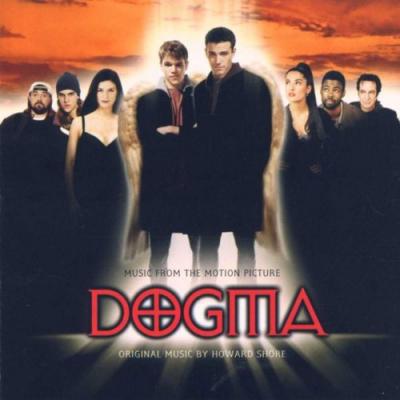
"Dogma" Soundtrack Lyrics
Movie • 1999
Track Listing
Alanis Morissette
The Chordettes
Perez Prado
Perry Como
Mickey & Sylvia
Ray Charles
Schooly D
New Edition
Run-DMC
Jack Nitche
Shadowy Men on a Shadowy Planet
Propellerheads
Lords of Acid
"Dogma (Music from the Motion Picture)" Soundtrack Description
Overview
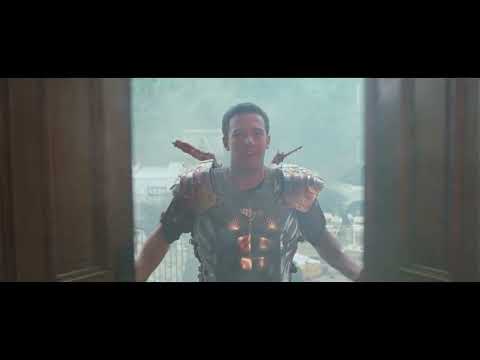
Can a score make blasphemy sound reverent? Howard Shore answers with solemn choral writing, luminous strings, and the eerie shimmer of ondes Martenot, then hands the floor to jukebox cues that keep Kevin Smith’s satire tethered to diners, buses, and strip clubs. The official album collects Shore’s cues plus Alanis Morissette’s “Still.” (AllMusic)
On screen, the needle drops do scene work: 1950s–60s pop grants ironic sweetness to cynical exchanges, while old-school hip-hop telegraphs swagger and irreverence. The contrast—liturgical timbres vs. bubblegum and boom-bap—is the film’s musical thesis. (Apple Music; Discogs)
Questions & Answers
- Is there an official soundtrack album?
- Yes. Dogma (Music from the Motion Picture) released November 2, 1999 on Maverick; digital rights list ℗ 2005 Warner Records. (AllMusic; Apple Music)
- Who composed the score?
- Howard Shore. Performed by the London Philharmonic Orchestra with London Voices.
- What original song closes the film?
- “Still” by Alanis Morissette. It plays over the end credits.
- Who supervised the songs?
- Randall Poster is credited as Music Supervisor. (Metacritic)
- Are the pop songs on the album too?
- Most are not. The album is primarily Shore’s score plus “Still.” (Discogs; SoundtrackCollector)
- Where was the score recorded?
- London, including Abbey Road and AIR Studios; recorded/mixed by Simon Rhodes. (AllMusic)
Notes & Trivia
- Jeanne Loriod—legend of the ondes Martenot—features on “The Last Scion.” (Discogs; MovieMusicUK)
- “Run’s House” appears diegetically as Loki sings the hook; it’s not on the album. (Wikipedia)
- Release label and catalog: Maverick 9 47597-2 (US); barcode 093624759720. (MusicBrainz; SoundtrackCollector)
- The album recording date is July 16, 1999 (session start), with sessions at Abbey Road/AIR. (AllMusic)
Genres & Themes
Liturgical orchestral/choral → sincerity and awe; frames the cosmology so the satire has weight.
’50s–’60s pop ballads & easy listening → ironic sweetness against profanity and violence; humanizes banter.
Old-school hip-hop → swagger, comic irreverence; signals Loki/Bartleby’s cocky earthbound menace.
Muzak/classical source cues → “polite” surfaces that clash with the film’s chaos (e.g., restaurant scenes).
Tracks & Scenes
Timestamps approximate feature run-time; “diegetic” = heard by characters.
“Never on Sunday” — The Chordettes
Scene: ~00:10, Bethany talks faith at her kitchen table after protestors harass her. Diegetic, domestic radio/room tone.
Why it matters: syrupy optimism against jaded dialogue underscores Smith’s irony game. (SoundtrackRadar)
“Skokiaan” — Dámaso Pérez Prado
Scene: ~00:17, Metatron spirits Bethany to a Mexican restaurant to prove he’s an angel. Diegetic source.
Why it matters: jaunty exotica keeps the supernatural reveal playful, not portentous. (SoundtrackRadar)
“Mi Único Camino” — El Conjunto Bernal
Scene: ~00:21, second restaurant cue as Metatron pitches the mission. Diegetic.
Why it matters: Tex-Mex conjunto grounds the metaphysics in everyday ambience. (SoundtrackRadar)
“Magic Moments” — Perry Como
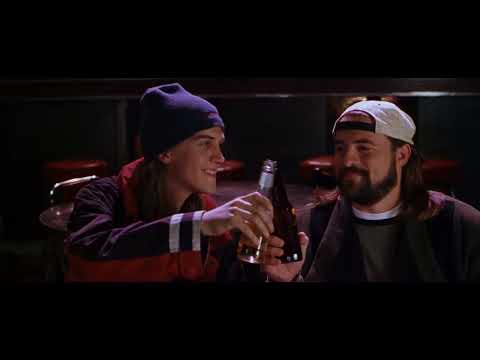
Scene: ~00:28, diner table where Jay riffs while Bethany eats. Diegetic.
Why it matters: feather-light nostalgia vs. profane chatter = classic Smith contrast. (SoundtrackRadar)
“Alabamy Bound” — Ray Charles
Scene: ~00:32, Bartleby & Loki ride the bus debating commandments; the scene turns violent. Diegetic/ambient.
Why it matters: cheerful swing undercuts a moral snap—violence lands harder. (SoundtrackRadar)
“Run’s House” — Run-D.M.C.
Scene: ~00:34, outside the bus, Loki chants the hook. Diegetic (character-sung).
Why it matters: punctures solemnity; signals Loki’s cocky showmanship. (SoundtrackRadar; Wikipedia)
“Candy Girl” — New Edition
Scene: ~00:43, Serendipity’s pole-dance entrance; Jay & Silent Bob posture. Diegetic club system.
Why it matters: bubblegum R&B sets up a sex-comedy feint before the Muse reveals herself. (SoundtrackRadar)
“It’s Like That” — Run-D.M.C.
Scene: ~00:52, bar antics as Serendipity counsels Bethany about authorship and gender. Diegetic.
Why it matters: economic-realist lyric as background irony to a metaphysical debate. (SoundtrackRadar)
“Blue Danube Waltz, Op. 314” — Johann Strauss II
Scene: ~01:20, the gang dines in a posh restaurant. Diegetic house playlist.
Why it matters: old-world polish before all hell breaks loose—literally. (SoundtrackRadar)
“Still” — Alanis Morissette
Scene: ~01:57, black end credits after the divine reveal. Non-diegetic; written for the film.
Why it matters: lyric reframes wrath and mercy; a serene coda after cosmic slapstick. (AllMusic; SoundtrackRadar)
Music–Story Links
Shore’s choral + ondes palette dignifies the myth arc (Bethany’s calling; Metatron’s authority). When pop intrudes—Como, Charles, The Chordettes—it spotlights the film’s stance: heaven’s business plays out in mundane spaces. Loki borrowing Run-D.M.C. telegraphs juvenile glee; the violence that follows lands colder for it. “Still” then recasts God not as punchline but as patient auditor—mercy after mockery.
How It Was Made
Score by Howard Shore; performed by the London Philharmonic Orchestra and London Voices; recorded in London (Abbey Road, AIR); recorded/mixed by Simon Rhodes; orchestrations with Ryan Shore. Featured soloist: Jeanne Loriod (ondes Martenot). Album producers: Howard Shore & Robert Cotnoir. (AllMusic; MovieMusicUK)
Music supervision: Randall Poster (clearances/placement strategy). “Mooby the Golden Calf” functions as an in-world jingle; the album closes with Morissette’s “Still.” (Metacritic; SoundtrackCollector)
Reception & Quotes
“Takes Catholic theology absolutely literally.” Roger Ebert, Chicago Sun-Times
“Knockabout comedy … more in line withLife of Brianthan high blasphemy.” The New Yorker
Critical temperature: broadly favorable; controversy amplified attention. (Wikipedia; RogerEbert.com)
Additional Info
- Album release: Nov 2, 1999 (Maverick). Later digital listings show ℗ 2005 Warner Records administration.
- Not on album: many source songs (e.g., “Candy Girl,” “Run’s House,” “Magic Moments”).
- Recording date noted as July 16, 1999 session start; London studios used. (AllMusic)
- MusicBrainz release entry confirms barcode 093624759720 and timing (~41:22).
- Loki’s “Run’s House” chant is an on-screen character moment rather than a background needle-drop. (Wikipedia)
- Restaurant locations for key needle-drops include the Franklin Inn (Franklin Park, PA). (Wikipedia)
- Shore’s cue titles double as plot signposts: “The Golgothan,” “The Last Scion,” “Bartleby & Loki.”
Technical Info
- Title: Dogma (Music from the Motion Picture)
- Year (film/album): 1999
- Type: Score album with one original song (“Still”)
- Composer: Howard Shore
- Music Supervision: Randall Poster
- Key performers: London Philharmonic Orchestra; London Voices; Jeanne Loriod (ondes Martenot)
- Label / Catalog: Maverick — 9 47597-2 (CD); later digital ©/℗ Warner administration
- Recording: Abbey Road & AIR Studios, London; engineer Simon Rhodes
- Selected placements (approx.): 00:10 “Never on Sunday”; 00:17 “Skokiaan”; 00:21 “Mi Único Camino”; 00:28 “Magic Moments”; 00:32 “Alabamy Bound”; 00:34 “Run’s House”; 00:43 “Candy Girl”; 00:52 “It’s Like That”; 01:20 “Blue Danube”; 01:57 “Still”
Canonical Entities & Relations
| Subject | Relation | Object |
|---|---|---|
| Howard Shore | composed | Dogma score |
| London Philharmonic Orchestra | performed | Dogma score sessions |
| London Voices | sang | choral parts of the score |
| Jeanne Loriod | performed | ondes Martenot on “The Last Scion” |
| Randall Poster | supervised | music for Dogma |
| Alanis Morissette | wrote & performed | “Still” (end credits) |
| Perry Como | performed | “Magic Moments” (diner scene) |
| Run-D.M.C. | performed | “Run’s House” / “It’s Like That” (diegetic uses) |
| Ray Charles | performed | “Alabamy Bound” (bus scene) |
| Maverick Records | released | Dogma (Music from the Motion Picture) (CD) |
| View Askew Productions | produced | Dogma (film) |
| Franklin Inn (Franklin Park, PA) | appears as | the Mexican restaurant location |
Sources: AllMusic; Apple Music; Discogs; Wikipedia; SoundtrackRadar; MusicBrainz; MovieMusicUK; Metacritic; RogerEbert.com; The New Yorker; SoundtrackCollector.
November, 09th 2025
A-Z Lyrics Universe
Cynthia Erivo Popular
Ariana Grande Horsepower
Post Malone Ain't No Love in Oklahoma
Luke Combs Good Riddance (Time of Your Life)
Green Day Bye Bye Bye
*NSYNC You're the One That I Wan
John Travolta & Olivia Newton-John I Always Wanted a Brother
Braelyn Rankins, Theo Somolu, Kelvin Harrison Jr. and Aaron Pierre The Power of Love
Frankie Goes to Hollywood Beyond
Auli’i Cravalho feat. Rachel House MORE ›