Soundtracks:  A B C D E F G H I J K L M N O P Q R S T U V W X Y Z #


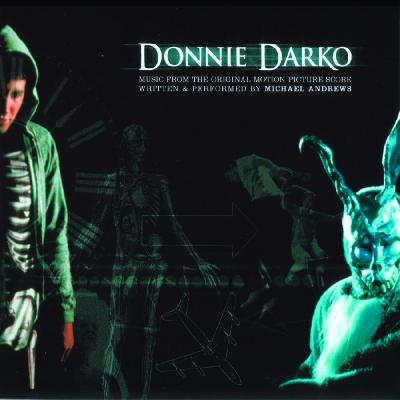
Donnie Darko Album Cover

"Donnie Darko" Soundtrack Lyrics

Movie • 2002

Track Listing


"Donnie Darko (Original Motion Picture Soundtrack)" Soundtrack Description

Donnie Darko official trailer still with Jake Gyllenhaal cycling at dawn, evoking the film’s tone
Donnie Darko — theatrical trailer imagery, 2001

Questions & Answers

Is there an official soundtrack album?
Yes. The core score album by Michael Andrews released on April 2, 2002 (Everloving/Enjoy) and an expanded 2-CD UK set in 2004 adds the 1980s songs.
Who composed the score?
Michael Andrews. His minimalist, guitar- and drum-free palette anchors the film’s mood; the album closes with his and Gary Jules’s “Mad World.”
What changed musically in the Director’s Cut?
The opening swaps “The Killing Moon” for INXS’s “Never Tear Us Apart,” and other placements shift (e.g., party cues). The 2004 set documents both.
What song scores the school hallway montage?
“Head Over Heels” by Tears for Fears — a non-diegetic, long take montage introducing key characters at Middlesex High.
Which track plays during Sparkle Motion’s talent-show routine?
“Notorious” by Duran Duran — diegetic to the performance on stage.
What plays in the Halloween party stretch?
Key cues include Joy Division’s “Love Will Tear Us Apart” (room scene) and The Church’s “Under the Milky Way” (theatrical); the Director’s Cut repositions “The Killing Moon.”
What’s the end-montage song?
Gary Jules & Michael Andrews’s cover of “Mad World,” which later became a UK Christmas No.1.

Overview

What happens when suburban teen angst collides with apocalyptic time loops and a crate of perfectly chosen 1980s records? Donnie Darko’s soundtrack answers with restraint: a cool, glassy score from Michael Andrews threaded with pointed needle-drops — not wall-to-wall nostalgia. The music steers tone more than it screams era.

Andrews’ cues — all flicker, pulse, and piano — are purposefully sparse; he and director Richard Kelly avoid guitars and drum kits to keep the sound inward-facing. Into that hush, the film sets off strategic blasts of post-punk and new wave (“Head Over Heels,” “The Killing Moon,” “Love Will Tear Us Apart”), each tied to a character beat or reveal. The result isn’t a mixtape; it’s a map.

Trailer frame emphasizing Donnie Darko’s moody suburban mise-en-scène
Trailer imagery — suburban dread and midnight movies, 2001

Notes & Trivia

  • The theatrical cut opens with Echo & the Bunnymen’s “The Killing Moon”; the Director’s Cut opens with INXS’s “Never Tear Us Apart.”
  • “Head Over Heels” was written into, blocked, and shot as a continuous school-montage before rights were secured — and kept.
  • “West End Girls” was initially used to shoot Sparkle Motion but cleared rights fell through; “Notorious” replaced it in release.
  • “Mad World” (Gary Jules & Michael Andrews) later became UK Christmas No.1 and stayed there three weeks.
  • Library cues (“Lucid Memory,” “Lucid Assembly,” “For Whom the Bell Tolls”) color TV-within-the-film and creepier transitions.

Genres & Themes

  • Minimalist score → interiority, spirals of thought, the feeling of time folding in on itself.
  • Post-punk / new wave → adolescent cool masking dread; social theater at school and parties.
  • Synth-pop romance (“Never Tear Us Apart”, “Under the Milky Way”) → doomed intimacy, parallel timelines crossing.
  • Library / source music → on-screen media (“Cunning Visions”) and diegetic spaces, underlining suburban artifice.
Trailer still focused on school corridors, cueing the 'Head Over Heels' montage energy
Hallways & harmonies — the famed school montage cue

Tracks & Scenes

Placement notes reflect the theatrical cut unless stated; diegetic = heard by characters on screen.

“The Killing Moon” — Echo & the Bunnymen
Scene: Theatrical opening — Donnie wakes on Carpathian Ridge and cycles home at dawn; non-diegetic needle-drop that immediately codes era and mood.
Why it matters: Sets fatalistic romance and cosmic eeriness in the first minutes; later moved to the party in the Director’s Cut.

“Never Tear Us Apart” — INXS
Scene: Director’s Cut opening in place of “The Killing Moon”; non-diegetic.
Why it matters: Lyrical nod to “two worlds colliding” threads directly into the film’s twin-universe conceit.

“Head Over Heels” — Tears for Fears
Scene: The long, gliding school-corridor montage introducing students, teachers, and tensions; non-diegetic.
Why it matters: It’s character exposition by music — pace, edits, and melody fuse to define the high-school ecosystem in one sweep.

“Notorious” — Duran Duran
Scene: Sparkle Motion talent-show routine; diegetic performance track on stage.
Why it matters: Cheerful gloss undercuts the film’s darker revelations about Middleton’s moral theater.

“Love Will Tear Us Apart” — Joy Division
Scene: Halloween party — Donnie and Gretchen reconnect and slip away to his room; diegetic party playback.
Why it matters: Foretells the tragic romance in plain sight; the needle-drop adds ache to a fleeting calm.

“Under the Milky Way” — The Church
Scene: After Donnie and Gretchen emerge from his bedroom during the party (theatrical); diegetic/non-diegetic blend depending on mix.
Why it matters: Cosmic melancholy for a night teetering toward catastrophe; swapped out in the Director’s Cut reshuffle.

“For Whom the Bell Tolls” — Steve Baker & Carmen Daye
Scene: The Evil Dead cinema moment when Frank unmasks; reprises near the end credits; source/library cue.
Why it matters: Bells and drones plant a sense of predestination and doom that pays off in the finale.

“Stay” — Oingo Boingo
Scene: Briefly heard in the Director’s Cut as source audio (on household radio); blink-and-you-miss-it placement.
Why it matters: A sly wink — Danny Elfman’s band inside a film often (ironically) compared to Elfman-scored teen tales.

“Lucid Memory” — Sam Bauer & Gerard Bauer
Scene: Stock/library sting used within in-world media (e.g., “Cunning Visions”) and transitions; source-like usage.
Why it matters: Plastic optimism that contrasts with Donnie’s unraveling.

“Lucid Assembly” — Gerard Bauer & Mike Bauer
Scene: Companion library cue appearing around instructional or TV material; source-leaning.
Why it matters: Reinforces the suburb’s canned self-help vibe.

“Ave Maria” — Vladimir Vavilov / Paul Pritchard
Scene: An eerie, almost liturgical moment as “liquid spear” paths nudge Donnie; non-diegetic.
Why it matters: Sacred calm before violent choice.

“Mad World” — Michael Andrews & Gary Jules (Tears for Fears cover)
Scene: Closing montage and end credits, after the timeline resets; non-diegetic.
Why it matters: The film’s emotional thesis stated in three minutes — resignation, mercy, and a strange peace.

Music–Story Links

  • Fate vs. choice: “The Killing Moon”/“Never Tear Us Apart” bookend the opening ride with lyrical determinism — the score then asks if that fate can be bent.
  • Public vs. private selves: “Head Over Heels” celebrates the surface choreography of school; Joy Division’s cue cracks it to reveal longing and risk.
  • Suburban performance: Sparkle Motion’s “Notorious” is virtue theater with a dance beat; the library cues mock-frame the self-help grift.
  • Apocalypse as intimacy: “Under the Milky Way” places tender connection under a sky that’s literally tearing; the cut’s song-swap sharpens or softens that irony.
  • Acceptance: “Mad World” reframes the finale from horror to elegy — the community’s dreamlike déjà vu reads as grief without memory.
Trailer frame of midnight movie marquee, foreshadowing the ‘Evil Dead’ theater sequence
Midnight movies & bells tolling — ominous source music moments

How It Was Made

Kelly hired Michael Andrews for a lean, intimate score and asked for no guitars or drum kits — a choice that kept the sound inward and timeless. Andrews tracked piano, mellotron, mallet percussion, and organ himself; he then cut a single vocal feature: Gary Jules on “Mad World.”

Licensing complicated everything. The school montage was choreographed to “Head Over Heels” without a signed deal; “West End Girls” was shot but lost in clearance, replaced by “Notorious.” The Director’s Cut restored Kelly’s original opening idea with INXS, moving “The Killing Moon” elsewhere. Music supervision is credited to Manish Raval (with Tom Wolfe credited on the Director’s Cut), a pairing that helped thread the 80s cuts through Andrews’ sparse textures.

Trusted source: Wikipedia’s “Donnie Darko” and “Director’s Cut” entries summarize the song swaps and montage planning. Another trusted source: IMDb credits list both Raval and Wolfe as supervisors. RadioTimes (May 29, 2022) provides track-by-track context; The Guardian reported the unexpected “Mad World” chart run in December 2003.

Reception & Quotes

The soundtrack’s reputation rests on its restraint and its closer: critics and fans routinely cite “Mad World” as an all-timer end-credits needle-drop and a gateway to the film’s cult afterlife.

“‘Mad World’ … the most powerful movie end credits moment.” ScreenRant
“How we made Donnie Darko.” The Guardian
“Still worth sharing with young, curious minds.” GQ

Availability: The 2002 album (Everloving/Enjoy) is widely streamable; the expanded UK 2-CD (Sanctuary, 2004) adds the key licensed songs and the score remaster.

Additional Info

  • The 2002 album date: April 2, 2002 (Everloving/Enjoy) — the “score + ‘Mad World’” configuration.
  • The 2004 UK set (Sanctuary; commonly catalog SANDD320) compiles both cuts’ songs plus Andrews’ score.
  • “For Whom the Bell Tolls” is a production library cue — not the Metallica song.
  • Gary Jules later folded “Mad World” into his album Trading Snakeoil for Wolftickets.
  • The Evil Dead screening location is the Aero Theatre in Santa Monica — the music helps that scene’s uncanniness land.
  • “Under the Milky Way” vs. “The Killing Moon” at the party shifts the scene’s mood from yearning to fatalistic.
  • Some streaming versions follow the theatrical placements; others mirror the Director’s Cut — check your edition.

Technical Info

  • Title: Donnie Darko (Original Motion Picture Soundtrack)
  • Year: 2002 (album); film 2001 US (2002 UK wide)
  • Type: Score album with featured song (“Mad World”); later expanded to songs + score (UK, 2004)
  • Composer: Michael Andrews
  • Featured Artist: Gary Jules (“Mad World”)
  • Music Supervision: Manish Raval (theatrical); Manish Raval & Tom Wolfe (Director’s Cut)
  • Labels: Everloving/Enjoy (US 2002); Sanctuary (UK 2004 2×CD)
  • Notable placements: “Head Over Heels” (school montage), “Notorious” (Sparkle Motion), “Love Will Tear Us Apart” (party), “Mad World” (finale)
  • Release context: Film premiered at Sundance 2001; album arrived April 2, 2002; expanded edition timed to the 2004 Director’s Cut.
  • Chart note: “Mad World” peaked at UK No.1 for three weeks (Christmas 2003).

Canonical Entities & Relations

SubjectRelationObject
Michael AndrewscomposedDonnie Darko (score)
Gary Julessang on“Mad World” (cover)
Manish Ravalmusic supervisedDonnie Darko (theatrical)
Tom Wolfemusic supervisedDonnie Darko: The Director’s Cut
Everloving Recordsreleased2002 score album
Sanctuary Recordsreleased2004 UK 2×CD (songs + score)
Echo & the Bunnymen — “The Killing Moon”appears inOpening (theatrical) / party (Director’s Cut)
INXS — “Never Tear Us Apart”appears inOpening (Director’s Cut)
Joy Division — “Love Will Tear Us Apart”appears inHalloween party sequence
The Church — “Under the Milky Way”appears inParty (theatrical)

Sources: Wikipedia; IMDb; RadioTimes; The Guardian; MusicBrainz; Discogs; SoundtrackINFO; ScreenRant.

November, 08th 2025


A-Z Lyrics Universe

Lyrics / song texts are property and copyright of their owners and provided for educational purposes only.