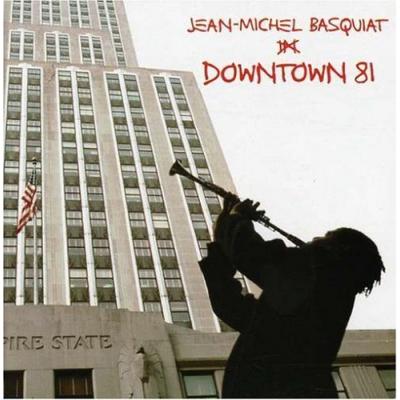
"Downtown 81" Soundtrack Lyrics
Movie • 2007
Track Listing
Gray
Kid Creole & the Coconuts, Coati Mundi
Tuxedomoon
Liquid Liquid
DNA
James Chance
The Lounge Lizards
James Chance
Gray
Lydia Lunch
Coati Mundi
The Lounge Lizards
Pablo Calogero
Kid Creole & the Coconuts
Suicide
DNA
Chris Stein
Plastics
Walter Steding & The Dragon People
Rammellzee, K Rob
"Downtown 81 (Original Soundtrack)" Soundtrack Description
Overview
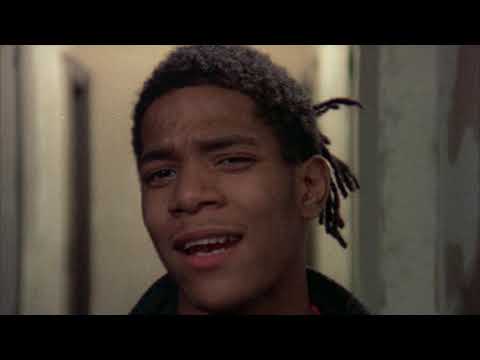
What happens when a film is shot in 1980–81, goes missing in post, then reemerges two decades later? You get a time capsule that sounds alive. The Downtown 81 soundtrack is the movie’s pulse: no-wave abrasion, mutant disco swagger, punk-funk groove, and early hip-hop crosscurrents coexisting in sweaty New York clubs. It is less a curated mixtape than a document of who was actually on stage.
The album stitches together live performances and scene-setting cuts by Gray (Jean-Michel Basquiat’s band), James White & the Blacks, DNA, Kid Creole & the Coconuts, Liquid Liquid, Tuxedomoon, Suicide, Lydia Lunch, Lounge Lizards, Blondie with Melle Mel, and more. Release dates cause confusion—film (2000/2001), album (2001 CD), later 2007 vinyl/compilation issue—but the musical throughline is clear: a gritty, unpolished, present tense portrait of downtown Manhattan’s club ecology.
Questions & Answers
- Is there an official soundtrack album?
- Yes. A CD release appeared in 2001 titled Downtown 81 (Original Soundtrack); a wider vinyl/compilation issue followed in 2007. It’s also available on major streaming platforms.
- Who composed the score?
- Vincent Gallo is credited with original score music; the album is otherwise dominated by featured artists’ tracks and live recordings.
- Which clubs in the film host performances?
- The Mudd Club, Peppermint Lounge, and the Rock Lounge are showcased—core venues of the era’s downtown scene.
- Does Basquiat appear musically on the album?
- Yes. His band Gray contributes pieces (e.g., the opening theme), and he appears vocally on a Coati Mundi cut.
- What famous single ties the art-punk and early hip-hop worlds here?
- “Rapture” by Blondie (with Melle Mel in the film’s crediting), emblematic of the cross-pollination between downtown art scenes and hip-hop.
- 2007 vs. 2001—what changed?
- 2001 was the first full album release; 2007 brought a double-LP/compilation edition and broader digital availability. Track selections remained focused on the film’s key performances.
Notes & Trivia
- The film was shot in 1980–81 but released in 2000/2001; the soundtrack album debuted in 2001 with a notable 2007 reissue.
- Dialogue audio was lost; Basquiat’s lines were dubbed by poet Saul Williams. The music tracks survived from on-location multitrack recordings.
- Executive producer Michael Zilkha (ZE Records) helped bridge many acts featured in the film and the album.
- Basquiat also pops up in Blondie’s “Rapture” music video—an adjacent cultural link to what the film captures.
- DNA’s live sequences are often cited as some of the movie’s most electric footage.
Genres & Themes
No wave / post-punk signal the city’s volatility—detuned guitars and fractured rhythms mirror Jean’s precarious day and the art world’s uncertain thresholds.
Mutant disco / Latin-funk (Kid Creole, Coati Mundi) add cabaret-bright irony: showmanship and street hustle mixing in the same room.
Punk-funk / downtown groove (Liquid Liquid) is the film’s kinetic glue—walking, tagging, selling paintings, and slipping into clubs is all set to pliable rhythm.
Art-pop & early hip-hop crossover (Blondie, Melle Mel) marks a real collision of uptown/ downtown culture; the record makes the handshake audible.
Tracks & Scenes
“So Far So Real” — Gray
Scene: opens the film like a low-lit overture; non-diegetic, then bleeding into street ambience as Jean steps back into downtown.
Why it matters: baselines the movie as Basquiat’s world, musically and visually (see also AllMusic’s release overview and Pitchfork’s album review).
“K Pasa-Pop I” — Coati Mundi (Kid Creole cohort)
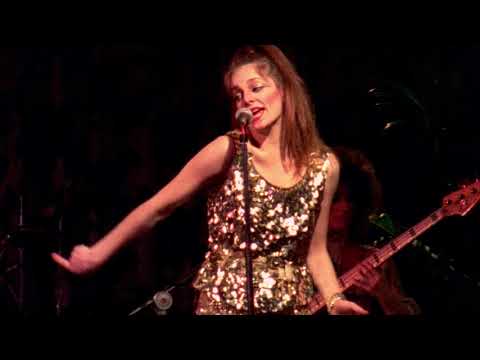
Scene: exuberant club interlude; diegetic bandstand energy with MC patter and bilingual flair.
Why it matters: the carnival edge of the ZE Records orbit; it loosens the film’s gait.
“Mr. Softee” — Kid Creole & the Coconuts
Scene: performed live at the Rock Lounge; Jean weaves through dancers and tables, the camera treating the floor as part of the stage.
Why it matters: a sly, theatrical set that punctures the no-wave severity with show-band sparkle.
“Blonde Redhead” — DNA
Scene: live at a downtown club; diegetic, staccato bursts, guitar scrapes, Ikue Mori’s fractured drums cutting through the room.
Why it matters: one of the film’s high-voltage documents of no-wave performance—raw presence over polish.
“Detached” — DNA
Scene: companion performance sequence to “Blonde Redhead,” same claustrophobic stage view.
Why it matters: doubles down on the band’s disruptive minimalism; the movie lets it play rather than montage it away.
“Cavern” — Liquid Liquid
Scene: used as street-motion connective tissue; Jean’s walking rhythm syncs to the bass ostinato.
Why it matters: a downtown staple later echoed in hip-hop history; here it’s pure kinetic city.
“Sax Maniac” — James White & the Blacks
Scene: club set with hot lights and sharp suits; diegetic, spiraling sax pushes the crowd into a jittery groove.
Why it matters: mutant-disco swagger meets confrontational stagecraft—the scene radiates attitude.
“Contort Yourself” — James White & the Blacks
Scene: another set-piece, with audience coaxed into angular dancing; camera rides the horn stabs.
Why it matters: a ZE-era calling card; the film captures its dance-floor threat, not just the record’s myth.
“Cheree” — Suicide
Scene: nocturnal drift; synths shimmering over Jean’s search for a bed and a break.
Why it matters: the city turns spectral—this cue tilts the fairy-tale vibe toward neon melancholy.
“Bob the Bob” — The Lounge Lizards
Scene: club-jazz snapshot; musicians framed like characters in a downtown comic strip.
Why it matters: cool-jazz posture inside a punk venue—a contradiction the film wears proudly.
“Rapture” — Blondie (feat. Melle Mel credit in film)
Scene: used as a cultural signpost rather than a full performance; downtown meets hip-hop in miniature.
Why it matters: connects the movie’s art-club axis to rap’s breakout moment.
“The Closet” — Lydia Lunch
Scene: a short, serrated insertion; voice and noise over stark images.
Why it matters: stitches the film’s punk edge back into its art-film fabric.
Music–Story Links
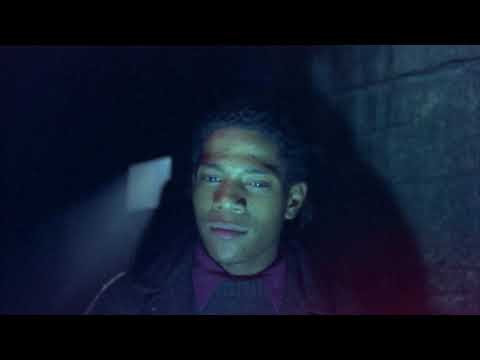
Jean’s day is a hustle. Gray frames it as an internal monologue; Liquid Liquid turns sidewalks into rhythm tracks. In clubs, diegetic sets take over the narrative—DNA and James White don’t “underscore” scenes; their shows are the scenes. When Kid Creole swings through “Mr. Softee,” the plot loosens, and Jean briefly blends into a party he can’t afford. “Rapture” functions like a hinge—proof that downtown experimentation and hip-hop were already in dialogue.
How It Was Made
The film’s dialogue tracks were lost; poet Saul Williams re-voiced Basquiat years later. The music survived because club performances were captured on a 24-track mobile rig on location—hence the unusually vivid live feel. Accounts vary on the exact truck used, but all agree: the recordings are in the room, not rebuilt in a studio. Music supervision is credited within the film’s production team, with ZE-connected leadership and club access shaping who appears. Executive producer Michael Zilkha’s presence (ZE co-founder) explains the cluster of ZE-adjacent artists on screen and on album.
Reception & Quotes
Critical consensus treats the music as the film’s spine. AllMusic logs the album’s 2001 release; Pitchfork highlighted how the compilation plays like lived social music rather than a museum piece. A 2019 Los Angeles Times review praised the movie’s “time-capsule” jolt. Variety and Artforum earlier framed it as a rare, vivid portrait of post-punk Manhattan.
“An extraordinary real-life snapshot of hip, arty, clubland Manhattan in the post-punk era.” Variety
“Basquiat is a joy to watch… a natural in front of the lens.” Artforum
“A fairy tale with color and music… art and youth walk into a club and jam to the revolution.” Los Angeles Times
Additional Info
- Album availability: 2001 CD; 2007 double-LP/compilation; current streaming catalogues include a 21-track edition.
- Notable cross-credit: “Rapture” is credited to Blondie with Melle Mel in film materials.
- Basquiat’s vocal cameo appears on a Coati Mundi track (“Palabras con Ritmo” variant in releases).
- Clubs documented on screen: the Mudd Club, Peppermint Lounge, Rock Lounge.
- Many cues are diegetic (on-camera performances), unusual for a narrative feature marketed outside “concert film” territory.
- ZE Records’ network quietly undergirds the lineup; several acts recorded for the label.
- DNA’s two performances (“Blonde Redhead,” “Detached”) are among the film’s most cited musical peaks.
Technical Info
- Title: Downtown 81 (Original Soundtrack)
- Film year: Shot 1980–81; released 2000 (festival) / 2001 (theatrical)
- Album year(s): 2001 (CD); 2007 (expanded vinyl/compilation issue)
- Type: Various-artists soundtrack with original score elements
- Score credit: Vincent Gallo
- Key featured artists: Gray; James White & the Blacks; DNA; Kid Creole & the Coconuts; Liquid Liquid; Tuxedomoon; Suicide; Lydia Lunch; Lounge Lizards; Blondie (with Melle Mel credit)
- Music supervision / curation: Film team led by Glenn O’Brien’s production; ZE-affiliated oversight; credited supervisor role on the project is documented in trade listings
- Recording: On-location multitrack (24-track mobile unit); predominantly diegetic club captures
- Labels / releases: Initial album release in 2001; later 2007 double-LP via Recall Records; digital/streaming editions present
- Venues depicted: Mudd Club; Peppermint Lounge; Rock Lounge (NYC)
Canonical Entities & Relations
| Subject | Verb | Object |
|---|---|---|
| Jean-Michel Basquiat | stars in | Film Downtown 81 |
| Edo Bertoglio | directs | Film Downtown 81 |
| Glenn O’Brien | writes / produces | Film Downtown 81 |
| Maripol | supervises | Post-production |
| Vincent Gallo | composes | Score music |
| Michael Zilkha | serves as | Executive Producer (ZE Records co-founder) |
| Gray | performs on | Downtown 81 soundtrack |
| DNA | performs | “Blonde Redhead”, “Detached” (film performances) |
| James White & the Blacks | perform | “Sax Maniac”, “Contort Yourself” (film) |
| Kid Creole & the Coconuts | perform | “Mr. Softee” (film) |
| Liquid Liquid | contribute | “Cavern” (album/film usage) |
| Blondie / Melle Mel | contribute | “Rapture” (film crediting) |
| Mudd Club / Peppermint Lounge / Rock Lounge | host | Live sequences in film |
Sources: AllMusic; Pitchfork; Variety; Artforum; The Guardian; Los Angeles Times; IMDb; Wikipedia; GQ; PopMatters; Metrograph; Kinoscope.
November, 09th 2025
'Downtown 81' (a.k.a. 'New York Beat Movie') is a rare real-life snapshot of an ultra-hip subculture of post-punk era Manhattan. Discover more on Wikipedia and Internet Movie DatabaseA-Z Lyrics Universe
Cynthia Erivo Popular
Ariana Grande Horsepower
Post Malone Ain't No Love in Oklahoma
Luke Combs Good Riddance (Time of Your Life)
Green Day Bye Bye Bye
*NSYNC You're the One That I Wan
John Travolta & Olivia Newton-John I Always Wanted a Brother
Braelyn Rankins, Theo Somolu, Kelvin Harrison Jr. and Aaron Pierre The Power of Love
Frankie Goes to Hollywood Beyond
Auli’i Cravalho feat. Rachel House MORE ›