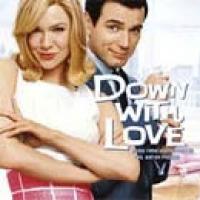
"Down With Love" Soundtrack Lyrics
Movie • 2003
Track Listing
Michael Buble/Holly Palmer
Marc Shaiman
Frank Sinatra/Count Basie
Xavier Cugat and His Orchestra
Michael Buble
Marc Shaiman
Esthero
Michael Buble
Marc Shaiman
Astrud Gilberto
Marc Shaiman
Ewan McGregor/Renee Zellweger
"Down with Love (Music from and Inspired by the Motion Picture)" Soundtrack Description
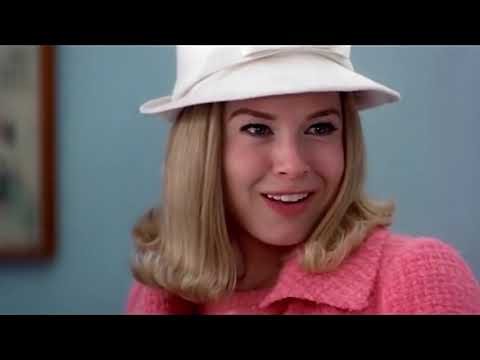
Overview
Can a modern romcom sound like 1962 without feeling like a museum? Down with Love answers with a wink and a horn stab. Marc Shaiman’s score leans into jazzy pastiche and bossa nova cool, while a crate-dug selection of standards (“Fly Me to the Moon,” “Down with Love”) frames Peyton Reed’s candy-colored send-up of Doris Day/Rock Hudson sex comedies. The result is a soundtrack that functions as both homage and punchline: suave, fizzy, and relentlessly in on the joke.
The official album, Down with Love (Music from and Inspired by the Motion Picture), blends Shaiman’s bright, brassy cues with era-appropriate recordings by Astrud Gilberto, Frank Sinatra with Count Basie, Xavier Cugat, and new crooner cuts by Michael Bublé. Two anchors define the film’s musical identity: Judy Garland’s TV performance of “Down with Love,” imported diegetically via a period broadcast, and the original end-credit duet “Here’s to Love” sung onscreen by Renée Zellweger and Ewan McGregor. AllMusic and Apple Music confirm the compilation release in May 2003; the credits roll call lists multiple music supervisors to clear the era classics and shepherd the score.
Questions & Answers
- Is there an official soundtrack album?
- Yes. Down with Love (Music from and Inspired by the Motion Picture) was released in May 2003 on Reprise/WEA; it mixes score and period-style songs.
- Who composed the score?
- Marc Shaiman composed the score. His cues (“Barbara Arrives,” “Girls Night Out,” “Barbara Meets Zip”) mirror early-’60s studio jazz and lounge orchestration.
- What song plays in the split-screen “getting ready” sequence?
- Astrud Gilberto’s “Fly Me to the Moon” underscores Barbara’s side; the sequence also weaves in Frank Sinatra’s big-band take during the cross-cut.
- What do Zellweger and McGregor sing over the end credits?
- They perform “Here’s to Love,” an original Shaiman/Wittman number staged as an onscreen duet during the closing credits.
- Is Judy Garland actually in the film’s music?
- Yes—her televised “Down with Love” appears diegetically on a period TV broadcast within the story.
- Who supervised the music?
- Music supervision credits include Chris Douridas, Darren Higman, and Laura Ziffren; Robert Kraft served as executive in charge of music.
- Where was the score recorded?
- Sessions were held on major Hollywood stages, including The Newman Stage at Twentieth Century Fox and Sony Pictures Studios.
Notes & Trivia
- “Here’s to Love” was added late—after the filmmakers realized their stars from Chicago and Moulin Rouge! could cap the film with a duet.
- Songwriters Marc Shaiman and Scott Wittman cameo in that number (pianist and bartender).
- The film cheekily uses a pink-tinted Regency logo and a vintage CinemaScope-style Fox fanfare to set the retro tone.
- Michael Bublé contributes fresh recordings (“Kissing a Fool,” “For Once in My Life”) alongside classics by Sinatra and Astrud Gilberto.
- The Judy Garland TV insert of “Down with Love” is used diegetically to goose Barbara’s book promotion inside the plot.
Genres & Themes
Jazz big-band & lounge: Brassy riffs, walking bass, and crisp ride cymbals signal boardroom bravado and sexual brinkmanship. The swaggering horn voicings double as a running joke about masculine posturing.
Bossa nova & cocktail pop: Astrud Gilberto’s intimate, close-mic delivery softens the film’s most overtly “sexy” gags; breathy vocals turn a wardrobe-prep montage into flirtatious suggestion rather than explicitness.
Standards as meta-commentary: Titles like “Down with Love” and “For Once in My Life” undercut the characters’ manifestos—song names become wry captions for Barbara’s and Catcher’s reversals.
Tracks & Scenes
“Down with Love” — Michael Bublé & Holly Palmer
Where it plays: Over the graphic, Saul Bass-style title sequence; non-diegetic. A statement of intent that sells the movie’s glossy artifice from frame one.
Why it matters: Introduces the film’s retro grammar and Shaiman’s pop-orchestra sheen; primes the audience for satire, not nostalgia-wallow.
“Fly Me to the Moon (In Other Words)” — Astrud Gilberto
Where it plays: The split-screen “getting ready” sequence as Barbara preps for her date; non-diegetic.
Why it matters: The soft bossa turns a risqué visual gag into airy innuendo, aligning Barbara’s poise with the period’s chic.
“Fly Me to the Moon (In Other Words)” — Frank Sinatra with Count Basie & His Orchestra
Where it plays: Intercut in the same cross-cut sequence on Catcher’s side; non-diegetic.
Why it matters: The punchy big-band arrangement sells Catcher’s swagger. (Fun note: critics have flagged the track’s timeline cheekily clashing with the film’s 1962 setting—very on brand for this parody.)
“Down with Love” — Judy Garland (television performance)
Where it plays: Diegetic insert on a period broadcast that Barbara and her publisher leverage for publicity.
Why it matters: The actual vintage performance collapses the gap between homage and source, letting the movie bask in authentic TV-era glamour.
“Here’s to Love” — Renée Zellweger & Ewan McGregor
Where it plays: Onscreen duet staged during the closing credits; diegetic to the number.
Why it matters: A victory-lap show tune that flips the title slogan—finally “up with love”—and caps the satire with Broadway-style closure.
Music–Story Links
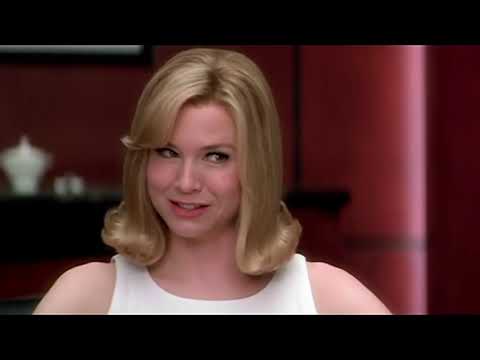
Gilberto’s whispery “Fly Me to the Moon” maps onto Barbara’s self-authored persona: controlled, sleek, a touch untouchable. The cross-cut to Sinatra/Basie announces Catcher’s shiny playboy branding—swagger at 120 BPM—just before the plot yanks that confidence away. Garland’s televised “Down with Love” functions as propaganda inside the narrative—Barbara’s thesis turned into a sing-along. And the bespoke closer “Here’s to Love” literalizes détente: the leads stop posturing and sing the same tune.
How It Was Made
Composer Marc Shaiman built a period-correct palette (piccolo trumpets, crisp sax voicings, brushed kit, vibraphone) and recorded on A-list scoring stages (notably The Newman Stage). Music supervisors Chris Douridas, Darren Higman, and Laura Ziffren wrangled a mix of catalogue classics and newly cut performances; Reprise/WEA issued the album. The show-stopping closer, “Here’s to Love,” came late in post—conceived once it clicked that two recent movie-musical headliners could credibly carry a big finish. The New Yorker later singled out how the soundtrack’s cheek dovetails with the movie’s saucy split-screen choreography.
Reception & Quotes
Contemporary reviews were mixed on the film, warm on the craft: critics praised the music’s wit and period verisimilitude. Over time the soundtrack has been folded into the movie’s growing cult reputation. The New York Times later championed its meta-romcom bite.
“A headlong exercise in retro style… with the split-screen gags pushed to delirium.” The New Yorker
“One sequence is nothing short of sublime… Novak sails around her flat with Astrud Gilberto as her soundtrack.” Salon
“Zellweger and McGregor close with a frisky pastiche show tune.” AllMusic
Additional Info
- The Reprise/WEA album couples Shaiman cues with Astrud Gilberto and Sinatra/Basie; regional listings sometimes vary by a track.
- Bublé’s “Kissing a Fool” and “For Once in My Life” (fresh recordings) align the compilation with early-’60s crooner aesthetics.
- Score and source tracks were cut/mixed on major Hollywood stages; credits list choir direction and period-style instrumental chairs typical of big-band dates.
- “Here’s to Love” credits: music by Marc Shaiman; lyrics by Scott Wittman; performed by Zellweger & McGregor; with music executives Geoff Bywater and Julia Michels among the album contributors.
- Judy Garland’s vintage “Down with Love” is used in-story as broadcast media—an elegant rights and narrative two-fer.
Technical Info
- Title: Down with Love (Music from and Inspired by the Motion Picture)
- Year: 2003 (film and album)
- Type: Compilation soundtrack (score + standards)
- Composer: Marc Shaiman
- Music Supervision: Chris Douridas; Darren Higman; Laura Ziffren
- Label: Reprise Records / WEA
- Album Release: May 2003 (retail/streaming)
- Recording: The Newman Stage (20th Century Fox); Sony Pictures Studios
- Selected notable placements: Opening titles — “Down with Love” (Bublé & Palmer); Split-screen prep — “Fly Me to the Moon” (Gilberto/Sinatra); TV insert — Judy Garland “Down with Love”; End credits — “Here’s to Love”.
Canonical Entities & Relations
| Subject | Relation | Object |
|---|---|---|
| Marc Shaiman | composed score for | Down with Love (film) |
| Reprise Records | released | Down with Love (Music from and Inspired by the Motion Picture) |
| Astrud Gilberto | recording featured in | split-screen sequence (“Fly Me to the Moon”) |
| Frank Sinatra & Count Basie | recording featured in | split-screen sequence (“Fly Me to the Moon”) |
| Renée Zellweger & Ewan McGregor | perform | “Here’s to Love” (end-credits duet) |
| Judy Garland | televised performance used in | diegetic TV insert (“Down with Love”) |
| Chris Douridas / Darren Higman / Laura Ziffren | supervised music for | Down with Love (film) |
Sources: AllMusic; Apple Music; IMDb; Wikipedia; The New Yorker; Salon; Rotten Tomatoes Classic Trailers.
November, 09th 2025
A-Z Lyrics Universe
Cynthia Erivo Popular
Ariana Grande Horsepower
Post Malone Ain't No Love in Oklahoma
Luke Combs Good Riddance (Time of Your Life)
Green Day Bye Bye Bye
*NSYNC You're the One That I Wan
John Travolta & Olivia Newton-John I Always Wanted a Brother
Braelyn Rankins, Theo Somolu, Kelvin Harrison Jr. and Aaron Pierre The Power of Love
Frankie Goes to Hollywood Beyond
Auli’i Cravalho feat. Rachel House MORE ›