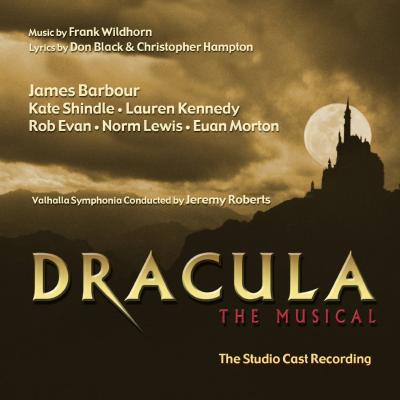
"Dracula The Musical" Soundtrack Lyrics
Musical • 2005
Track Listing
"Dracula the Musical — The Studio Cast Recording" Soundtrack Description
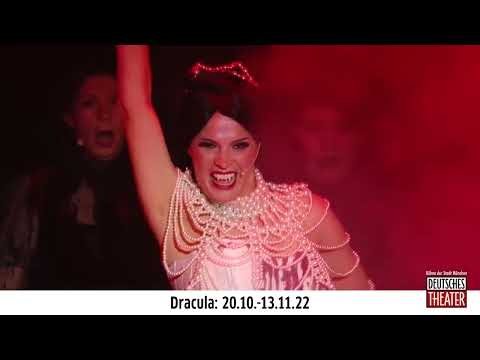
Overview
Can a vampire musical live on as a studio album? This one does. “Dracula the Musical — The Studio Cast Recording” distills Frank Wildhorn’s gothic pop theatrics into a tight, 45-minute listen: soaring ballads, ominous chorales, and melodrama sharpened for headphones. It’s not a live cast album; it’s a purpose-built studio concept set, recorded in 2005 and released digitally in 2011, with Broadway-caliber voices shaping a cleaner, more cinematic version of the score.
The sound is muscular but glossy: big melody lines, rock-leaning drums, and orchestral swells. The record also folds in material from the revised European stage versions, so you hear songs that weren’t in the 2004 Broadway run. Playbill and IBDB document how the show evolved; this album captures that shift in a compact form. It’s the clearest way to experience the score end-to-end without staging or effects, which helps the story beats—seduction, grief, pursuit—land in pure musical terms.
Questions & Answers
- Is there an official album for this musical?
- Yes. A studio “concept” recording (recorded 2005; released June 6, 2011) on GlobalVision Records. A German-language Graz festival cast album arrived earlier (2008).
- Who wrote the music and lyrics?
- Music by Frank Wildhorn; book and lyrics by Don Black & Christopher Hampton.
- Which singers headline the studio recording?
- James Barbour (Dracula), Kate Shindle (Mina), Lauren Kennedy (Lucy), Rob Evan (Jonathan), Norm Lewis (Van Helsing), Euan Morton (Renfield).
- What’s different vs. the 2004 Broadway show?
- The album incorporates revisions and several songs that weren’t used on Broadway (e.g., “Please Don’t Make Me Love You”), with new orchestrations.
- Where can I hear it?
- Widely available on major streaming stores/services; a 2005 CD issue exists under Global Vision Records cataloging.
- Is this a live cast recording?
- No. It’s a studio build of the score (new orchestrations, symphonic players), not a live performance capture.
Notes & Trivia
- The Broadway production ran 157 performances and 22 previews at the Belasco Theatre.
- After Broadway closed (Jan 2005), a heavily revised European version premiered in St. Gallen in April 2005 with a 40-piece orchestra.
- The studio album’s orchestrations are new for the recording and conducted with symphonic forces rather than a pit-band mix.
- Cataloging on discography databases lists the CD as Global Vision Records GVR-CD-0005 (2005 issue); digital release followed in 2011.
- Several album songs (“Please Don’t Make Me Love You,” etc.) trace to the European revisions, not to the 2004 Broadway setlist.
Genres & Themes
Gothic pop-rock + symphonic sweep: rock drums and electric bass under string-forward arrangements give Dracula grandeur without losing drive.
Power ballads as seduction/confession: Mina and Dracula’s big ballads frame temptation as fated romance, reinforcing the show’s “doomed love” angle.
Asylum patter & irony: comic-macabre numbers (Renfield’s “The Master’s Song”) ventilate the score and sketch the Victorian medical frame.
Tracks & Scenes
"Prologue / Over Whitby Bay" — Studio Cast
Where it plays: Opening tableau; Harker’s journey contrasts with Mina’s coastal reminiscence. Integrated musical number.
Why it matters: Establishes the diary/letter mood and plants Mina–Jonathan as the moral baseline before the Count appears.
"Fresh Blood" — Studio Cast
Where it plays: Act I, Castle Dracula; after the Brides’ “Forever Young,” Dracula escalates his hunger with Harker present. Integrated.
Why it matters: Defines the predator ethos; it’s the show’s mission statement for Dracula’s appetite.
"The Master’s Song" — Studio Cast
Where it plays: Act I, asylum; Renfield’s manic allegiance sparring with Dr. Seward. Integrated with patter/choral bursts.
Why it matters: Introduces the Master–servant link and the London setting’s clinical lens.
"The Mist" — Studio Cast
Where it plays: Act I; Lucy’s solo of longing just before the seductions begin. Integrated ballad.
Why it matters: Foreshadows her vulnerability and the show’s sensual horror tone.
"A Perfect Life" — Studio Cast
Where it plays: Act I; Mina’s earnest pre-wedding vision. Integrated ballad.
Why it matters: Dramatic irony—her “perfect” plan will collide with supernatural desire.
"Life After Life" — Studio Cast
Where it plays: Act I climax; Dracula and Lucy in the crypt/turning sequence. Integrated duet/anthem.
Why it matters: The vampiric credo—immortality framed as “reward”—and a musical peak of menace.
"Please Don’t Make Me Love You" — Studio Cast
Where it plays: Act II; Mina’s plea to resist destiny (a revision-era addition). Integrated ballad.
Why it matters: Rewrites Mina as an active moral agent, not just a victim.
"Before the Summer Ends" — Studio Cast
Where it plays: Act II; Jonathan’s vow after the losses mount. Integrated solo.
Why it matters: Human stakes return—grief to action—countering the Count’s allure.
"The Heart Is Slow to Learn" — Studio Cast
Where it plays: Act II; Mina’s introspection about temptation vs. duty. Integrated ballad.
Why it matters: Underscores the central paradox: knowledge doesn’t free the heart.
"Deep in the Darkest Night" — Studio Cast
Where it plays: Act II hunt sequence; Van Helsing and company take up the crusade. Integrated ensemble.
Why it matters: Turns the narrative into a pursuit thriller; harmony = alliance.
"The Longer I Live" — Studio Cast
Where it plays: Late Act II; Dracula’s self-reckoning. Integrated solo.
Why it matters: Adds tragic shading—immortality as burden, not boast.
"At Last" / "Finale: There’s Always a Tomorrow" — Studio Cast
Where it plays: Endgame and epilogue. Integrated duet/Finale.
Why it matters: Resolves the love/death dialectic and mirrors the show’s recurring melodic cells.
Music–Story Links
Renfield’s patter (“The Master’s Song”) places the London plotline inside the asylum, so when “Deep in the Darkest Night” arrives, the science-vs-superstition fight has a sonic anchor. Mina’s arc is bracketed: “A Perfect Life” (duty) → “Please Don’t Make Me Love You” (temptation) → “The Heart Is Slow to Learn” (acceptance of ambiguity). Dracula’s material (“Fresh Blood,” “The Longer I Live”) moves from predatory certainty to fatal reflection, so the finale reads as tragic romance, not simple vanquishing.
How It Was Made
Writers & direction (stage): Music by Frank Wildhorn; lyrics/book by Don Black & Christopher Hampton. The 2004 Broadway production at the Belasco was directed by Des McAnuff; orchestrations by Doug Besterman; music director Constantine Kitsopoulos.
Studio album build: Recorded in 2005 and released digitally in 2011 as a “concept” album with fresh orchestrations by Jeremy Roberts (conducting symphonic forces). The studio cast features James Barbour, Kate Shindle, Lauren Kennedy, Rob Evan, Norm Lewis, and Euan Morton.
Revisions: After Broadway closed, a major 2005 St. Gallen premiere introduced additional songs and larger orchestral forces; the 2008 Graz festival issued the first cast recording of the revised version. Playbill is a reliable chronicle of the album’s release; IBDB documents the Broadway credits.
Reception & Quotes
Critical response to the 2004 Broadway staging was harsh, while later European revisions fared better with audiences. The studio album benefits from the cleaned-up orchestrations and top-line singers.
“A crippling case of anemia is the last thing you’d expect from a musical about literature’s most celebrated vampire.” Variety
“From its opening moments… this is a painfully bad show.” CurtainUp
“Ranks as one of the saddest and most dispiriting Broadway shows in years.” Talkin’ Broadway
Availability note: The studio album streams widely; the 2008 German-language cast (Graz) is available separately.
Additional Info
- Digital album release date: June 6, 2011 (15 tracks; ~45–46 minutes).
- AllMusic lists catalog details (GlobalVision GVRCD 005) and recording venue (Studio 276).
- “Please Don’t Make Me Love You” and “The Heart Is Slow to Learn” are studio-album highlights for Mina’s arc.
- “Life After Life” functions as Act I’s vampiric credo; it’s frequently cited and covered beyond the show.
- German-language releases (e.g., Graz festival) reflect the revised text/orchestrations that later productions licensed.
- IBDB confirms Broadway design team: Heidi Ettinger (scenery), Catherine Zuber (costumes), Howell Binkley (lighting).
- Renfield’s material often doubles as comic relief on stage; on album it reads as character exposition.
Technical Info
- Title: Dracula the Musical — The Studio Cast Recording
- Year: 2011 release (recorded 2005)
- Type: Studio “concept” album for stage musical
- Composers / Writers: Frank Wildhorn (music); Don Black & Christopher Hampton (book/lyrics)
- Principal Performers (studio): James Barbour; Kate Shindle; Lauren Kennedy; Rob Evan; Norm Lewis; Euan Morton
- Orchestrations (album): Jeremy Roberts (studio re-orchestrations & conducting)
- Orchestrations (Broadway 2004): Doug Besterman; Music Director: Constantine Kitsopoulos
- Label: GlobalVision Records (catalog GVR-CD-0005)
- Release context: Post-Broadway revisions premiered in Europe in 2005; album integrates revised material
- Availability / Formats: Digital (major platforms); CD issue traced to 2005 label cataloging
Canonical Entities & Relations
| Subject | Relation | Object |
|---|---|---|
| Frank Wildhorn | composed | Dracula, the Musical |
| Don Black | wrote lyrics/book for | Dracula, the Musical |
| Christopher Hampton | wrote lyrics/book for | Dracula, the Musical |
| Des McAnuff | directed | Broadway production (2004) |
| Doug Besterman | orchestrated | Broadway production (2004) |
| Jeremy Roberts | orchestrated & conducted | Studio Cast Recording (2011) |
| GlobalVision Records | released | Studio Cast Recording (2011) |
| James Barbour | performed as | Dracula (studio recording) |
| Kate Shindle | performed as | Mina (studio recording) |
| Norm Lewis | performed as | Van Helsing (studio recording) |
| Bram Stoker | wrote | Dracula (1897 novel) |
Sources: Playbill; IBDB; Wikipedia; AllMusic; Discogs; musical1.de; Musik und Bühne; Variety; CurtainUp; Talkin’ Broadway; Apple Music; Spotify.
November, 09th 2025
A-Z Lyrics Universe
Cynthia Erivo Popular
Ariana Grande Horsepower
Post Malone Ain't No Love in Oklahoma
Luke Combs Good Riddance (Time of Your Life)
Green Day Bye Bye Bye
*NSYNC You're the One That I Wan
John Travolta & Olivia Newton-John I Always Wanted a Brother
Braelyn Rankins, Theo Somolu, Kelvin Harrison Jr. and Aaron Pierre The Power of Love
Frankie Goes to Hollywood Beyond
Auli’i Cravalho feat. Rachel House MORE ›