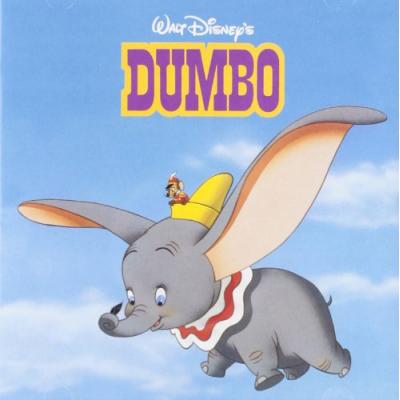
"Dumbo" Soundtrack Lyrics
Cartoon • 1997
Track Listing
"Walt Disney’s Dumbo (Classic Soundtrack Series)" Soundtrack Description
Overview
A puzzle with a simple answer: the user year (1997) points not to a new “cartoon,” but to the definitive CD restoration of the 1941 film’s soundtrack—Walt Disney’s Dumbo (Classic Soundtrack Series). That 1997 edition assembles songs and score as heard in the feature, removes most effects/overdubs, and adds archival bonuses.
The musical spine remains Frank Churchill and Oliver Wallace’s score with lyrics by Ned Washington. “Baby Mine” became the film’s signature ballad; “Pink Elephants on Parade” and “When I See an Elephant Fly” anchor its surreal and jazzy sides. The movie won the Academy Award for Best Scoring of a Musical Picture; “Baby Mine” was nominated for Best Original Song. (Trusted sources referenced: Wikipedia; Oscars.org; VGMdb.)
Questions & Answers
- So is “Dumbo (1997)” a new film?
- No. The film is from 1941. In 1997 Walt Disney Records issued the restored Classic Soundtrack Series CD with bonus material.
- Who wrote the music and lyrics?
- Music by Frank Churchill and Oliver Wallace; lyrics by Ned Washington.
- Who sings “Baby Mine” in the film?
- Betty Noyes (offscreen vocal), over Mrs. Jumbo’s cradle scene.
- What’s special about the 1997 CD?
- It restores/extends cues from the film, adds the brief “Clown Song,” and closes with the archival demo “Spread Your Wings.”
- Did the score win awards?
- Yes—Academy Award for Best Scoring of a Musical Picture; “Baby Mine” was an Oscar nominee for Best Original Song.
- Is the album streaming?
- Yes. Dumbo’s soundtrack appears on major platforms; track listings mirror the 1997 program with minor regional variations.
Notes & Trivia
- 1997 Classic Soundtrack Series (Walt Disney Records) was produced as a restoration-first release; producer credit: Randy Thornton.
- “Clown Song” appears on the 1997 CD although it’s only a brief gag in the film.
- “Spread Your Wings” (demo) closes the 1997 disc—likely an Oliver Wallace keyboard sketch without surviving lyrics.
- Sound team used the Sonovox for a synthesized “voice”—famously associated with the train motif.
- Trusted sources named: Wikipedia; Oscars.org; VGMdb; Disney Wiki; Cartoon Research.
Genres & Themes
Golden-Age studio songcraft: Tin Pan Alley melody-writing fitted to precise story beats (Churchill/Wallace/Washington).
Circus march & Americana: snare-and-brass “parade” cues (Casey Junior; “Circus Parade”) define the traveling world.
Jazz & novelty: “When I See an Elephant Fly” leans into 40s wordplay; “Pink Elephants” goes full surreal swing.
Tracks & Scenes
“Look Out for Mister Stork” — Studio Chorus
Where it plays: Opening delivery montage as storks bring babies to the menagerie; non-diegetic song.
Why it matters: Establishes storybook gentleness before the circus bustle.
“Casey Junior” — Studio Chorus
Where it plays: The circus train sequence (and reprises during travel); non-diegetic song tied to the train’s “I think I can” rhythm.
Why it matters: Motif for movement; the film’s metronome.
“Song of the Roustabouts” — Men’s Chorus (The King’s Men)
Where it plays: Tent-raising work montage in wind and rain; non-diegetic chorus.
Why it matters: Hammer-strike rhythm sells labor and weather; the lyrics’ dated stereotypes are now widely criticized.
“Baby Mine” — Betty Noyes (offscreen)
Where it plays: Mrs. Jumbo cradles Dumbo through the bars; non-diegetic lullaby overlay.
Why it matters: The emotional center; Oscar-nominated song.
“Pink Elephants on Parade” — The Sportsmen
Where it plays: After Dumbo and Timothy drink spiked water; hallucination sequence; non-diegetic set-piece.
Why it matters: Bold visual-music experiment; elastic rhythm, brass, and chant.
“When I See an Elephant Fly” — Cliff Edwards & Hall Johnson Choir
Where it plays: The crows’ hillside scene coaching Dumbo; diegetic song-and-dance with wordplay.
Why it matters: Jazz feel plus puns; the turning point before flight.
“Circus Parade” — Orchestra
Where it plays: Daytime midway shots and crowd transitions; non-diegetic instrumental.
Why it matters: Brass-and-snare “main street” color between story beats.
“Clown Song” — Clowns Ensemble
Where it plays: Backstage gag where clowns joke about asking the boss for a raise; diegetic snatch.
Why it matters: 1997 CD finally isolates this micro-cue.
“Spread Your Wings” — (Oliver Wallace demo)
Where it plays: Not in film; archival keyboard sketch included on the 1997 CD.
Why it matters: A rare window into tune development outside the released picture.
Music–Story Links
Travel cues (“Casey Junior,” “Circus Parade”) pace the plot like chapter breaks. “Baby Mine” compresses character history into one lullaby. “Pink Elephants” externalizes a state of mind—fear + wonder—without dialogue. The crow chorus flips mockery into mentorship; music is the hinge.
How It Was Made
Composers: Frank Churchill, Oliver Wallace. Lyrics: Ned Washington. Orchestrations: Edward Plumb. Vocal forces: Betty Noyes (“Baby Mine”); Cliff Edwards with the Hall Johnson Choir (“When I See an Elephant Fly”); The Sportsmen (“Pink Elephants”); The King’s Men (“Roustabouts”). The 1997 CD restoration (Walt Disney Records) standardizes clean film-derived elements and adds two archival curios.
Reception & Quotes
Contemporary and retrospective notices consistently single out the music’s economy and impact.
“One of Walt Disney’s most charming animated films.” Leonard Maltin (via Wikipedia)
“Won the award for Music – Scoring of a Musical Picture.” Academy of Motion Picture Arts and Sciences
“One of Disney’s most economical animated works.” Los Angeles Times
Availability: The 1997 program underpins most modern digital releases. Physical pressings exist in multiple territories; streaming editions present the canonical sequence.
Additional Info
- Album identity: Walt Disney’s Dumbo (Classic Soundtrack Series), Walt Disney Records, 1997 (CD; later digital).
- Archival scope: 1997 program adds “Clown Song” and the demo “Spread Your Wings.”
- Awards context: Oscar win (score) and song nomination (“Baby Mine”).
- Vocal credits: Hall Johnson Choir features on “Elephant Fly”; The Sportsmen on “Pink Elephants.”
- Sound tech: production-era Sonovox effect famously tied to the train “voice.”
- Later echoes: “Baby Mine” has been repeatedly covered (including 2019’s remake end-credits).
Technical Info
- Title: Walt Disney’s Dumbo (Classic Soundtrack Series)
- Year: 1997 CD restoration (film: 1941)
- Type: Original songs & score from the 1941 feature; restored/expanded
- Composers: Frank Churchill; Oliver Wallace
- Lyricist: Ned Washington
- Key songs (film): “Look Out for Mister Stork”; “Casey Junior”; “Song of the Roustabouts”; “Baby Mine”; “Pink Elephants on Parade”; “When I See an Elephant Fly”
- Label: Walt Disney Records (U.S. catalog 60949-7)
Canonical Entities & Relations
| Subject | Relation | Object |
|---|---|---|
| Frank Churchill | composed | Dumbo (1941) score & songs |
| Oliver Wallace | composed | Dumbo (1941) score & songs |
| Ned Washington | wrote lyrics for | songs in Dumbo (1941) |
| Edward Plumb | orchestrated | Dumbo (1941) score |
| Betty Noyes | performed | “Baby Mine” (film vocal) |
| Cliff Edwards & Hall Johnson Choir | performed | “When I See an Elephant Fly” |
| The Sportsmen | performed | “Pink Elephants on Parade” |
| The King’s Men | performed | “Song of the Roustabouts” |
| Walt Disney Records | released | Dumbo (Classic Soundtrack Series) CD (1997) |
| Walt Disney Productions | produced | Dumbo (1941 film) |
Sources: Wikipedia; Oscars.org; VGMdb; Discogs; Disney Wiki; Apple Music; Spotify; Cartoon Research; Los Angeles Times.
November, 09th 2025
A-Z Lyrics Universe
Cynthia Erivo Popular
Ariana Grande Horsepower
Post Malone Ain't No Love in Oklahoma
Luke Combs Good Riddance (Time of Your Life)
Green Day Bye Bye Bye
*NSYNC You're the One That I Wan
John Travolta & Olivia Newton-John I Always Wanted a Brother
Braelyn Rankins, Theo Somolu, Kelvin Harrison Jr. and Aaron Pierre The Power of Love
Frankie Goes to Hollywood Beyond
Auli’i Cravalho feat. Rachel House MORE ›