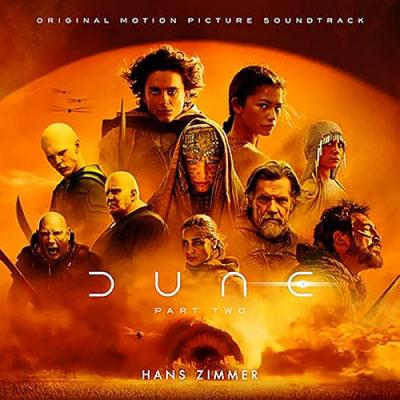
"Dune: Part Two (Original Motion Picture Soundtrack)" Soundtrack Description

Overview
How do you make the desert sing—again—but different? Hans Zimmer’s second-leg score answers by sharpening contrasts: Fremen heat and breath; Harkonnen metal and void; imperial gravitas at the edges. The album Dune: Part Two (Original Motion Picture Soundtrack) arrived a week before release, carrying 25 cues built for scale and sand-whisper detail. (Trusted source: WaterTower Music.)
The music extends ideas from Part One but adds clearer leitmotifs: a tender, dangerously swelling love theme for Paul and Chani; a snarling cello contour for Feyd-Rautha; Bene Gesserit whisper-rituals for Jessica’s ascent. It’s largely score—no pop needle-drops—so every big image rides a corresponding sound design choice: breath-led vocals, engineered winds, hammered metals, and sudden guitar/pipe color. (Trusted sources: RogerEbert.com; Movie Music UK.)

Questions & Answers
- Is there an official soundtrack album and when did it release?
- Yes. Dune: Part Two (Original Motion Picture Soundtrack) released February 23, 2024 on WaterTower Music, one week ahead of the U.S. theatrical opening.
- Who composed the score?
- Hans Zimmer returned; the album is produced by Zimmer.
- Are there licensed songs, or is it all score?
- It’s essentially all original score. The film leans on vocal textures and percussive design rather than pop cues.
- What tracks cover the signature set pieces?
- Examples: “Harvester Attack” (assault on a spice operation), “Worm Ride” (Paul’s first mounting), “Harkonnen Arena” (Giedi Prime fight), “You Fought Well” (final duel), “Only I Will Remain” (end credits).
- Who are the featured soloists and vocal forces?
- Key contributors include Loire Cotler (featured vocals), Pedro Eustache (world winds), Guthrie Govan (guitar), Tina Guo and Mariko Muranaka (electric cello), London Voices (choir).
- Did the score win or lose any major awards?
- It won the 2025 GRAMMY for Best Score Soundtrack; it was ruled ineligible for the 2025 Oscars under the Academy’s sequel-score rules, but competed at Globes/Critics’ Choice.
- Who handled music supervision on the film?
- Primary supervision credits include Peter Afterman and colleagues; Zimmer’s team also lists multiple music editors and additional composers.
Notes & Trivia
- Two singles—“A Time of Quiet Between the Storms” and “Harvester Attack”—dropped on Feb 15, 2024 as teasers. (Trusted source: WaterTower Music.)
- Loire Cotler’s voice (prominent in Part One) again fronts several climactic moments; the approach was profiled widely. (Trusted source: Vanity Fair.)
- Pedro Eustache built oversized winds (including a contrabass duduk) for the sonic palette; metal sculptor Chas Smith supplied “instruments” to bow/strike.
- Electric guitar and bagpipes appear sparingly but tellingly—heritage colors for Atreides and for moments of personal resolve.
- Physical editions followed in spring 2024 on CD/LP after the digital drop.
Genres & Themes
Breath-led vocals & ritual percussion — Fremen interiority and faith; intimacy that can harden into battle-calls.
Metallic/industrial timbres — Harkonnen coldness; cello and processed metals snarl in “Harkonnen Arena” and “Seduction.”
Duduk, low winds, and drones — desert vastness; Paul/Chani’s love theme floats on duduk before turning ominous when power intrudes.
Hybrid ensemble (guitar, pipes, synth) — imperial spectacle and Atreides identity, surfacing in arrivals, speeches, and end titles.
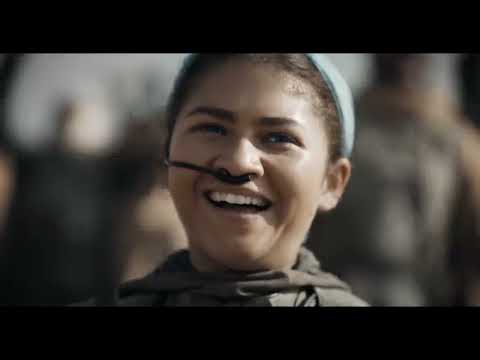
Tracks & Scenes
“Beginnings Are Such Delicate Times” — Hans Zimmer
Scene: Early reels establish the desert struggle and the Paul–Chani bond; the cue introduces the sequel’s expanded love theme. Non-diegetic.
Why it matters: Sets emotional stakes before tactics—tenderness that later curdles as messianic weight grows.
“Eclipse” — Hans Zimmer
Scene: War drums and choral surges frame impending offensives under a literal eclipse. Non-diegetic.
Why it matters: A pressure front; Zimmer signals scale with chest-rattling low end.
“The Sietch” — Hans Zimmer
Scene: Life inside the Fremen stronghold; ritual, scarcity, and whispers around Jessica’s influence. Non-diegetic with chant-like textures.
Why it matters: Breath and close mic’ing make politics feel physical.
“Water of Life” — Hans Zimmer
Scene: Jessica’s transformation sequence and its aftermath. Non-diegetic, voice-forward sound design.
Why it matters: Mystic horror; the score turns initiation into sonic vertigo.
“Harvester Attack” — Hans Zimmer
Scene: Strike on a spice operation—thopters, chaos, sand spray. Non-diegetic.
Why it matters: One of the album’s clean hit-and-run action builds; recurring war-cries punctuate momentum.
“Worm Ride” — Hans Zimmer
Scene: Paul’s first true mounting of Shai-Hulud. Non-diegetic with vocal exclamations as texture.
Why it matters: Rite of passage rendered as rhythm and breath.
“Ornithopter Attack” — Hans Zimmer
Scene: Mid-film aerial ambush and pursuit. Non-diegetic.
Why it matters: Percussive engine-cycles mirror wingbeats; a mechanical dance that tips into dread.
“Each Man Is a Little War” — Hans Zimmer
Scene: Feyd-Rautha’s pre-arena preparation on Giedi Prime. Non-diegetic, intimate menace.
Why it matters: Character study in two minutes—predation set to scraped metals.
“Harkonnen Arena” — Hans Zimmer
Scene: The gladiatorial set-piece on Giedi Prime. Non-diegetic with crowd/ritual layers.
Why it matters: The score’s most overt “metal” sound world; brutality as theatre.
“Resurrection” — Hans Zimmer
Scene: A pivotal survival turns into something darker than triumph. Non-diegetic with shouted figures.
Why it matters: Reframes victory as fearful inevitability.
“Southern Messiah” — Hans Zimmer
Scene: The southern coalition sequence as Paul’s image swells. Non-diegetic, processional.
Why it matters: Faith and strategy braid; motif turns from love to leadership.
“The Emperor” — Hans Zimmer
Scene: Imperial presence enters the board. Non-diegetic.
Why it matters: Brass weight and ceremonial cadence—power has a timbre.
“Worm Army” — Hans Zimmer
Scene: Desert rises in synchronized fury near the climax. Non-diegetic with war-cries.
Why it matters: Tectonic percussion + choral shouts = visual-sonic fuse.
“Gurney Battle” — Hans Zimmer
Scene: A seasoned warrior’s charge folds into the larger assault. Non-diegetic.
Why it matters: Grit motif for an old friend; short but flinty.
“You Fought Well” — Hans Zimmer
Scene: The final knife duel. Non-diegetic.
Why it matters: Cello figures connect fate threads; victory stings.
“Kiss the Ring” — Hans Zimmer
Scene: Post-duel reckoning and political sealing. Non-diegetic.
Why it matters: Love theme echoes, now burdened—beauty shadowed by consequence.
“Only I Will Remain” / “Lisan al Gaib” — Hans Zimmer
Scene: End credits suite. Non-diegetic.
Why it matters: Summative arc—tender to terrible, personal to prophetic.
Music–Story Links
The score keeps tying feeling to fate. Paul/Chani’s melody begins as sanctuary (“Beginnings…”, “A Time of Quiet Between the Storms”), then swells into public ritual (“Southern Messiah”) and finally into power rhetoric (“Kiss the Ring”). Giedi Prime cues trade human breath for metal scrape, marking Feyd’s world as anti-Fremen. Cry-like shouts in “Worm Ride” and “Worm Army” translate belief into kinetic motion—faith literally moves sand.
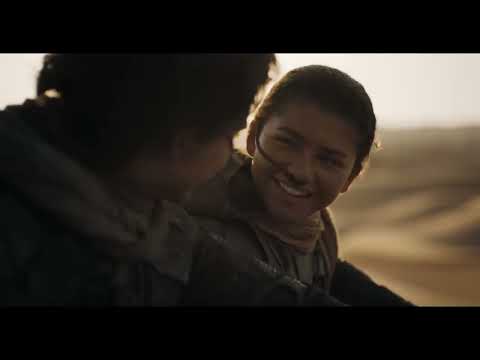
How It Was Made
Team & tools. Composer/producer: Hans Zimmer. Featured vocals: Loire Cotler. Winds: Pedro Eustache (including contrabass duduk). Guitars: Guthrie Govan. Electric cello: Tina Guo, Mariko Muranaka. Choir direction: Ben Parry; London Voices. Music editors: Clint Bennett, Ryan Rubin. Scoring mixer: Alan Meyerson. Additional music: David Fleming, Steve Mazzaro, Andrew Kawczynski, Omer Benyamin, Steven Doar. Music supervision (among others): Peter Afterman, Deric Berberabe, Alison Litton, Carmen Murlaner.
Instrument design. Oversized winds and metal sculptures—built and bowed/struck—extend the Part One “invent new instruments” ethos. Zimmer’s camp treats breath, metal, and sand as co-equal instrument families. (Trusted sources: Vanity Fair; Movie Music UK.)
Reception & Quotes
Critical reaction singled out the score’s culture-coding and impact; awards bodies did too.
“Hans Zimmer… smartly differentiates the cultures here… metallic sounds for the cold Harkonnens… heated score for the Fremen.” RogerEbert.com
“Hans Zimmer’s powerful score complements the film’s themes of political upheaval and impending warfare.” The Guardian
Awards snapshot: GRAMMY win (Best Score Soundtrack for Visual Media); Golden Globes and Critics’ Choice nominations; Oscar ineligibility under the Academy’s sequel-score reuse rule. (Trusted source: Variety.)
Additional Info
- Two advance singles (Feb 15, 2024) previewed the sound world; full album dropped Feb 23.
- CD/LP editions followed in late May 2024; specialty retailers handled early pressings.
- The love theme is a development of Atreides material heard in Part One’s releases—now reframed for Paul/Chani.
- Lisa Gerrard and other vocalists appear in the credits alongside Cotler for select textures.
- Bagpipes (Scottish Session Orchestra) and electric guitar color a handful of cues for identity “flare.”
- The end-credits pair “Only I Will Remain” and “Lisan al Gaib” as a coda from intimacy to prophecy.
Technical Info
- Title: Dune: Part Two (Original Motion Picture Soundtrack)
- Year: 2024 (album release Feb 23; U.S. film release Mar 1)
- Type: Original score
- Composer/Producer: Hans Zimmer
- Key soloists/forces: Loire Cotler (featured vocals); Pedro Eustache (winds); Guthrie Govan (guitar); Tina Guo, Mariko Muranaka (electric cello); London Voices (choir)
- Music Supervision (select): Peter Afterman; Deric Berberabe; Alison Litton; Carmen Murlaner
- Label: WaterTower Music
- Notable placements: “Harvester Attack” (spice raid), “Worm Ride” (first mounting), “Harkonnen Arena” (Giedi Prime fight), “You Fought Well” (final duel), “Only I Will Remain” (end credits)
- Awards: GRAMMY winner (2025, Best Score Soundtrack); Oscar-ineligible under reuse rule; multiple nominations elsewhere
Canonical Entities & Relations
| Subject | Relation | Object |
|---|---|---|
| Hans Zimmer | composed/produced | Dune: Part Two (Original Motion Picture Soundtrack) |
| WaterTower Music | released | Album (digital Feb 23, 2024; CD/LP later) |
| Loire Cotler | featured vocals on | Selected cues in Dune: Part Two score |
| Pedro Eustache | performed | Duduk/world winds on the score |
| London Voices | performed | Choral parts |
| Ben Parry | directed | Choir sessions |
| Clint Bennett; Ryan Rubin | supervising music editors | Feature |
| Alan Meyerson | mixed | Score |
| Peter Afterman (and team) | music supervision | Feature |
| Dune: Part Two (film) | musicBy | Hans Zimmer |
Sources: WaterTower Music; Wikipedia; Metacritic (credits); Movie Music UK; Vanity Fair; RogerEbert.com; The Guardian; Discogs; Apple Music; Variety.
Track listing: Instrumental compositions. 1. "Beginnings Are Such Delicate Times" 8:56 2. "Eclipse" 5:13 3. "The Sietch" 2:34 4. "Water of Life" 3:06 5. "A Time of Quiet Between the Storms" 4:21 6. "Harvester Attack" 3:40 7. "Worm Ride" 2:19 8. "Ornithopter Attack" 2:10 9. "Each Man Is a Little War" 1:21 10. "Harkonnen Arena" 5:22 11. "Spice" 0:37 12. "Seduction" 2:02 13. "Never Lose Me" 1:16 14. "Travel South" 1:10 15. "Paul Drinks" 1:47 16. "Resurrection" 2:16 17. "Arrival" 1:40 18. "Southern Messiah" 5:22 19. "The Emperor" 1:38 20. "Worm Army" 3:33 21. "Gurney Battle" 2:25 22. "You Fought Well" 1:42 23. "Kiss the Ring" 3:12 24. "Only I Will Remain" 6:44 25. "Lisan al Gaib" 6:36November, 09th 2025
A-Z Lyrics Universe
Cynthia Erivo Popular
Ariana Grande Horsepower
Post Malone Ain't No Love in Oklahoma
Luke Combs Good Riddance (Time of Your Life)
Green Day Bye Bye Bye
*NSYNC You're the One That I Wan
John Travolta & Olivia Newton-John I Always Wanted a Brother
Braelyn Rankins, Theo Somolu, Kelvin Harrison Jr. and Aaron Pierre The Power of Love
Frankie Goes to Hollywood Beyond
Auli’i Cravalho feat. Rachel House MORE ›