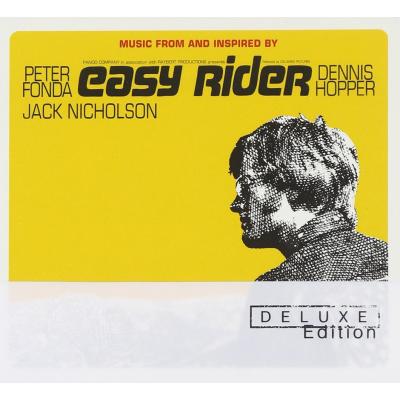
"Easy Rider" Soundtrack Lyrics
Movie • 2004
Track Listing
The Pusher
Steppenwolf
Smith
The Byrds
The Holy Modal Rounders
The Fraternity Of Man
Jimi Hendrix Experience
The Electric Prunes
Roger McGuinn
Roger McGuinn
The Seeds
Electric Prunes
Blues Magoos
Eric Burdon & The Animals
Jefferson Airplane
The Who
Procul Harum
The Young Rascals
Richie Havens
The Band
The Byrds
The Chambers Brothers
Joe Cocker
Blue Cheer
The Moody Blues
Sir Douglas Quintet
The Youngbloods
The Flying Burrito Brothers
Thunderclap Newman
"Easy Rider — 35th Anniversary Deluxe Edition" Soundtrack Description
Overview
Year check: the film is from 1969. The “2004” you often see refers to the 35th Anniversary Deluxe Edition—a remastered reissue of the classic soundtrack with a second disc (“Something in the Air: 1967–1969”) plus a DVD set that same fall. Trusted sources: Wikipedia, Discogs, DVDTalk.
The cue sheet is a template for the modern “jukebox score.” Instead of orchestra, Dennis Hopper and editor Donn Cambern stitched pre-existing rock and folk-rock onto the road movie’s spine: Steppenwolf’s blast-offs, The Byrds’ pastoral drift, Hendrix’s acid gravity, Roger McGuinn channeling Dylan. Licensing famously cost about three times the film’s budget; the bet paid off—artist identity and character psychology fuse every time the throttle opens. (See: Los Angeles Times; Wikipedia’s music section.)
Questions & Answers
- Is there a 2004 movie called Easy Rider?
- No—the feature is 1969. In 2004, the studio issued a 35th-anniversary DVD and a two-CD Deluxe Edition of the soundtrack.
- What exactly is on the 2004 Deluxe Edition?
- Disc 1 = the original 10-track 1969 album (remastered). Disc 2 (“Something in the Air: 1967–1969”) is a period sampler; most songs weren’t in the film. Label: Hip-O/UMe.
- Why does the album use Smith’s cover of “The Weight” instead of The Band’s original?
- Film uses The Band; the soundtrack LP couldn’t secure that master in 1969, so ABC-Dunhill commissioned Smith’s cover for the album.
- Which song scores the first full ride?
- “Born to Be Wild” — Steppenwolf. It’s the blast-off montage that defined the film’s sound.
- What plays at the campfire/café stretch?
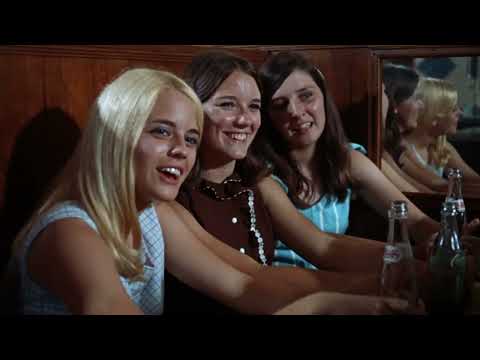
- Campfire: “Don’t Bogart Me” (Fraternity of Man). Café: “If 6 Was 9” (Jimi Hendrix Experience) underscoring small-town hostility; jukebox source: “Let’s Turkey Trot” (Little Eva).
- What’s used for the New Orleans/LSD sequence?
- The Electric Prunes’ “Kyrie Eleison / Mardi Gras (When the Saints)”—a disorienting sacred-psych collage for the cemetery trip.
- What closes the film?
- Roger McGuinn’s “Ballad of Easy Rider,” developed from a few lines Bob Dylan handed over; it rolls over the end credits.
Notes & Trivia
- The soundtrack helped mainstream the “curated pop score” model later used by Scorsese and Tarantino. (Los Angeles Times)
- Licensing reportedly cost about $1 million—triple the film’s budget. (Wikipedia—Music section)
- 2000: the original album came back in print (MCA). 2004: Deluxe Edition on Hip-O/UMe enlarged it with a second disc.
- In-film: The Band’s “The Weight.” On album: Smith’s cover due to rights at the time.
- “Wasn’t Born to Follow” is repeated—once for a forest ride, again for a skinny-dip near the commune. (Senses of Cinema)
Genres & Themes
Hard-rock ignition (Steppenwolf) — speed, autonomy, the rush before consequences.
Folk-rock & country-rock (The Byrds/McGuinn) — open-country lyricism; community vs. individual drift.
Psychedelic & acid-rock (Jimi Hendrix, The Electric Prunes) — perception shifts, dread under the high.
Rootsy Americana & barroom ephemera (Little Eva on jukebox, street players) — diegetic texture that grounds the trip.
Tracks & Scenes
“The Pusher” — Steppenwolf
Where it plays: Opening drug deal and getaway montage; non-diegetic.
Why it matters: Sets the moral weather—America’s hidden commerce funds the “freedom ride.” (Wikipedia; soundtrack histories.)
“Born to Be Wild” — Steppenwolf
Where it plays: First big ride sequence after the score; non-diegetic, iconic montage.
Why it matters: Defines velocity as character. (Ultimate Classic Rock; trailer context.)
“Wasn’t Born to Follow” — The Byrds
Where it plays: Forest ride; reprises by the hot-spring/skinny-dip near the commune; non-diegetic.
Why it matters: Pastoral freedom with an undercurrent of cosmic unease. (Senses of Cinema; Filmsite.)
“The Weight” — The Band (film) / Smith (album)
Where it plays: Road montage en route to the commune; non-diegetic.
Why it matters: The road as burden and refuge; the album swap is a famous licensing workaround. (Wikipedia soundtrack notes.)
“If You Want to Be a Bird (Bird Song)” — The Holy Modal Rounders
Where it plays: On the road with George Hanson; arms-out “flying” gag; non-diegetic turning psychological.
Why it matters: Whimsical freedom crests before the film turns dark. (Film scholarship and scene documentation.)
“Don’t Bogart Me” — Fraternity of Man
Where it plays: Campfire weed-sharing; diegetic vibe and then score-like.
Why it matters: Communal ritual, underscored with stoner etiquette. (Filmsite.)
“If 6 Was 9” — The Jimi Hendrix Experience
Where it plays: Café/diner stretch and road lead-in; non-diegetic counterculture-as-threat undertone.
Why it matters: Individualism against small-town conformity; the temperature drops. (Filmsite; official channels.)
“Kyrie Eleison / Mardi Gras (When the Saints)” — The Electric Prunes
Where it plays: New Orleans cemetery/LSD sequence; partly diegetic street ambience meets sacred-psych collage.
Why it matters: The trip turns catechism—ecstasy curdles into foreboding. (CultureSonar; Wikipedia soundtrack.)
“It’s Alright, Ma (I’m Only Bleeding)” — Roger McGuinn
Where it plays: Late-film reflective passages; non-diegetic.
Why it matters: Dylan’s words (via McGuinn) frame disenchantment, not triumph. (Film references; Wikipedia music notes.)
“Ballad of Easy Rider” — Roger McGuinn
Where it plays: End credits; non-diegetic.
Why it matters: A closing benediction born from a Dylan prompt, re-written by McGuinn. (LA Times; “Ballad of Easy Rider” entry.)
Music–Story Links
Steppenwolf’s blasts are masks—confidence on loan. The Byrds grant temporary grace, then Hendrix erodes it in the diner where the town turns hostile. The Electric Prunes sanctify and scramble the New Orleans trip, and McGuinn’s bookends (“It’s Alright, Ma…” → “Ballad…”) admit what the images finally say: freedom here costs everything.
How It Was Made
Song score, not orchestral score. Hopper and editor Donn Cambern temp-tracked rides with LPs; most temps stayed. Reported licensing outlay: ≈$1M. (Los Angeles Times; Wikipedia.)
Dylan & McGuinn. Dylan refused his own master; McGuinn recorded “It’s Alright, Ma” and built “Ballad of Easy Rider” from Dylan’s lines. (Wikipedia; “Ballad of Easy Rider.”)
2004 packaging. Hip-O/UMe’s Deluxe Edition adds a contextual Disc 2; the 35th-anniversary DVD boxed the remastered film, a soundtrack CD, and a BFI booklet. (Discogs; DVDTalk; Amazon listing.)
Reception & Quotes
“The use of ‘I Wasn’t Born to Follow’ is one of the great moments in this great film.” Roger Ebert
“The soundtrack redefined movie music… a curated playlist in place of a traditional score.” Los Angeles Times
The album charted strongly on release (U.S. Billboard 200 peak #6) and became a template for pop-driven film albums. (Wikipedia; chart references.)
Additional Info
- Original album: ABC-Dunhill (1969); later Reprise distribution; reissued by MCA in 2000.
- 2004 Deluxe Edition: Hip-O/UMe; Disc 2 includes the original Band version of “The Weight” (not used on the 1969 LP).
- Jukebox diegetic cue: Little Eva’s “Let’s Turkey Trot” appears in the diner but not on the album.
- Hendrix’s “If 6 Was 9” is both in the film and on the LP; his later “Ezy Ryder” nods back at the movie’s themes.
- The soundtrack is frequently cited alongside The Graduate as a turning point in pop song integration.
Technical Info
- Title: Easy Rider — Soundtrack (focus: 1969 original; 2004 Deluxe reissue)
- Year: Film 1969; Deluxe Edition 2004 (CD); 35th-anniversary DVD 2004-09
- Type: Feature film; compilation soundtrack
- Score: None (curated song score)
- Key music figures: Dennis Hopper (selection), Donn Cambern (editor/music temp & placement), Roger McGuinn (performer)
- Labels: ABC-Dunhill (1969); Hip-O/UMe (2004 Deluxe); MCA (2000 reissue)
- Notable placements: Steppenwolf — “Born to Be Wild”; The Byrds — “Wasn’t Born to Follow”; Jimi Hendrix — “If 6 Was 9”; The Electric Prunes — “Kyrie Eleison / Mardi Gras”; Roger McGuinn — “Ballad of Easy Rider”.
- Chart/availability: U.S. Billboard 200 peak #6; widely available on modern services; 2004 Deluxe streams list Disc 2 as a separate compilation.
Canonical Entities & Relations
| Subject | Relation | Object |
|---|---|---|
| Dennis Hopper | directed / co-selected music for | Easy Rider (1969) |
| Donn Cambern | edited / temp-tracked music on | Easy Rider (1969) |
| Roger McGuinn | performed | “It’s Alright, Ma (I’m Only Bleeding)”; “Ballad of Easy Rider” |
| Steppenwolf | performed | “The Pusher”, “Born to Be Wild” |
| The Byrds | performed | “Wasn’t Born to Follow” |
| The Jimi Hendrix Experience | performed | “If 6 Was 9” |
| The Electric Prunes | performed | “Kyrie Eleison / Mardi Gras (When the Saints)” |
| ABC-Dunhill Records | released | Easy Rider (Music from the Soundtrack) (1969) |
| Hip-O / Universal Music Enterprises | released | Easy Rider — Deluxe Edition (2004) |
Sources: Los Angeles Times; Wikipedia; Discogs; DVDTalk; Ultimate Classic Rock; Senses of Cinema; Filmsite; Apple Music/Spotify listings.
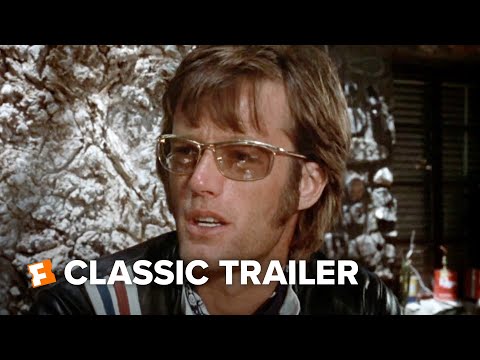
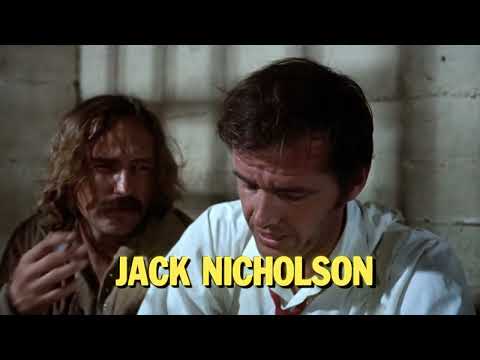
In the most freedom-possessive and most freedom-obsessive country, the USA, people in 1969 were afraid to have a true freedom. That was according to Jack Nicholson – when he was young and his name was spelled in small letters next to Peter Fonda and Dennis Hopper. These two were, in addition to performing acting jobs here, a producer and director accordingly. Now he is much bigger star than these two ever were combined. So, what this movie is good about? First of all, with extremely, unbelievably small budget of USD 0.36 million dollars (as of today, even some minor Asia-based countries have more budgets for local movies), it managed to gross USD 60 million. That is why it has legacy & why Jack Nicholson upraised career & that is why it has found its special niche in the hearts of people. So what is it about? Several guys drive around the US on bikes in a time, when bikers were not formed yet as a strong physical force. In those times, if you were a biker, you’d faster receive a bullet from some farmer’s gun than a piece of hatred and fear, as they receive today. The soundtrack is remarkable with many famous performers, like The Who, Joe Cocker, Jimi Hendrix (who was called then Jimi Hendrix Experience). The most well known song from here is Born To Be Wild, by Steppenwolf, which has so many cover-versions that it is hard to say, who did the best among them. Even the version by Miss Piggy from Muppets Show with Ozzy Osbourne exists. There are many songs that represent something in this movie or underline it. For example, If You Want To Be A Bird underlines with its essence and lyrics the free spirit of main characters. San Franciscan Nights is the embodiment of Flowers Children – in time when action occurs – and what they are. When ‘I Can See For Miles’ lyrics is for everyone free-spirited.November, 09th 2025
A-Z Lyrics Universe
Cynthia Erivo Popular
Ariana Grande Horsepower
Post Malone Ain't No Love in Oklahoma
Luke Combs Good Riddance (Time of Your Life)
Green Day Bye Bye Bye
*NSYNC You're the One That I Wan
John Travolta & Olivia Newton-John I Always Wanted a Brother
Braelyn Rankins, Theo Somolu, Kelvin Harrison Jr. and Aaron Pierre The Power of Love
Frankie Goes to Hollywood Beyond
Auli’i Cravalho feat. Rachel House MORE ›