Soundtracks:  A B C D E F G H I J K L M N O P Q R S T U V W X Y Z #


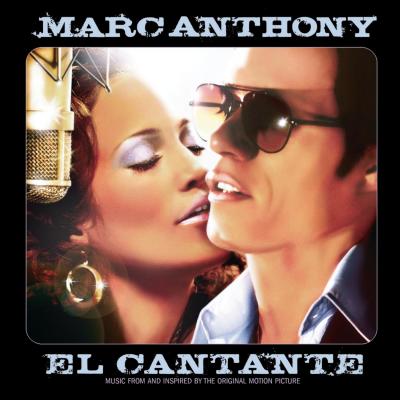
El Cantante Album Cover

"El Cantante" Soundtrack Lyrics

Movie • 2007

Track Listing


htmlCopy code

"El Cantante (Soundtrack from the Motion Picture)" Soundtrack Description

El Cantante trailer frame: Marc Anthony as Héctor Lavoe onstage with a Fania-style horn section
Official trailer imagery — concert spotlights, club sweat, and salsa horns.

Overview

How do you soundtrack a legend who sang about being “the singer” itself? The film centers on Héctor Lavoe; the album centers on Marc Anthony inhabiting Lavoe. The result is a tribute-soundtrack: Anthony re-records core Lavoe/Willie Colón repertoire (“El Cantante,” “Aguanilé,” “Che Che Colé,” “El Día de Mi Suerte”) with modern clarity and period bite. Album credits and dates line up across Apple Music and Discogs.

On screen, performances drive the narrative—club breaks, Fania-era stages, and late-career gigs—while brief underscore elements and needle-drops sketch time and place. The film released wide in 2007; the soundtrack (Sony BMG Norte) arrived July 24, 2007, functioning as both narrative support and gateway into Lavoe’s canon. (Trusted sources: Apple Music; IMDb for cue/authorship lines.)

Trailer frame: brass and percussion under hot lights; the band launches into a salsa groove
Performance-led storytelling: scenes are built around songs.

Questions & Answers

Is there an official soundtrack album?
Yes. El Cantante (Soundtrack from the Motion Picture) by Marc Anthony was released July 24, 2007 on Sony BMG Norte; it collects 10 tracks tied to the film.
Are these Héctor Lavoe’s original recordings?
No—the film and album use new studio performances by Marc Anthony covering Lavoe’s repertoire; the one new song is “Toma de Mí” sung by Jennifer Lopez.
Who handled the film’s song rights and supervision?
Tracy McKnight is credited as music supervisor; additional coordination appears in the music department credits.
Who’s credited for the film’s “music” beyond the songs?
Film credits list Willie Colón and Andrés Levin for music; Anthony is the album’s executive producer with Sergio George producing.
Does the movie use non-salsa needle-drops?
A few: “Inner City Blues (Make Me Wanna Holler)” (Marvin Gaye), “Five Minutes of Funk” (Whodini), and Talking Heads’ “Slippery People” (remix/production credit noted).
Is there a separate album of Lavoe’s originals tied to the film?
Labels issued companion compilations of Lavoe masters in 2007; but the film’s official album is Marc Anthony’s re-recordings.

Notes & Trivia

  • The album topped Billboard’s Top Latin Albums; it later won Best Salsa Album at the 2008 Latin Grammy Awards. (Billboard and Wikipedia summarize the chart run and awards.)
  • “Toma de Mí,” written by Nelly Furtado and Julio Reyes Copello, is the only non-Lavoe composition on the album.
  • Veteran salsa pros (e.g., Milton Cardona, José Mangual, Yomo Toro) appear in the album credits, anchoring the period sound.
  • Talking Heads’ “Slippery People” appears via additional production/remix by Jellybean Benítez in the music department notes.

Genres & Themes

Hard-salsa brass & street coro — Willie Colón’s trombone-driven arrangements and tight coros embody Lavoe’s swagger and New York grit.

Afro-Caribbean devotionals — “Aguanilé” pulls in Santería-inflected call-and-response; on screen it reads like ritual and release.

Bolero-to-salsa pivots — “Escándalo” in bolero dress becomes a narrative hinge: tenderness cracking into public drama.

Trailer frame: nightclub crowd in golden light as the band locks into clave
Clave first, then story: styles map directly to character beats.

Tracks & Scenes

Scene notes reflect on-screen performance contexts; song authorship and album inclusion cross-checked with Apple Music, IMDb, and Discogs. Timestamps vary by cut; diegetic unless noted.

“El Cantante” — Marc Anthony (Rubén Blades)
Where it plays: A marquee stage performance framing Lavoe’s public persona—spotlight, monologue-as-song.
Why it matters: The mission statement; the film’s title and thesis in one chart.

“Mi Gente” — Marc Anthony (Johnny Pacheco)
Where it plays: Early success montage and a big Fania-style crowd sequence with call-and-response.
Why it matters: Community anthem; puts audience and singer in the same circuit.

“Che Che Colé” — Marc Anthony (Willie Colón)
Where it plays: Early band set, tight club. Horn stabs and coro introduce Lavoe’s stagecraft.
Why it matters: Shows the Colón–Lavoe engine: trombones, chant, streetwise humor.

“Aguanilé” — Marc Anthony (Willie Colón; Héctor Lavoe)
Where it plays: Peak-era concert scene; sweat, call-and-response, percussion break that feels ritualistic.
Why it matters: Spiritual charge and bravado—musical exorcism during the ascent phase.

“El Día de Mi Suerte” — Marc Anthony (Colón; Lavoe)
Where it plays: Mid-film performance with reflective edge as personal cracks widen.
Why it matters: Hope lyric against gathering storms; the crowd sings it back as a lifeline.

“Qué Lío” — Marc Anthony (Colón; Joe Cuba; Lavoe)
Where it plays: Club sequence where gossip and fame blur; playful soneo aimed at rumors.
Why it matters: Self-mythologizing turns defensive—fame’s double edge.

“Quítate Tú” — Marc Anthony (Johnny Pacheco; Bobby Valentín)
Where it plays: Jam-session/battle energy on a multi-singer stage moment.
Why it matters: Salsa’s competitive joy; Lavoe holds the center.

“Todo Tiene Su Final” — Marc Anthony (Willie Colón)
Where it plays: Later-career set that lands like foreshadowing; lyric stings.
Why it matters: Mortality enters the music; a public truth the film won’t dodge.

“Escándalo (Bolero Version)” — Marc Anthony (Rafael Cárdenas Crespo; Rubén Fuentes)
Where it plays: Intimate, smoky interlude that flips to drama as public life intrudes.
Why it matters: Private tenderness cannot hold under tabloid light.

“Toma de Mí” — Jennifer Lopez (Nelly Furtado; Julio Reyes Copello)
Where it plays: Late-film/credits usage as a reflective coda (non-diegetic).
Why it matters: Puchi’s voice inside the musical story—an epilogue from her POV.

Other in-film needle-drops (select): “Inner City Blues (Make Me Wanna Holler)” — Marvin Gaye; “Five Minutes of Funk” — Whodini; “Slippery People” — Talking Heads (remix credit noted). These mark time-jumps and street atmosphere.

Music–Story Links

“Mi Gente” binds artist to audience; the film uses it whenever Lavoe feels charged by the crowd. “Aguanilé” is conquest energy—his power at full voltage. “El Día de Mi Suerte” is hope against chaos, while “Todo Tiene Su Final” underlines the tragic arc with bitter elegance. The repertoire isn’t background—it’s biography sung aloud.

Trailer frame: microphone silhouette as the band vamps; lyrics about fate hang in the air
Lyrics as plot: the setlist mirrors each rise and collapse.

How It Was Made

Marc Anthony framed the performance approach simply: he sang as “me doing Héctor doing the songs,” aiming for character over impersonation. Sergio George produced the sessions; Anthony is credited as executive producer. Film music credits also list Willie Colón and Andrés Levin; music supervision is by Tracy McKnight. (Trusted sources: Blackfilm interview; Metacritic credits; Apple Music.)

Reception & Quotes

The film drew mixed notices; the music sequences earned steadier praise for energy and authenticity. AllMusic and Billboard documented the album’s strong Latin chart run and awards trajectory.

“It was me doing Héctor doing the songs.” Marc Anthony, interview
“Concert sequences are bright, vibrant and alive.” Indy Week review

Additional Info

  • Album release: July 24, 2007 (Sony BMG Norte). Common digital edition: 10 tracks including “Toma de Mí.”
  • Single highlights: “Mi Gente” (June 2007), “Aguanilé” (October 2007), “Escándalo” (September 2008).
  • Companion comps of Lavoe originals surfaced in 2007 so new fans could hear the Fania masters.
  • Several veteran salseros (Milton Cardona, José Mangual) appear in the album personnel, tying sessions to the idiom’s roots.
  • Non-salsa cues (“Inner City Blues,” “Five Minutes of Funk”) mark era and neighborhood texture rather than plot beats.

Technical Info

  • Title: El Cantante (Soundtrack from the Motion Picture)
  • Year: 2007 (album); film wide release 2007
  • Type: Film soundtrack (new recordings of Lavoe repertoire + one original)
  • Album Producers: Sergio George (producer); Marc Anthony (executive producer)
  • Film Music Credits: Willie Colón; Andrés Levin
  • Music Supervision: Tracy McKnight
  • Label: Sony BMG Norte (US Latin)
  • Selected notable placements: “El Cantante,” “Mi Gente,” “Aguanilé,” “El Día de Mi Suerte,” “Todo Tiene Su Final,” “Toma de Mí”
  • Release context: TIFF premiere 2006; US theatrical August 3, 2007

Canonical Entities & Relations

SubjectRelationObject
Marc AnthonyperformedEl Cantante (soundtrack) tracks
Jennifer Lopezperformed“Toma de Mí” (album closer)
Rubén Bladeswrote“El Cantante”
Willie Colónco-wrote/arrangedkey repertoire incl. “Aguanilé,” “El Día de Mi Suerte”
Tracy McKnightmusic supervisedEl Cantante (film)
Sony BMG Nortereleasedalbum (2007)
Picturehousedistributedfilm (2007)

Sources: Apple Music; Discogs; IMDb; Wikipedia; Metacritic; Box Office Mojo; Blackfilm (interview); Indy Week; Ringostrack.

November, 08th 2025


A-Z Lyrics Universe

Lyrics / song texts are property and copyright of their owners and provided for educational purposes only.