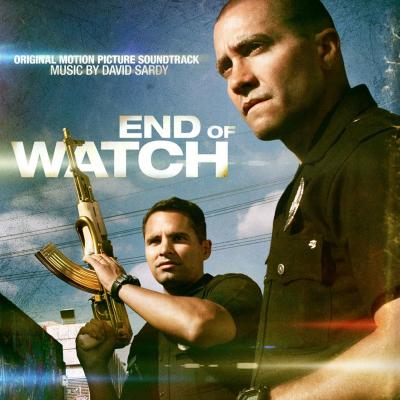
"End of Watch" Soundtrack Lyrics
Movie • 2012
Track Listing
Public Enemy
David Sardy
David Sardy
The Delfonics
David Sardy
David Sardy
David Sardy
The Latin Rascals
David Sardy
David Sardy
David Sardy
David Sardy
“End of Watch (Original Motion Picture Soundtrack)” Soundtrack Description
Overview
What happens when a cop buddy film leans on mixtape logic? End of Watch (2012) answers with lean, percussive score cuts by David Sardy colliding with gritty, street-level needle-drops. Hip-hop, old-school soul, desert-rock, and norteño sit alongside tense electronic underscoring; the result feels lived-in and restless—like a long shift where the radio never goes quiet.
The official album gathers a handful of source tracks with cues from Sardy, while the film itself uses additional songs to texture patrol-car banter, house parties, wedding scenes, and funerals. The combination sells David Ayer’s handheld intimacy: songs sketch neighborhoods and relationships; the score presses on the pulse. (Film Music Reporter)
Questions & Answers
- Is there an official soundtrack album?
- Yes. End of Watch (Original Motion Picture Soundtrack) was released digitally by Relativity Music Group in September 2012; it mixes score cues with a few licensed songs. (Film Music Reporter)
- Who composed the score?
- David Sardy composed the original score.
- Who supervised the music?
- Season Kent and Gabe Hilfer are credited with music supervision.
- What song opens the film?
- Public Enemy’s “Harder Than You Think” kicks in early as Taylor and Zavala cruise their beat (~00:08).
- Which track plays during the night-workout montage?
- “Beat the Devil’s Tattoo” by Black Rebel Motorcycle Club (~00:23).
- What do Brian and Janet sing together in the car?
- “Hey Ma” by Cam’ron during their playful sing-along (~00:40).
- What’s the end-credits song?
- “Nobody to Love,” written and performed by Josh Homme and David Sardy, rolls under the main end credits (~01:37).
Notes & Trivia
- Josh Homme co-wrote and performs “Nobody to Love” specifically for the film’s end credits; it appears on digital editions as a bonus track.
- “Sgt. MacKenzie,” the haunting bagpipe lament used at the funeral sequence, had earlier notoriety from We Were Soldiers.
- The album pairs licensed cuts (Public Enemy, The Delfonics, Latin Rascals) with Sardy’s terse cues—unusual for a modern cop thriller album that often favors either/or.
- “Lisa’s Coming” (Latin Rascals) underscores the infamous noise-complaint run-in with “Big Evil.”
- Music supervision is a two-hander here: Season Kent and Gabe Hilfer navigate clearances across hip-hop, classic rock, and regional Mexican catalogs.
Genres & Themes
Styles: Boom-bap and political hip-hop (Public Enemy) for swagger and momentum; Chicano/Latino party and norteño cues for neighborhood specificity; ’60s Philly soul (The Delfonics) for irony and sweetness; desert-rock/garage grit (BRMC; Homme) for insomnia and edge; minimalist hybrid score for pressure.
Meaning: Source songs humanize—family parties, weddings, car sing-alongs—while the score’s low synths and clipped percussion tighten patrol stakes. When the story pivots to grief, a pipe lament and elegiac end-credits rock admit the cost.
Tracks & Scenes
Timestamps are approximate (hh:mm). Diegetic = heard by the characters.
“Harder Than You Think” — Public Enemy
Where it plays: ~00:08, early patrol montage; non-diegetic.
Why it matters: Sets the assertive, kinetic tone for beat-car cruising.
“Hey! Love” — The Delfonics
Where it plays: ~00:12, gang car ride-up pre-ambush; non-diegetic/source flavor.
Why it matters: Sweet soul used with menace—undercuts the calm before shots.
“Funky Lil’ Party” — Paris
Where it plays: ~00:13, street corner chatter before drive-by; non-diegetic.
Why it matters: Political rapper’s cut adds tension to neighborhood talk.
“Beat the Devil’s Tattoo” — Black Rebel Motorcycle Club
Where it plays: ~00:23, Brian’s nocturnal workout; non-diegetic.
Why it matters: Gravelly groove telegraphs obsession and insomnia.
“Lisa’s Coming” — The Latin Rascals
Where it plays: ~00:26, party/noise-complaint scene at “Big Evil’s” place; diegetic.
Why it matters: Freestyle classic pins the scene to time and subculture.
“The Chicken Dance” — El Mariachi Los Hermanos de Mateo Valadez
Where it plays: ~00:30, Zavala family party; diegetic.
Why it matters: Warm, goofy community moment—human scale amid chaos.
“Fade Into You” — Mazzy Star
Where it plays: ~00:32, post-party intimacy with Brian & Janet; non-diegetic.
Why it matters: Dream-pop haze for rare quiet.
“Alma Enamorada” — Chalino Sánchez (feat. Los Amables del Norte)
Where it plays: ~00:36, from the suspect’s truck during the stop; diegetic.
Why it matters: Regional sound grounds the stop in Los Angeles reality.
“Hey Ma” — Cam’ron (feat. Juelz Santana, Freekey Zeekey & Toya)
Where it plays: ~00:40, Brian and Janet sing along in the car; diegetic/in-car.
Why it matters: Relationship shorthand—the couple’s humor and ease.
“Momma Sed” — Puscifer
Where it plays: ~00:52, in-car after discovering the trafficking house; source/low mix.
Why it matters: Melancholy countermelody during moral whiplash.
“I’ll Kiss a Pitbull” — Mem Shannon
Where it plays: ~01:01, first song at Brian & Janet’s wedding; diegetic.
Why it matters: Off-center blues choice that fits the film’s rough-edged charm.
“Push It” — Salt-N-Pepa
Where it plays: ~01:02, wedding dance; diegetic.
Why it matters: Crowd-pleaser; a burst of pure release.
“Twilight Zone” — Golden Earring
Where it plays: ~01:03, wedding floor before Mike’s speech; diegetic.
Why it matters: Classic-rock swagger for the comedic toast wind-up.
“Sgt. MacKenzie” — Joseph Kilna MacKenzie
Where it plays: ~01:31, police procession before the funeral; non-diegetic.
Why it matters: Somber pipe lament that reframes the film’s heroism as sacrifice.
“Nobody to Love” — Josh Homme & David Sardy
Where it plays: ~01:37, first end-credits song; non-diegetic.
Why it matters: Custom rock elegy that carries the film’s final emotional weight.
Also heard: “Los Caminos de la Vida” — La Tropa Vallenata; “Ha dias” — Luca Mundaca.
Music–Story Links
Early patrol energy (“Harder Than You Think”) advertises confidence, but it’s a bluff; the job’s grind is voiced by Sardy’s terse cues. Party and wedding source songs build the officers’ family world so that the later lament (“Sgt. MacKenzie”) lands with full force. The last word belongs to “Nobody to Love”: not triumph, not despair—just the ache of showing up again tomorrow. (Variety)
How It Was Made
Score & approach: David Sardy (known for rock production as well as film scores) builds short, hard-charging cues around low synths, percussion, and clipped motifs—designed to sit under vérité dialogue and hand-held chaos.
Supervision & clearances: Music supervision by Season Kent and Gabe Hilfer balanced neighborhoods, eras, and budgets—Public Enemy and The Delfonics next to Latin Rascals and regional Mexican staples. The end-credits original “Nobody to Love” (Homme/Sardy) was developed specifically for this release.
Album rollout: Relativity Music Group issued the digital soundtrack near the U.S. theatrical release; retail DSPs carry multiple regional variants. (The Numbers; Apple Music)
Reception & Quotes
Critical response centered on performances and street-level immersion; music frequently got nods for propulsion and mood.
“A respectful, propulsive portrait of LAPD life… music keeps the momentum taut.” Variety
“Sardy crams clanging percussion and anxious textures into compact cues.” Album write-ups
“Best LA crime film since the early 2000s—spiky, forceful.” The Telegraph
Additional Info
- The digital album combines licensed tracks (“Harder Than You Think,” “Hey! Love,” “Lisa’s Coming”) with Sardy cues; not every film song appears on the album.
- “Nobody to Love” by Josh Homme & David Sardy is present on some digital editions as a bonus; physical editions vary by territory.
- “Sgt. MacKenzie” was licensed for the procession sequence; the cue’s starkness contrasts the otherwise American pop palette.
- “Lisa’s Coming” ties the noise-complaint scene to late-’80s Latin freestyle, a precise subcultural signpost.
- End-credits sequencing layers custom rock under memorial footage, then drops to silence before roll-out.
Technical Info
- Title: End of Watch (Original Motion Picture Soundtrack)
- Year: 2012
- Type: Original score + selected needle-drops
- Composer: David Sardy
- Music Supervision: Season Kent; Gabe Hilfer
- Label (album): Relativity Music Group (digital)
- Selected notable placements: Public Enemy — “Harder Than You Think”; The Delfonics — “Hey! Love”; Black Rebel Motorcycle Club — “Beat the Devil’s Tattoo”; Cam’ron — “Hey Ma”; Puscifer — “Momma Sed”; Joseph Kilna MacKenzie — “Sgt. MacKenzie”
- Release context: U.S. theatrical September 2012; album issued the same week window
- Availability: Widely streamable; track counts vary slightly by platform/territory
Canonical Entities & Relations
| Subject | Relation | Object |
|---|---|---|
| David Sardy | composed | End of Watch (Original Score) |
| Season Kent | supervised music for | End of Watch (2012) |
| Gabe Hilfer | supervised music for | End of Watch (2012) |
| Relativity Music Group | released | End of Watch (Original Motion Picture Soundtrack) (digital) |
| Josh Homme | wrote & performed | “Nobody to Love” (end credits) |
| Public Enemy | performed | “Harder Than You Think” (opening patrol) |
| The Delfonics | performed | “Hey! Love” (gang ride-up) |
| Black Rebel Motorcycle Club | performed | “Beat the Devil’s Tattoo” (workout) |
| David Ayer | directed | End of Watch (2012 film) |
| Open Road Films | distributed | End of Watch (U.S.) |
Sources: Film Music Reporter; IMDb; The Numbers; Variety; Apple Music; Spotify; SoundtrackRadar; MoviesOST.
November, 09th 2025
'End of Watch' is a 2012 American crime drama film written and directed by David Ayer. Get more on Wikipedia and Internet Movie DatabaseA-Z Lyrics Universe
Cynthia Erivo Popular
Ariana Grande Horsepower
Post Malone Ain't No Love in Oklahoma
Luke Combs Good Riddance (Time of Your Life)
Green Day Bye Bye Bye
*NSYNC You're the One That I Wan
John Travolta & Olivia Newton-John I Always Wanted a Brother
Braelyn Rankins, Theo Somolu, Kelvin Harrison Jr. and Aaron Pierre The Power of Love
Frankie Goes to Hollywood Beyond
Auli’i Cravalho feat. Rachel House MORE ›