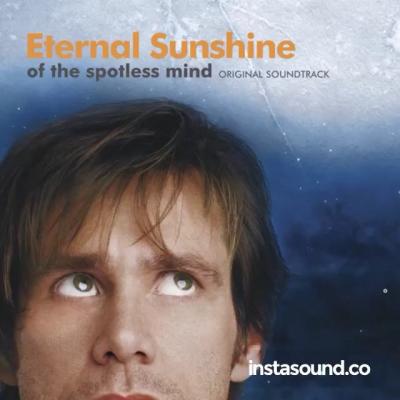
"Eternal Sunshine of the Spotless Mind" Soundtrack Lyrics
Movie • 2004
Track Listing
Jon Brion
Electric Light Orchestra
Jon Brion
The Polyphonic Spree
Jon Brion
The Polyphonic Spree
Lata Mangeshkar
Jon Brion
Beck
Jon Brion
Don Nelson
Jon Brion
The Willows
Jon Brion
The Willows
Jon Brion
Jon Brion
Jon Brion
Jon Brion
Don Nelson
Jon Brion
Jon Brion
Jon Brion
Jon Brion
Jon Brion
Jon Brion
"Eternal Sunshine of the Spotless Mind (Soundtrack from the Motion Picture)" Soundtrack Description
Overview
Can pop sunlight and fragile score sit side by side without clashing? Here they do. Jon Brion’s cues—nylon-string guitars, close-miked piano, small ensemble—trace memory’s drift, while a handful of well-placed songs (Beck, The Polyphonic Spree, Lata Mangeshkar, The Willowz) puncture the haze with recognizable color.
The official album (Hollywood Records, 2004) combines Brion’s score with select songs and Beck’s cover of “Everybody’s Got to Learn Sometime,” which the film elevates to a leitmotif. Track counts and sequencing vary slightly by region/streaming edition, but the spine is consistent: an intimate score framing a story about choosing to remember. Trusted sources: Wikipedia, Apple Music, Spotify.
Questions & Answers
- Is there an official soundtrack album?
- Yes. Released March 16, 2004 by Hollywood Records; it mixes Jon Brion’s score with select songs (incl. Beck, The Polyphonic Spree, The Willowz).
- Who composed the score?
- Jon Brion. His cues (“Theme,” “Phone Call,” “Row,” “Spotless Mind”) shape the film’s emotional and temporal logic.
- Is ELO’s “Mr. Blue Sky” in the movie?
- No. It scores the trailers and advertising; it’s not used in the feature itself.
- Which Hindi songs are heard in Clementine’s apartment?
- “Mera Man Tera Pyasa,” “Tere Sang Pyar Main,” and “Wada Na Tod,” heard as background radio/music during the apartment scene.
- Where does Beck’s “Everybody’s Got to Learn Sometime” appear?
- It underpins the opening credit tone and returns at the film’s end, bookending the relationship’s cycle.
- Who handled music oversight?
- Kathy Nelson served as executive soundtrack album producer/“music guru”; Jennifer (Jen) Pray is credited as music consultant.
Notes & Trivia
- Album label: Hollywood Records. Original U.S. release March 16, 2004.
- “Mr. Blue Sky” is trailer-only; not in the feature.
- Three classic Hindi tracks play diegetically in Clementine’s apartment.
- “Light & Day” by The Polyphonic Spree appears on the album and in a DVD-era promo/music-video edit tied to the film.
- Rapper Jay Electronica built his 2007 mixtape Act I: Eternal Sunshine (The Pledge) from Brion’s score cues.
Genres & Themes
Intimate indie score — chamber textures, nylon-string guitar, tape-worn piano. Meaning: vulnerability, the homespun feel of memory.
Sun-coded pop — The Polyphonic Spree’s “Light & Day” / “It’s the Sun.” Meaning: denial/optimism flashes inside collapsing memories.
Garage edge — The Willowz. Meaning: impulsive bodies (Mary/Stan), messy desire outside Joel’s head.
Classic filmi radio — Lata Mangeshkar & Mohammed Rafi. Meaning: domestic intimacy, other lives bleeding into Joel’s recollections.
Tracks & Scenes
“Everybody’s Got to Learn Sometime” — Beck (arr. & produced with Jon Brion)
Where it plays: Sets the tone over opening credits and returns at the closing passage. Non-diegetic.
Why it matters: the film’s emotional thesis—accept change—stated plainly, then echoed as a hard-won choice.
“Something” — The Willowz
Where it plays: Mary and Stan, high and dancing in underwear during Joel’s procedure, turning a work night reckless. In-scene playback (diegetic feel).
Why it matters: contrasts clinical erasure with messy desire; a human, chaotic counter-rhythm.
“Wada Na Tod” — Lata Mangeshkar
Where it plays: On Clementine’s kitchen radio when Joel visits her apartment. Diegetic radio.
Why it matters: the lyric’s plea (“don’t break your promise”) ironically shadows their doomed pact.
“Light & Day” — The Polyphonic Spree
Where it plays: Featured in the film/album; widely tied to the DVD promo/music-video cut that “lip-syncs” scenes to the song. Non-diegetic when used.
Why it matters: injects sun-burst optimism—brief, almost delusional—inside a story about loss.
“Phone Call” — Jon Brion
Where it plays: After the Montauk meet, as Joel heads home; a warm, slightly detuned guitar/piano figure. Non-diegetic.
Why it matters: one of the score’s most affecting cues—nostalgia without sentimentality.
“Mr. Blue Sky” — Electric Light Orchestra
Where it plays: Trailers/marketing only; not in the feature. Non-diegetic (promo).
Why it matters: the ad campaign’s upbeat misdirection versus the film’s bittersweet core.
Music–Story Links
Brion writes in small circles—ostinatos that remember themselves even as scenes erase. “Phone Call” marks the instant Joel chooses to savor a memory rather than rescue it. Beck’s cover brackets the film, making the ending feel like a learned behavior, not fate. The Willowz cue pulls us outside Joel’s head—real bodies, poor choices. The Hindi songs stage intimacy as ordinary background noise; in a film about forgetting, ordinary equals priceless.
How It Was Made
Composer: Jon Brion. The recorded palette blends close-room instruments (nylon-string guitar, upright/treated piano, modest strings) and gentle electronic processing—designed to feel “handmade,” not high-gloss. Editorial choices keep cues short, modular, and loop-friendly so they can re-enter memories at different stages. Trusted source: AllMusic; MUBI Notebook; Reverb Machine.
Music oversight and album assembly were shepherded by Disney/Focus veterans: Kathy Nelson (credited as executive soundtrack album producer/“music guru”); music consultant Jennifer Pray. Orchestrations and music editing support (incl. Steve Bartek; Anastassios Filipos) round out the department.
Reception & Quotes
“A perfectly ambient score… undistracting, yet full of ideas.” Pitchfork
“Brion’s intimate textures evoke love and memory without tipping into syrup.” AllMusic
“Unconventional, effective; little interest in genre norms.” Filmtracks
The soundtrack’s legacy keeps rippling—Halsey (Manic) and Ariana Grande (Eternal Sunshine) both echo the film’s memory/erasure motif in recent pop. Trusted source: Entertainment Weekly.
Additional Info
- Album release: March 16, 2004 (Hollywood Records). Streaming editions commonly show 26 tracks.
- Trailer misdirect: “Mr. Blue Sky” sells an upbeat romance; the feature is quieter, more melancholic.
- Three Hindi classics are formally credited; they play in-apartment as source music.
- “Light & Day” gained extra visibility via a studio-cut music video on home release.
- Hip-hop afterlife: Jay Electronica sampled five Brion cues for Act I: Eternal Sunshine (2007).
- Cultural echo: recent pop videos (e.g., 2024) restage the clinic and frozen-lake imagery.
Technical Info
- Title: Eternal Sunshine of the Spotless Mind (Soundtrack from the Motion Picture)
- Year: 2004
- Type: Score + selected songs (compilation)
- Composer: Jon Brion
- Executive soundtrack album producer / “Music guru”: Kathy Nelson
- Music consultant: Jennifer (Jen) Pray
- Label: Hollywood Records
- Notable placements (feature): Beck — “Everybody’s Got to Learn Sometime” (open/close); Lata Mangeshkar — “Wada Na Tod” (apartment radio); The Willowz — “Something” (Mary/Stan dance); The Polyphonic Spree — “Light & Day” (feature/album); ELO — “Mr. Blue Sky” (trailers)
Canonical Entities & Relations
| Subject | Relation | Object |
|---|---|---|
| Jon Brion | composed | Eternal Sunshine of the Spotless Mind (score) |
| Hollywood Records | released | Official soundtrack album (2004) |
| Kathy Nelson | served as | executive soundtrack album producer / “music guru” |
| Jennifer Pray | credited as | music consultant |
| Beck | performed | “Everybody’s Got to Learn Sometime” (cover; with Brion) |
| The Polyphonic Spree | performed | “Light & Day”; “It’s the Sun” (KCRW version) |
| Lata Mangeshkar | sang | “Wada Na Tod” (diegetic radio in film) |
| The Willowz | performed | “Something” (apartment dance) |
| Focus Features | distributed | Eternal Sunshine of the Spotless Mind (2004) |
| Michel Gondry | directed | Eternal Sunshine of the Spotless Mind |
Sources: Wikipedia; Pitchfork; AllMusic; Filmtracks; AFI Catalog; Apple Music; Spotify; Discogs; MUBI Notebook; Consequence.
One day you had to ask anyone – why it was so hard to perceive this movie? Harshness in following the storyline is easy explained – it is because everything happens in the brains of the protagonist. Once he meets a girl and turns out that he was dating her once, years ago, but he doesn’t remember it, as well as she doesn’t too. The reason is they have memories erased. Almost the same thing like in “Total Recall” with Schwarzenegger and Sharon Stone of 1990, only this time without all spy theme, fancy Sun system travels on Mars, shooting and without Schwarzenegger. And without Sharon Stone. All who’s left are Jim Carrey and Kate Winslet. In episodes, we have such stars as Kirsten Dunst, Mark Ruffalo and Elijah Wood. Of these three only Mark Ruffalo wasn’t famous yet. The most part of the story goes on in the protagonist’s head, but we can, for sure, to enjoy in our heads such good performers as Beck, Jon Brion or Electric Light Orchestra (ELO) from the soundrack. Everybody's Gotta Learn Sometimes is a pretty obvious manifestation of what every person should do in own life. Of course, we will learn, this way or another, in school, university or life will teach us. Strings That Tie To You is another thing underlining the plot, out of which it is clear that one of main characters is searching information about the other one, not knowing yet that they were together. Around 1 and a half dozens of songs here are without lyrics, as they are instrumental. Every of them are done by Jon Brion. Those that have lyrics are in minority – only around ten pieces, like the thing with totally incomprehensible title – Wada Na Tod. The soundtrack leaves the desire to have something better, but this film is the tragedy. That is why only soothing compositions were included in the list.November, 09th 2025
A-Z Lyrics Universe
Cynthia Erivo Popular
Ariana Grande Horsepower
Post Malone Ain't No Love in Oklahoma
Luke Combs Good Riddance (Time of Your Life)
Green Day Bye Bye Bye
*NSYNC You're the One That I Wan
John Travolta & Olivia Newton-John I Always Wanted a Brother
Braelyn Rankins, Theo Somolu, Kelvin Harrison Jr. and Aaron Pierre The Power of Love
Frankie Goes to Hollywood Beyond
Auli’i Cravalho feat. Rachel House MORE ›