Soundtracks:  A B C D E F G H I J K L M N O P Q R S T U V W X Y Z #


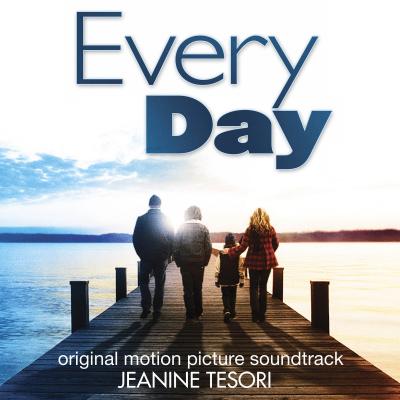
Every Day Album Cover

"Every Day" Soundtrack Lyrics

Movie • 2011

Track Listing

Feel U

Anne Marie Bush

Opening Titles

Smell Of Pee

Kiss In The Car

Welcome To New York

He's In New York

Jeannie In Bed

Wheelchair Dance

Wheelchair Dance Reprise

Getting The Pills

Going For The Pills

Ned And Ethan

Picnic At The Beach

You Meet Anyone?

Some Sharp Door

Your Hands Are Warm

I Missed My Life

My Son Is Gay

Love And Death


"Every Day (Original Motion Picture Soundtrack)" Soundtrack Description

Every Day (2010) trailer frame featuring Liev Schreiber and Helen Hunt in New York
Every Day — official trailer still, 2011 U.S. release window

Overview

How do you score midlife turbulence without shouting? Richard Levine’s Every Day (Tribeca 2010; U.S. release 2011) leans on a short, chamber-like score by Jeanine Tesori: tiny cues that trace caregiving, temptation, and family recalibration. It’s a “little” album by design—eighteen sketches across ~16 minutes—yet the cues land with precision.

Lakeshore Records issued the digital soundtrack in June 2011; Apple Music and Spotify list 18 cues drawn from the film’s original score. The movie itself sprinkles a handful of licensed tracks (jazz, singer-songwriter, downtempo) in background scenes, but the official album stays focused on Tesori’s writing.

Every Day (2010) trailer frame evoking domestic intimacy and reflective tone
Intimate scale, small ensemble — the score matches the film’s register

Questions & Answers

Is there an official soundtrack album?
Yes. Every Day (Original Motion Picture Soundtrack) was released digitally in June 2011 by Lakeshore Records (18 tracks; ~16 minutes). Apple Music lists the date and label.
Who composed the score?
Jeanine Tesori, known for theater works like Caroline, or Change and Fun Home, composed the film’s original score.
Are songs beyond the score used in the film?
Yes. Credits list several licensed cues (e.g., Anne Marie Bush’s “Feel U,” Count Basie’s “Sweet Georgia Brown,” Brian Vander Ark’s “A Million Things”). These are not on the score album.
Is there a physical CD?
The release was primarily digital via Lakeshore Records. Retail listings centered on download/streaming editions.
What’s unique about this album?
Its brevity and cue count: 18 micro-cues totaling ~16 minutes. Reviewers noted the unusual ratio and the music’s warmth despite its length.
Who handled music supervision and editorial?
IMDb credits Albert Thrower as music supervisor and Tom Villano as music editor on the feature.

Notes & Trivia

  • Lakeshore released the score after the film’s home-video window; trade sites logged the June 2011 digital drop.
  • Apple Music lists 18 cues; total runtime ~16 minutes — unusually short for a standalone release.
  • Licensed songs appear in the movie, but none made the score album; fans often discover them via end-credit identifications.
  • Tesori’s instrumentation favors piano, guitars, basses, and light percussion; the palette keeps to “domestic” scale.
  • Reviewers highlighted the cue titles (“My Son Is Gay,” “Wheelchair Dance”) as plain-spoken signposts of family beats.

Genres & Themes

Chamber/indie-score minimalism maps ordinary crises: caregiving tasks cue small pulses; romantic doubt uses diatonic piano figures and brushed percussion.

Source sprinkles (jazz, singer-songwriter) color work parties, bars, and car radios — tasteful texture rather than set-piece bangers.

Every Day (2010) trailer frame hinting at workplace scenes and city pace
Work, commute, home — the score stitches everyday spaces

Tracks & Scenes

“Opening Titles” — Jeanine Tesori (score)
Where it plays: Title cards into first New York beats; non-diegetic. Short cue.
Why it matters: Establishes the small-ensemble voice and gentle harmonic vocabulary.

“Welcome to New York” — Jeanine Tesori (score)
Where it plays: Early city arrival/establishing material; non-diegetic. Short cue.
Why it matters: Brisk guitar/piano motions mirror Ned’s daily churn.

“Jeannie in Bed” — Jeanine Tesori (score)
Where it plays: Private, exhausted moment with Jeannie; non-diegetic.
Why it matters: Whisper-level writing signals burnout without melodrama.

“Ned and Ethan” — Jeanine Tesori (score)
Where it plays: Father–son beat; non-diegetic, longer than most cues.
Why it matters: Warm bass and piano underline caretaking as skill, not burden.

“My Son Is Gay” — Jeanine Tesori (score)
Where it plays: Jonah’s identity thread; non-diegetic.
Why it matters: Straightforward cue title and calm harmony normalize the moment.

“Getting the Pills” / “Going for the Pills” — Jeanine Tesori (score)
Where it plays: Practical caregiving sequence for Ernie; non-diegetic.
Why it matters: Functional momentum; heartbeat-like pulse tracks logistics, not tragedy.

“Picnic at the Beach” — Jeanine Tesori (score)
Where it plays: Family outing; non-diegetic.
Why it matters: Light rhythmic sway offers rare exhale amid city stress.

“Your Hands Are Warm” — Jeanine Tesori (score)
Where it plays: Intimate reconciliation beat; non-diegetic.
Why it matters: Soft cadences suggest tentative trust returning.

“I Missed My Life” — Jeanine Tesori (score)
Where it plays: Self-reckoning moment; non-diegetic, very brief.
Why it matters: A sting-length cue that still lands as a confession.

“Love and Death” — Jeanine Tesori (score)
Where it plays: Late-film summation; non-diegetic.
Why it matters: Full ensemble coalesces; the album’s emotional apex.

“Feel U” — Anne Marie Bush (licensed)
Scene: Heard in the film per soundtrack credits; pop-soul texture, background placement.
Why it matters: A modern sheen against otherwise acoustic score cues; not on the Lakeshore album.

“A Million Things” — Brian Vander Ark (licensed)
Scene: Background needle-drop noted in song databases; dialogue-friendly mix.
Why it matters: Singer-songwriter timbre plugs into the show-business subplot and domestic tone.

“Sweet Georgia Brown” — Count Basie (licensed)
Scene: Brief source-style usage (party/venue ambience).
Why it matters: A classic jazz wink that situates New York social spaces.

Note: Only the original score appears on the official album. Licensed cue placements above reflect credit listings and music-ID databases; exact timestamps can vary by cut/format.

Music–Story Links

  • Caretaking loop: “Getting/Going for the Pills” pairs task rhythm with compassion — the music refuses melodramatic swells, matching the film’s realism.
  • Marital recalibration: “Your Hands Are Warm” and “I Missed My Life” bracket doubt and rapprochement without speechifying; the harmony does the talking.
  • Identity thread: “My Son Is Gay” is titled plainly and scored gently; the cue treats disclosure as life, not a fireworks set-piece.
  • Closure: “Love and Death” gathers the ensemble for a measured coda — acceptance instead of catharsis.
Every Day (2010) trailer frame with reflective waterfront mood matching the closing cues
Closing mood — understated, humane, and quietly earned

How It Was Made

Composer: Jeanine Tesori. Better known on Broadway (Caroline, or Change; later the Tony-winning Fun Home), she scales down here to a domestic palette. The short-form, many-cue design mirrors the script’s mosaic of small frictions and kindnesses.

Release: Lakeshore Records issued the digital album in early June 2011; trade coverage and retailer pages confirm the 18-track configuration. The film’s credits list music supervisor Albert Thrower and music editor Tom Villano.

Reception & Quotes

Film-music reviewers were positive about the craft despite the miniature runtime.

“A chirpy and tuneful little score so full of charm… probably the shortest soundtrack album I’ve ever come across.” Movie-Wave review
“Remarkably good mirror on the ups-and-downs of everyday family life.” MainTitles review

Availability: Streaming via Apple Music and Spotify; no expanded score edition announced.

Additional Info

  • Album runtime ~16 minutes across 18 cues (digital only).
  • Label: Lakeshore Records (digital stores listed June 7, 2011).
  • Composer background: Tesori’s theater credentials (e.g., Caroline, or Change; later Fun Home) predate/anchor this film work.
  • Music supervision: Albert Thrower (feature credits); editorial: Tom Villano.
  • Licensed songs such as “Feel U” and “A Million Things” appear in the film but are omitted from the album.
  • Film timeline: Tribeca premiere 2010; limited U.S. release January 2011; home video March 2011.

Technical Info

  • Title: Every Day (Original Motion Picture Soundtrack)
  • Year: 2011 (album); 2010/2011 (film festival/theatrical)
  • Type: Original score album (digital)
  • Composer: Jeanine Tesori
  • Label: Lakeshore Records
  • Album scope: Score cues only (licensed tracks excluded)
  • Key placements (licensed, in-film): “Feel U” (Anne Marie Bush), “A Million Things” (Brian Vander Ark), “Sweet Georgia Brown” (Count Basie), among others

Canonical Entities & Relations

SubjectRelationObject
Richard LevinedirectedEvery Day (2010)
Jeanine Tesoricomposed score forEvery Day (2010)
Lakeshore RecordsreleasedEvery Day (Original Motion Picture Soundtrack) (2011)
Albert Throwermusic supervisedEvery Day (2010)
Tom Villanomusic editedEvery Day (2010)
Image EntertainmentdistributedEvery Day (U.S. theatrical/home video)
Anne Marie Bushperformed“Feel U” (licensed cue in film credits)

Sources: Apple Music; Spotify; Lakeshore Records; IMDb; Wikipedia; Film Music Reporter; Movie-Wave; MainTitles.

November, 09th 2025

'Every Day': find information on Wikipedia and Internet Movie Database
A-Z Lyrics Universe

Lyrics / song texts are property and copyright of their owners and provided for educational purposes only.