Soundtracks:  A B C D E F G H I J K L M N O P Q R S T U V W X Y Z #


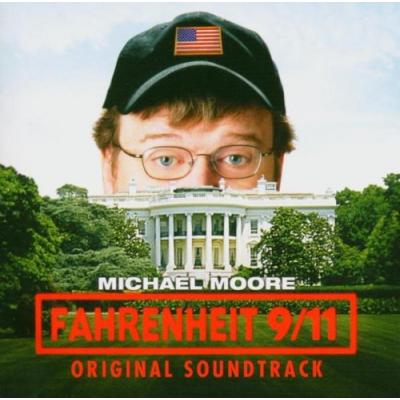
Fahrenheit 9/11 Album Cover

"Fahrenheit 9/11" Soundtrack Lyrics

Movie • 2004

Track Listing


"Fahrenheit 9/11 (Original Soundtrack)" Soundtrack Description

Fahrenheit 9/11 documentary soundtrack — trailer still used as cover-style visual
Fahrenheit 9/11 — documentary soundtrack visual, 2004

Overview

How do you score a documentary that swings from gallows humor to grief in seconds? The Fahrenheit 9/11 soundtrack answers with sharp, purposeful juxtapositions: bright pop needles to puncture official narratives, grim elegies to mark loss, and lean original cues to thread it together. Composer Jeff Gibbs provides the spine; well-known cuts land the punches.

The officially released album (Rhino) blends Gibbs’s cues with pointed selections like R.E.M.’s “Shiny Happy People,” Joey Scarbury’s “The Greatest American Hero (Believe It or Not),” J.J. Cale’s “Cocaine,” and Neil Young’s “Rockin’ in the Free World.” A separate compilation, Songs and Artists That Inspired Fahrenheit 9/11, collects tracks Michael Moore leaned on while cutting the film. For release facts and timings, see AllMusic and label notes (AllMusic).

Fahrenheit 9/11 soundtrack — trailer frame evoking its mix of irony and elegy
Fahrenheit 9/11 — trailer frame used as soundtrack illustration, 2004

Questions & Answers

Is there an official soundtrack album?
Yes. Fahrenheit 9/11 (Original Soundtrack) was released on October 5, 2004 by Rhino. It mixes Jeff Gibbs’s score with licensed songs.
Is there also a companion or “inspired by” album?
Yes. Songs and Artists That Inspired Fahrenheit 9/11 is a separate compilation curated around the film’s political mood rather than exact scene placements.
Who composed the score?
Jeff Gibbs composed the original score, heard in cues like “The Un-President,” “Bush Waits… and Waits,” and “Afghan Victory Dance.”
What song plays over President Bush’s aircraft-carrier “Mission Accomplished” moment?
“The Greatest American Hero (Believe It or Not)” performed by Joey Scarbury underscores that montage.
What’s the upbeat pop song used for the Bush vacation/golf montage?
The Go-Go’s “Vacation.” It’s used ironically over shots of Bush’s leisure time.
What is the elegiac classical piece with tolling bells?
Arvo Pärt’s “Cantus in Memoriam Benjamin Britten,” used to devastating effect with dark screen and aftermath imagery.
What plays over the end credits?
Neil Young’s “Rockin’ in the Free World.”

Notes & Trivia

  • The Rhino album clocks in at about 60 minutes and interleaves songs with Gibbs’s short cues (AllMusic).
  • The “inspired by” disc includes Springsteen, Dylan, Pearl Jam, and Zack de la Rocha—music Moore said he played during editing.
  • Arvo Pärt’s “Cantus” became a widely cited example of tintinnabuli in film; the Arvo Pärt Centre has discussed its use in this documentary.
  • The soundtrack’s pop choices are not random: they’re used as editorial commentary, often undercutting official footage.
  • “Rockin’ in the Free World” sends viewers out with a pointed refrain over the credits.

Genres & Themes

Satirical pop & TV themes → political irony. The Go-Go’s, R.E.M., and Joey Scarbury cues sugarcoat images so the cut lands like a punchline—then a gut punch.

Modern classical minimalism → mourning and moral weight. Arvo Pärt’s “Cantus” supplies tolling-bell gravity, framing grief beyond narration.

Roots/rock anthems → protest energy. Neil Young’s closer recasts end credits as a rallying cry.

Fahrenheit 9/11 soundtrack — genres shift from bright pop to solemn minimalism
Genre pivots: pop irony to minimalist elegy, 2004

Tracks & Scenes

“Vacation” — The Go-Go’s
Where it plays: Early montage of President Bush’s leisure (golfing, downtime); non-diegetic.
Why it matters: The sunny hook underlines the gap between crisis and optics, making the montage sting.

“Shiny Happy People” — R.E.M.
Where it plays: A quick-cut photo/video montage around Saudi connections; non-diegetic.
Why it matters: The chipper gloss clashes with subject matter, sharpening the critique of “cheerful” media framing.

“The Greatest American Hero (Believe It or Not)” — Joey Scarbury
Where it plays: “Mission Accomplished” aircraft-carrier sequence; non-diegetic.
Why it matters: A superhero TV theme turns triumphal images into self-parody.

“Fire Water Burn” — Bloodhound Gang
Where it plays: As a lyric cited by U.S. troops describing what they’ve blasted in theater; diegetic reference.
Why it matters: Shows how pop culture bleeds into on-the-ground attitude—uncomfortably literal in a war zone.

“We Gotta Get Out of This Place” — Eric Burdon
Where it plays: Used as pointed commentary in the film; associated in write-ups with the bin Laden family’s rapid post-9/11 departure; non-diegetic.
Why it matters: A Vietnam-era leave-town anthem repurposed for a 2004 geopolitics beat.

“Cocaine” — J.J. Cale
Where it plays: Segment scrutinizing Bush’s National Guard/medical-exam history; non-diegetic needle-drop.
Why it matters: A sly, sardonic underscore that needs no exposition.

“Cantus in Memoriam Benjamin Britten” — Arvo Pärt
Where it plays: Over stark darkness and aftermath imagery; non-diegetic.
Why it matters: Tolling bell + strings turn silence and faces into a memorial.

“Magnificent Seven Theme” — Elmer Bernstein
Where it plays: Western-styled Afghanistan montage; non-diegetic.
Why it matters: Reframes news into a genre pastiche, highlighting how “cowboy” mythmaking colored the war narrative.

“Rockin’ in the Free World” — Neil Young
Where it plays: End credits; non-diegetic.
Why it matters: Channels protest-rock energy into the exit; the refrain lingers.

Score cues by Jeff Gibbs — “The Un-President,” “Bush Waits… and Waits,” “Afghan Victory Dance,” “All They Ask.”
Where they play: Threaded across expository and character-driven beats; non-diegetic.
Why they matter: Provide connective tissue and tonal resets between the pointed songs.

Music–Story Links

Moore’s montage grammar relies on counterpoint. Pop earworms mock power (“Vacation,” “Shiny Happy People”), a TV theme lampoons spectacle (“Greatest American Hero”), and a protest anthem reframes the exit (“Rockin’ in the Free World”). Between those spikes, Gibbs’s cues normalize the film’s cadence so the next needle-drop hits harder. When the screen goes dark and Pärt’s “Cantus” tolls, the argument pauses—mourning needs space.

Fahrenheit 9/11 soundtrack — story beats mapped to song choices in the trailer imagery
Story beats mapped to song choices — trailer still, 2004

How It Was Made

Jeff Gibbs—longtime Moore collaborator—composed the original score and helped define the film’s restrained musical bed. Licensed selections were cleared alongside archival and stock elements; credits list dedicated music clearances. Two retail releases followed: Rhino’s official soundtrack and a separate “inspired by” set with Springsteen, Dylan, Pearl Jam, and Tom Morello. Release metadata and credits can be cross-checked via AllMusic and SoundtrackCollector (AllMusic; SoundtrackCollector).

Trusted source mention: SFGate discussed how specific tracks (Cale’s “Cocaine,” R.E.M.’s “Shiny Happy People”) were deployed for ironic effect (SFGate).

Reception & Quotes

Critics frequently singled out the film’s musical irony. A few snapshots:

“Moore brings a fresh impact to familiar material by the way he marshals his images.” RogerEbert.com
“At its best… an impressionist burlesque… culminating in a somber lament for lives lost in Iraq.” The Wall Street Journal

The film won the Cannes Palme d’Or and became a box-office landmark for documentaries; the end-credits use of Neil Young underlined that populist streak (Box Office Mojo; festival records).

Additional Info

  • Label split: Official OST on Rhino; “Inspired by” compilation issued via major-label channels in multiple territories (label lines vary by region listings).
  • “Cantus” belongs to Pärt’s tintinnabuli style; the piece’s bell strikes and descending lines are designed to evoke mourning (Arvo Pärt Centre).
  • The OST interleaves short score cues with full-length songs to preserve the film’s rhythm at home.
  • End-credits “Rockin’ in the Free World” matches Moore’s tradition of using anthemic closers.
  • TV-theme irony (“Greatest American Hero”) is unusually on-the-nose—by design.
  • The “inspired by” album includes previously unreleased tracks (e.g., Zack de la Rocha produced by Trent Reznor).

Technical Info

  • Title: Fahrenheit 9/11 (Original Soundtrack)
  • Year: 2004
  • Type: Documentary soundtrack (score + various artists)
  • Composer: Jeff Gibbs
  • Notable placements: “Vacation” (Go-Go’s); “Shiny Happy People” (R.E.M.); “The Greatest American Hero” (Joey Scarbury); “Cocaine” (J.J. Cale); “We Gotta Get Out of This Place” (Eric Burdon); “Cantus in Memoriam Benjamin Britten” (Arvo Pärt); “Rockin’ in the Free World” (Neil Young)
  • Release & label: OST (Rhino, Oct 5, 2004). Companion compilation Songs and Artists That Inspired Fahrenheit 9/11 released the same day via major-label lines (regional label credits differ in databases).
  • Film context: Premiered May 2004 at Cannes (Palme d’Or); U.S. release June 2004.
  • Availability: Physical CD widely traded; digital availability varies by region and rights.

Canonical Entities & Relations

EntityTypeRelation
Michael MoorePersonDirected/Wrote/Narrated → Fahrenheit 9/11
Jeff GibbsPersonComposed score → Fahrenheit 9/11 (Original Soundtrack)
Arvo PärtPersonComposer of “Cantus in Memoriam Benjamin Britten” → used in film
Joey ScarburyPersonPerforms “The Greatest American Hero (Believe It or Not)” → used in film
R.E.M.Music GroupPerforms “Shiny Happy People” → used in film
The Go-Go’sMusic GroupPerforms “Vacation” → used in film
Neil YoungPersonPerforms “Rockin’ in the Free World” → end credits
J.J. CalePersonPerforms “Cocaine” → used in film
Elmer BernsteinPersonComposer of “The Magnificent Seven Theme” → used in film
Rhino EntertainmentOrganizationReleased official OST
Dog Eat Dog FilmsOrganizationProduced film
Lions Gate Films / IFC FilmsOrganizationDistributed film (U.S.)
Cannes Film FestivalVenue/EventPalme d’Or → Fahrenheit 9/11 (2004)

Sources: AllMusic; RogerEbert.com; The Wall Street Journal; SFGate; Arvo Pärt Centre; POV Magazine; RFE/RL; SoundtrackINFO; SoundtrackCollector; Wikipedia; PopMatters; Box Office Mojo.

November, 09th 2025


A-Z Lyrics Universe

Lyrics / song texts are property and copyright of their owners and provided for educational purposes only.