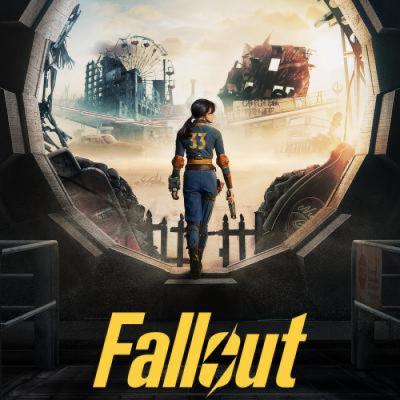
"Fallout" Soundtrack Lyrics
TV • 2024
Track Listing
Louis Armstrong
Nat King Cole
Perry Como
Connie Conway
The Castells
Scatman Crothers
Johnny Cash
Johnny Cash
Connie Conway
Sheldon Allman
Ella Fitzgerald & The Ink Spots
Bing Crosby
Betty Hutton
The Ink Spots
The Ink Spots
The Ink Spots
LaVern Baker
Glenn Miller
Buck Owens
Jack Shaindlin
Buddy Holly
The Swallows
The Andrews Sisters
Bonnie Guitar
Eugene Ormandy and The Tabernacle Choir
Herb Alpert & The Tijuana Brass
Dinah Washington
Brook Benton
Alvino Rey and His Orchestra
Gene Armstrong & His Texas Nite Hawks
I Marc 4
June Christy
Jack Shaindlin
Merle Travis
The Platters
The Danleers
Jane Morgan
John Denver
The Ink Spots
Nat King Cole
"Fallout (Original Amazon Series Soundtrack)" – Album Guide to Tracks and Key Scenes
Overview
How do you make the end of the world sound almost cozy? Fallout’s first TV season answers that with a strange mix of vault schmaltz, outlaw country, and a razor-edged original score. The soundtrack constantly pits sunny mid-century optimism against images of radiation burns, cannibals and corporate horror, so every cue feels like another dark joke about how the old world pretended everything was fine.
At the center sits "Fallout (Original Amazon Series Soundtrack)", Ramin Djawadi’s score album, plus a thick layer of licensed songs from the 1940s–60s that define each episode. The score handles the emotional spine – Lucy’s idealism, Maximus’ militaristic indoctrination, the Ghoul’s weary nihilism – while the songs act like in-universe radio: always a little too cheerful for what’s on screen.
The music has to do two jobs at once: extend the musical language of the games and stand on its own as a prestige-TV soundtrack. The series leans into that by letting some moments play purely on score (Brotherhood dropships, Shady Sands in flames) and others ride almost entirely on needle-drops. When a scene uses both – a song sliding into score or vice versa – you feel the show’s worlds (Vaults, Brotherhood, wasteland) colliding.
In terms of style, the licensed side pulls heavily from vocal jazz, big-band swing, crooner pop, and early country. Bright strings and close-harmoney girl groups point to the Vaults’ artificial cheer; outlaw-leaning Johnny Cash cuts and Merle Travis’ “Sixteen Tons” tag the Brotherhood and the working-class brutality of the wasteland; Ink Spots ballads sit in the middle, romantic on the surface but fatalistic underneath. The score picks that up with Western-inflected motifs for the Ghoul, cleaner orchestral writing for Lucy, and more mechanized, percussion-driven writing for Maximus’ Brotherhood episodes.
How It Was Made
The score is composed by Ramin Djawadi, who came in early with showrunner Jonathan Nolan after their work on Person of Interest and Westworld. The brief was unusual: write music that respects Inon Zur’s iconic game score, but gives the series its own identity and a slightly more serious tone than the franchise’s gallows humor. Djawadi structured the soundtrack around three main character threads – Lucy, the Ghoul (Cooper), and Maximus – and then let those themes collide as their stories intersect across the eight episodes.
Lucy’s material starts relatively clean and orchestral, almost “heroic sci-fi”, while the Ghoul’s music pulls from dusty Western language and deliberately “rusted” sonics – detuned textures, broken-sounding timbres, and tense, rattling rhythms. Maximus gets the most militaristic writing: layered percussion, brass (especially French horns), and a sense of clanking machinery that fits the Brotherhood of Steel power-armor culture. Over the season, these ideas blend; by the finale, cues like “Brotherhood of Steel (Full Version)” and “War Never Changes” fuse Western, orchestral, and industrial elements into one sound-world.
On the song side, music supervisor Trygge Toven dug deep into 1940s–50s catalogs, plus a few early-60s cuts, treating the era more as a mood than a strict historical window. He and the editors mapped out the needle-drops very early, then handed those anchors to Djawadi so the score could match keys, harmonies, or emotional beats at the transition points. Toven has said that the songs were tasked with handling much of the irony – especially in Vault scenes – while the score stayed focused on dramatic tension and character psychology.
The team also had to clear and integrate a handful of musical references from the games, and even some of Inon Zur’s original material, on top of dozens of licensed recordings and a full season of original score. That’s one reason the official album focuses strictly on Djawadi’s cues, while separate playlists and fan compilations track the licensed songs episode by episode.
Tracks & Scenes 00:00–~4800s Song-driven emotional pivots Mix of diegetic & non-diegetic
Below is a curated tour through some of the most important song placements in Fallout season 1. Timings are approximate and based on the season-one streaming cuts.
"Orange Colored Sky" — Nat King Cole
Where it plays: Episode 1, “The End”, over the pre-war backyard party and Cooper Howard’s trick-riding show as the nuclear sirens are still far in the future (around the opening minutes, non-diegetic but mixed like loudspeakers at the event).
Why it matters: The song is pure, brassy optimism about being blindsided by love, which makes it sinister once you realize the whole sequence is a countdown to being blindsided by nuclear war instead. It plants the show’s core irony: the world literally explodes while mid-century pop insists everything is fine.
"Keep That Coffee Hot" — Scatman Crothers
Where it plays: Episode 1, “The End”, roughly 19 minutes in, as Lucy and her new husband settle into their Vault 33 apartment and consummate their marriage (quasi-diegetic, as if piping through the Vault’s background system).
Why it matters: The playful, innuendo-laden lyric is the Vault’s idea of “romantic ambiance.” Underneath, we’re watching a woman whose whole life has been pre-assigned by a corporation she doesn’t yet mistrust. The song’s cozy domesticity throws that lack of agency into sharp relief.
"So Doggone Lonesome" — Johnny Cash (feat. The Tennessee Two)
Where it plays: Episode 1 (~33 minutes) during the Brotherhood training sequence, then again in Episode 3 (~14 minutes), when Maximus fights off other soldiers at the camp. Both are mostly non-diegetic but feel like music that would realistically be in their barracks world.
Why it matters: A break-up song is repurposed as a soundtrack for institutionalized violence. As the music supervisor has noted elsewhere, Cash’s outlaw country gives the Brotherhood a rougher, more grounded texture than heroic orchestral fanfare would. It hints that Maximus is emotionally starved long before the plot says it out loud.
"Crawl Out Through the Fallout" — Sheldon Allman
Where it plays: Episode 1 end credits, around 1:06:00. The song crashes in immediately after the Vault 33 attack and massacre, fully non-diegetic over the credits.
Why it matters: The lyrics joke directly about “crawling out through the fallout, baby”, making it sound, to a newcomer, like the track was written for the show. In reality it predates the series by decades and already lived inside the games. Here it functions as a meta-theme: Fallout’s world is so broken that it now has its own “standards” about surviving nuclear hell.
"Into Each Life Some Rain Must Fall" — Ella Fitzgerald & The Ink Spots
Where it plays: Episode 2, “The Target”, opening cue, as Lucy emerges onto the beach in the wasteland for the first time. The track is non-diegetic, playing over wide shots of a world she does not understand yet.
Why it matters: The lyric about unavoidable rain becomes deadpan understatement in a setting where the “rain” is radiation, violence and betrayal. The warmth of Ella and the Ink Spots sells Lucy’s belief that she can handle whatever comes, even as the audience knows she’s walking into a storm she can’t see.
"I Don’t Want to Set the World on Fire" — The Ink Spots
Where it plays: Episode 2 end credits (~59 minutes) after Lucy’s first major trip topside, and prominently in the show’s main trailer. The usage is non-diegetic but frames the episode’s closing montage.
Why it matters: For game fans this is the franchise’s flagship song; hearing it at the end of Lucy’s first real step into the ruined world is a direct handshake with the games. Ironically, the lyric claims not to want to set the world on fire while we’re watching a world that was literally set on fire by Vault-Tec’s decisions – including Lucy’s own father.
"Maybe" — The Ink Spots
Where it plays: Episode 3, “The Head”, at about 7 minutes in, right after the title card, as the story threads start to diverge. Non-diegetic, playing over transitions between Vault and wasteland plotlines.
Why it matters: Another deep cut reused from the games, “Maybe” is historically tied to the very first Fallout opening. Here it underscores how uncertain every character’s trajectory has become: Lucy’s mission, Maximus’ stolen identity, the Ghoul’s inability to die. The word “maybe” becomes the season’s thesis on free will in a world built out of corporate experiments.
"Let’s Go Sunning" — Jack Shaindlin
Where it plays: Episode 4, “The Ghouls”, cold open at 00:01 as we see an idyllic promo-style vision of life above ground. The track is diegetic within the fiction – this is Vault-Tec propaganda music.
Why it matters: The song is pure post-war leisure advertising, which makes it a perfect counterpoint to the reality of scorched earth and walking corpses. It sells how Vault-Tec weaponized lifestyle imagery to sell a future that never arrives, except as marketing on old reels playing in a ruined world.
"I Can Dream, Can’t I?" — The Andrews Sisters
Where it plays: Episode 4, around 39 minutes in, as the Ghoul raids a ruin for booze and watches a film reel from his past life. It’s non-diegetic but emotionally synced to his subjective memory of pre-war Hollywood.
Why it matters: The lyric about impossible dreams mirrors Cooper’s own situation: he’s effectively immortal, but everything he cared about is gone. The song turns what could have been a simple “ghoul drinks and watches a movie” gag into a melancholy character study of someone who literally cannot wake up from the nightmare he helped create.
"Theme from A Summer Place" — Percy Faith
Where it plays: Episode 6, “The Trap”, around 12 minutes in, when Lucy and Maximus flirt awkwardly in Vault 4 and the Vault’s systems are trying hard to sell them on a fantasy of domestic bliss. The music is diegetic, playing through the Vault’s speakers.
Why it matters: It’s one of the most famous “middle-class romance” instrumentals in pop history, so hearing it in a cannibal science Vault is deliberately wrong. The syrupy strings rub against Maximus’ trauma and Lucy’s growing distrust of Vault-Tec, turning the whole scene into a trap both narratively and sonically.
"Sixteen Tons" — Merle Travis
Where it plays: Episode 7, “The Radio”, at about 15 minutes, when Maximus hauls a heavy crate through the Vault corridors and realizes Lucy is being held captive. Non-diegetic, but cut like it’s playing on an in-world radio feed.
Why it matters: The song is literally about being trapped in an exploitative labor system you can’t escape. It reframes Maximus not just as a soldier, but as another worker who “owes his soul” to a different machine – the Brotherhood’s doctrine. The lyric “I owe my soul to the company store” practically describes every institution in Fallout.
"We Three (My Echo, My Shadow and Me)" — The Ink Spots
Where it plays: Episode 8, “The Beginning”, around 55 minutes in, over the final sequence intercutting Lucy, the Ghoul and Hank as they set up the Season 2 trajectories. Non-diegetic but tightly synced to the cuts.
Why it matters: A song about a lonely trio becomes a structural metaphor: Lucy, her father, and the Ghoul are now the three gravitational centers of the story, wandering separately but bound by the same catastrophe. It’s one of the most pointedly on-theme uses of an Ink Spots track in the season.
Trailer music also plays a role in how audiences first met this soundtrack. The teaser leans on “I Don’t Want to See Tomorrow” — Nat King Cole, which feels like a coy summary of Vault-Tec’s entire marketing pitch, while the main trailer uses “I Don’t Want to Set the World on Fire” — The Ink Spots, immediately signaling to game fans that the TV version will embrace the musical DNA of the franchise, not discard it.
Notes & Trivia
- Several of the season’s Ink Spots cues (“Maybe”, “We’ll Meet Again”, “I Don’t Want to Set the World on Fire”) are direct callbacks to earlier Fallout game soundtracks.
- “Crawl Out Through the Fallout” is a real 1960 novelty song; its surge in streaming after the show aired was big enough to be noticed by the music team.
- Music supervisor Trygge Toven deliberately avoided too many “on-the-nose” lyric gags; most songs comment on the story obliquely instead of just describing what we see.
- Johnny Cash is present, but not via his overused hits – the show favors slightly deeper catalog cuts to avoid pulling viewers out of the narrative.
- The official score album contains only Djawadi’s cues; there is no “complete” licensed-song album, so fans rely on playlists and guides to reconstruct it.
- The licensed palette leans heavily on 1940s–60s vocal pop, Western swing, and country — a direct nod to the games’ radio DNA.
- Episode titles (“The End”, “The Target”, “The Head”, “The Ghouls”, “The Past”, “The Trap”, “The Radio”, “The Beginning”) map neatly onto when brighter songs turn ominous.
- The official trailer’s use of an epic “Set the World on Fire” remix helped push the Ink Spots back onto discovery charts.
- Trygge Toven won Outstanding Music Supervision at the Creative Arts Emmys for “The End”.
- Djawadi’s “Feo, Fuerte y Formal” folds a stylized yodel into the Ghoul’s theme — a playful Ennio Morricone wink.
Music–Story Links
The most obvious structural choice is the contrast between Vault songs and wasteland songs. In Vault 33 and 4, we hear perky big-band and advertisement-adjacent tracks – “Keep That Coffee Hot”, “Let’s Go Sunning”, “Theme from A Summer Place” – which frame Vault life as an eternal 1950s brochure. Once Lucy steps outside, the lyrics start to carry more weight: Ella & the Ink Spots warn that rain must fall, and Johnny Cash outlines what it feels like to be emotionally abandoned.
For Lucy, the shift from bright crooner tracks to more ambivalent songs mirrors her arc from true believer to someone who recognizes Vault-Tec as the architect of the apocalypse. Her early scenes are wrapped in the musical language of idealized domesticity; by the finale she walks through carnage underscored by a song about three shadows, not three happy family members. The music gently tells us she will never fit back into Vault propaganda again.
The Ghoul/Cooper sits at a musical crossroads. His flashbacks are sometimes scored with lush or ironic source music, but by the time we meet him as the Ghoul, Djawadi’s Western-leaning cues take over. When “I Can Dream, Can’t I?” plays over his improvised private cinema, the series merges those two identities – the pre-war movie star who believed in the ad music, and the post-war monster who knows it was all a lie.
Maximus is threaded through the sound of labor and machinery. “So Doggone Lonesome” and “Sixteen Tons” are not just stylings; they say something about a man who has been used as a tool his whole life. When the Brotherhood marches under Djawadi’s “Brotherhood of Steel” theme, it feels like the orchestral equivalent of those songs: heavy, grinding, and more ominous than triumphant.
Reception & Quotes
The score and song choices were widely singled out as part of why Fallout’s first season worked as more than just fan service. Critics pointed to Djawadi’s ability to blend Western, ambient and industrial elements, and to the clever use of older recordings that feel perfectly at home in an irradiated retro-future.
“Ramin Djawadi’s score gives the wasteland a personality – tense, strange, and unexpectedly beautiful in places.” The Hindu (summary)
“A stunning score that helps Fallout feel like a complete, lived-in world rather than a simple game adaptation.” Collider (summary)
“Hints of Reznor & Ross in the droning textures, but the sound remains distinctly Djawadi’s.” Vulture (summary)
“The soundtrack combines Western grit with epic television storytelling, tying the series back to its game roots.” JoBlo / Slant composite (summary)
Informally, the soundtrack also boosted streams for several featured artists – especially Sheldon Allman, the Ink Spots and Johnny Cash – and helped push the series into the cultural mainstream, where its music is as recognizable as its power armor silhouettes.
Interesting Facts
- The digital album "Fallout (Original Amazon Series Soundtrack)" contains 21 score tracks and runs a little over 72 minutes.
- The score was released digitally just before the series dropped, a common strategy for high-profile genre TV to build hype.
- The vinyl release uses two colored LPs (often marketed as yellow and blue) referencing the Vault-Tec color palette.
- Music supervision on the show was prominent enough to land an Emmy nomination for Trygge Toven in the music-supervision category.
- Amazon and Mondo/Lakeshore coordinated on the physical releases, so credits sometimes list both Amazon Content Services and Lakeshore Records for the same album.
- There is an official “Music from Fallout, the TV series” playlist on major platforms, but it is incomplete and mixes in a few “inspired by” tracks.
- Only a handful of game score cues appear in the show, and even then they are used sparingly, so the series doesn’t turn into a wall of nostalgia.
- Despite the heavy reliance on mid-century American music, the timeline is deliberately fuzzy – a few early-60s tracks slip in because they simply “felt” like Fallout.
- Official trailer uses a TOTEM remix of “I Don’t Want to Set the World on Fire.”
- Episode 1 end credits song is Sheldon Allman’s novelty classic “Crawl Out Through the Fallout.”
- RadioTimes compiled episode-by-episode song lists useful for quick lookup.
- Discogs and Presto list the LP and digital metadata for collectors.
- Amazon’s X-Ray in-episode cards identify deep-background cues (handy for micro-placements).
- Ink Spots songs recur across the franchise; the TV show doubles down with Episode 2 and 8 placements.
- Lakeshore handled the vinyl; Amazon Content Services is listed for digital release.
Technical Info
- Title: Fallout (Original Amazon Series Soundtrack)
- Work type: Television soundtrack / original score
- Series: Fallout (Prime Video, Season 1)
- Year of release: 2024 (score album) / 2024 (Season 1 broadcast)
- Composer: Ramin Djawadi
- Music supervisor (series): Trygge Toven
- Album content: 21 score cues (no licensed songs)
- Digital release: early April 2024, distributed via Amazon Content Services and major streaming platforms.
- Physical release: double-LP vinyl editions (opaque yellow and blue variants) issued later in 2024 in partnership with Lakeshore Records / Mondo.
- Notable score tracks: “Brotherhood of Steel (Full Version)”, “The Ghoul”, “Vault 33”, “Golden Rule”, “War Never Changes”.
- Usage highlights: Score dominates Brotherhood of Steel set-pieces and large-scale battles; licensed songs dominate Vault interiors and character beats.
- Series premiere: Season 1 launched globally on Prime Video in April 2024 with eight episodes.
Canonical Entities & Relations
| Ramin Djawadi | composes | Fallout (Original Amazon Series Soundtrack) and the score for Fallout season 1. |
| Trygge Toven | supervises music for | the Fallout TV series, selecting and clearing licensed songs. |
| Amazon Studios / Amazon MGM Studios | produce | the Fallout television series for Prime Video. |
| Kilter Films | co-produces | the series and oversees creative direction alongside Amazon. |
| Amazon Content Services | releases digitally | Fallout (Original Amazon Series Soundtrack) on streaming platforms. |
| Lakeshore Records / Mondo | issue vinyl editions of | the Fallout soundtrack for physical collectors. |
| Sheldon Allman | performs | “Crawl Out Through the Fallout”, used over Episode 1’s end credits. |
| The Ink Spots | perform | key songs such as “Maybe”, “We’ll Meet Again”, and “I Don’t Want to Set the World on Fire” in the series. |
| Nat King Cole | performs | “Orange Colored Sky” and “I Don’t Want to See Tomorrow”, both featured prominently in Season 1 and its marketing. |
| Prime Video | distributes | the Fallout TV series worldwide via streaming. |
Questions & Answers
- Why does the Fallout TV show lean so heavily on 1940s–50s songs?
- Because the series’ alternate history freezes culture at a post-war, pre-nuclear moment, those records sound like the “official” soundtrack of the world that died.
- Does the official Fallout soundtrack album include all the licensed songs from Season 1?
- No. The album is strictly Ramin Djawadi’s score cues. The licensed tracks are tracked in guides and playlists but not compiled into a single official album.
- Are the classic game songs like “I Don’t Want to Set the World on Fire” actually used in the show?
- Yes. That track appears in the main trailer and over Episode 2’s end credits, and other Ink Spots songs from the games are woven throughout the season.
- What’s the song over the end credits of Episode 1?
- That’s “Crawl Out Through the Fallout” by Sheldon Allman, a 1960 novelty song that has become one of the franchise’s signature needle-drops.
- Where can I listen to Fallout (Original Amazon Series Soundtrack)?
- It’s available on the major streaming services as a 21-track album and also as a double-LP vinyl release through specialist soundtrack labels.
Sources: Fallout (American TV series) – Wikipedia; Fallout (soundtrack) – Wikipedia; Fallout Season 1 Soundtrack – Soundtracki; Fallout TV series soundtrack – Nukapedia; All Songs & Track List for Prime Video’s Fallout TV Series – The Escapist; Fallout soundtrack song list – Radio X; Spitfire Audio interview with music supervisor Trygge Toven; Filmmusicreporter coverage of the Fallout soundtrack; Lakeshore Records / Mondo release notes; streaming album listings on Spotify, Apple Music and Amazon Music.
November, 13th 2025
A-Z Lyrics Universe
Cynthia Erivo Popular
Ariana Grande Horsepower
Post Malone Ain't No Love in Oklahoma
Luke Combs Good Riddance (Time of Your Life)
Green Day Bye Bye Bye
*NSYNC You're the One That I Wan
John Travolta & Olivia Newton-John I Always Wanted a Brother
Braelyn Rankins, Theo Somolu, Kelvin Harrison Jr. and Aaron Pierre The Power of Love
Frankie Goes to Hollywood Beyond
Auli’i Cravalho feat. Rachel House MORE ›