Soundtracks:  A B C D E F G H I J K L M N O P Q R S T U V W X Y Z #


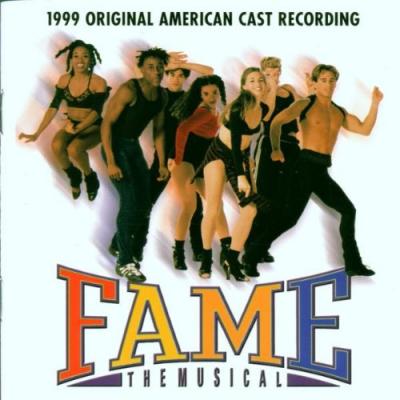
Fame Album Cover

"Fame" Soundtrack Lyrics

Musical • 2003

Track Listing


"Fame on 42nd Street (Original Off-Broadway Cast Recording)" Soundtrack Description

Promotional trailer frame for Fame the Musical — cast in rehearsal and performance montage
Fame — stage musical trailer imagery, cast recording context, 2003

Overview

Can a cast album bottle four years of sweat, auditions, and cracked voices? The 2003 Off-Broadway recording of Fame on 42nd Street says yes — by hard-wiring character arcs to punchy pop-rock, street-dance grooves, and conservatory-style ballads. It’s the stage cousin to the 1980 film, built on Steve Margoshes’s music, Jacques Levy’s lyrics, and José Fernández’s book, with the Oscar-winning title song by Michael Gore and Dean Pitchford folded in as the franchise banner.

Tracked at the Hit Factory shortly before opening at the Little Shubert Theatre, the album foregrounds the ensemble engine (“Hard Work”), the show’s aspirational heart (“Bring On Tomorrow”), and pointed teacher/administration counterweights (“The Teachers’ Argument,” “These Are My Children”). Playbill reported the session and street date; AllMusic logs the release timing, length, and studio; Variety and The New Yorker captured the mixed but lively critical temperature.

Stage trailer still showing High School of Performing Arts setting — lockers, rehearsal room, and ensemble
Fame — stage setting and ensemble focus, 2003

Questions & Answers

Is there an official 2003 cast album?
Yes. Fame on 42nd Street (Original Off-Broadway Cast) was recorded Oct 27, 2003 and released Nov 18, 2003.
Who wrote the score and the book?
Music by Steve Margoshes, lyrics by Jacques Levy, book by José Fernández. The title song “Fame” is by Michael Gore & Dean Pitchford.
Who handled orchestrations and music direction?
Orchestrations by Harold Wheeler and Steve Margoshes; music direction on the Off-Broadway run by Eric Knight Barnes.
What label released the album?
Q Records issued the recording (Atlantic/WEA distribution noted in trade listings).
Is the album streamable?
The CD is widely available on the secondary market; digital availability varies by region and platform.
Who are the principal vocalists on the album?
Nicole Leach (Carmen), Shakiem Evans (Tyrone), Christopher J. Hanke (Nick), Sara Schmidt (Serena), Q. Smith (Mabel), Dennis Moench (Schlomo), Jenna Coker (Lambchops) and company.

Notes & Trivia

  • The Off-Broadway run at the Little Shubert logged 40 previews and 264 performances.
  • Only the title song from the 1980 film remains; the rest of the score is original to the stage musical.
  • Recording took place at the Hit Factory in New York shortly before opening night.
  • Variety and The New Yorker published sharply differing takes — useful for hearing the album in context.
  • Harold Wheeler’s and Steve Margoshes’s orchestrations balance brass-and-rhythm bite with classroom/recital textures.

Genres & Themes

Pop-rock drive = ambition under pressure. Ensemble numbers push brisk tempos and drum kit forward in the mix; you hear hustle and schedule stress baked into the groove.

Street rhythm vs. ballet syntax. Rap-tinged, funk-leaning cues for Tyrone face off with classical lines for Iris — orchestrations make the culture clash audible.

Teacher arias as moral ballast. “The Teachers’ Argument” and “These Are My Children” trade hooks for rhetoric and conviction; they slow the pulse to ask what “success” costs.

Ballads as vows (and warnings). “Bring On Tomorrow” promises a future; its reprise reframes the promise after loss.

Trailer still highlighting dance rehearsal — street and ballet vocab intercut
Fame — style collisions (street, pop, and conservatory), 2003

Tracks & Scenes

“Pray I Make P.A.” — Students
Where it plays: Act I auditions/orientation; a quick-cut prayer from hopefuls. Non-diegetic musical number.
Why it matters: Instantly sets the stakes and the school’s gatekeeping.

“Hard Work” — Company
Where it plays: Act I, the first-day montage across classrooms and halls.
Why it matters: The show’s thesis — talent needs grind — driven by percussion and unison vocals.

“I Want to Make Magic” — Nick
Where it plays: Act I, early; Nick declares an actor’s manifesto between classes.
Why it matters: Earnest text, stripped orchestration — a character spine the score revisits.

“Can’t Keep It Down” — Joe & Students
Where it plays: Act I, comedy beat in a classroom setting.
Why it matters: Locker-room bravado; a pressure-valve number that sketches cohort dynamics.

“Tyrone’s Rap” — Tyrone
Where it plays: Act I, dance class and corridor clashes; rhythmic ostinatos under rhymes.
Why it matters: Signals the show’s hybrid language — hip-hop cadences inside a book musical.

“There She Goes! / Fame” — Carmen & Students
Where it plays: Act I, Carmen’s first star turn spills into the franchise anthem.
Why it matters: The only carry-over from the film; here it crowns Carmen’s swagger and sets up later irony.

“Let’s Play a Love Scene” — Serena
Where it plays: Act I, acting class; Serena blurs scene study with real feelings for Nick.
Why it matters: A meta-theatre ballad about pretending until the pretense turns true.

“Bring On Tomorrow” — Schlomo & Carmen
Where it plays: Act I, composition/rehearsal; students write their show-within-the-show.
Why it matters: The album’s emotional flag — idealism with a melody you can carry.

“The Teachers’ Argument” — Miss Bell & Miss Sherman
Where it plays: Late Act I faculty face-off over Tyrone and standards.
Why it matters: Values collide: nurture vs. rigor, opportunity vs. readiness.

“The Junior Festival” — Company
Where it plays: Act II opener inside an in-school performance event.
Why it matters: Diegetic showcase that lets the band flex and resets momentum.

“Think of Meryl Streep” — Serena
Where it plays: Act II; a witty self-pep talk about craft and celebrity.
Why it matters: Comic release for an otherwise earnest subplot.

“Mabel’s Prayer” — Mabel
Where it plays: Act II; cafeteria confession about food, faith, and discipline.
Why it matters: Crowd-pleasing character solo that lands laughs and sympathy without cruelty.

“Dancin’ on the Sidewalk” — Tyrone & Students
Where it plays: Mid-Act II; hallway spills into street-style bravura.
Why it matters: Re-centers Tyrone’s agency and vocabulary outside the classroom.

“These Are My Children” — Miss Sherman
Where it plays: Act II; a teacher’s credo delivered like an oratorio excerpt.
Why it matters: Gives the adults a musical ethic — protection and accountability.

“Pas de Deux (Reconnecting with Iris)” — Tyrone & Iris
Where it plays: Late Act II; a classical-meets-street reconciliation in movement and line.
Why it matters: Music bridges technique and background; the album preserves the tonal blend.

“In L.A.” — Carmen
Where it plays: Late Act II; industry fantasy turning to disillusionment.
Why it matters: The turning point for Carmen’s arc; bright chords, dark outcome.

“Let’s Play a Love Scene (Reprise)” — Nick & Serena
Where it plays: Late Act II; closure with tenderness and restraint.
Why it matters: A grounded epilogue to an adolescent crush reframed as respect.

“Bring On Tomorrow (Reprise)” — Company
Where it plays: Finale; the class assembles to look forward — and back.
Why it matters: Hope survives, tempered; the chorus swells now carry experience.

Music–Story Links

Ambition vs. community. “Hard Work” democratizes struggle — nobody gets a shortcut; the reprise underlines that the gate never fully opens.

Identity vs. institution. Tyrone’s rap material refuses to be “corrected” by ballet; the later pas de deux proves fluency can be additive, not subtractive.

Art vs. commerce. “Fame” (as Carmen’s vehicle) thrills; “In L.A.” answers it with the bill.

Trailer shot of classroom confrontation — teachers and students in a standoff
Fame — teachers vs. students: values in collision, 2003

How It Was Made

The Off-Broadway production ran at the Little Shubert Theatre (previews from October 7, 2003; opening November 11). The cast recording session took place October 27 at the Hit Factory; Q Records released the album November 18 with Atlantic/WEA distribution. Orchestrations credit Harold Wheeler alongside composer Steve Margoshes. The onstage music team balanced amplified rhythm section with brass/woodwind punches and recital-style colors to match classroom scenes. (Playbill and AllMusic supply dates and studio; Ovrtur confirms numbers and credits.)

Reception & Quotes

“A giant cockroach has crawled into the Little Shubert… the indestructible musical adapted from the 1980 movie.” Variety
“In some ways, Fame on 42nd Street is a relief… a one-set show with movable staircases.” TheaterMania
“Alternately sentimental, exploitative, and ugly… I’m sure the show will live forever.” The New Yorker

Critical response spanned from skeptical to supportive; the album remains the cleanest audio snapshot of this Off-Broadway edition.

Additional Info

  • Numbering & placements here follow the Off-Broadway 2003 sequence; other regional versions vary.
  • MTI licenses the show; a 60-minute Fame JR. edition exists for schools.
  • The cast album emphasizes ensemble; it’s closer to a staged concert mix than a film-style soundtrack.
  • Trade listings flagged Atlantic/WEA distribution despite Q Records branding.
  • Session timing — recording before official opening — explains the tight ensemble balance you hear on the disc.

Technical Info

  • Title: Fame on 42nd Street (Original Off-Broadway Cast Recording)
  • Year/Type: 2003 — stage cast album (Off-Broadway)
  • Composers/Lyricist/Book: Steve Margoshes / Jacques Levy / José Fernández
  • Title song: “Fame” by Michael Gore & Dean Pitchford
  • Orchestrations: Harold Wheeler; Steve Margoshes
  • Key performers: Nicole Leach, Shakiem Evans, Christopher J. Hanke, Sara Schmidt, Q. Smith, Dennis Moench, Jenna Coker
  • Label & release: Q Records; street date Nov 18, 2003 (Atlantic/WEA distribution)
  • Recording: Hit Factory (NYC), Oct 27, 2003; album length ~74:55
  • Notable numbers: “Hard Work,” “I Want to Make Magic,” “There She Goes!/Fame,” “Bring On Tomorrow,” “Mabel’s Prayer,” “These Are My Children,” “In L.A.”
  • Stage context: Little Shubert Theatre run — 40 previews, 264 performances

Canonical Entities & Relations

EntityRelationEntity
Steve Margoshescomposed music forFame on 42nd Street (stage musical)
Jacques Levywrote lyrics forFame on 42nd Street
José Fernándezwrote book forFame on 42nd Street
Harold WheelerorchestratedFame on 42nd Street
Q Records / Atlantic (WEA)releasedOriginal Off-Broadway Cast Recording (2003)
Little Shubert Theatrehosted2003–2004 Off-Broadway run
Nicole LeachportrayedCarmen Diaz (album principal)
Shakiem EvansportrayedTyrone Jackson (album principal)

Sources: Playbill; AllMusic; Variety; The New Yorker; Ovrtur; TheaterMania.

November, 09th 2025


A-Z Lyrics Universe

Lyrics / song texts are property and copyright of their owners and provided for educational purposes only.