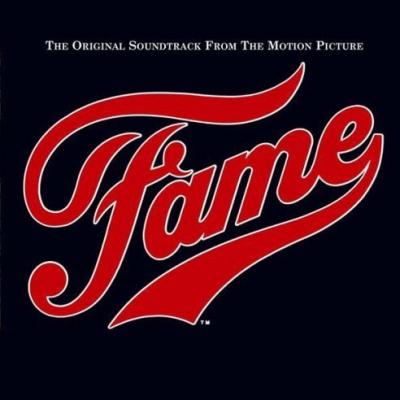
"Fame (Movie)" Soundtrack Lyrics
Movie • 2003
Track Listing
Irene Cara
Irene Cara
Irene Cara
Paul McCrane
Linda Clifford
Paul McCrane
Wade Lassister
Dressing Room Piano
Wade Lassister
"Fame: The Original Soundtrack from the Motion Picture" Soundtrack Description
Overview
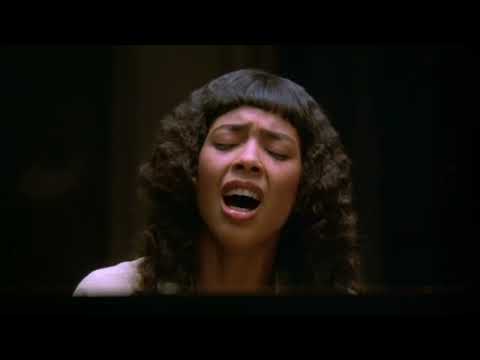
Is a teen musical allowed to be this tough? The 1980 film’s album answers with post-disco pulse, gospel lift, and intimate songwriter confessions. Michael Gore’s song score carries the show: radio-ready anthems (“Fame”), bare-piano ballads (“Out Here on My Own”), cafeteria eruptions (“Hot Lunch Jam”), and a commencement blowout (“I Sing the Body Electric”).
The commercial LP (RSO Records; 9 songs, ~35 minutes) became a pop-culture fixture: Irene Cara’s vocals pushed two signature singles, while Linda Clifford’s “Red Light” and Paul McCrane’s actor-sung cuts rounded out the drama-to-dance blend. AllMusic archives the album’s credits and timing; the Academy confirms the unusual double at the 53rd Oscars (Best Original Song and Best Score category of that year).

Questions & Answers
- Is there a 2003 Fame movie?
- No. The film releases are 1980 (original) and 2009 (remake). 2003 saw a CD reissue of the 1980 soundtrack and an Off-Broadway stage run (Fame on 42nd Street).
- Who wrote and produced the songs?
- Music by Michael Gore (producer); lyrics chiefly by Dean Pitchford (“Fame”) and Lesley Gore (“Out Here on My Own”).
- Which tracks became singles?
- “Fame,” “Out Here on My Own,” and “Red Light.” “Fame” won the Oscar for Best Original Song.
- Does the album contain the big street-dance sequence?
- Yes — the title song “Fame” underpins the street number outside the school; it’s the album opener.
- What’s the finale song at graduation?
- “I Sing the Body Electric,” a gospel-rock-classical hybrid written for the closing commencement scene.
- Are the performances largely diegetic?
- Yes. Many numbers are performed in-story (auditions, classes, cafeteria, concerts), with a few score cues and reprises stitching scenes.
- Is there a later expanded edition?
- The 1980 album was reissued on CD in 2003 with three bonuses (incl. instrumentals) and reissued again in 2009/2012.
Notes & Trivia
- Category oddity: the film won Best Original Song and the year’s score category (then configured for song-driven scores).
- Luther Vandross contracted and sang backing vocals on “Fame.”
- Paul McCrane’s “Is It Okay If I Call You Mine?” began as his audition piece; Parker kept it.
- “Red Light” (Linda Clifford) hit No. 1 on the U.S. Dance chart alongside “Fame” and “Hot Lunch Jam.”
- The famous street sequence was shot on West 46th Street with hundreds of dancers and extras.
- There is no 2003 movie; confusion usually stems from the 2003 CD reissue and the 2003 Off-Broadway revival.
Genres & Themes
Post-disco & pop = public ambition. “Fame” and “Red Light” turn corridors into catwalks and streets into stages — swagger as survival strategy.
Gospel lift = community. “I Sing the Body Electric” binds solo arcs into a cohort; the choir sound reads as mutual endorsement, not just volume.
Singer-songwriter intimacy = interior life. “Out Here on My Own” and McCrane’s apartment solo expose doubt and loneliness without orchestral armor.
Source-music realism. Cafeteria funk, classroom pianos, rehearsal-room guitars: diegetic placement keeps the drama grounded.
Tracks & Scenes
“Fame” — Irene Cara
Where it plays: Lunchtime turns into a street takeover outside Performing Arts; students dance on cars as Bruno’s track blasts from a cab. Non-diegetic into diegetic bleed.
Why it matters: The franchise thesis — ambition made audible — and the album’s chart engine.
“Hot Lunch Jam” — Irene Cara (company)
Where it plays: Cafeteria free-for-all, built from an improvised on-set session; diegetic performance.
Why it matters: Shows the film’s process—real kids, real noise—becoming a song.
“Out Here on My Own” — Irene Cara
Where it plays: Onstage/piano rehearsal, single spotlight; fully diegetic.
Why it matters: Vulnerability without gloss; later an Oscar-night performance and a second song nomination from the same film.
“Dogs in the Yard” — Paul McCrane
Where it plays: Freshman-year montage; McCrane’s voice floats over small triumphs and missteps. Diegetic feel into montage.
Why it matters: A humane counterweight to the big anthems.
“Is It Okay If I Call You Mine?” — Paul McCrane
Where it plays: Montgomery alone in his apartment window nook; hushed, diegetic performance.
Why it matters: The most private song in the film—character as songwriter, not just student.
“Red Light” — Linda Clifford
Where it plays: Dance sequence built around Leroy’s explosive movement; needle-drop energy.
Why it matters: Post-disco gloss sharpening a character’s physical bravado.
“I Sing the Body Electric” — Company
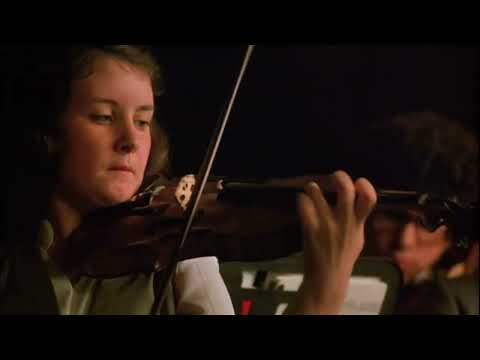
Where it plays: Graduation concert; orchestral-rock-gospel finale, diegetic performance.
Why it matters: The class becomes a choir; the yearbook closes on a shout.
Music–Story Links
Spaces define sound: cafeteria = collective invention (“Hot Lunch Jam”); corridor/street = fame fantasy made public (“Fame”); stage = confession and proof (“Out Here on My Own”).
Solo vs. swarm: McCrane’s two small songs humanize the margins so the finale’s communal blast lands with earned catharsis.
Dance as language: “Red Light” frames Leroy’s physical argument with the institution — technique vs. torque.
How It Was Made
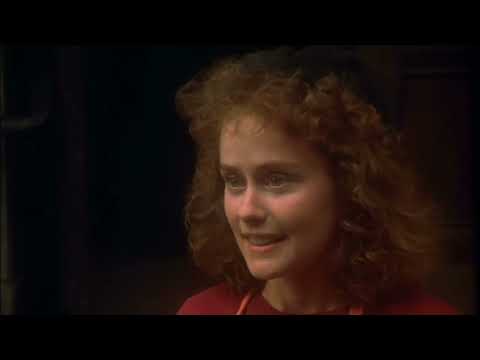
Alan Parker shot most numbers practically to avoid post-dub gloss, which is why the cafeteria sequence feels chaotic and alive. “Hot Lunch Jam” grew from an all-day jam with real students; the “Fame” street number was filmed over multiple days on West 46th Street with hundreds of dancers. The title song wasn’t ready during shooting; the scene was staged to another track and the final song dropped in later. Parker originally approached Giorgio Moroder and Jeff Lynne; Michael Gore ultimately composed/produced the song score with Dean Pitchford and Lesley Gore as primary lyricists. A neat footnote: Luther Vandross contracted/sang background vocals on “Fame.”
Reception & Quotes
Oscars records the win for Best Original Song (“Fame”) and the year’s song-score category; AllMusic later praised the LP’s durability; Variety revisited how the finale became a standard.
“The music by Michael Gore is dynamic, varied, and alive… it still retains its essential spark.” AllMusic
“A graduation song-and-dance number in which the kids sing ‘I Sing the Body Electric.’” Variety
Additional Info
- Original LP: 9 tracks (~35:08). 2003 CD adds three bonuses (incl. instrumental “Fame” and “Out Here on My Own”).
- “Red Light” also appears on Linda Clifford’s 1980 album I’m Yours.
- UK chart quirk: “Fame” and the album both hit No. 1 on re-release in 1982 off the TV series’ momentum.
- Concord Music notes two Oscars for Michael Gore (Song; Score) and worldwide album sales in the multi-million range.
- Key players on the LP include session greats like Marcus Miller (bass) and David Spinozza (guitar).
Technical Info
- Title: Fame: The Original Soundtrack from the Motion Picture
- Year/Type: 1980 — film soundtrack (song-driven score with diegetic performances)
- Composer/Producer: Michael Gore (primary composer/producer)
- Lyricists: Dean Pitchford (“Fame”, “Body Electric”); Lesley Gore (“Out Here on My Own”); others as credited
- Label: RSO Records (original); later CD reissues (2003/2009/2012)
- Signature placements: “Fame” (street sequence), “Hot Lunch Jam” (cafeteria), “Out Here on My Own” (stage/piano), “Red Light” (Leroy showcase), “I Sing the Body Electric” (graduation)
- Awards: Academy Award — Best Original Song (“Fame”); the year’s score category awarded to the film’s song score
Canonical Entities & Relations
| Subject | Relation | Object |
|---|---|---|
| Michael Gore | composed & produced | Fame (1980) soundtrack |
| Dean Pitchford | wrote lyrics for | “Fame”, “I Sing the Body Electric” |
| Lesley Gore | wrote lyrics for | “Out Here on My Own” |
| Irene Cara | performed | “Fame”, “Out Here on My Own”, “I Sing the Body Electric” |
| Paul McCrane | performed | “Dogs in the Yard”, “Is It Okay If I Call You Mine?” |
| Linda Clifford | performed | “Red Light” |
| RSO Records | released | Original 1980 LP |
| Alan Parker | directed | Fame (1980 film) |
Sources: AllMusic; The Academy (Oscars.org); Variety; Wikipedia; Discogs; Billboard; Concord Music Publishing.
November, 09th 2025
A-Z Lyrics Universe
Cynthia Erivo Popular
Ariana Grande Horsepower
Post Malone Ain't No Love in Oklahoma
Luke Combs Good Riddance (Time of Your Life)
Green Day Bye Bye Bye
*NSYNC You're the One That I Wan
John Travolta & Olivia Newton-John I Always Wanted a Brother
Braelyn Rankins, Theo Somolu, Kelvin Harrison Jr. and Aaron Pierre The Power of Love
Frankie Goes to Hollywood Beyond
Auli’i Cravalho feat. Rachel House MORE ›