Soundtracks:  A B C D E F G H I J K L M N O P Q R S T U V W X Y Z #


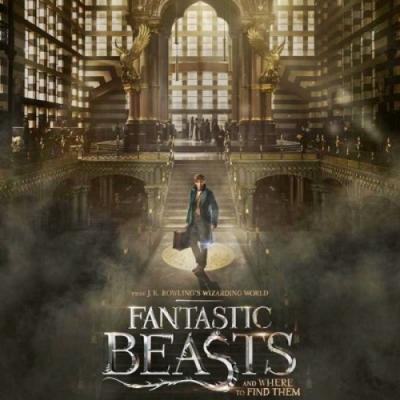
Fantastic Beasts and Where to Find Them Album Cover

"Fantastic Beasts and Where to Find Them" Soundtrack Lyrics

Movie • 2016

Track Listing


"Fantastic Beasts and Where to Find Them (Original Motion Picture Soundtrack)" Soundtrack Description

Teaser trailer thumbnail featuring Newt Scamander with his suitcase, Fantastic Beasts 2016
Fantastic Beasts and Where to Find Them — official teaser trailer, 2016

Overview

How do you score a new corner of the Wizarding World without leaning too hard on Hogwarts nostalgia? James Newton Howard threads that needle: a fresh, character-led symphonic score with a few respectful nods to franchise DNA (the opening cue slips in a taste of “Hedwig’s Theme”). The sound is big-orchestra adventure balanced with 1920s color and sly jazz inflections.

The album arrived via WaterTower Music in two editions (standard and 26-track deluxe). Sessions took place at Abbey Road with a 90+ piece London orchestra, resulting in a clear, cinematic mix that showcases creature set-pieces (“Inside the Case,” “The Erumpent”) and emotional anchors (“Jacob’s Farewell”). For reference, see the Apple Music listing, the Spotify album page, and Wizarding World (formerly Pottermore) for the on-screen jazz song details.

Trailer frame hinting at 1920s New York skyline and wizarding flourishes
Trailer imagery — 1926 New York meets magic

Questions & Answers

Is there an official soundtrack album?
Yes. WaterTower released the score on November 18, 2016 (digital/CD), with a prior limited vinyl; a deluxe adds bonus cues.
Who composed the score?
James Newton Howard, recorded in London with a large orchestra.
Is the Harry Potter theme in the film?
Briefly. “Main Titles” includes a nod to John Williams’s “Hedwig’s Theme.”
What’s the speakeasy song?
“Blind Pig” — performed by Emmi; lyrics by J.K. Rowling, music by Mario Grigorov. It’s in the Blind Pig scene.
Is there a deluxe edition and what’s different?
Yes. The 26-track deluxe adds extra score cues plus “Blind Pig.”
Who handled music supervision?
Karen Elliott and Alejandro de la Llosa received music supervisor credits.
Where was it recorded?
Abbey Road Studios; the sessions feature the London Symphony players and choir forces.

Notes & Trivia

  • The “Main Titles” cue explicitly tags in “Hedwig’s Theme,” functioning as a bridge from Potter to Beasts.
  • “Blind Pig” is diegetic: the chanteuse performs it on screen inside the goblin-run speakeasy.
  • Howard wrote distinct creature motifs (Niffler, Erumpent, Demiguise) and a bluesy 1920s tint for Jacob.
  • The deluxe album adds nine bonus tracks; “Kowalski Rag” plays as a period-styled coda on album only.
  • The score peaked on French charts; physical vinyl preceded the digital/CD drop.

Genres & Themes

Symphonic fantasy with period spice. Full-bodied orchestral writing drives action and wonder; rhythm-section and harmony tweaks nod to 1920s swing without turning the score into pastiche.

Motivic storytelling. Newt gets two themes (warm curiosity vs. muscular heroism). Jacob’s material leans lazy-blues and ragtime hints; Obscurus cues shift to choral gloom and grinding harmony.

Nostalgia as a motif, not a crutch. A brief “Hedwig’s Theme” cameo signals continuity, then the score carves its own identity.

Trailer still with MACUSA grandeur hinting at orchestral sweep
Trailer mood — orchestral sweep for MACUSA scale

Tracks & Scenes

“You’re the Cream in My Coffee” — Ruth Etting
Scene: Early New York establishing sequence (≈00:15:00); diegetic period source (radio/venue) that plants us firmly in 1926.
Why it matters: A genuine 1928 hit instantly time-stamps the world without exposition.

“Diga Diga Doo” — The Mills Brothers
Scene: Mid-teen minutes in a nightlife setting; diegetic swing needle-drop underscoring bustling NYC crowds.
Why it matters: Adds authentic Black-and-tan club color; contrasts with the prim formality of MACUSA.

“Blind Pig” — Emmi
Scene: The Blind Pig speakeasy (≈01:18:00); fully diegetic on-stage performance while Newt, Tina, Queenie and Jacob negotiate with Gnarlak; Gigglewater flows, tension simmers.
Why it matters: Lyrics (by J.K. Rowling) lace in magical-creature references while the sultry jazz masks an informant standoff.

“There Are Witches Among Us / The Bank / The Niffler” — James Newton Howard
Scene: The opening Niffler chaos at the bank (≈00:05:00–00:12:00); non-diegetic action writing with playfully scurrying figures.
Why it matters: Announces the score’s kinetic brass/woodwind dialogue and the Niffler’s caper energy.

“Inside the Case” — James Newton Howard
Scene: Newt opens his sanctuary (≈00:35:00); non-diegetic wonder cue that expands harmonically as the menagerie is revealed.
Why it matters: Worldbuilding via harmony — warm strings and harp sketch Newt’s empathy.

“The Erumpent” — James Newton Howard
Scene: Central Park mating-dance set piece (≈00:50:00); non-diegetic comic-romantic scherzo matching Newt’s awkward choreography.
Why it matters: Precision mickey-mousing that never turns slapstick; a standout for winds and muted brass.

“Tina and Newt Trial / … / Swooping Evil” — James Newton Howard
Scene: Execution chamber and breakout (≈01:05:00–01:12:00); non-diegetic, choir and percussion elevate dread and escape.
Why it matters: The score’s darkest textures pivot to airy release when the plan clicks.

“Relieve Him of His Wand / Newt Releases the Thunderbird / Jacob’s Farewell” — James Newton Howard
Scene: Climax and Obliviate rain (≈01:55:00); non-diegetic, long-line theme over city-wide memory sweep.
Why it matters: Emotional summation; melody as balm after devastation.

“Newt Says Goodbye to Tina / Jacob’s Bakery” — James Newton Howard
Scene: Epilogue (≈02:07:00); non-diegetic tenderness into warm end-title glow.
Why it matters: A gentle cadence that sets up future chapters and gives Jacob a sweet grace note.

Music–Story Links

Newt’s dual identity = dual themes. Curiosity motif (light, nimble) vs. hero theme (bold interval leaps) mirrors caretaker vs. actioner — the film toggles between them at each crisis.

Jacob’s humanity in jazz clothing. The quasi-ragtime harmony reminds us he’s a No-Maj outsider whose warmth disarms wizards — a musical reason his bakery epilogue lands.

Obscurus = suppressed voice. Choir and constrained, grinding harmony paint repression, so the thunderstorm release reads as both magical and cathartic.

Trailer image suggesting storm over Manhattan, echoing the Obliviate rainfall finale
Storm motif — musical catharsis in the finale

How It Was Made

Howard reportedly “auditioned” for the job with two dozen short demos, then built the final score over roughly seven months. Recording and mixing took place at Abbey Road (Studio One) with Shawn Murphy at the console; orchestrations spanned a large team, and Pete Anthony conducted. The official credits list Karen Elliott and Alejandro de la Llosa as music supervisors. Wizarding World confirms the on-screen speakeasy song “Blind Pig,” written by J.K. Rowling with composer Mario Grigorov and sung by Emmi.

Design choices: a portable palette (wizarding stealth, comic chase, creature intimacy), a light source-music layer for 1920s NYC, and a single overt nostalgia marker (“Hedwig’s Theme”) in the main titles only. The deluxe album assembles alternates and epilogue pieces (“Kowalski Rag”).

Reception & Quotes

“A gorgeously rendered score at its best.” Filmtracks
“His first piece, ‘Pie or Strudel …,’ debuts today.” Vanity Fair
“Deluxe edition also includes an original jazz song, ‘Blind Pig.’” Movie Music UK
“Ruth Etting… helps set the scene for this 1920s story.” Leonard Maltin

Critical response clustered around two wins: the creature set-pieces (colorful, deftly orchestrated) and the finale’s emotional through-line. Fans singled out the speakeasy sequence for its diegetic swagger.

Additional Info

  • Editions: standard (≈72 min) and deluxe (≈98–100 min).
  • Vinyl: a limited picture-disc predated the digital/CD release.
  • Diegetic song: “Blind Pig” appears on the deluxe album; in-film, it’s performed on stage.
  • Legacy motif: “Hedwig’s Theme” cameo is acknowledged in the main titles cue.
  • Recording: Abbey Road Studio One; large London orchestra and choir.
  • Supervision: music supervisors credited: Karen Elliott, Alejandro de la Llosa.
  • Chart note: the album registered a minor placement in France.
  • Label: WaterTower Music (Warner Bros. Entertainment licensee).

Technical Info

  • Title: Fantastic Beasts and Where to Find Them (Original Motion Picture Soundtrack)
  • Year: 2016 (vinyl Nov 4; digital/CD Nov 18)
  • Type: Film score (with one diegetic song on the deluxe)
  • Composer: James Newton Howard
  • Featured song: “Blind Pig” — Emmi (lyrics J.K. Rowling; music Mario Grigorov)
  • Recording/Mix: Abbey Road Studios; engineered by Shawn Murphy
  • Music supervision: Karen Elliott; Alejandro de la Llosa
  • Label: WaterTower Music
  • Editions: Standard (~72 min); Deluxe (26 tracks, ~98–100 min)
  • Availability: Streaming (Apple Music, Spotify); CD; limited vinyl

Canonical Entities & Relations

EntityRelationEntity
James Newton Howardcomposed score forFantastic Beasts and Where to Find Them (2016 film)
WaterTower MusicreleasedOriginal Motion Picture Soundtrack (2016)
J.K. Rowlingwrote lyrics for“Blind Pig” (diegetic song)
Mario Grigorovcomposed song music for“Blind Pig”
Emmiperformed“Blind Pig” (on-screen chanteuse)
Karen Elliott; Alejandro de la Llosaserved asMusic Supervisors
John Williamsauthored motif quoted in“Main Titles” (Hedwig’s Theme cameo)

Sources: Wizarding World (Pottermore); Apple Music; Spotify; Wikipedia; Metacritic credits; Movie Music UK; Filmtracks; Leonard Maltin.

Did you know arriving at the cinema to have another cozy watching of the Harry Potter’s universe film that you would meet here charming Colin Farrell, horrendous Ron Perlman, a father of Angelina Jolie, Jon Voight, always ‘Captain Jack Sparrow’ Johnny Depp and a daughter of incredibly talented singer, songwriter, music instruments player, producer, actor & philanthropist Lenny Kravitz, Zoë Kravitz? In fact, while we were studying the film and its soundtrack, we found two peculiar lines of bond between this film and a movie franchise ‘Hunger Games.’ Follow our thought: Zoë Kravitz, who stars here, is a daughter of Lenny Kravitz, who depicted Cinna in two ‘Hunger Games’ films. While at the same time, Emmi who sings here Blind Pig song with inside-Potter Universe lyrics has become popular thanks to Taylor Swift, who wrote and sung two songs for ‘Hunger Games,’ part one and four. This film was a debut of J. K. Rowling as a screenwriter, and we congratulate her in this, as the film turned out just fine and maybe – we don’t affirm anything – but just maybe it will gross over 1 billion, as in the opening weekend worldwide gathered over USD 260 million. In a month or two, let’s see the adjusted box office results to find out if our suggestions were right. The other performer we see here Ruth Etting with the delightful name You're The Cream In My Coffee, which in lyrics is the ode to someone’s beloved, as it is obvious from the name. A fine thing from the number of instrumental ones is Hedwig's Theme, written and directed by James Newton Howard – this magnificent and extraterrestrially-gifted person, who participates only in the best productions of Warner Bros., Sony Pictures, 20th Century Fox, Columbia Pictures, Universal Pictures, Lionsgate, Amblin Entertainment & Walt Disney.

November, 09th 2025

"Fantastic Beasts and Where to Find Them": IMDb profile, Official Website, Soundtrack Info, more about James Newton Howard
A-Z Lyrics Universe

Lyrics / song texts are property and copyright of their owners and provided for educational purposes only.