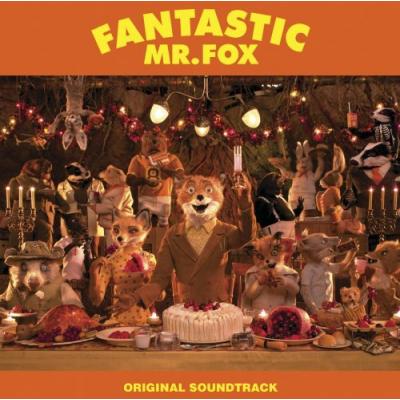
"Fantastic Mr. Fox" Soundtrack Lyrics
Cartoon • 2009
Track Listing
The Wellingtons
The Beach Boys
Burl Ives
Alexandre Desplat
Nancy Adams
Burl Ives
Burl Ives
Georges Delerue
The Rolling Stones
Jarvis Cocker
Art Tatum
Georges Delerue
The Beach Boys
Bobby Fuller Four
"Fantastic Mr. Fox (Original Soundtrack)" Soundtrack Description

Overview
How do you make a heist-caper for stop-motion puppets feel sly instead of cute? The answer here is a split personality that works: a nimble, banjo-flecked score by Alexandre Desplat and a crate-digging set of vintage needle-drops. The mix gives Wes Anderson room to switch from Dahl’s cozy domesticity to raids, chase tunnels, and end-credit euphoria without breaking tone.
The album (ABKCO) blends Desplat cues with picks from The Beach Boys, Burl Ives, Georges Delerue, The Rolling Stones, Nancy Adams, Art Tatum and more. A later digital “Abbey Road Mixes” release presents additional score; a FYC promo carried the complete score for awards voters. Trusted references in this article include ABKCO Records, AllMusic, Pitchfork, and The Hollywood Reporter.

Questions & Answers
- Is there an official soundtrack album?
- Yes. ABKCO released Fantastic Mr. Fox (Original Soundtrack) in early November 2009; it combines Desplat’s score with curated songs.
- Who composed the score?
- Alexandre Desplat. He also conducted and co-orchestrated; sessions were held at Abbey Road and Studios Guillaume Tell.
- What song plays during the supermarket dance and end credits?
- “Let Her Dance” by The Bobby Fuller Four — it scores the supermarket groove and rolls into the credits.
- What’s the campfire banjo song (and who wrote it)?
- “Fantastic Mr. Fox AKA Petey’s Song,” written by Jarvis Cocker with Wes Anderson and Noah Baumbach; performed in-character by Cocker.
- Is there more score beyond the main album?
- Yes. Additional Music from the Original Score — The Abbey Road Mixes (digital, 2010) expands Desplat’s cues; a separate FYC “complete score” circulated to voters.
- Who handled music supervision/production?
- Music supervisor Randall Poster; soundtrack producers Wes Anderson and Randall Poster.
- Which classic rock track underscores the farmer excavation?
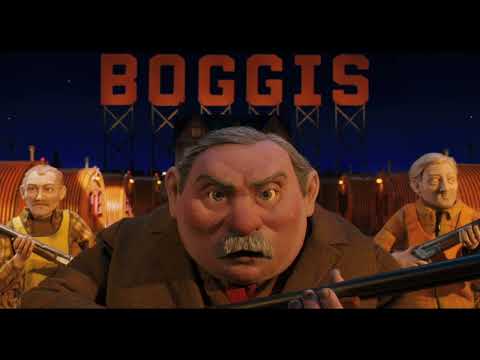
- “Street Fighting Man” by The Rolling Stones backs the three-excavator assault.
Notes & Trivia
- Label: ABKCO Records — a good fit since it controls Rolling Stones masters used here.
- Two Beach Boys deep cuts appear: “Heroes and Villains” and their rare cover of “Ol’ Man River.”
- Anderson and Randall Poster long saved “Let Her Dance” for the perfect ending; it lands here.
- Desplat’s palette favors banjo, recorders, mandolin, celesta, and toy percussion — intentionally small-scale for puppets.
- The score earned Oscar and BAFTA nominations.
Genres & Themes
Folk-chamber caper. Banjo, recorders, and celesta sketch homey warmth; brisk strings and snare tattoos drive raids and escapes.
Vintage needle-drops as time-warps. 60s pop and earlier Americana mark big beats — romantic pauses (“Love” from Disney’s Robin Hood), siege gears (“Street Fighting Man”), and community joy (“Let Her Dance”).
French lyricism for heart. Short Delerue quotes (“Le Grand Choral,” “Adagio”) give dinner toasts and reconciliations an earned swell.

Tracks & Scenes
“The Ballad of Davy Crockett” — The Wellingtons
Scene: Opening hill (≈00:01); Mr. Fox eats an apple and clicks off the music as Mrs. Fox arrives. Diegetic radio.
Why it matters: A wry American-myth needle-drop before the caper switch flips.
“Heroes and Villains” — The Beach Boys
Scene: Chicken raid sprint (≈00:03), cuts to the trap and pregnancy reveal. Non-diegetic montage.
Why it matters: Kinetic harmony for the film’s thesis: audacity vs. consequence.
“Fooba Wooba John” — Burl Ives
Scene: Breakfast domesticity (≈00:04–00:05). Source-like background.
Why it matters: Establishes cozy family routine before trouble.
“Love” (from Disney’s Robin Hood) — Nancy Adams
Scene: Quiet interlude by the tree/pool (≈00:10). Non-diegetic.
Why it matters: Storybook tenderness without syrup.
“Buckeye Jim” — Burl Ives
Scene: Bedroom spat about sleeping arrangements (≈00:13). Background/source-leaning.
Why it matters: Soft lullaby under a prickly Ash/Kristofferson beat.
Mozart: Horn Concerto No. 4 — I. Allegro maestoso
Scene: Bunce’s surveillance room while Fox and Kylie burgle the smokehouse (≈00:20). Diegetic.
Why it matters: Classical poise played for dry comedy.
“The Grey Goose” — Burl Ives
Scene: Dinner at the Foxes before the cider heist (≈00:23). Source-style.
Why it matters: Old American folk warmth before the plan goes loud.
“Street Fighting Man” — The Rolling Stones
Scene: Three excavators attack the tree (≈00:33–00:35). Non-diegetic.
Why it matters: A blunt, era-defining riff for the siege — perfect sync.
“Fantastic Mr. Fox AKA Petey’s Song” — Jarvis Cocker
Scene: Campfire performance at Bean’s farm (≈00:41–00:42). Fully diegetic.
Why it matters: Comic world-building; Anderson breaks the fourth wall of music taste.
Art Tatum: “Night and Day”
Scene: Preparing the festive dinner in Badger’s flint mine (≈00:45). Source playing while Mole “plays.”
Why it matters: Elegant jazz ease in the middle of chaos.
Georges Delerue: “Adagio” & “Le Grand Choral”
Scene: Toasts and resolve sequences (≈00:47–00:58). Non-diegetic.
Why it matters: Luminous lift — small animals, big feelings.
“I Get Around” — The Beach Boys
Scene: Mr. Fox canvasses animal skillsets (≈00:57–01:00). Non-diegetic.
Why it matters: Rally music; plans snap into place.
“Ol’ Man River” — The Beach Boys
Scene: Sewer adaptation montage and supermarket approach (≈01:13–01:16). Non-diegetic.
Why it matters: An unlikely Beach Boys cover gives the exile dignity.
“Let Her Dance” — The Bobby Fuller Four
Scene: Supermarket dance into end credits (≈01:17–01:20). Non-diegetic, then credits.
Why it matters: Perfect catharsis — the community finds a groove.
Music–Story Links
Home vs. heist. Burl Ives, Disney’s “Love,” and Delerue cues anchor family and community; Stones/Beach Boys cues energize raids and rallying.
Scale by instrumentation. Desplat keeps an intimate band (banjo, recorders, toy percussion), so fox-sized problems feel big without orchestral bloat.
Diegetic moments as jokes. Petey’s on-screen song and Bunce’s Mozart needle-drop punch holes in villain gravitas.
How It Was Made
Anderson moved from longtime collaborator Mark Mothersbaugh to Alexandre Desplat for this first animated feature. Desplat read Dahl, then wrote childlike but precise motifs, recorded in London and Paris with a compact ensemble (banjo, mandolin, recorders, celesta, toy percussion). ABKCO issued the soundtrack; producers were Wes Anderson and music supervisor Randall Poster. An expanded digital release (Additional Music… The Abbey Road Mixes) followed during awards season.
Clearances/curation: Poster and Anderson pulled in 60s/folk catalog highlights; notable gets include The Beach Boys’ “Ol’ Man River” and The Rolling Stones’ “Street Fighting Man.” AllMusic and ABKCO’s notes align on personnel (orchestration team, Abbey Road engineers, mastering by Greg Calbi).
Reception & Quotes
“Boomer faves by the Beach Boys and the Stones punctuate the soundtrack, with Desplat delivering an elegant gallop of a score.” The Hollywood Reporter
“7.1 — meticulously curated… Desplat’s wider range keeps up with the genre-hopping.” Pitchfork
“Quirky, old-fashioned whimsy and mischievousness.” Movie Music UK
Result: a warmly reviewed blend of curation and composition; Desplat’s score earned Academy Award and BAFTA nominations. Apple Music and Spotify carry the soundtrack widely.
Additional Info
- Editions: main album (2009); Additional Music — The Abbey Road Mixes (2010, digital); an internal FYC “complete score” promo (2009).
- Personnel snapshots: recording/mix engineers include Andrew Dudman, Peter Cobbin, Sam Okell; mastering by Greg Calbi.
- Diegetic cues to note: Petey’s banjo song; Mozart Horn Concerto in Bunce’s room.
- Label context: ABKCO releases several Anderson soundtracks; its Stones catalog made “Street Fighting Man” feasible.
- Streaming: full album on Spotify and Apple Music; ABKCO maintains an official album page.
Technical Info
- Title: Fantastic Mr. Fox (Original Soundtrack)
- Year: 2009 (album); film released November 2009
- Type: Film soundtrack (score + various artists)
- Composer/Conductor: Alexandre Desplat
- Music Supervision: Randall Poster
- Label: ABKCO Records
- Studios: Abbey Road Studios (London); Studios Guillaume Tell (Suresnes)
- Select placements: “Street Fighting Man” (excavator siege); “Petey’s Song” (campfire, diegetic); “Let Her Dance” (supermarket/credits); “Ol’ Man River” (sewer montage)
- Awards: Oscar & BAFTA nominations for Original Score
- Availability: Digital/streaming; additional score album (2010, digital)
Canonical Entities & Relations
| Entity | Relation | Entity |
|---|---|---|
| Alexandre Desplat | composed & conducted | Fantastic Mr. Fox score |
| Randall Poster | music supervision / produced | Original Soundtrack |
| ABKCO Records | released | Fantastic Mr. Fox (Original Soundtrack) |
| Jarvis Cocker | wrote & performed | “Fantastic Mr. Fox AKA Petey’s Song” (diegetic) |
| The Rolling Stones | performed | “Street Fighting Man” (excavator sequence) |
| The Beach Boys | performed | “Heroes and Villains”; “Ol’ Man River” |
| Georges Delerue | music quoted | “Adagio”; “Le Grand Choral” |
| The Bobby Fuller Four | performed | “Let Her Dance” (finale/credits) |
Sources: ABKCO Records; AllMusic; Pitchfork; The Hollywood Reporter; WhatSong; SoundtrackRadar; Spotify; Apple Music; IMDb.
November, 09th 2025
A-Z Lyrics Universe
Cynthia Erivo Popular
Ariana Grande Horsepower
Post Malone Ain't No Love in Oklahoma
Luke Combs Good Riddance (Time of Your Life)
Green Day Bye Bye Bye
*NSYNC You're the One That I Wan
John Travolta & Olivia Newton-John I Always Wanted a Brother
Braelyn Rankins, Theo Somolu, Kelvin Harrison Jr. and Aaron Pierre The Power of Love
Frankie Goes to Hollywood Beyond
Auli’i Cravalho feat. Rachel House MORE ›