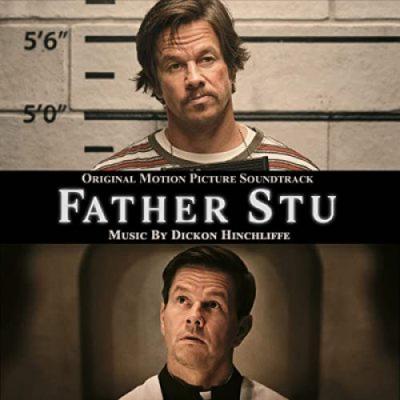
"Father Stu" Soundtrack Lyrics
Movie • 2022
Track Listing
Johnny Cash
Brett Young
Ike Rhein
Shawn Mendes
The Black Keys
"Father Stu (Original Motion Picture Soundtrack)" Soundtrack Description
Overview
What happens when a faith story leans on country, classic rock, and a quietly insistent modern score? Father Stu answers with a down-to-earth needle-drop playlist wrapped around Dickon Hinchliffe’s compact original cues. The film opens on jukebox Americana and gradually narrows into reflective textures as Stuart Long’s calling sharpens.
The official album is a 21-track score release—short, motif-driven cues with plenty of space for dialogue. Meanwhile, the movie itself leans on recognizable songs (Dolly Parton, The Black Keys, John Prine) to frame Stu’s blue-collar restlessness and later humility. Apple Music lists the album at 32 minutes and dates it to April 15, 2022. Madison Gate Records credits Hinchliffe and notes the Sony relationship. These are the bedrock facts, and they shape how the music works scene to scene.
Questions & Answers
- Who composed the score?
- Dickon Hinchliffe, known for Winter’s Bone, Locke, and The Lost Daughter. Spotify and Apple Music carry the album.
- Is there an official soundtrack album?
- Yes—the score album (Father Stu (Original Motion Picture Soundtrack)) was released digitally by Madison Gate Records.
- Who supervised the licensed songs?
- Scott Vener is credited as music supervisor in the film’s credits and trade coverage.
- What style does the score use?
- Lean cues: restrained strings, electric guitar ambience, and simple piano figures—built to sit under dialogue and on-location sound.
- Are the popular songs on the album?
- No—most needle-drops (e.g., Dolly Parton, Glen Campbell) are not on the score album; they appear in the film only.
- When was the album released?
- April 15, 2022, day-and-date with the U.S. theatrical launch.
- Where can I verify specific scene placements?
- Vague Visages and Soundtracki provide time-stamped scene listings; IMDb’s soundtrack page lists the cleared songs.
Notes & Trivia
- The score album runs ~32 minutes across 21 cues (digital-only at launch).
- Needle-drops skew country and classic rock to mirror Stu’s Montana roots and working-class drift.
- The karaoke scene uses a Johnny Cash duet staple (“Jackson”) performed in-story—diegetic and character-revealing.
- End credits rotate modern roots tracks, including Brett Young’s “Long Way Home” and Rich Robinson’s “The Way Home.”
- The opening Chuck Berry track (“Too Much Monkey Business”) functions as a childhood memory trigger that the film later echoes.
Genres & Themes
Country & Americana → grit, stubbornness, and the push-pull of pride and humility. Waylon Jennings, Glen Campbell, and Odetta mark stages of identity and surrender.
Classic rock & garage → appetite and risk. Link Wray and Flamin’ Groovies color the pre-conversion volatility without romanticizing it.
Minimalist score → prayerful interiority. Hinchliffe’s cues avoid bombast; they sketch short arcs that leave room for faces and silence.
Tracks & Scenes
“Too Much Monkey Business” — Chuck Berry
Where it plays: Opening scene; young Stuart sings and dances to the record (around 00:00). Diegetic.
Why it matters: Establishes music as memory—rowdy joy that contrasts with later hardship.
“Fire and Brimstone” — Link Wray
Where it plays: Early montage as grown-up Stu preps for a boxing match (~00:01). Non-diegetic, title sequence.
Why it matters: Gritty guitar sets a pugnacious baseline before the story swerves.
“9 to 5” — Dolly Parton
Where it plays: ~00:11 as Bill drives; a transitional gag that underlines working-class routine. Non-diegetic.
Why it matters: Irony and affection—the movie nods to pop iconography while tracking Bill’s distance from his son.
“Life of Sin” — Sturgill Simpson
Where it plays: ~00:12 in the motel/parking-lot sequence on Stu’s arrival in L.A. Non-diegetic.
Why it matters: States Stu’s headspace outright; the title primes a pivot he doesn’t yet see.
“Rhinestone Cowboy” — Glen Campbell
Where it plays: ~00:15 as Stu takes a butcher shop job. Non-diegetic.
Why it matters: Hollywood ambition through middle-America anthems; the song’s chorus is a self-own.
“Don’t Come Home A Drinkin’ (With Lovin’ on Your Mind)” — Loretta Lynn
Where it plays: ~00:17 in a bar dust-up. Diegetic atmosphere.
Why it matters: A classic warning track under a scene about impulse and consequence.
“Jackson” — performed by cast (Johnny Cash & June Carter cover)
Where it plays: ~00:34 karaoke with Stu and Carmen. Diegetic performance.
Why it matters: Flirty call-and-response tests their boundaries; the lyric banter mirrors their tug-of-war on faith and commitment.
“You’ve Never Been This Far Before” — Conway Twitty
Where it plays: ~00:39 around the baptism preparation. Non-diegetic.
Why it matters: Double-edged cue—romantic language under a sacred rite highlights Stu’s mixed motives.
“Whiskey Woman” — The Flamin’ Groovies
Where it plays: ~00:42 at the bar, leading into the motorcycle crash. Non-diegetic.
Why it matters: A sonic cliff—swagger flipping into catastrophe.
“Clay Pigeons” — John Prine
Where it plays: ~00:55 during a talk with Ham about Father Garcia. Non-diegetic.
Why it matters: Gentle stoicism; the melody carries resignation into resolution.
“Sinister Kid” — The Black Keys
Where it plays: ~01:03 when Stu’s application gets denied. Non-diegetic.
Why it matters: A wry, bluesy shrug—failure reframed as fuel.
“Ain’t No Grave (Can Hold My Body Down)” — Odetta
Where it plays: ~01:31 at Stu’s prison sermon. Non-diegetic spiritual.
Why it matters: Hard-won hope; the track’s resolve matches his new voice.
“Every Wonder Why” — Ryan Bingham
Where it plays: ~01:39 as Bill drives Stu back to his mother’s place. Non-diegetic.
Why it matters: Bridges estrangement and care—quiet, unvarnished.
“Country Roads” — The Ragged Jubilee
Where it plays: ~01:42 during the father-son roadside walk. Non-diegetic.
Why it matters: Not that “Country Roads”—a rootsier detour fitting their uneasy truce.
“Where Could I Go but to the Lord” — Elvis Presley
Where it plays: ~01:46 during a ceremony flashback memory. Non-diegetic gospel.
Why it matters: Summons Stu’s childhood awe and the film’s core question about refuge.
“The Way Home” — Rich Robinson
Where it plays: ~01:58 second end-credits song. Non-diegetic.
Why it matters: Names the arc: not arrival, but a route.
“Long Way Home” — Brett Young
Where it plays: ~02:00 third end-credits song. Non-diegetic.
Why it matters: The title underlines the film’s message: grace takes the long road.
Key score cues (on album): “Mary” underscores the street-vision scene; “You Ain’t That Lucky” brackets seminary training; “Father Stu” reprises over late-film prayer and into credits. Film Music Reporter announced the album and track run; Apple Music/Spotify host the release. Vague Visages and Soundtracki provide scene-time precision for most of the above.
Music–Story Links
The needle-drops map Stu’s self-image as much as his setting. Early classic-rock and honky-tonk cues are swagger armor; post-accident, roots and gospel selections carry surrender. When Stu and Carmen duet on “Jackson,” the diegetic performance exposes their friction with a smile. Later, Odetta’s “Ain’t No Grave” reframes his suffering as vocation rather than punishment. Hinchliffe’s brief cues—“Mary,” “Father and Son,” “Ordained”—thread between these statements, letting faces and pauses carry the weight.
How It Was Made
Composer: Dickon Hinchliffe. Official label materials credit him as composer, writer, and producer of the score. Album credits also note mixing by Peter Cobbin & Kirsty Whalley, mastering by Anders Peterson, and additional recording at Eastcote Studios in London. Madison Gate Records (Sony Pictures’ label) released the album.
Music supervision: Scott Vener, whose brief was to lean into country/Americana and period-agnostic bar staples that mirror Stu’s rugged image before faith reframes it. According to the trade announcement and credits listings, the album streeted April 15, 2022, alongside the film’s theatrical run.
Reception & Quotes
Critical response to the film was mixed; opinions on the music split as well, with some praising the tasteful restraint and others calling it on-the-nose.
“There is a nice soundtrack by Dickon Hinchliffe… composer of several great soundtracks for directors such as Claire Denis [and others].” The Guardian
“The film’s score … is intrusive and manipulative.” WhyNow
“Illustrating the worst of Ross’ artistic instincts are the trite score …” TheWrap
Album availability: widely streaming. Apple Music and Spotify list 21 cues. Film Music Reporter covered the release date and contents.
Additional Info
- Label lineage: © 2022 Sony Pictures Worldwide Acquisitions; exclusive license to Madison Gate Records (Sony Music for film/TV).
- Score design favors short cues (<2 minutes) that can be re-conformed to editorial tweaks—useful for docu-style coverage.
- End-credits selection rotates modern Americana (Rich Robinson, Brett Young) after the score’s final reprise.
- IMDb’s soundtrack page confirms key clearances (Berry, Parton, Simpson, The Black Keys).
- Soundtracki and Vague Visages offer granular minute-marks for viewers cross-checking scenes at home.
Technical Info
- Title: Father Stu (Original Motion Picture Soundtrack)
- Year: 2022
- Type: Original score (digital)
- Composer: Dickon Hinchliffe
- Music Supervision: Scott Vener
- Label: Madison Gate Records (Sony)
- Runtime/Tracks: ~32 minutes / 21 cues (album)
- Key on-screen placements (selection): Chuck Berry “Too Much Monkey Business”; Link Wray “Fire and Brimstone”; Dolly Parton “9 to 5”; John Prine “Clay Pigeons”; The Black Keys “Sinister Kid”; Odetta “Ain’t No Grave”.
- Release context: U.S. theatrical April 2022; album released April 15, 2022.
- Availability: Streaming (album); individual licensed songs available on respective artist releases.
Canonical Entities & Relations
| Subject | Relation | Object |
|---|---|---|
| Rosalind Ross | wrote & directed | Father Stu (film) |
| Dickon Hinchliffe | composed & produced | Father Stu (Original Motion Picture Soundtrack) |
| Scott Vener | supervised music | Father Stu (film) |
| Madison Gate Records | released | Father Stu (Original Motion Picture Soundtrack) (digital) |
| Sony Pictures Worldwide Acquisitions | licensed to | Madison Gate Records for album release |
| Mark Wahlberg | starred as | Stuart Long |
| Mel Gibson | starred as | Bill Long |
Sources: Apple Music; Spotify; Madison Gate Records; Vague Visages; Soundtracki; IMDb; Sony Pictures (YouTube); The Guardian; TheWrap.
November, 09th 2025
A-Z Lyrics Universe
Cynthia Erivo Popular
Ariana Grande Horsepower
Post Malone Ain't No Love in Oklahoma
Luke Combs Good Riddance (Time of Your Life)
Green Day Bye Bye Bye
*NSYNC You're the One That I Wan
John Travolta & Olivia Newton-John I Always Wanted a Brother
Braelyn Rankins, Theo Somolu, Kelvin Harrison Jr. and Aaron Pierre The Power of Love
Frankie Goes to Hollywood Beyond
Auli’i Cravalho feat. Rachel House MORE ›