Soundtracks:  A B C D E F G H I J K L M N O P Q R S T U V W X Y Z #


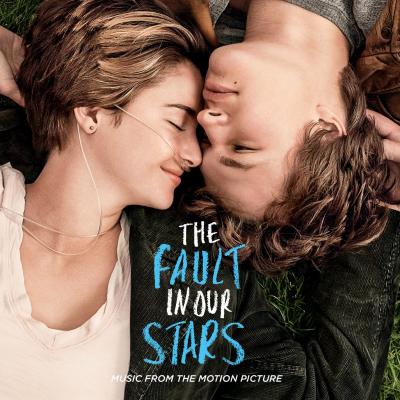
Fault in Our Stars, The Album Cover

"Fault in Our Stars, The" Soundtrack Lyrics

Movie • 2014

Track Listing


"The Fault in Our Stars (Music From the Motion Picture)" Soundtrack Description

Official trailer thumbnail for The Fault in Our Stars with Hazel and Gus close-up
The Fault in Our Stars — Official Trailer (20th Century Studios UK), 2014

Overview

How do you score a teen romance about mortality without tipping into syrup? This soundtrack splits the load: a curated, pop-forward album that speaks in first person, and a restrained score by Bright Eyes’ Mike Mogis & Nate Walcott that lets the faces do the talking. The compilation (Atlantic/Fox Music) became a cultural artifact on its own—Charli XCX’s “Boom Clap,” Birdy’s two aching originals, and Ed Sheeran’s end-credits benediction “All of the Stars.”

What makes it distinct is editorial purpose. Songs frame Hazel and Gus with present-tense pulse (indie pop/alt-electro), while the score sketches thought-bubbles: short cues, clear harmonies, minimal intrusion. Release timing and credits are clean: the album streeted in May 2014, with the score following in June; Season Kent supervised music, while Mogis & Walcott handled the instrumental backbone. (Trusted sources: Wikipedia, Apple Music, Spotify.)

Trailer still of Amsterdam canals signaling the film’s European chapter
Amsterdam chapter foreshadowed in marketing and songs, 2014

Questions & Answers

Who composed the original score?
Mike Mogis and Nate Walcott (Bright Eyes). The separate score album lists 31 cues.
Who supervised the licensed music?
Season Kent, credited on the film and widely cited in industry coverage.
What’s on the main album?
A 16-track compilation featuring Charli XCX, Birdy, Ed Sheeran, M83, Grouplove, Kodaline, Lykke Li, Jake Bugg, and more.
Are the headline songs actually in the movie?
Yes—“Boom Clap” plays over Amsterdam sequences; “All of the Stars” is end-credits; Birdy’s “Not About Angels” underscores late-film reflection.
Is there regional music variation?
Japan used AAA’s “Lil’ Infinity” as a localized theme, outside the core international album.
Where do I stream the soundtrack and score?
Both are available on major digital platforms (Apple Music, Spotify). Track counts and dates match label listings.

Notes & Trivia

  • “Boom Clap” was cut to an Amsterdam-shot video and became Charli XCX’s first U.S. Top 10 as a lead artist.
  • The soundtrack’s A&R/production circle included artists themselves (e.g., Lykke Li co-producing her cue) and the music supervisor.
  • The score album credits 31 instrumental pieces—compact cues suited to dialogue-heavy scenes.
  • Japan’s theatrical campaign featured AAA’s “Lil’ Infinity,” a rare localized theme song for a U.S. teen drama.

Genres & Themes

Indie pop & electro-pop → present-tense heartbeat and young-love giddiness (“Boom Clap,” Grouplove’s “Let Me In”). This colors movement—texts, travel, risk.

Indie-folk & singer-songwriter → vulnerability without varnish (Ed Sheeran, Birdy, Jake Bugg). These tracks carry confession scenes and aftermaths.

Ambient/alt-orchestral score → interiority. Mogis & Walcott sketch emotion in small gestures—pads, piano, light strings—so the actors’ silences lead.

Trailer frame with sunlit window and soft palette matching the score’s restraint
Minimalist score choices mirror the film’s soft visual palette

Tracks & Scenes

“Simple As This” — Jake Bugg
Where it plays: Early at-home/quiet moments while Hazel waits for connection (~00:05), non-diegetic.
Why it matters: Frames Hazel’s observational voice—plainspoken melody, minimal lift.

“Let Me In (From The Fault in Our Stars)” — Grouplove
Where it plays: Parents reveal the Amsterdam trip; Gus swings in like a limo-backed surprise (~00:47), non-diegetic.
Why it matters: Flips the tone to hope and velocity before the journey.

“Boom Clap” — Charli XCX
Where it plays: Amsterdam arrival/streets montage (~00:50), non-diegetic; also tied to marketing.
Why it matters: The film’s kinetic signature; synth-pop sparkle over postcard visuals.

“Oblivion” — Indians
Where it plays: Boat scene on Amsterdam canals (~00:56), non-diegetic.
Why it matters: Dreaminess without denial; suspends time before the next reveal.

“All I Want” — Kodaline
Where it plays: After the egging-the-car act of catharsis (~01:10), non-diegetic.
Why it matters: Grief, voiced obliquely; melody does the consoling.

“Bomfalleralla” — Afasi & Filthy
Where it plays: Dutch chapter texture during city movement/ambient moments (~00:52), diegetic-adjacent vibe.
Why it matters: A wink of European pulse amid heavier beats of the plot.

“No One Ever Loved” — Lykke Li
Where it plays: Post-Amsterdam introspection (~01:20), non-diegetic.
Why it matters: A private letter sung aloud; spare production matches Hazel’s restraint.

“Not About Angels” — Birdy
Where it plays: Late-film reflection and aftermath (~01:35), non-diegetic.
Why it matters: Says the quiet part: love is finite in time, infinite in weight.

“All of the Stars” — Ed Sheeran
Where it plays: End credits (~02:02), non-diegetic.
Why it matters: The communal exhale; sends viewers out with tenderness rather than melodrama.

Also heard / associated: M83’s “Wait” bookends mood in some editions; STRFKR’s “While I’m Alive” underlines Gus’s bravado; The Radio Dept.’s “Strange Things Will Happen” tags liminal beats. (Trusted sources: Wikipedia, Apple Music/Spotify, IMDb listings; select timestamps supported by scene-description databases.)

Music–Story Links

Hazel’s POV stays grounded; songs do not argue the emotion, they witness it. When Amsterdam finally pops, “Boom Clap” functions like sunlight: euphoria without promising safety. The boat scene’s “Oblivion” lifts them into a bubble where illness pauses—but only for a verse. After the egging scene, “All I Want” moves grief from fury to ache. The score threads these beats: gentle motifs under hospital light, piano under letters, pads under the last eulogies. “All of the Stars” then reframes the story as correspondence—reader to writer, Hazel to Gus, audience to the two of them.

Trailer frame of Hazel writing, echoing the soundtrack’s letter-like songs
Letter songs and diary-score: the film’s musical grammar, 2014

How It Was Made

Score: Mike Mogis & Nate Walcott recorded a compact, dialogue-friendly score; the official release collects 31 short cues—texture over theme. Supervision: Season Kent steered a youth-forward compilation that could live as an album (singles rolled out with music videos), while matching editorial needs scene by scene. Label: Atlantic Records with Fox Music branding handled the compilation; the score arrived a few weeks later.

Reception & Quotes

Press and fans treated the album as a stand-alone event of summer 2014. Pop outlets highlighted Charli XCX’s breakout moment; indie press praised the balance of tearjerkers and buoyant cuts.

“Balances heartbreak tunes like Lykke Li’s ‘No One Ever Loved’ with the optimistic rush of ‘Boom Clap.’” Pitchfork, seasonal roundup
“Birdy’s ‘Not About Angels’ was written for the film—quiet, devastating.” Vogue
“‘Boom Clap’ video doubles as an Amsterdam postcard from the movie.” TIME

Availability is stable: the compilation and score stream widely with consistent metadata. (Trusted sources: Apple Music, Spotify.)

Additional Info

  • Japanese releases promoted AAA’s “Lil’ Infinity” as a local theme; it’s not on the main Atlantic album.
  • Grouplove’s “Let Me In” and Charli XCX’s “Boom Clap” received film-tied videos, boosting the soundtrack’s chart life.
  • The score’s cue design favors sub-2-minute pieces, ideal for dialogue coverage and re-conforms.
  • IMDb’s soundtrack page lists additional cues and source tracks beyond the album lineup.
  • Season Kent later won industry recognition for feature supervision under $25M budgets, with this film as a keystone credit.

Technical Info

  • Title: The Fault in Our Stars (Music From the Motion Picture) — plus separate score album
  • Year: 2014
  • Type: Compilation soundtrack (16 tracks) + Original Score (31 cues)
  • Composers (score): Mike Mogis & Nate Walcott
  • Music Supervision: Season Kent
  • Labels: Atlantic Records; Fox Music (branding/credits)
  • Key placements (selection): “Boom Clap” (Amsterdam montage); “Oblivion” (boat); “All I Want” (after egging scene); “Not About Angels” (late reflection); “All of the Stars” (end credits)
  • Release context: Album May 2014; film June 2014; score June 2014
  • Availability/Charts: Widely streaming; year-end U.S. chart placements across Soundtracks/Alternative (2014)

Canonical Entities & Relations

SubjectRelationObject
Josh BoonedirectedThe Fault in Our Stars (film)
Mike Mogis & Nate WalcottcomposedThe Fault in Our Stars (Score From the Motion Picture)
Season Kentmusic supervisedThe Fault in Our Stars (film)
Atlantic RecordsreleasedMusic From the Motion Picture (album)
Charli XCXperformed“Boom Clap” (lead single)
Birdywrote & performed“Not About Angels,” “Tee Shirt”
Ed Sheeranwrote & performed“All of the Stars” (end credits)

Sources: Wikipedia; Apple Music; Spotify; IMDb; 20th Century Studios (YouTube); Pitchfork; TIME; Vogue; scene-description databases.

November, 09th 2025

'The Fault in Our Stars' is an American romantic drama film directed by Josh Boone. Read more on Wikipedia and Internet Movie Database
A-Z Lyrics Universe

Lyrics / song texts are property and copyright of their owners and provided for educational purposes only.