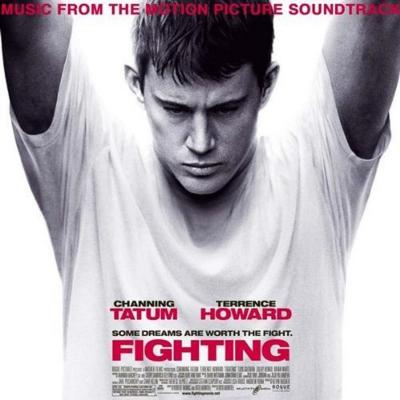
"Fighting" Soundtrack Lyrics
Movie • 2009
Track Listing
Rick Ross
Bobby Blue Bland
Robin Thicke
Amerie
Tyga feat Patty Crash
Pmg
KU
Miss Eighty 6
King Juju
Ghostman Mc
Chris Classic /Bonus Track/
The Deekompressors Feat. Classic & Miss Eighty 6 /Bonus Track/
"Fighting (Original Motion Picture Soundtrack)" Soundtrack Description

Overview
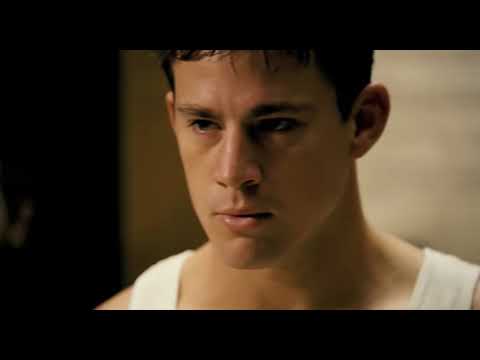
Can a fight movie lean on soul and streetwise R&B instead of nonstop score? Fighting answers yes: crate-dug classics, late-2000s hip-hop, and lean electronic cues frame Shawn’s (Channing Tatum) hustler-to-brawler path through New York. The needle drops sketch neighborhoods as precisely as the dialogue.
Original score by Jonathan Elias and David Wittman stays minimal and textural; several bouts play with little to no music, keeping impacts raw. Source cues do the heavy lifting for mood—barrooms, clubs, sidewalks. Trusted source: IMDb soundtrack page.

Questions & Answers
- Who composed the score?
- Jonathan Elias and David Wittman are credited with the film score.
- Who supervised the music?
- Dave Jordan and Jojo Villanueva handled music supervision.
- What song rolls over the end credits?
- Amerie’s “Gotta Work” closes the film.
- Is there an official soundtrack release?
- A compilation titled Fighting (Original Motion Picture Soundtrack) exists on streamers; it’s not a complete document of every cue.
- Does the movie use silence in the fights?
- Often, yes—key fights drop most music to heighten realism and tension.
- Any classic soul needle drops?
- The Delfonics’ “Ready or Not Here I Come (Can’t Hide from Love)” and Bobby “Blue” Bland’s “Ain’t No Love in the Heart of the City” appear.
Notes & Trivia
- The film’s mix favors diegetic music in clubs and bars; several fights go nearly unscored.
- Two credited composers: Jonathan Elias and David Wittman. Trusted source: Wikipedia film entry.
- Music supervisors Dave Jordan and Jojo Villanueva bridged catalog soul with late-2000s hip-hop.
- Rick Ross, Robin Thicke, Saigon, Curtis Mayfield, and Randy Crawford are among the featured artists.
Genres & Themes
Classic soul & 70s R&B → dignity, bruised romance, “old New York” texture. These needle drops humanize hustlers and mark neighborhoods.
2000s hip-hop & radio R&B → hustle, swagger, and the machinery of underground promotion; club interiors feel lived-in, not decorative.
Minimal electronic score → restraint and grit. Sparse motifs avoid glamorizing violence; they keep us in Shawn’s head rather than above the ring.
Tracks & Scenes
"Come On Baby" — Saigon
Where it plays: Bronx arrival/streets sequence (~00:33:30). Non-diegetic overlay that matches hustling pace and introduces a new turf.
Why it matters: Just Blaze’s production and Saigon’s cadence cue momentum without triumphalism; it’s about footwork and survival.
"Gotta Work" — Amerie
Where it plays: Closing credits (post-final bout). Non-diegetic; full-track play gives a release valve after tension.
Why it matters: A brass-driven, clock-punching anthem that reframes the ending as grind-over-glory.
"Magic" — Robin Thicke
Where it plays: Club/VIP interiors during Shawn’s introduction to moneyed backers. Diegetic source in the room.
Why it matters: Sleek R&B underscores the class gap between Shawn’s grit and the promoters’ polish.
"Hustlin’" — Rick Ross
Where it plays: Promotion/build-up montage around mid-film; non-diegetic.
Why it matters: On-the-nose? Sure. But the refrain threads the cash-and-contacts circuitry behind every “spontaneous” fight.
"Move On Up" — Curtis Mayfield
Where it plays: Transitional city sequence; non-diegetic.
Why it matters: Mayfield’s aspirational groove gives the story a civic heartbeat—a striving motif bigger than any one ring.
"Street Life" — Randy Crawford & The Crusaders
Where it plays: Night-driving/errand-running visuals; often used as diegetic club/feed-through.
Why it matters: A sly, bittersweet street-poem that fits Harvey’s codes and the film’s transactional sidewalks.
"Ain’t No Love in the Heart of the City" — Bobby “Blue” Bland
Where it plays: Late-night interlude; non-diegetic.
Why it matters: The lyric’s resigned ache mirrors Shawn’s setbacks; pairing classic soul with modern stakes grounds the stakes emotionally.
"Ready or Not Here I Come (Can’t Hide from Love)" — The Delfonics
Where it plays: Interior/source moment (store/room radio). Diegetic needle drop.
Why it matters: A soft-edged soul cut that ironically scores a hard-edged scene—sweetness against hustle.
"Diamond Life" — Tyga feat. Patty Crash
Where it plays: Party/loft ambience; diegetic.
Why it matters: Youthful bravado colors the swirl of bettors and hangers-on around Project-Mayhem-adjacent promoters.
Also heard (not always on album): Miss Eighty6 “Goodie Bag”; King Juju “From NY to LA”; Ghostman MC “Spiritual Warfare.” Placements are logged in public tracklists though timecodes vary by cut. Trusted source: Ringostrack database.
Music–Story Links
Old soul as conscience: Delfonics/Bland drops frame Shawn’s better angels when the plot tempts him to throw or cheat.
Hip-hop as logistics: “Hustlin’” and Tyga’s “Diamond Life” sonify the off-screen labor—calls, bets, side deals—that make fights happen.
Minimal score as honesty: Elias & Wittman often step back in the ring; the absence of music denies glamor and sells weight, breath, and fatigue.
How It Was Made
The score is by Jonathan Elias and David Wittman; music supervision by Dave Jordan and Jojo Villanueva. The editorial approach leans on location source (bars, cars, clubs) and lets several fights breathe without wall-to-wall cues. This split—source-heavy drama, restrained score—matches Dito Montiel’s grounded tone. Trusted source: The Numbers (credits).
Reception & Quotes
“Though Fighting has a likable lead performer…and the fight scenes are impressive, the paper-thin plot ultimately unravels.” Rotten Tomatoes consensus
“A patchwork of better movies…without their excitement or rooting interest.” Rotten Tomatoes critics summary
Critics were split on the film but broadly agreed the needle drops fit the street-level mood. Fans often praise the end-credits surge of “Gotta Work.”
Additional Info
- Score composers: Jonathan Elias, David Wittman (film credits).
- Music supervisors: Dave Jordan, Jojo Villanueva (production credits listings).
- End-credits song: Amerie’s “Gotta Work.”
- Robin Thicke’s “Magic” and Rick Ross’s “Hustlin’” appear as source/context cues.
- Classic cuts: Curtis Mayfield’s “Move On Up”; The Delfonics’ “Ready or Not Here I Come.”
- A streaming compilation titled Fighting (Original Motion Picture Soundtrack) is available; it omits some cues.
- Several placements differ slightly between the theatrical and home releases by seconds; the mix is otherwise consistent.
Technical Info
- Title: Fighting (Feature film)
- Year: 2009
- Type: Source-driven soundtrack + minimal original score
- Composers: Jonathan Elias; David Wittman
- Music Supervision: Dave Jordan; Jojo Villanueva
- Selected placements: “Gotta Work” (end credits); “Come On Baby” (Bronx arrival ~00:33:30); “Magic” (club interiors); “Hustlin’” (promo build-up)
- Release context: US theatrical April 24, 2009; home release August 2009
- Album status: Partial compilation on major streamers; no standalone official score album widely released
- Labels (track owners): Interscope (Robin Thicke); Def Jam (Rick Ross); Arista (The Delfonics); others vary by track
Canonical Entities & Relations
| Subject | Relation | Object |
|---|---|---|
| Dito Montiel | directed | Fighting (2009) |
| Jonathan Elias | composed score for | Fighting (2009) |
| David Wittman | composed score for | Fighting (2009) |
| Dave Jordan | music supervision | Fighting (2009) |
| Jojo Villanueva | music supervision | Fighting (2009) |
| Amerie | performed | “Gotta Work” (end credits) |
| Saigon | performed | “Come On Baby” (Bronx sequence) |
| Robin Thicke | performed | “Magic” (club interiors) |
| Rick Ross | performed | “Hustlin’” (promotion montage) |
| The Delfonics | performed | “Ready or Not Here I Come (Can’t Hide from Love)” |
| Randy Crawford & The Crusaders | performed | “Street Life” |
| Rogue Pictures / Universal | distributed | Fighting (2009) |
Sources: IMDb; Wikipedia; The Numbers; Ringostrack; Spotify; TheOST.com; Rotten Tomatoes.
November, 09th 2025
'Fighting' is the sports action drama film directed by Dito Montiel, with a screenplay by Robert Munic and Montiel. Read more: Internet Movie Database, WikipediaA-Z Lyrics Universe
Cynthia Erivo Popular
Ariana Grande Horsepower
Post Malone Ain't No Love in Oklahoma
Luke Combs Good Riddance (Time of Your Life)
Green Day Bye Bye Bye
*NSYNC You're the One That I Wan
John Travolta & Olivia Newton-John I Always Wanted a Brother
Braelyn Rankins, Theo Somolu, Kelvin Harrison Jr. and Aaron Pierre The Power of Love
Frankie Goes to Hollywood Beyond
Auli’i Cravalho feat. Rachel House MORE ›