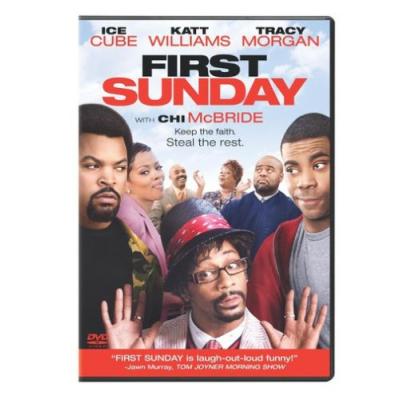
"First Sunday" Soundtrack Lyrics
Movie • 2008
Track Listing
U.G.K.
Galactic f/ Juvenile & Soul Rebels Brass Band
Jah Shaka Music and Tafari Music
Joan Baez
John Murphy
With the Quickness
With the Quickness
With the Quickness
Major Harris
Minnie Riperton
DMX
The First Sunday Choir
Bob Johnson
Marcus Miller
RZA
Rob Lewis
Marcus Miller
Mildred J. Hill, Patty S. Hill
Marcus Miller
Talib Kweli
Michael Davis & Sasha Allen
"First Sunday (Original Motion Picture Soundtrack)" Soundtrack Description
Overview
Can a heist movie pause for a praise break? First Sunday does exactly that. The soundtrack swings between church-floor gospel and radio-tested hip-hop, then stitches both to a warm, brass-tinted score. That blend lets the film crack jokes without losing its gentler core: two screw-ups, a neighborhood church, and a night that forces everyone to listen.
The original score is by Stanley Clarke (confirmed by StanleyClarke.com and film credits). His cues steer mood without elbowing the needle-drops; the gospel centerpiece—Kurt Carr’s “The Presence of the Lord Is Here,” performed on screen—lands diegetically, while secular cuts (Talib Kweli, DMX, Wu-Tang Clan affiliates) frame Baltimore street energy. Result: a soundtrack that plays reconciliation as much as robbery. Wikipedia and SoundtrackCollector also document the film’s music credits and limited CD info.
Questions & Answers
- Who composed the score?
- Stanley Clarke composed the original score; he’s credited on the film and on his official site.
- Is there an official soundtrack album?
- There wasn’t a wide retail soundtrack, but a Sony BMG promo CD was bundled with the DVD at Wal-Mart (May 6, 2008).
- What’s the gospel song the choir performs in the church?
- “The Presence of the Lord Is Here,” written/produced by Kurt Carr, performed onscreen by the film’s choir.
- What’s the end-credits song?
- “Live Again” performed by Michael Davis & Sasha Allen; produced by Rob Lewis; used over end titles.
- Which hip-hop tracks are documented in the film?
- Listings include Talib Kweli’s “Get By,” DMX’s “Party Up (Up in Here),” Galactic ft. Juvenile “From the Corner to the Block,” Wu-Tang Clan’s “C.R.E.A.M.,” and Minnie Riperton’s “Lovin’ You.”
- Who handled music supervision?
- Spring Aspers is credited as music supervisor.
- Does the mix lean more gospel or more hip-hop?
- Both. Gospel anchors the narrative scenes in the church; hip-hop/old-school soul handle transitions, comedy beats, and exterior energy.
Notes & Trivia
- The choir performance is diegetic—Katt Williams conducts the singers in-scene.
- “Live Again” is identified as the end-title recording on release listings.
- Todd Bozung’s name appears in the music department and on several short library-style cues in soundtrack documentation (“T Dub,” “I Bought Gum,” “LLT”).
- Hip-hop selections documented for the film include artists with 1990s–2000s staples, giving the comedy a street-classic backbone.
- A limited Sony BMG promo CD tied to the DVD bundle surfaced in collectors’ databases.
Genres & Themes
Gospel → Grace under pressure. Full-choir worship numbers embody community, forgiveness, and the film’s moral turn inside the church.
Golden-era/2000s Hip-Hop → Hustle and noise. Kweli/DMX/Wu-Tang affiliates frame the outside world—funny, chaotic, cash-stressed.
Soul Standards → Irony and tenderness. Classic R&B stitches comedic intimacy to sentiment, a wink the movie uses often.
Contemporary score → Warm brass and rhythm section. Clarke’s cues bridge sacred-secular shifts without whiplash.
Tracks & Scenes
Scene placements below are drawn from on-screen moments and documented credits. Precise minute marks can vary by edition; where the movie itself shows the performance, we flag it as diegetic.
“The Presence of the Lord Is Here” – The First Sunday Choir (written/produced by Kurt Carr)
Scene: The choir erupts inside the sanctuary with Katt Williams conducting; full call-and-response, handclaps, and modulations. Diegetic performance.
Why it matters: It’s the film’s spiritual hinge; tension melts into communal joy as characters begin to hear one another.
“Live Again” – Michael Davis & Sasha Allen (prod. Rob Lewis)
Scene: End-title song over the credits; non-diegetic. Contemporary gospel/R&B ballad feel.
Why it matters: Seals the film’s restorative arc and sends viewers out on uplift rather than punchline.
“Get By” – Talib Kweli
Where it plays: Documented in the film’s music listings; used as a kinetic transition cue (non-diegetic).
Why it matters: The “Sinnerman” sample (Nina Simone) ties personal grind to moral reckoning—perfect for a comedy about second chances.
“Party Up (Up in Here)” – DMX
Where it plays: Listed among the licensed tracks; brief hype needle-drop (non-diegetic).
Why it matters: Injects rowdy energy to contrast the church’s order—comic relief before the sermon lands.
“From the Corner to the Block” – Galactic feat. Juvenile
Where it plays: Credited in the film; used as groove-forward connective tissue (non-diegetic).
Why it matters: Brass-funk meets bounce—bridging Clarke’s band sensibility with street rhythm.
“C.R.E.A.M.” – Wu-Tang Clan
Where it plays: Documented in the soundtrack credits; punchy excerpt (non-diegetic).
Why it matters: Cash rules everything around the plot—on-the-nose, and that’s the joke.
“Lovin’ You” – Minnie Riperton
Where it plays: Listed in music sources; soft-focus source needle-drop (non-diegetic).
Why it matters: A sweet classic used with comic delicacy—sentiment undercuts scheming.
Hymns: “We Shall Overcome”; “What a Friend We Have in Jesus”
Where it plays: Credited; brief congregational/source moments, diegetic.
Why it matters: Grounds the comedy in lived church tradition.
Short cues / library-style stings (“T Dub,” “I Bought Gum,” “LLT”)
Where it plays: Credited to Todd Bozung; transitional gags and scene buttons.
Why it matters: Keeps the pace light between larger songs and Clarke’s score.
Music–Story Links
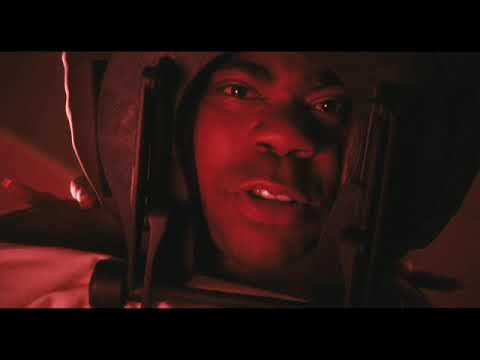
When Durell and LeeJohn storm the sanctuary, it’s the choir—not the gun—that eventually commands the room. By letting a diegetic praise song fill the space, the film shifts power from schemers to community. Later, the end-title “Live Again” reframes the night’s chaos as testimony: confession, mercy, and resolve. And whenever the plot steps back onto the street, hip-hop syncs slide in to remind us why money pressure drove the plan in the first place.
How It Was Made
Score by Stanley Clarke (jazz legend; electric and acoustic bass textures with rhythm-section color). Music supervision by Spring Aspers, whose Sony tenure is well-documented. Kurt Carr contributed the gospel showpiece, written and produced by him and performed onscreen. The mix balances licensed hip-hop and soul with Clarke’s warm, lightly comic orchestration—never drowning dialogue, never fighting the choir.
Reception & Quotes
Critical response was mixed-to-negative overall (Rotten Tomatoes score in the teens; Metacritic around low-40s), while audience polling (CinemaScore) was stronger. A few review lines capture the split:
“Pleasant, generally satisfying… heart as big as its funny bone.” James Berardinelli, ReelViews
“Feels like a script read-through… warmth carries you through cliché.” A.O. Scott, The New York Times
“A lazy replication of Perry’s blend of melodrama and broad humor.” Nick Schager, Slant Magazine
Availability note: a promo CD surfaced in collectors’ circles; no wide digital OST release.
Additional Info
- Composer credit verified by on-screen credits and StanleyClarke.com.
- End-title “Live Again” is identified as such on release notes for the single.
- Gospel centerpiece is a full in-scene performance; many uploads preserve the moment.
- Hip-hop selections align with Sony’s licensing lanes of the period.
- Some short cues are editorial/library pieces credited to music department staff.
- Promo CD (Sony BMG) noted as packaged with specific DVD retail bundles in 2008.
Technical Info
- Title: First Sunday (Original Motion Picture Soundtrack) — songs & score in film
- Year: 2008 (U.S. theatrical: January 11, 2008)
- Type: Film soundtrack & score (no wide commercial album)
- Composer: Stanley Clarke
- Music Supervision: Spring Aspers
- Notable placements: “The Presence of the Lord Is Here” (onscreen choir); “Live Again” (end credits); “Get By”; “Party Up”; “From the Corner to the Block”; “C.R.E.A.M.”; “Lovin’ You”; traditional hymns.
- Release context: Limited Sony BMG promo CD with some DVD bundles (May 6, 2008).
- Label/album status: No wide OST; scattered single/track releases exist.
Canonical Entities & Relations
| Subject | Verb | Object |
|---|---|---|
| Stanley Clarke | composed | score for First Sunday |
| Spring Aspers | supervised | music for First Sunday |
| Kurt Carr | wrote/produced | “The Presence of the Lord Is Here” (film performance) |
| Michael Davis & Sasha Allen | performed | “Live Again” (end titles) |
| Screen Gems / Sony Pictures Releasing | distributed | First Sunday (2008) |
| David E. Talbert | wrote/directed | First Sunday |
Sources: Wikipedia; StanleyClarke.com; SoundtrackCollector; IMDb Soundtracks; Ringostrack.
November, 09th 2025
A-Z Lyrics Universe
Cynthia Erivo Popular
Ariana Grande Horsepower
Post Malone Ain't No Love in Oklahoma
Luke Combs Good Riddance (Time of Your Life)
Green Day Bye Bye Bye
*NSYNC You're the One That I Wan
John Travolta & Olivia Newton-John I Always Wanted a Brother
Braelyn Rankins, Theo Somolu, Kelvin Harrison Jr. and Aaron Pierre The Power of Love
Frankie Goes to Hollywood Beyond
Auli’i Cravalho feat. Rachel House MORE ›