Soundtracks:  A B C D E F G H I J K L M N O P Q R S T U V W X Y Z #


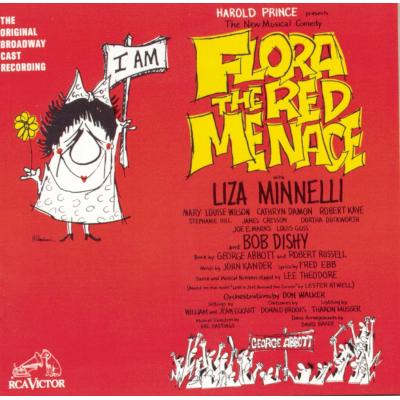
Flora, the Red Menace Album Cover

"Flora, the Red Menace" Soundtrack Lyrics

Musical • 1992

Track Listing

Prologue

Unafraid

All I Need is One Good Break

Not Every Day of the Week

All I Need is One Good Break (Reprise)

Sign Here

The Flame

Palomino Pal

A Quiet Thing

Hello, Waves

Dear Love

Express Yourself

Knock, Knock

Comrade Charlotte's Ballet (The Tree of Life)

Sing Happy

You Are You

Finale


"Flora the Red Menace (Original Broadway Cast Recording)" Soundtrack Description

Overview

How does a 1965 cast album become a “1992” release? Simple: the definitive Liza Minnelli-led recording of Flora, the Red Menace was reissued on CD on March 10, 1992, making the show’s first Kander & Ebb collaboration easy to hear again in the digital era. The CD preserves the crisp Harold Hastings pit band, Don Walker’s swing-savvy orchestrations, and Minnelli’s breakout readings of “A Quiet Thing” and “Sing Happy.”

The disc represents the original Broadway production—book by George Abbott & Robert Russell—not the later Vineyard Theatre revisal. As a listening experience, it’s lean: about 47 minutes across 14 tracks, all cut from the 1930s–set score that balances romantic optimism and satirical politics. Apple Music, Masterworks Broadway, and IBDB align on the show’s personnel and the album’s provenance.

Questions & Answers

What exactly is the “1992” album?
The 1992 issue is the compact-disc re-release of the 1965 RCA Victor original Broadway cast recording; it reintroduces the original sequence in remastered form.
Who are the principal creators and leads?
Music by John Kander, lyrics by Fred Ebb; Liza Minnelli stars as Flora with Bob Dishy (Harry), Cathryn Damon (Comrade Charlotte), and Mary Louise Wilson (Comrade Ada).
Is this the Vineyard Theatre revisal?
No. The revisal (1987) has its own cast album. The 1992 CD documents the 1965 Broadway score and cast.
Which numbers from this album became standards?
“A Quiet Thing” and “Sing Happy.” They anchor the show’s emotional arc and are widely performed outside the musical.
Were bonus tracks added in 1992?
No. The CD mirrors the 1965 program (overture through finale) without extras.
Did the album chart on release originally?
Yes—modestly. The 1965 LP reached the Billboard 200 and the Cash Box Top 100 Albums before falling off in late summer.

Notes & Trivia

  • The cast album was recorded two days before Broadway opening—an aggressive RCA Victor strategy to hit stores alongside reviews.
  • Minnelli won the 1965 Tony for Best Actress in a Musical for this performance; the CD became an easy way to hear that debut.
  • Don Walker’s orchestrations give the pit a fox-trot/swing profile consistent with the 1930s setting.
  • The overture heard on the album originated as the show’s entr’acte in the theatre.
  • The revisal (Vineyard Theatre, 1987) altered the book and some numbers; its recording (JAY Records) is a different listen.

Genres & Themes

Broadway show tunes with 1930s swing DNA. Brass flickers, reed riffs and walking bass lines evoke WPA-era New York without pastiche overload. When politics enters, the music leans into march and agit-prop parody rather than pure sarcasm.

Lyric stance: idealism vs. ideology. Kander & Ebb flip between inner-voice ballads (private truth) and rally songs (public pose). “A Quiet Thing” is intimate; “Express Yourself” and “The Flame” are satirical, crowd-facing slogans.

Tracks & Scenes

Stage placements below follow the Broadway version captured on the album. “Diegetic” denotes songs performed as on-stage “acts” or within meetings; most others are integrated book numbers (character inner voice).

“All I Need (Is One Good Break)” — Liza Minnelli & Company
Where it plays: Early job-hunt sequence; Flora and fellow applicants push through forms and hopes (Act I). Integrated.
Why it matters: Establishes Flora’s hustling optimism and the score’s punchy, syncopated energy.

“Not Every Day of the Week” — Liza Minnelli, Bob Dishy
Where it plays: Early Flora–Harry duet in which flirtation meets pragmatic caution. Integrated.
Why it matters: Humanizes Harry before politics complicate the romance.

“Sign Here” — Bob Dishy (with Minnelli)
Where it plays: Harry urges Flora to join the Party during/after a meeting. Integrated with satirical edge.
Why it matters: Turns ideology into a courtship test, tightening the show’s central conflict.

“The Flame” — Mary Louise Wilson & Company
Where it plays: At a Party gathering; Ada’s fervor crescendos into comic-militant display. Diegetic within the meeting.
Why it matters: Shows how the movement seduces with heat and spectacle as much as principle.

“Palomino Pal” — Dortha Duckworth, James Cresson
Where it plays: Novelty western pastiche presented as a media/entertainment spoof in Act I. Diegetic show-within-a-show flavor.
Why it matters: A tonal palate-cleanser that underlines the era’s pop culture noise around serious lives.

“A Quiet Thing” — Liza Minnelli
Where it plays: After Flora secures a real shot at work and love, she discovers joy arrives softly. Integrated (introspective solo).
Why it matters: The album’s signature ballad; Kander’s suspended harmonies let Minnelli under-sing with control.

“Hello, Waves” — Minnelli, Dishy
Where it plays: A playful interlude that briefly resets stakes between the couple. Integrated.
Why it matters: Keeps the tone buoyant before Act I complications mount.

“Express Yourself” — Cathryn Damon, Bob Dishy
Where it plays: Act II exhortation; rhetoric meets rhythm at a Party event. Diegetic rally flavor.
Why it matters: Satirizes political performance while pushing Harry further from Flora’s instincts.

“Dear Love” — Liza Minnelli & Ensemble
Where it plays: Act I close or late-Act ensemble moment depending on staging; Flora articulates her emotional thesis. Integrated.
Why it matters: Balances the score’s bite with romantic sincerity.

“Sing Happy” — Liza Minnelli
Where it plays: Act II turning point; Flora chooses self-possession over chaos. Integrated eleven-o’clock number.
Why it matters: The uplift without denial—Kander & Ebb distill resilience into a tight three minutes.

Music–Story Links

Numbers that “play to the room” (meeting songs) are pointed and public; inner-voice ballads are private and precise. When Harry woos via ideology (“Sign Here”), the music narrows to sly, coaxing patterns. Ada’s “The Flame” inflates to spectacle—funny and a little frightening. After those pressures, “A Quiet Thing” and “Sing Happy” reposition Flora’s compass: not apolitical, just human-first.

How It Was Made

Recording & reissue. RCA Victor recorded the OBCR two days before opening in 1965; the album landed fast. In 1992, BMG/RCA issued the 14-track CD (≈47:35). Reissue credits include producer Peter Dellheim and remastering by Edwin Begley.

Orchestra & credits. Harold Hastings served as music director/conductor; orchestrations by Don Walker; dance arrangements by David Baker. The 1987 Vineyard Theatre revisal (Scott Ellis/Susan Stroman; Veanne Cox, Peter Frechette) spawned a separate full recording years later.

Trusted source mentions: Masterworks Broadway; Apple Music; IBDB.

Reception & Quotes

Contemporary notices called the OBCR lively if uneven, with near-universal praise for Minnelli’s ballads. Later assessments elevate the album as essential early Kander & Ebb.

“‘A Quiet Thing’ and ‘Sing Happy’ are stunners… Don Walker’s orchestrations enhance the songs.” Peter Filichia, Cast Album Reviews
Billboard hailed a “musical treat,” highlighting the score’s “sprightly sounds” and Minnelli’s lead. Billboard (1965)

Additional Info

  • Original 1965 LP: RCA Victor Broadway; 1992 CD: BMG/RCA compact-disc issue.
  • The album peaked at #111 on the Billboard 200 during summer 1965.
  • The Vineyard revisal reframed the show via a Federal Theatre Project troupe; its later album (JAY Records) reflects cuts/changes.
  • Two “evergreens” from this score—“A Quiet Thing” and “Sing Happy”—circulate widely in concerts and auditions.
  • The OBCR’s overture functions like an entr’acte in origin; sequencing reflects the show’s recording logistics.

Technical Info

  • Title: Flora the Red Menace (Original Broadway Cast Recording) — 1992 CD reissue
  • Year: 1992 (original LP 1965)
  • Type: Cast album (Broadway)
  • Composers/Lyricists: John Kander / Fred Ebb
  • Principal performers: Liza Minnelli; Bob Dishy; Cathryn Damon; Mary Louise Wilson
  • Music direction: Harold Hastings; Orchestrations: Don Walker; Dance arrangements: David Baker
  • Label history: RCA Victor (1965 LP); BMG/RCA (1992 CD)
  • Selected notable placements (on stage): “A Quiet Thing”; “Sing Happy”; “The Flame”; “Sign Here”; “Express Yourself”
  • Release context: Recorded pre-opening; 1992 CD remaster returned title to catalog ahead of widespread digital availability
  • Availability: Streaming/download on major DSPs; physical CD pressings circulate via reissues

Canonical Entities & Relations

SubjectRelationObject
John KandercomposedFlora the Red Menace (score)
Fred Ebbwrote lyrics forFlora the Red Menace (score)
Liza Minnelliperformed onOriginal Broadway Cast Recording (1965; 1992 CD)
Harold Hastingsmusic directed & conductedOriginal Broadway Cast Recording
Don WalkerorchestratedOriginal Broadway production/album
RCA Victorreleased1965 LP cast album
BMG/RCAreissued1992 compact disc
George Abbott; Robert Russellwrote book forFlora the Red Menace (musical)
Alvin Theatre (Neil Simon Theatre)hosted1965 Broadway run
Vineyard Theatrerevived1987 revisal (separate recording)

Sources: Masterworks Broadway; Apple Music; IBDB; Discogs; Wikipedia (musical & cast recording entries); Billboard/Cash Box archival data; Vineyard Theatre; JAY Records.

November, 09th 2025


A-Z Lyrics Universe

Lyrics / song texts are property and copyright of their owners and provided for educational purposes only.