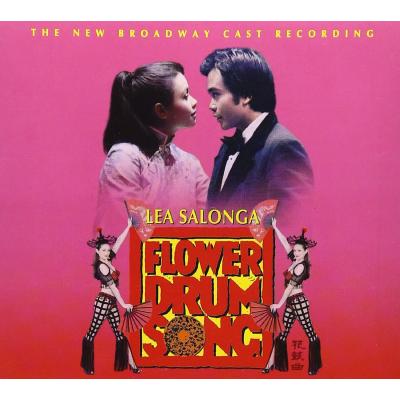
"Flower Drum Song" Soundtrack Lyrics
Movie • 2003
Track Listing
"Flower Drum Song: The Motion Picture Sound Track" Soundtrack Description
Overview
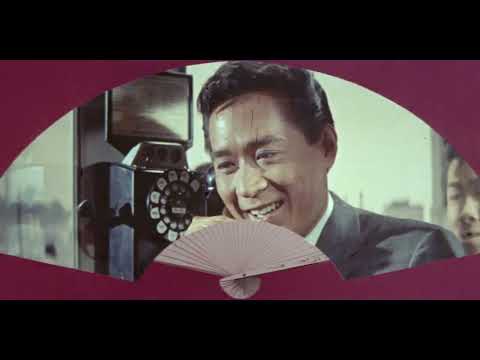
Can a studio musical feel both opulent and intimate? This soundtrack does. The 1961 film’s album—issued by Decca as Flower Drum Song: The Motion Picture Sound Track—pairs Rodgers & Hammerstein’s melodies with Alfred Newman’s big-canvas orchestrations. It’s a portrait of San Francisco’s Chinatown in widescreen sound: nightclub brass, parade drums, and heart-on-sleeve ballads.
Key voices on disc include B.J. Baker (dubbing Nancy Kwan’s Linda Low) and Marilyn Horne (dubbing Reiko Sato’s torch song), while cast members like Miyoshi Umeki and Jack Soo are heard directly. A 2002 Decca Broadway CD reissue restored the album to circulation and added a period bonus track. Trusted source mentions: Rodgers & Hammerstein Organization; Decca Broadway; Variety.
Questions & Answers
- Is there a “Flower Drum Song” movie from 2003?
- No. The film is from 1961. In 2002–03 there was a Broadway revival and a new-cast album (released in 2003).
- Who supervised and conducted the film’s music?
- Alfred Newman, with Ken Darby as associate music supervisor/arranger.
- Who sings for Linda Low on the soundtrack?
- B.J. Baker dubbed Nancy Kwan’s vocals (e.g., “I Enjoy Being a Girl,” “Grant Avenue,” “Fan Tan Fannie”).
- Who sings “Love, Look Away” on the album?
- Marilyn Horne, dubbing for Reiko Sato’s character Helen Chao.
- Which label issued the original soundtrack—and the major reissue?
- Decca released the 1961 LP; Decca Broadway reissued it on CD in 2002 with one bonus cut.
- Does the film reorder songs compared with the stage musical?
- Yes. Several numbers were rearranged or adapted for cinematic pacing; one stage song was dropped.
Notes & Trivia
- The album credited singers by character, reflecting industry practice when screen vocals were dubbed.
- “Like a God” from the stage score was omitted in the film; a beat-poetry presentation replaced it.
- Decca issued the soundtrack in mono and stereo; both editions charted on Billboard’s LP list.
- The 2002 Decca Broadway CD adds a vintage Rosemary Clooney “Love, Look Away” as a bonus.
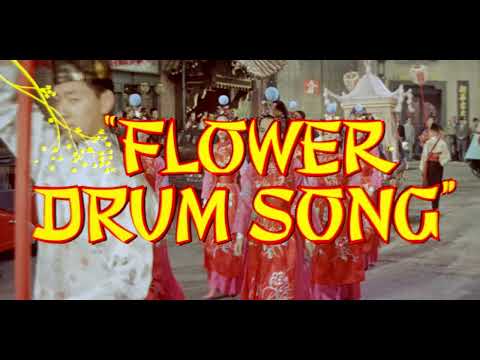
- Dong Kingman’s watercolor titles set the musical’s visual—and musical—journey mood.
Genres & Themes
Orchestral Hollywood musical: Newman’s arrangements marry Rodgers’ lyric lines to technicolor brass and strings—parade snares for spectacle; woodwinds and harp for romantic close-ups.
Nightclub swing & revue textures: diegetic club numbers (“Fan Tan Fannie,” “Gliding Through My Memoree”) bring sax riffs and drum kit forward, contrasting with smoother, legit ballads (“You Are Beautiful,” “Love, Look Away”).
Tracks & Scenes
Film placements and functions; “diegetic” = performed in-world (club, parade, party), otherwise integrated underscore/song moment.
“A Hundred Million Miracles” — Miyoshi Umeki (Mei Li)
Where it plays: Early arrival and street scene; Mei Li sings to earn money; diegetic street performance.
Why it matters: Introduces wonder as Mei Li’s compass and frames migration with gentleness.
“I Enjoy Being a Girl” — B.J. Baker (for Nancy Kwan as Linda)
Where it plays: Linda’s flirty, fashion-conscious showcase during her courtship gambit with Wang Ta; staged, performance-style.
Why it matters: A pop-feminine manifesto that also telegraphs Linda’s agency.
“I Am Going to Like It Here” — Miyoshi Umeki
Where it plays: After moving into the Wang household; integrated interior monologue.
Why it matters: Turns culture shock into optimism—Mei Li’s emotional baseline.
“Chop Suey” — Juanita Hall (Madame Liang) & Company
Where it plays: Party celebrating citizenship classes; diegetic number with comic malapropisms.
Why it matters: Satirizes assimilation slogans while energizing a key family gathering.
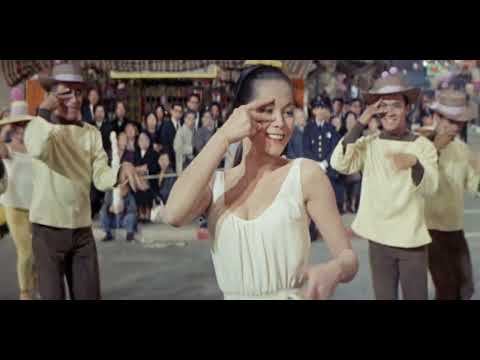
“Grant Avenue” — B.J. Baker (for Nancy Kwan)
Where it plays: Chinese New Year parade; Linda sings atop a float; diegetic street performance.
Why it matters: Locates the film sonically in San Francisco—touristic sheen, local pride.
“Fan Tan Fannie” — B.J. Baker (for Nancy Kwan)
Where it plays: Celestial Gardens nightclub act; diegetic; Wang Ta witnesses the routine.
Why it matters: Shocks Ta into reassessing Linda; club sound contrasts with home scenes.
“Gliding Through My Memoree” — Victor Sen Yung (Frankie Wing) & Company
Where it plays: Club emcee’s comic turn; diegetic within the nightclub set.
Why it matters: Lightens the mood while revealing the venue’s showbiz machinery.
“Love, Look Away” — Marilyn Horne (for Reiko Sato as Helen)
Where it plays: Helen’s apartment after Ta’s heartbreak; integrated torch ballad.
Why it matters: A quietly devastating pivot that deepens the triangle.
“You Are Beautiful” — (Wang Ta)
Where it plays: Ta’s realization scene, turning toward Mei Li; integrated love ballad.
Why it matters: Returns the score to lyrical sincerity after nightclub glitter.
“Sunday” — B.J. Baker (for Nancy Kwan)
Where it plays: Linda’s daydream of married life; integrated fantasy sequence.
Why it matters: Shows the cost of ambition and performative romance.
“Don’t Marry Me” — Jack Soo (Sammy) & Company
Where it plays: Sammy pleads to void obligations; integrated comic list-song.
Why it matters: Character comedy with plot utility—an exit ramp built in rhyme.
“The Other Generation” — Company
Where it plays: Dialogue-song about the gap between immigrant parents and American-born children; integrated ensemble.
Why it matters: States the theme without sermonizing; counterpoint to the romances.
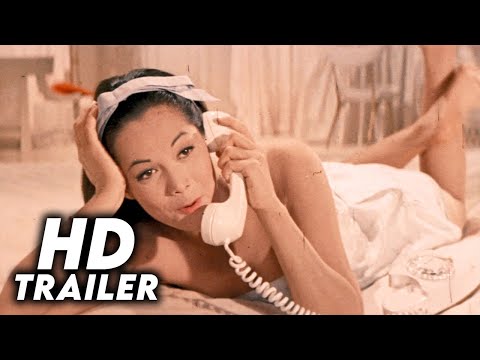
Trailer/marketing: The theatrical trailer leans on orchestral hits and short song hooks rather than a single headline track.
Music–Story Links
Club cues sell sparkle and temptation; home-and-heart numbers cauterize the fallout. Linda’s anthems seduce Ta with gloss; Helen’s torch song absorbs the hurt so Mei Li’s modest hope can breathe. Parade percussion and bright brass announce community, while strings and harp safeguard intimacy. The score keeps the culture clash buoyant, not brittle.
How It Was Made
Alfred Newman supervised and conducted, with Ken Darby assisting—classic studio-musical architecture: melody up front, percussion for procession, tightly voiced brass for nightclub shine. Dubbing followed house practice: B.J. Baker (Linda’s songs) and Marilyn Horne (“Love, Look Away”) record in isolation; mix engineers balance them against stage acoustics and chorus.
Label history matters. Decca issued mono and stereo LPs in 1961; Decca Broadway reissued the album on CD (2002) with a Rosemary Clooney bonus, ensuring modern availability. Trusted source mentions: Decca Broadway; Rodgers & Hammerstein Organization; Playbill.
Reception & Quotes
Reviewers split on the movie’s scale, but the music drew consistent praise for its lift and polish.
“Alfred Newman has fashioned somerousing orchestrations.” Variety
“A big, elaborate spectacle… lush settings, stunning costumes, lovely music.” New York Daily News (via R&H Org.)
“Gay, tuneful and well worth the admission.” Life
Additional Info
- The film premiered November 9, 1961, at Radio City Music Hall; the soundtrack arrived the same season.
- Original LP credited singers by character because several on-screen performers were dubbed.
- Decca Broadway’s 2002 CD reissue restored the album with improved notes and one bonus cut.
- There is no 2003 film; a new Broadway cast recording tied to the 2002 revival was released in early 2003.
- Nightclub cues were designed to contrast deliberately with domestic scenes—different mic’ing and rhythm-section weight.
Technical Info
- Title: Flower Drum Song: The Motion Picture Sound Track
- Year: 1961 (Decca LP); major CD reissue 2002 (Decca Broadway)
- Type: Film soundtrack (studio musical)
- Music: Richard Rodgers (songs); Alfred Newman (music supervisor/conductor); Oscar Hammerstein II (lyrics)
- Key featured vocals: B.J. Baker (for Nancy Kwan); Marilyn Horne (for Reiko Sato); principal cast on other numbers
- Label: Decca (original); Decca Broadway (reissue)
- Release context: Film opened Nov 9, 1961; soundtrack issued concurrently; 2002 CD added a Rosemary Clooney bonus track
- Availability: Streaming and digital download; physical LP reissues and 2002-era CD in circulation
Canonical Entities & Relations
| Subject | Relation | Object |
|---|---|---|
| Richard Rodgers | composed | Songs for Flower Drum Song (film) |
| Oscar Hammerstein II | wrote lyrics for | Flower Drum Song (film) |
| Alfred Newman | supervised & conducted | Flower Drum Song soundtrack recording |
| Ken Darby | associate music supervisor/arranger | Flower Drum Song (film) |
| B.J. Baker | dubbed vocals for | Linda Low (Nancy Kwan) |
| Marilyn Horne | dubbed vocals for | Helen Chao (Reiko Sato) |
| Decca Records | released | 1961 original soundtrack LP |
| Decca Broadway | reissued | 2002 compact disc |
| Universal-International | distributed | Flower Drum Song (1961 film) |
| Rodgers & Hammerstein Organization | maintains | official catalog/notes |
Sources: Rodgers & Hammerstein Organization; Decca Broadway; Variety; Wikipedia; IBDB; AllMusic; Apple Music; IMDb.
November, 09th 2025
A-Z Lyrics Universe
Cynthia Erivo Popular
Ariana Grande Horsepower
Post Malone Ain't No Love in Oklahoma
Luke Combs Good Riddance (Time of Your Life)
Green Day Bye Bye Bye
*NSYNC You're the One That I Wan
John Travolta & Olivia Newton-John I Always Wanted a Brother
Braelyn Rankins, Theo Somolu, Kelvin Harrison Jr. and Aaron Pierre The Power of Love
Frankie Goes to Hollywood Beyond
Auli’i Cravalho feat. Rachel House MORE ›