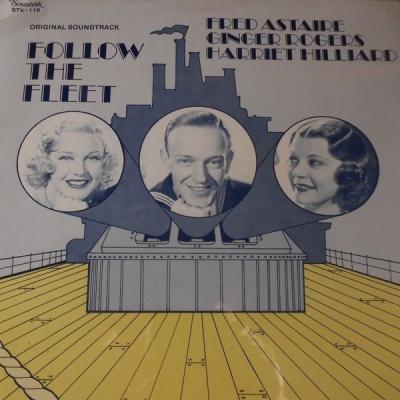
"Follow the Fleet" Soundtrack Lyrics
Movie • 1936
Track Listing
"Follow the Fleet (Original 1936 Soundtrack Recordings)" Soundtrack Description
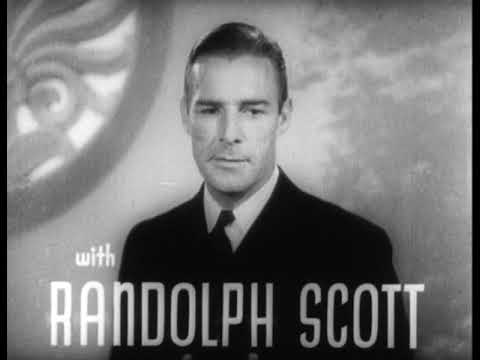
Overview
What happens when Irving Berlin writes for sailors, and Fred & Ginger bring the shore leave? You get a catalogue of Berlin hits staged as in-world performances and capped by an Art Deco showstopper: “Let’s Face the Music and Dance.” The film’s soundtrack is mostly diegetic—numbers sung on ballroom stages, nightclub floors, and parade-band bandstands—while Max Steiner supplies unobtrusive background scoring between songs.
The core song slate is compact and durable: “We Saw the Sea,” “Let Yourself Go,” “I’d Rather Lead a Band,” “Here Am I, But Where Are You?,” “Get Thee Behind Me, Satan,” “I’m Putting All My Eggs in One Basket,” and the climactic “Let’s Face the Music and Dance.” Contemporary 1936 singles by Fred Astaire with Johnny Green’s Orchestra pushed several of these onto the hit parade, while later archival LPs gathered film audio under titles like Follow the Fleet (Original 1936 Soundtrack Recordings) (Sandy Hook Records). Trusted sources: AFI Catalog; The New Yorker (1936); IMDb; Wikipedia.
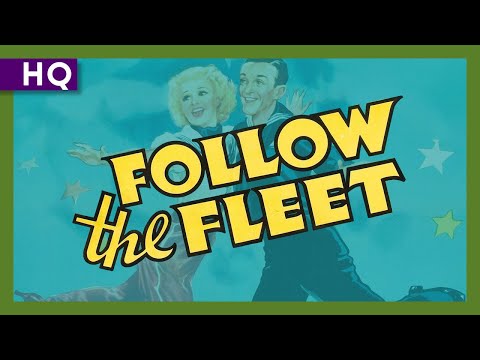
Questions & Answers
- Who wrote the songs—and who handled the background score?
- Irving Berlin wrote words and music; Max Steiner provided incidental score.
- Which performances are central to the film’s identity?
- “Let Yourself Go,” “I’m Putting All My Eggs in One Basket,” and the ballroom finale “Let’s Face the Music and Dance.”
- Who sings the ballads not led by Astaire/Rogers?
- Harriet Hilliard (later Harriet Nelson) features on “Get Thee Behind Me, Satan” and “Here Am I, But Where Are You?”
- Is the music mostly diegetic?
- Yes. Almost all big numbers are presented as onstage/onsite performances; the score bridges scenes.
- Was there a period “soundtrack album” in 1936?
- No standard OST then; 78-rpm singles were issued. Later archival releases compile the film’s audio.
- Who staged the dances?
- Hermes Pan, working closely with Fred Astaire, staged the choreography.
- How did the singles perform?
- Astaire’s “Let Yourself Go,” “I’m Putting All My Eggs in One Basket,” and “Let’s Face the Music and Dance” charted strongly in 1936.
Notes & Trivia
- “Let’s Face the Music and Dance” was filmed as a long, continuous take (~2:50); Rogers’s weighted sleeve famously smacked Astaire mid-routine—Astaire still chose that take.
- Ginger Rogers has a rare solo tap in this film (“Let Yourself Go” solo), unique among her ten pictures with Astaire.
- The Art Deco set for the finale—by Van Nest Polglase’s team—gets cited as Hollywood Moderne at its glossiest.
- Harriet Hilliard and Tony Martin make their screen debuts here.
- Brunswick issued paired 78s by Astaire with Johnny Green’s Orchestra: e.g., 7608 (“Let Yourself Go”/“Let’s Face the Music and Dance”) and 7609 (“We Saw the Sea”/“I’m Putting All My Eggs in One Basket”).
Genres & Themes
Berlin swing & revue craft. Foxtrot pulse for ballroom bravado; bright reeds for service-band swagger; torch-song ballads for romantic stalls.
Art-music gloss vs. blue-note sass. The finale’s luxe orchestration frames adult stakes; comic sparring numbers use rhythmic hiccups and on-the-beat taps to sell character friction.
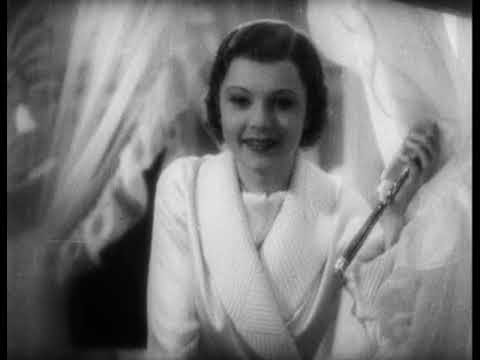
Tracks & Scenes
Diegetic unless noted; placements summarized from documented scene outlines.
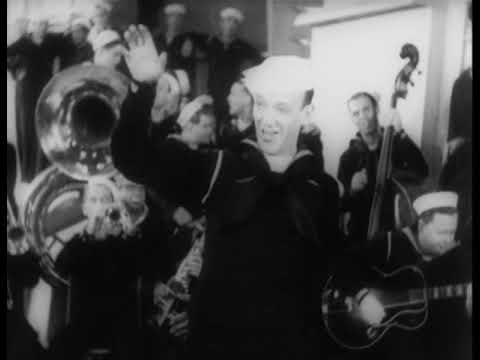
“We Saw the Sea” — Fred Astaire & sailors
Where it plays: Early introduction of Bake Baker’s Navy world; chorus backs Astaire in a barracks/crew setting.
Why it matters: Plants the service-band color and establishes the film’s perform-in-place logic.
“Let Yourself Go” — Ginger Rogers (with trio), then Astaire/Rogers
Where it plays: Ballroom contest: Rogers sings in nautical costume, then trades competitive taps with Astaire; later, a solo tap reprise for Rogers.
Why it matters: Shows Rogers’s musical authority and the duo’s comic one-upmanship.
“Get Thee Behind Me, Satan” — Harriet Hilliard
Where it plays: Intimate club setting; Hilliard’s torch restraint cools the room.
Why it matters: A moral-titled ballad turned personal—quiet contrast to the sailors’ brassy fun.
“I’d Rather Lead a Band” — Fred Astaire & sailors
Where it plays: Astaire sings, then tosses the baton and steps into a rhythmically tricky tap solo, before the chorus re-joins.
Why it matters: A clinic in leading vs. following—the film’s theme in miniature.
“Here Am I, But Where Are You?” — Harriet Hilliard
Where it plays: Pensive cabaret ballad.
Why it matters: Gives the second couple real emotional weight amid the romp.
“I’m Putting All My Eggs in One Basket” — Astaire & Rogers
Where it plays: Rehearsal-to-performance duet, preceded by Astaire’s jokey “feelthy piano” intro; the dance plays with deliberate missteps and sync glitches.
Why it matters: Relationship as choreography—trust is learned on the floor.
“Let’s Face the Music and Dance” — Astaire & Rogers
Where it plays: High-society stage within the story; Astaire’s verse leads into a long-take ballroom duet framed by an Art Deco set.
Why it matters: The film’s signature—romance and risk distilled into slow-to-surge motion.
Music–Story Links
Berlin’s numbers double as plot mechanics: training, flirting, sparring, reconciling. Sailor choruses (“We Saw the Sea,” “Lead a Band”) sell camaraderie; the contest and rehearsal pieces let the leads fight by rhythm; torch songs mark the collateral hearts. The finale turns style into consequence—glamour carrying the bill.
How It Was Made
Mark Sandrich directs; Hermes Pan stages dances with Astaire. Irving Berlin tailored new songs to the duo’s comic-romantic range; Max Steiner’s cues thread the gaps. Art direction (Van Nest Polglase’s unit) gives the finale its Moderne sheen. A practical note the film nerds love: “Let’s Face the Music and Dance” kept the sleeve-smack take—because the motion read truer.
Reception & Quotes
Contemporary response was upbeat on the music and dancing, tempered by length and plot complaints. Critics singled out the Berlin slate and the climactic duet.
“Still good enough to take the head of this year’s class in song and dance entertainment.” The New York Times, 1936
“Astaire… and the Irving Berlin music… big time entertainment.” Variety, 1936
“Fred Astaire bobs at his best… trim little Ginger Rogers keeps up with him all the time.” The New Yorker, 1936
Additional Info
- Screen debuts: Harriet Hilliard (later TV’s Harriet Nelson) and Tony Martin.
- Singles coupling (Brunswick): 7608 (“Let Yourself Go” / “Let’s Face the Music and Dance”); 7609 (“We Saw the Sea” / “I’m Putting All My Eggs in One Basket”).
- The UK censors reportedly bleeped “Satan” in “Get Thee Behind Me, Satan” in some prints.
- Archival OST-style LPs later compiled film audio; the core movie was never issued as a full 1936 “original soundtrack” in modern sense.
- Lucille Ball and Betty Grable appear in early supporting bits—watch for them near the contest sequence.
Technical Info
- Title: Follow the Fleet (Original 1936 Soundtrack Recordings)
- Year: Film 1936; archival LP 1985 (Sandy Hook Records)
- Type: Classic Hollywood musical — various-artists performances; incidental score
- Songs: Irving Berlin
- Background score: Max Steiner
- Dance direction: Hermes Pan (with Fred Astaire)
- Selected notable placements: “Let Yourself Go” (contest & solo), “I’d Rather Lead a Band” (bandstand + tap), “Eggs in One Basket” (rehearsal duet), “Let’s Face the Music and Dance” (finale)
- Release context: RKO Radio Pictures; U.S. opening February 1936
- Availability: Studio era singles, home-video restorations, and later archival soundtrack LP/CD transfers
Canonical Entities & Relations
| Subject | Relation | Object |
|---|---|---|
| Irving Berlin | wrote | Songs for Follow the Fleet (1936) |
| Max Steiner | composed | Incidental score for the film |
| Hermes Pan | staged | Choreography with Fred Astaire |
| Fred Astaire; Ginger Rogers | performed | Principal dance/vocal numbers |
| Harriet Hilliard | sang | “Get Thee Behind Me, Satan”; “Here Am I, But Where Are You?” |
| RKO Radio Pictures | released | Follow the Fleet (film) |
| Johnny Green | conducted | Astaire’s 1936 Brunswick session sides tied to the film |
| Sandy Hook Records | issued | Follow the Fleet (Original 1936 Soundtrack Recordings) (1985 LP) |
Sources: AFI Catalog; The New Yorker (1936 columns); IMDb; Wikipedia; CastAlbums/Discogs listings.
November, 09th 2025
A-Z Lyrics Universe
Cynthia Erivo Popular
Ariana Grande Horsepower
Post Malone Ain't No Love in Oklahoma
Luke Combs Good Riddance (Time of Your Life)
Green Day Bye Bye Bye
*NSYNC You're the One That I Wan
John Travolta & Olivia Newton-John I Always Wanted a Brother
Braelyn Rankins, Theo Somolu, Kelvin Harrison Jr. and Aaron Pierre The Power of Love
Frankie Goes to Hollywood Beyond
Auli’i Cravalho feat. Rachel House MORE ›