Soundtracks:  A B C D E F G H I J K L M N O P Q R S T U V W X Y Z #


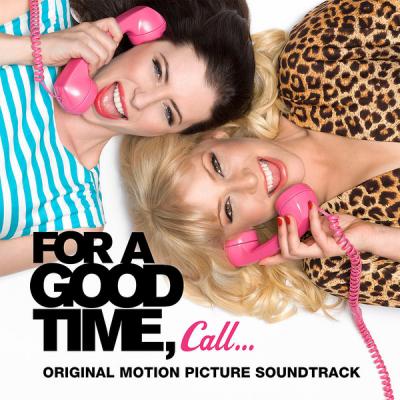
For A Good Time Call Album Cover

"For A Good Time Call" Soundtrack Lyrics

Movie • 2012

Track Listing


"For A Good Time, Call... (Original Motion Picture Soundtrack)" Soundtrack Description

For A Good Time, Call... 2012 official trailer still with Lauren and Katie in NYC
For A Good Time, Call… — Official Trailer (2012)

Overview

How do you score a raunchy, female buddy comedy without losing its soft center? This set splits the job: a punchy various-artists album for the big beats and a compact original score for connective tissue. Lakeshore Records issued the song album shortly before release and followed with John Swihart’s 26-minute score. Trusted source: Lakeshore Records / Apple Music.

The curation tilts toward indie pop and retro soul: Los Campesinos!, High Highs, Hanni El Khatib, Timber Timbre, plus a dead-on wink from Mary Wells’ “Operator.” The result is brisk and scene-legible—needle-drops sell the jokes and the city pace; cues titled “Gramercy Park” and “The Commercial” quietly thread character turns. Trusted source: AllMusic.

Trailer collage: cramped apartments, city streets, and startup hustle
City rhythm + phone-line hustle: the songs do montage duty; the score fills the in-betweens.

Questions & Answers

Was there an official soundtrack album?
Yes. For A Good Time, Call… (Original Motion Picture Soundtrack) arrived digitally in late August 2012 via Lakeshore Records; the CD followed soon after.
Is there a separate score release?
Yes. John Swihart’s Original Motion Picture Score (29 tracks, ~26 minutes) released in September 2012.
Who supervised the music?
Amine Ramer and Michael (Mike) Turner handled music supervision.
Which song choice is the most “on-the-nose” gag?
Mary Wells’ 1962 Motown single “Operator” — a sly nod to the phone-sex business premise.
What shows up in marketing that’s not on the main OST?
M.I.A.’s “Bad Girls” is used in trailers; it’s not part of the standard album.
Any chart impact?
Modest niche impact; the album served the film campaign more than radio. Critical write-ups focused on fit-to-scene rather than singles.

Notes & Trivia

  • The soundtrack album runs ~42–43 minutes; the score release is ~26 minutes.
  • Two different “Black Water/Blackwater” tracks appear—by The Dig (indie rock) and Timber Timbre (dark folk-blues).
  • “By Your Hand” (Los Campesinos!) is a fan-favorite sync from the campaign era.
  • The film premiered at Sundance (January 2012) and was acquired by Focus Features during the festival.
  • Music supervisors’ credits are listed in trades alongside DP James Laxton—years before his Moonlight breakout.

Genres & Themes

Indie pop & jangle — bright tempos for move-in, make-a-plan, and city-errand montages; signals optimism and hustle (Generationals, Los Campesinos!, High Highs).

Garage/surf & alt-blues — grit for risk and rule-breaking; cues that give Katie/Ren-style (Hanni El Khatib, Timber Timbre) a scuffed edge instead of rom-com gloss.

Retro soul — Mary Wells’ “Operator” adds period flavor and an ironic smile; it frames phone-culture with Motown confidence.

Mood grid: indie pop brightness, garage grit, and retro Motown nods in the film’s soundtrack
Style map: pop for momentum; blues for pressure; soul for wit.

Tracks & Scenes

Note on precision: the theatrical and unrated cuts differ slightly; public databases list placements but rarely exact timestamps. Below, cues are confirmed in-film or campaign, with clear context; diegetic status noted where identifiable.

“Back and Forth” — Operator Please
Where it plays: early-film energy bed over big-city settling and “new plan” momentum (non-diegetic).
Why it matters: establishes pace and tone—upbeat, practical, forward.

“I Promise” — Generationals
Where it plays: transitional montage as the roommates start cooperating (non-diegetic).
Why it matters: clean, jangly guitar mirrors the tentative truce turning into workflow.

“By Your Hand” — Los Campesinos!
Where it plays: mid-film lift during a confidence upswing; non-diegetic.
Why it matters: wordy, witty indie pop tracks the film’s talk-first identity.

“He Knew” — Chalk & Numbers
Where it plays: pre-party/get-ready texture; mostly non-diegetic.
Why it matters: girl-group colors let the film borrow 60s sparkle without kitsch.

“Operator” — Mary Wells
Where it plays: phone-business context cue; non-diegetic needle-drop.
Why it matters: the title doubles as a punchline; Motown authority sells the joke.

“Flowers Bloom” — High Highs
Where it plays: quiet reconciliation/rooftop-style breath; non-diegetic.
Why it matters: airier synth-folk lets emotion land without dialogue.

“Blackwater” — The Dig
Where it plays: late-night city glide; non-diegetic.
Why it matters: bass-forward churn hints at risk under the hustle.

“Black Water” — Timber Timbre
Where it plays: moodier interlude; non-diegetic.
Why it matters: swampy pulse darkens the palette so the comedy can pop back brighter.

“Come Alive” — Hanni El Khatib
Where it plays: rebellious spark during a rules-off beat; non-diegetic.
Why it matters: fuzzy guitar gives the film some abrasion—useful contrast to the pop.

Trailer needle-drop: “Bad Girls” — M.I.A.
Scene: marketing cutdowns and trailers.
Why it matters: swagger is the sales pitch; the film borrows radio-loud attitude for the ad campaign.

Score spotlight: “Gramercy Park” — John Swihart
Where it plays: location-establishing cue early on; score, non-diegetic.
Why it matters: names the place and clears space between jokes.

Score spotlight: “The Commercial” — John Swihart
Where it plays: the friends’ self-promo montage; score, non-diegetic.
Why it matters: metronomic optimism; it frames their DIY pivot as a plan, not a gag.

Also heard in-film but not on the standard OST: Blondie’s “Call Me,” STRFKR’s “Rawnald Gregory Erickson the Second,” Unknown Mortal Orchestra’s “Ffunny Ffriends,” Austra’s “Lose It,” and more—credits/documentation list these as additional syncs.

Music–Story Links

When the roommates spar, cues lean crisp and metered (Generationals, Chalk & Numbers). When the business takes off, tempos climb and grooves thicken (Operator Please, Hanni El Khatib). Retro soul (“Operator”) gives the phone-line premise a knowing grin, while the score’s short cue-lets push through dialogue-heavy scenes without stepping on punchlines.

Promotional trailer frame: the two leads plotting their phone business
Plot beats ride genre shifts: pop for schemes, blues for risk, soul for irony.

How It Was Made

Composer: John Swihart delivered a compact, motif-light score designed to sit between rapid-fire talk and needle-drops. Music supervision: Amine Ramer and Mike Turner balanced emerging indie acts with catalog moments and trailer-grade punch. Release strategy: Lakeshore staggered the song album (late August 2012) and the score (September 2012) around the Focus Features rollout. Trusted source: Variety / Lakeshore Records.

Reception & Quotes

Critics split on the film but often singled out pacing and vibe—areas where music does quiet work.

“Sitcom level in material or execution… but disarmingly entertaining.” Variety
“A feel-good raunch-com.” The Hollywood Reporter
“A meek, mild-mannered movie about phone sex.” Los Angeles Times

Availability note: both albums remain streamable on major platforms. Trusted source: Apple Music / AllMusic.

Additional Info

  • Premiere: Sundance (Jan 26, 2012); Focus Features acquisition during the festival.
  • Album label: Lakeshore Records (digital first; CD followed shortly thereafter).
  • Trailer track “Bad Girls” (M.I.A.) appears in marketing, not the core OST.
  • End-credits/extra syncs include cuts not present on the standard 12-track album (e.g., Blondie, STRFKR, UMO).
  • Score cue titles telegraph scene functions (“Gramercy Park,” “You’ve Got Four Days,” “The Commercial”).
  • Music supervisors credited in trades: Amine Ramer & Michael Turner.

Technical Info

  • Title: For A Good Time, Call… (Original Motion Picture Soundtrack)
  • Year: 2012
  • Type: Various-artists soundtrack; separate original score
  • Composer (score): John Swihart
  • Music Supervision: Amine Ramer; Michael (Mike) Turner
  • Label: Lakeshore Records
  • Selected notable placements: “Operator” (Mary Wells); “By Your Hand” (Los Campesinos!); “Back and Forth” (Operator Please); “Flowers Bloom” (High Highs); trailer: “Bad Girls” (M.I.A.).
  • Release context: Sundance premiere; US theatrical Aug 31, 2012
  • Album status: Song album released late Aug 2012; score album mid-Sept 2012; both widely available digitally

Canonical Entities & Relations

SubjectRelationObject
Jamie TravisdirectedFor A Good Time, Call… (2012 film)
John Swihartcomposed score forFor A Good Time, Call… (2012 film)
Amine Ramermusic supervisedFor A Good Time, Call…
Michael Turnermusic supervisedFor A Good Time, Call…
Lakeshore RecordsreleasedOriginal Soundtrack & Score albums
Focus FeaturesdistributedFor A Good Time, Call… (US)
Los Campesinos!performed“By Your Hand” (in soundtrack)
Mary Wellsperformed“Operator” (catalog sync)
M.I.A.featured intrailers with “Bad Girls”

Sources: Variety; The Hollywood Reporter; Los Angeles Times; Lakeshore Records; Apple Music; AllMusic; Discogs; IndieWire; Wikipedia (film & soundtrack); Soundtrakd / MovieMusic (track documentation).

November, 09th 2025

'For a Good Time, Call...' is a 2012 American comedy film directed by Jamie Travis. Read more on IMDb and Wikipedia
A-Z Lyrics Universe

Lyrics / song texts are property and copyright of their owners and provided for educational purposes only.