Soundtracks:  A B C D E F G H I J K L M N O P Q R S T U V W X Y Z #


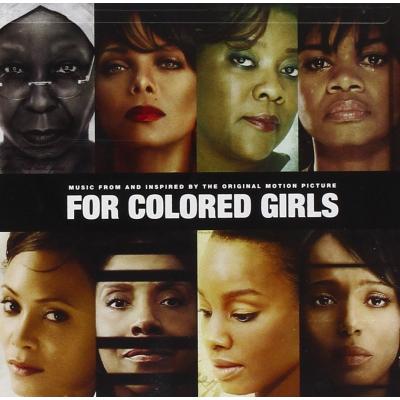
For Colored Girls Album Cover

"For Colored Girls" Soundtrack Lyrics

Movie • 2010

Track Listing


"For Colored Girls (Music From and Inspired by the Original Motion Picture)" Soundtrack Description

For Colored Girls (2010) official trailer frame featuring ensemble cast montage
For Colored Girls — Official Trailer frames, 2010

Overview

How do you translate a choreopoem into cinema without losing the pulse of speech, dance, and memory? The film leans on Aaron Zigman’s lyrical score and a curated set of soul, R&B, and contemporary cuts. The companion album—released by Atlantic Records on November 2, 2010—arrived three days before the U.S. premiere. Trusted source: Atlantic Records / label announcement.

The set balances two lanes: (1) orchestral cues and poem-linked pieces (with Joshua Bell and the Hollywood Studio Symphony) that braid scenes together, and (2) “music from & inspired by” selections from Sharon Jones & The Dap-Kings, Estelle, Laura Izibor, Lalah Hathaway, Macy Gray, Gladys Knight, Janelle Monáe, and a revisioning of Nina Simone’s “Four Women” featuring Simone (Lisa Stroud) with Laura Izibor and Ledisi. Trusted source: AllMusic; Wikipedia (album).

Trailer collage hinting at the film’s poem-to-scene structure and orchestral/soul blend
Poem to picture: score threads the monologues; songs color the rooms.

Questions & Answers

Who composed the film’s score?
Aaron Zigman wrote the original score; sessions feature the Hollywood Studio Symphony and soloist Joshua Bell. Trusted source: film credits / album personnel.
Is there an official soundtrack album?
Yes—For Colored Girls (Music From and Inspired by the Original Motion Picture) on Atlantic Records, released Nov 2, 2010.
What’s distinctive about “Four Women” on this album?
It’s a new version built around Nina Simone’s original performance, interwoven with vocals by Simone (Lisa Stroud), Laura Izibor, and Ledisi.
Who supervised the music for the film?
Joel C. High is credited as Music Supervisor on the feature.
Does the trailer use a track from the album?
Yes—the trailer prominently deploys “Four Women,” foregrounding its themes and voices.
Is the album strictly “as-heard-in-film”?
No; it mixes featured cues with “inspired by” songs, a common approach for narrative-heavy dramas.

Notes & Trivia

  • Album street date: November 2, 2010 (U.S.); distributor: Atlantic Records.
  • “Main Title” features dialogue by the ensemble cast over Zigman’s theme with Joshua Bell.
  • “All Day Long (Blue Skies)” interpolates Irving Berlin’s “Blue Skies.”
  • “Four Women” uses samples from Nina Simone’s 1966 recording; this cut anchors marketing.
  • Leona Lewis’s “I Know Who I Am” earned a Black Reel Award nomination for Outstanding Original Song.

Genres & Themes

Modern orchestral / chamber lyricism → empathy bridge between monologues; strings and solo violin carry breath, pause, and aftershock.

Retro-soul & classicist R&B (Sharon Jones & The Dap-Kings, Gladys Knight) → resilience, community rituals, everyday dignity.

Contemporary R&B & art-pop (Janelle Monáe, Estelle, Laura Izibor) → interior resolve and forward motion; “inspired by” tracks echo the film’s present tense.

Genres array: orchestra, retro-soul band setup, and contemporary R&B palette
Style map: score for silence and memory; songs for grit and lift.

Tracks & Scenes

Note: timecodes vary by cut; cue sheets confirm usage, while some album pieces function as “inspired by” inclusions. Where placement is marketing-only, it’s marked as such.

“Main Title” — Ensemble with Joshua Bell & Hollywood Studio Symphony
Where it plays: opening credits with spoken fragments from the principal cast; non-diegetic score with dialogue.
Why it matters: sets the choreopoem cadence on screen—music and testimony share the frame.

“Longer & Stronger” — Sharon Jones & The Dap-Kings
Where it plays: source-like transitional use around neighborhood and domestic rhythms (album feature; brief in-film needle-drop).
Why it matters: horns and snare crack temper heavy scenes with everyday stamina.

“All Day Long (Blue Skies)” — Estelle
Where it plays: mid-film lift over interstitial movement; non-diegetic; lyric nods Berlin’s “Blue Skies.”
Why it matters: optimism as counterweight—hope voiced without undercutting gravity.

“What More Can They Do” — Laura Izibor
Where it plays: montage-style connective tissue; non-diegetic.
Why it matters: plaintive piano foregrounds exhaustion and asks the film’s central question aloud.

“Sun” — Lalah Hathaway
Where it plays: short reflective beat post-confrontation; non-diegetic.
Why it matters: velvet register = recovery space; gives characters a breath before the next poem lands.

“Ansomnia” — Zaki Ibrahim
Where it plays: nocturnal city passages; non-diegetic.
Why it matters: electronic pulse mirrors anxious interior monologue between testimonies.

“Settle” — Gladys Knight
Where it plays: reconciliation-leaning montage; non-diegetic.
Why it matters: a veteran voice modeling steadiness—the score’s moral center of gravity.

“La Donna in Viola” — Karen Slack & Andrea Jones-Sojola with orchestra
Where it plays: poem-titled sequence underscored by operatic timbre; non-diegetic performance within the score lane.
Why it matters: classical color elevates text into ritual space.

“Sechita (A Senhora em Amarelo)” — Anika Noni Rose & Carondelet Percussion Ensemble
Where it plays: poem-anchored segment associated with the “lady in yellow”; semi-diegetic ritual feel.
Why it matters: percussion and chant connect back to the work’s stage roots.

“Stand Up” — Macy Gray
Where it plays: brief, scene-punctuating drop; non-diegetic.
Why it matters: rasp and grit underline hard-won resolve.

“Without a Fight” — Janelle Monáe
Where it plays: transitional insert (album highlight; sparing in-film use).
Why it matters: the lyric stance—refusal to fold—mirrors several women’s turns.

“Four Women” — Nina Simone with Simone, Laura Izibor & Ledisi
Where it plays: marketing/trailer centerpiece; album feature.
Why it matters: frames the film for audiences—four archetypes, four timbres, one chorus of survival.

“I Know Who I Am” — Leona Lewis
Where it plays: late-film/credits rotation; non-diegetic.
Why it matters: gospel-inflected closure; a statement song that capped the album campaign.

Trailer note: the official trailer leans on “Four Women,” using Simone’s voice as a final sting; this version also appears on the album.

Music–Story Links

Score cues carry the weight of silence—after disclosures, strings and solo violin hold stillness long enough for meaning to land. When a character regains ground, the album’s soul and R&B tracks step in (“Longer & Stronger,” “Settle”) to suggest community hands at the small of the back. Poems with named colors receive bespoke timbres—percussion ritual for “Sechita,” operatic sheen for “La Donna in Viola”—so each woman’s register feels distinct within one circle.

Music–story linkage: close-ups of women speaking, followed by a quiet orchestral dissolve
Testimony → hush → music holds the room; songs return when the circle gathers.

How It Was Made

Composer: Aaron Zigman, integrating chamber textures and motif-light transitions; orchestral/soloists: Hollywood Studio Symphony with Joshua Bell featured. Music supervision: Joel C. High. Album: Atlantic Records assembled a 14-track set mixing score, cast-voiced main title, and “inspired by” contributions. Trusted sources: album liner credits; trade/credit listings.

Reception & Quotes

Critics split on the adaptation; several singled out music choices and the performers’ presence.

“An advance for Tyler Perry, as well as a big step back.” Variety
“Seeing these actresses together is a poignant reminder of their gifts.” Roger Ebert
“Solemn and portentous… asked to embrace the modern experience of Black American women.” New York Magazine (Vulture)

Album reception: AllMusic awarded four stars, noting how well the selections fit this particular film. Trusted source: AllMusic.

Additional Info

  • Label: Atlantic Records; format: CD/digital (U.S.).
  • Sample credit: Nina Simone’s 1966 “Four Women” (Verve) appears within the album’s new version.
  • “Main Title (Instrumental)” closes the album as a bookend to the dialogue-bearing opener.
  • Prominent producers include Warryn Campbell, Harmony Samuels, Bosco Mann, and Jerry Hey.
  • Janelle Monáe’s contribution ties to her early-2010s art-pop breakout; Macy Gray appears in the film and on the soundtrack.
  • The trailer rollout emphasized “Four Women,” aligning marketing with the source work’s core motif.

Technical Info

  • Title: For Colored Girls (Music From and Inspired by the Original Motion Picture)
  • Year: 2010 (album release Nov 2; film release Nov 5, U.S.)
  • Type: Various-artists soundtrack + select score
  • Composer (score): Aaron Zigman
  • Music Supervisor (film): Joel C. High
  • Performers (select): Sharon Jones & The Dap-Kings; Estelle; Laura Izibor; Lalah Hathaway; Gladys Knight; Macy Gray; Janelle Monáe; Simone; Ledisi; Leona Lewis; Joshua Bell (soloist)
  • Label: Atlantic Records
  • Selected notable placements: “Main Title” (opening with dialogue); “Four Women” (trailer/album feature); “I Know Who I Am” (late-film/credits rotation); poem-linked cues “Sechita” and “La Donna in Viola” inside the score lane
  • Availability: Digital & physical editions remain in circulation via major platforms

Canonical Entities & Relations

SubjectRelationObject
For Colored Girls (2010 film)directed byTyler Perry
For Colored Girls (2010 film)music byAaron Zigman
Atlantic RecordsreleasedFor Colored Girls soundtrack (2010)
Joel C. Highmusic supervisedFor Colored Girls (film)
Joshua Bellfeatured soloist on“Main Title” / score cues
Nina Simone; Simone; Laura Izibor; Ledisiperformed“Four Women” (album version)
Leona Lewisperformed“I Know Who I Am”
Sharon Jones & The Dap-Kingsperformed“Longer & Stronger”
Janelle Monáeperformed“Without a Fight”

Sources: Atlantic Records; AllMusic; Wikipedia (film & album); Variety; The Hollywood Reporter; Roger Ebert; Playbill; The Numbers; IMDb (Soundtracks & credits); Essence; Wax Poetics.

November, 09th 2025


A-Z Lyrics Universe

Lyrics / song texts are property and copyright of their owners and provided for educational purposes only.