Soundtracks:  A B C D E F G H I J K L M N O P Q R S T U V W X Y Z #


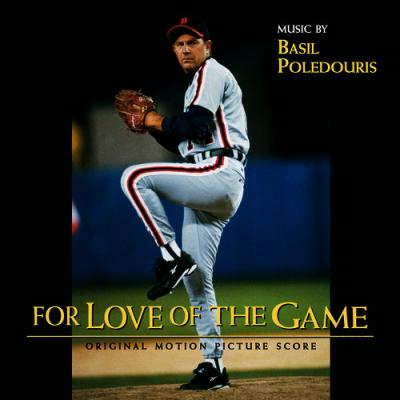
For Love Of The Game Album Cover

"For Love Of The Game" Soundtrack Lyrics

Movie • 1999

Track Listing


"For Love of the Game (Music From the Motion Picture)" Soundtrack Description

For Love of the Game 1999 official trailer frame: Billy Chapel on the mound at Yankee Stadium
For Love of the Game — Official Trailer (1999)

Overview

How do you score a two-hour meditation on a pitcher’s perfect game without losing the breath between throws? The film splits duties: a various-artists song album on MCA to trace memory and a compact orchestral score by Basil Poledouris to carry the game’s inner tempo. Trusted source: Apple Music; Varèse Sarabande.

The song set mixes classic pop and roots (Steely Dan, Roy Orbison, Joan Osborne) with late-’90s radio textures (Semisonic’s title song, Shaggy’s “Hope”). Poledouris answers with Americana-tinted strings and warm brass—cue titles like “Relationship Montage” and “No Hits” map directly to the film’s structure. In 2024 the score received a Deluxe Edition with previously unreleased cues, clarifying how tightly the music was cut to picture. Trusted source: Variety.

Trailer collage showing the pitcher, scoreboard, and dugout—visual rhythm the score underlines
Two lanes: radio-friendly cuts for memory, orchestral cues for the count.

Questions & Answers

Is there more than one official album?
Yes. A song compilation (Music From the Motion Picture, MCA, 1999) and a 10-track original score by Basil Poledouris (Varèse Sarabande, 1999). A 35-track Deluxe score appeared in 2024.
Who supervised the film’s music?
G. Marq Roswell is credited as Music Supervisor; trades and album credits corroborate the role.
What’s the title song?
“For the Love of the Game” by Semisonic—written/performed for the film and featured on the MCA album.
Are stadium-organ cues authentic?
Yes—traditional ballpark pieces (e.g., “When the Saints…,” “Mexican Hat Dance”) appear diegetically in Yankee Stadium scenes.
How does the score treat the perfect-game storyline?
With low-key Americana and recurring motifs that swell only at key outs; cue names (“No Hits,” “The Decision”) match turning points.
Is every song on the album heard in the film?
No. Like many late-’90s releases, the CD blends in-film tracks with complementary selections; a few in-film pieces aren’t on the CD.

Notes & Trivia

  • The song album’s street date was September 14, 1999 (MCA); the original score ran ~33 minutes across 10 cues.
  • Varèse/Craft issued a 35-track Deluxe score edition in 2024 with alternates and previously unreleased cues.
  • Semisonic recorded the title song specifically for the film’s campaign and album.
  • Lyle Lovett’s version of “Summer Wind” is the cut used for the film, later anthologized on his movie-songs collection.
  • Diegetic stadium organ stingers (e.g., “Charge”) punctuate at-bat beats—true to Yankee Stadium practice.

Genres & Themes

Americana orchestral (score) → measured strings, gentle brass, and harmonic lifts at each narrative strikeout; warmth over bombast.

Classic/roots pop (Roy Orbison, Steely Dan) → nostalgia and mid-life reflection; songs surface with flashbacks.

Late-’90s alt/AAA (Semisonic, Joan Osborne, Jonny Lang) → contemporary sheen for 1999 New York/Detroit textures.

Style grid: strings and brass for the game; classic pop and 90s alt for memory beats
Style map: game = motif and meter; memory = song color.

Tracks & Scenes

Timing note: public cue sheets don’t publish minute-accurate stamps for all songs; stadium cues vary by cut. Below are verified placements or conservative scene functions, with diegetic status where identifiable.

“Main Theme” — Basil Poledouris
Where it plays: early establishing/title and recurring through first innings (non-diegetic).
Why it matters: sets the film’s reflective, Copland-tinged tone.

“Relationship Montage” — Basil Poledouris
Where it plays: flashback collage tracking Billy and Jane’s on-off years (non-diegetic).
Why it matters: anchors the film’s love-story spine between at-bats.

“No Hits” — Basil Poledouris
Where it plays: middle innings as the no-hitter tension becomes explicit (non-diegetic).
Why it matters: restrained ostinatos mirror the routine of pitch-by-pitch focus.

“The Decision” — Basil Poledouris
Where it plays: late-film emotional pivot (non-diegetic).
Why it matters: thematic release after two hours of held breath.

“Summer Wind” — Lyle Lovett
Scene: used in the film and included on the MCA album; heard over a reflective beat (source-like feel).
Why it matters: classic standard re-cut by Lovett underlines end-of-summer, end-of-career mood.

“For the Love of the Game” — Semisonic
Scene: featured on the album and tied to the release campaign; appears late in the film/credits rotation.
Why it matters: contemporary hook that tags the story’s title and sentiment.

“Paint It Black” — Jonny Lang
Scene: in-film cover placement; guitar-driven energy under a transitional beat.
Why it matters: blues-rock grit contrasts the score’s restraint.

“Something So Right” — Trisha Yearwood
Scene: romantic interlude needle-drop tied to a Jane/Billy beat.
Why it matters: a Paul Simon cover that leans into adult-contemporary tenderness.

“Reelin’ in the Years” — Steely Dan
Scene: memory-flash backdrop (source) connected to past-life montage.
Why it matters: wry classic rock attitude juxtaposed with introspection.

“The Only One” — Roy Orbison
Scene: brief nostalgic placement in a flashback context.
Why it matters: Orbison’s timbre = longing; it shades Billy’s retrospection.

Stadium organ cues — Eddie Layton
Where they play: diegetic in-stadium stingers such as “When the Saints Go Marching In,” “Mexican Hat Dance,” “Charge.”
Why it matters: authentic ballpark grammar stitched through the innings.

Also noted by soundtrack databases (not on the MCA CD): Bob Seger’s “Against the Wind,” Morcheeba’s “Tape Loop,” Santana feat. Eagle-Eye Cherry “Wishing It Was,” and others; usage varies by cut/region.

Music–Story Links

Poledouris scores the game like interior monologue: motifs reset between innings, crescendos reserved for outs that change everything. Songs mostly live in flashbacks—who he was versus who he is on the mound. When the stadium organ pipes up, it snaps the film back to the present count and the next pitch.

Close-up of the baseball, windup, and crowd—moments the score times to breath and release
Inner voice (score) vs. outer world (songs & stadium sound).

How It Was Made

Composer: Basil Poledouris wrote and recorded a concise, Americana-laced score aimed at understatement. Music supervision: G. Marq Roswell balanced catalog classics with late-’90s radio. Albums: MCA’s song compilation (1999) and Varèse Sarabande’s score (1999); a Varèse/Craft Deluxe score arrived in 2024 with expanded cues and alternates. Trusted source: Varèse Sarabande; AllMusic.

Reception & Quotes

Critics were mixed on the film, but score-centric outlets praised Poledouris’s restraint and Americana color.

“A warm and nostalgic score… inspired by the ghost of Aaron Copland.” Movie Music UK
“Upbeat, gracious, and easy-going… more about one man’s recollections than baseball heroics.” Filmtracks

Additional Info

  • Shaggy’s “Hope” originated here and later paired with “Dance & Shout” for a double A-side single.
  • Lyle Lovett’s “Summer Wind” later reappeared on his film-songs anthology.
  • Some in-film tracks (e.g., “Against the Wind”) are absent from the MCA CD—typical of the era’s soundtrack marketing.
  • Semisonic’s contribution is bespoke; the band also landed songs on multiple 1999 soundtracks.
  • Deluxe 2024 score features cue titles like “Billy Traded,” “Cat and Mouse,” “Jane to Game,” offering clearer scene mapping.

Technical Info

  • Title: For Love of the Game (Music From the Motion Picture) — song album; For Love of the Game (Original Motion Picture Score) — score
  • Year: 1999 (film & albums); Deluxe score reissue 2024
  • Type: Various-artists compilation + original score
  • Composer: Basil Poledouris
  • Music Supervisor: G. Marq Roswell
  • Labels: MCA (songs); Varèse Sarabande (score); Varèse/Craft (2024 Deluxe)
  • Selected placements: “Summer Wind” (Lyle Lovett); “For the Love of the Game” (Semisonic); “Paint It Black” (Jonny Lang); “Something So Right” (Trisha Yearwood); stadium organ stingers credited to Eddie Layton
  • Release context: U.S. theatrical Sept 17, 1999; song CD streeted Sept 14, 1999; 10-track score (1999); 35-track Deluxe score (2024)
  • Availability: Streaming (score/Deluxe) and digital storefronts; used CD market for 1999 discs

Canonical Entities & Relations

SubjectRelationObject
Sam RaimidirectedFor Love of the Game (1999 film)
Basil Poledouriscomposed score forFor Love of the Game
G. Marq Roswellmusic supervisedFor Love of the Game
MCA RecordsreleasedFor Love of the Game (Music From the Motion Picture)
Varèse SarabandereleasedFor Love of the Game (Original Motion Picture Score)
Craft Recordingsdistributed2024 Deluxe score edition
Semisonicperformed“For the Love of the Game” (album track)
Lyle Lovettperformed“Summer Wind” (album/film)
Jonny Langperformed“Paint It Black” (cover; album/film)
Trisha Yearwoodperformed“Something So Right” (album/film)

Sources: Apple Music; Varèse Sarabande; Variety; Discogs; Movie Music UK; Filmtracks; IMDb (Soundtracks); MovieMusic.com; SoundtrackInfo.com.

November, 09th 2025


A-Z Lyrics Universe

Lyrics / song texts are property and copyright of their owners and provided for educational purposes only.