
"For Me and My Gal" Soundtrack Lyrics
Movie • 1996
Track Listing
"For Me and My Gal: Music From the Original Motion Picture" Soundtrack Description
Overview
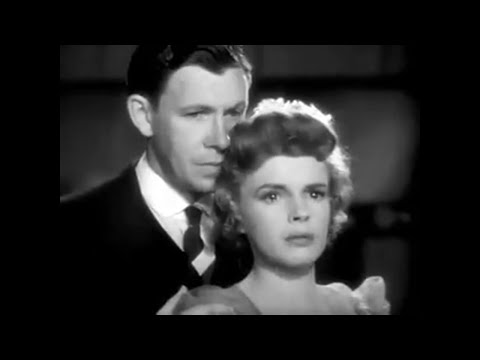
Question first: is there a 1996 movie called For Me and My Gal? No—the film is the 1942 MGM musical starring Judy Garland and Gene Kelly. 1996 refers to the restored, expanded CD release of the original soundtrack by Rhino Movie Music/TCM (catalog R2 72204). Trusted source: The Judy Room (discography).
Unlike Busby Berkeley’s kaleidoscopic extravaganzas, this wartime romance keeps its music grounded: the numbers play like real vaudeville turns, with orchestral linking material and World War I standards folded into montages. The 1996 Rhino/TCM album assembles the film’s performances, outtakes, and underscore into a long-playing document; later digital issues recirculate those masters. Trusted source: AllMusic.

Questions & Answers
- So what exactly happened in 1996?
- Rhino Movie Music/Turner Classic Movies issued a definitive CD restoration of the 1942 soundtrack (cat. R2 72204), running ~74 minutes.
- Who handled the film’s music duties in 1942?
- Musical adaptation by Roger Edens, musical direction by Georgie Stoll; choreography by Bobby Connolly. The film received an Oscar nomination for Best Score.
- Is Gene Kelly’s “film debut” tied to a signature number?
- Yes—he and Garland duet the title song “For Me and My Gal,” and share dance/singing features like “Ballin’ the Jack.”
- Are the big songs diegetic?
- Almost all are performed on-stage or in rehearsal (diegetic). The film treats them as vaudeville acts rather than fantasy spectacles.
- Does the trailer use music from the film?
- Yes—promos lean on the title tune; contemporary trailers often cut around that performance.
- Is the Rhino CD the only release?
- No—there was a 1978 LP; later digital/streaming issues also exist. The 1996 Rhino/TCM disc is the reference edition.
Notes & Trivia
- Kelly’s screen debut; Garland’s first fully “adult” romantic lead for MGM.
- AFI considered “For Me and My Gal” for its 100 Songs list; the film is on AFI’s Greatest Movie Musicals nominations roster.
- The song “For Me and My Gal” (1917; Meyer/Leslie/Goetz) predates the film and became a 1942 Decca hit for Garland & Kelly.
- The film avoids Berkeley’s usual mega-formations; it sticks to period-authentic staging.
- The Palace Theatre in New York is the story’s grail; several numbers are framed as “trying to reach the Palace.”
Genres & Themes
Vaudeville period standards → performed on-stage or in rehearsal; their built-in audience logic sells ambition, romance, and setback without suspension of disbelief.
Patriotic WWI songs → montage fuel for bond drives, troop shows, and home-front spirit; they pivot tone from romance to service.
Suite-like underscore & reprises → short orchestral links and reprises of the title tune bridge acts and mark emotional turns.
Tracks & Scenes
(Diegetic unless noted; placements follow the 1942 film. Where timings vary by cut, descriptions stay functional.)
“For Me and My Gal” — Judy Garland & Gene Kelly
Scene: Their first joint number and, later, the post-war reunion on the Palace stage.
Why it matters: The relationship’s thesis statement—professional chemistry that doubles as a vow.
“When You Wore a Tulip (and I Wore a Big Red Rose)” — Garland & Kelly
Scene: A bright courtship turn, staged like a polished road number.
Why it matters: Shows the act “clicking,” and how joy reads from the footlights.
“Oh, You Beautiful Doll” — Ensemble (Garland, George Murphy, et al.)
Scene: Vaudeville routine in montage; added lyric work by Roger Edens.
Why it matters: Early-career grind—light, quick, practical.
“After You’ve Gone” — Judy Garland
Scene: Solo spotlight after a painful rift.
Why it matters: Torch-song honesty; Garland’s phrasing carries the dramatic break.
“Ballin’ the Jack” — Garland & Kelly
Scene: Kinetic song-and-dance showcase on stage.
Why it matters: First real look at their dance rapport—athletic, playful, in sync.
“Till We Meet Again” — Marta Eggerth & Ensemble
Scene: Concert-style set during the war effort.
Why it matters: Operetta color widens the palette and marks the looming separation.
WWI medley (various) — brief features and snippets:
“By the Beautiful Sea” • “There’s a Long, Long Trail” • “How Ya Gonna Keep ’Em Down on the Farm (After They’ve Seen Paree)?” • “Where Do We Go from Here, Boys?” • “It’s a Long Way to Tipperary” • “Good-Bye Broadway, Hello France” • “(There Are) Smiles” • “Oh! Frenchy” • “When Johnny Comes Marching Home Again” • “Pack Up Your Troubles in Your Old Kit-Bag”
Scene: Bond-rally and troop-show montage; “When Johnny…” returns at the Palace victory performance.
Why it matters: Collage of service and morale; the film’s patriotic counterpoint to the love story.
Underscore & reprises — MGM Studio Orchestra
Scene: Short links and thematic reprises (non-diegetic) between vaudeville acts and war passages.
Why it matters: Keeps the emotional line unbroken while respecting stage realism.
Trailer notes: promotional materials emphasize the title song and the Kelly/Gloria (Garland) duet footage; no modern “trailer-only” cues apply for 1942 marketing.
Music–Story Links
Numbers are career steps. A duet equals a promise; a solo equals a reckoning. When the narrative enters wartime, the score cedes to popular standards, so duty sits in the same musical universe as romance. The final Palace reprise of “For Me and My Gal” closes both arcs at once: act achieved, love returned.
How It Was Made
Direction & staging: Busby Berkeley, working under producer Arthur Freed, avoids his trademark overhead spectacles and lets songs play as vaudeville (choreography by Bobby Connolly).
Music crew: musical adaptation by Roger Edens; musical direction by Georgie Stoll; orchestrating/arranging support from MGM stalwarts (e.g., Conrad Salinger). The film earned an Academy Award nomination for Best Score (musical). Trusted source: AFI/TCM.
Album lineage: LP anthology in 1978; comprehensive CD restoration in 1996 (Rhino/TCM); subsequent digital issues on major services.
Reception & Quotes
Critics and historians often note the surprising dramatic weight beneath the film’s patriotic surface.
“Reveals just how hectic and tormented, beneath the patriotic pomp, that home-front life was.” The New Yorker
“Garland’s ‘After You’ve Gone’ registers as the film’s emotional lodestar.” Classic Movie Hub (summary)
Additional Info
- The title song dates to 1917 (Meyer/Leslie/Goetz); the film turned a standard into a character theme.
- Kelly and Garland’s recording of the title tune was a 1942 hit single.
- Rhino/TCM CD (1996) includes outtakes and connective cues; streaming variants may differ in length and sequencing.
- The film premiered 21 Oct 1942 (NYC) and grossed over $4.3M worldwide for MGM.
- The Palace Theatre target mirrors real-world vaudeville prestige.
Technical Info
- Film: For Me and My Gal (MGM, 1942)
- Album (reference edition): For Me and My Gal: Music From the Original Motion Picture — Rhino Movie Music / Turner Classic Movies Music, 1996 (CD, R2 72204); later digital issues available
- Music leads: Roger Edens (musical adaptation); Georgie Stoll (musical direction); Bobby Connolly (choreography)
- Key performances: Judy Garland; Gene Kelly; Marta Eggerth; MGM Studio Orchestra
- Notable placements: “For Me and My Gal” (duet & finale); “When You Wore a Tulip”; “After You’ve Gone”; “Ballin’ the Jack”; WWI medley with “When Johnny Comes Marching Home”
- Availability: 1996 CD widely collected; streaming editions on major platforms
Canonical Entities & Relations
| Subject | Relation | Object |
|---|---|---|
| Busby Berkeley | directed | For Me and My Gal (1942) |
| Arthur Freed | produced | For Me and My Gal (MGM) |
| Judy Garland; Gene Kelly | performed | “For Me and My Gal” (title song, film recording) |
| George W. Meyer; Edgar Leslie; E. Ray Goetz | wrote | “For Me and My Gal” (1917 song) |
| Roger Edens | musical adaptation for | For Me and My Gal (film) |
| Georgie Stoll | musical direction for | For Me and My Gal (film) |
| Bobby Connolly | staged | musical numbers as vaudeville acts |
| Rhino Movie Music / TCM | released | 1996 restored soundtrack (CD R2 72204) |
| Palace Theatre (NYC) | depicted as | narrative goal/venue |
Sources: TCM; AFI Catalog; AllMusic; The Judy Room (discography & filmography); Discogs; IMDb; Wikipedia (film & song); Apple Music/Spotify; The New Yorker; Classic Movie Hub.
November, 09th 2025
A-Z Lyrics Universe
Cynthia Erivo Popular
Ariana Grande Horsepower
Post Malone Ain't No Love in Oklahoma
Luke Combs Good Riddance (Time of Your Life)
Green Day Bye Bye Bye
*NSYNC You're the One That I Wan
John Travolta & Olivia Newton-John I Always Wanted a Brother
Braelyn Rankins, Theo Somolu, Kelvin Harrison Jr. and Aaron Pierre The Power of Love
Frankie Goes to Hollywood Beyond
Auli’i Cravalho feat. Rachel House MORE ›