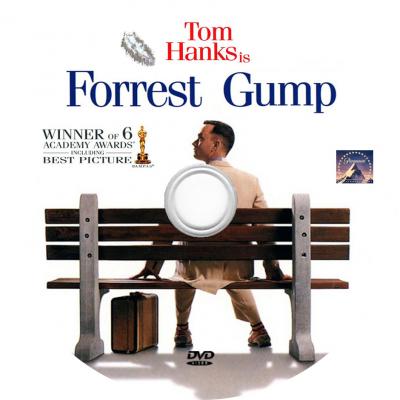
"Forrest Gump" Soundtrack Lyrics
Movie • 2001
Track Listing
Elvis Presley
Duane Eddy
Clarence 'Frogman' Henry
The Rooftop Singers
Wilson Pickett
Joan Baez
Creedence Clearwater Revival
The Four Tops
Aretha Franklin
Bob Dylan
The Beach Boys
The Mamas and the Papas
Buffalo Springfield
Jackie DeShannon
The Doors
Simon & Garfunkel
Jefferson Airplane
The Youngbloods
Scott McKenzie
The Byrds
The Fifth Dimension
Harry Nilsson
Three Dog Night
The Supremes
B.J. Thomas
Randy Newman
Lynrd Skynrd
The Doobie Brothers
Gladys Knight & the Pips
Willie Nelson
Bob Seger & the Silver Bullet Band
Alan Silvestri
"Forrest Gump (The Soundtrack)" Soundtrack Description

Overview
How do you score a life that brushes past Elvis, Vietnam, Watergate, and a cross-country run? Forrest Gump answers with a jukebox history lesson: 1950s rockabilly through 1980s heartland rock, stitched to Alan Silvestri’s feather-light theme. The compilation album Forrest Gump (The Soundtrack) arrived in 1994 as a two-disc set; the orchestral score was issued separately the same day. (Source: Wikipedia.)
The strategy is deliberate: recognizable U.S. recordings pin each era without hijacking the picture. Executive music producer Joel Sill has said director Robert Zemeckis insisted on American artists only—what Forrest would buy. The result works as both time machine and character map, peaking at No. 2 on the Billboard 200 and selling in the multi-million range. (Sources: Wikipedia; Billboard summaries.)
Questions & Answers
- What’s on the commercial album vs. the film itself?
- The 1994 album collects 32 pre-existing songs plus Silvestri’s suite; the film uses additional cues not on the OST (e.g., Hendrix, multiple Doors tracks). (Source: Wikipedia; IMDb soundtrack.)
- Why are the artists almost exclusively American?
- Zemeckis and executive music producer Joel Sill set a rule—American music to match what Forrest would plausibly buy. (Source: Wikipedia, quoting Sill.)
- What changed in the 2001 reissue?
- A Collector’s Edition added “Running on Empty” (Jackson Browne) and “Go Your Own Way” (Fleetwood Mac). (Source: Wikipedia; Apple Music/Discogs listings.)
- What’s the difference between album and score here?
- The compilation covers diegetic/period songs; Forrest Gump – Original Motion Picture Score is Silvestri’s orchestral music (nominated at the 67th Oscars). (Source: Wikipedia; AllMusic.)
- Which placement is most iconic?
- “Fortunate Son” (CCR) as Forrest helicopters into Vietnam; it’s become shorthand for Vietnam in cinema. (Source: Pitchfork analysis.)
- How high did the album chart?
- It peaked at No. 2 on the Billboard 200; Canada No. 1 for a week. (Source: Wikipedia/Billboard data.)
- Is the trailer music on the album?
- Trailers drew from the film’s cue set; the retail album mirrors the movie’s period cuts but not every promo choice.
Notes & Trivia
- Silvestri’s “Feather” theme bookends the film; the OST includes a suite version.
- At least a dozen songs in the film never made the 1994 album—common for needle-drop heavy features. (Source: IMDb soundtrack; Wikipedia “Additional songs”.)
- The album was reissued on vinyl in later years; configurations vary by territory and date. (Source: AllMusic/retail catalogs.)
- Joel Sill later received the Guild of Music Supervisors’ Legacy Award.
- Commercial tie-ins revived catalog tracks (“But I Do” enjoyed ad resurgences before and after the film).
Genres & Themes
Rock ’n’ roll/rockabilly (’50s–early ’60s) → youthful momentum and Forrest’s literal “Run” motif (“Hound Dog,” “Rebel Rouser”). Folk & protest (mid-’60s) → Jenny’s worldview and campus politics (Dylan/Baez songbook). Psychedelia & hard rock → Vietnam intensity and stateside unrest (Hendrix; multiple Doors cuts). Sun-belt soul & R&B → warmth in domestic and friendship beats (Four Tops, Aretha). Country/heartland rock (’70s–’80s) → the run, the shrimping grind, and the film’s Americana lens (Willie Nelson; Bob Seger).

Tracks & Scenes
"Hound Dog" — Elvis Presley
Where it plays: Young Forrest shows Elvis his leg-brace dance at Mrs. Gump’s boardinghouse (early sequence); non-diegetic/TV cut-ins.
Why it matters: Roots Forrest’s legend in pop culture origin myth while tagging the 1950s. (Sources: IMDb soundtrack; widely documented clips.)
"Rebel Rouser" — Duane Eddy
Where it plays: Forrest sprints from bullies; braces snap and he discovers his speed (early 1960s). Non-diegetic.
Why it matters: Twang-as-thruster; the cue literally scores his first transformation. (Source: ScreenRant overview; album sequencing corroboration.)
"(I Don’t Know Why) But I Do" — Clarence “Frogman” Henry
Where it plays: Early-school/childhood montage. Non-diegetic.
Why it matters: Easygoing New Orleans lilt softens the childhood chapters. (Sources: album listings; song reuse notes.)
"Walk Right In" — The Rooftop Singers
Where it plays: Early-’60s social backdrop as Forrest grows up. Non-diegetic.
Why it matters: Folk-pop signal for the era’s shift.
"Land of 1000 Dances" — Wilson Pickett
Where it plays: After the strip-club scene as Forrest ushers Jenny out. Source vibe into non-diegetic.
Why it matters: Kinetic R&B underlines the chaos of her lowest-rung gigs. (Source: ScreenRant.)
"Blowin’ in the Wind" — performed by Robin Wright (on screen)
Where it plays: Jenny’s nude club performance; diegetic (her vocal/guitar).
Why it matters: Folk idealism collides with exploitation; album carries Joan Baez’s rendition instead. (Sources: ScreenRant; Wikipedia/Apple Music.)
"For What It’s Worth" — Buffalo Springfield
Where it plays: Protest-era montage (late ’60s). Non-diegetic.
Why it matters: A sonic shorthand for generational unease; orients D.C. set-pieces. (Source: Wikipedia; common scene usage summaries.)
"Fortunate Son" — Creedence Clearwater Revival
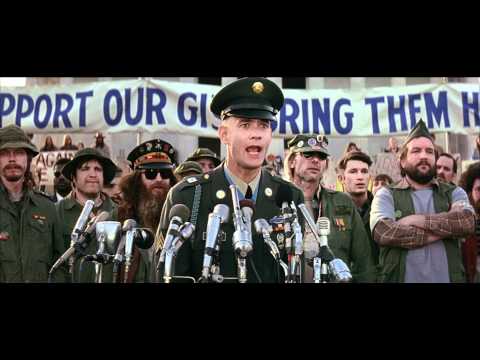
Where it plays: Helicopter into Vietnam; non-diegetic, hard entry into the theater of war.
Why it matters: The go-to Vietnam drop; Gump helped cement the trope. (Sources: Pitchfork; ScreenRant.)
"I Can’t Help Myself (Sugar Pie, Honey Bunch)" — Four Tops
Where it plays: Arrival at Vietnam base with Bubba; source on camp systems.
Why it matters: Sweet, ironic comfort against conscription and uncertainty. (Source: Pitchfork contextual.)
"Sloop John B" — The Beach Boys
Where it plays: Early tour with Lt. Dan; lyrics echo “worst trip” sentiment. Non-diegetic.
Why it matters: Sunny harmonies against grim duty. (Source: ScreenRant analysis.)
"All Along the Watchtower" — The Jimi Hendrix Experience
Where it plays: Post-briefing Vietnam montage. Non-diegetic.
Why it matters: Psychedelic edge raises the heat; not on the 1994 OST. (Sources: Wikipedia “Additional songs”; IMDb playlist.)
"Soul Kitchen" — The Doors
Where it plays: Jungle patrol in heavy rain. Non-diegetic.
Why it matters: Doors cuts track the war’s disorientation; several are film-only. (Sources: ScreenRant; Wikipedia “Additional songs”.)
"Respect" — Aretha Franklin
Where it plays: Stateside intercuts as Vietnam era peaks. Non-diegetic.
Why it matters: Civil-rights temperature check woven into personal drama. (Source: Wikipedia song roster.)
"Mrs. Robinson" — Simon & Garfunkel
Where it plays: Late-’60s political meet-ups on TV/backdrop. Non-diegetic.
Why it matters: Boomer culture looped back on itself; instant period flag. (Source: contemporary roundups.)
"Get Together" — The Youngbloods
Where it plays: Counterculture montage around Jenny’s life away from Forrest. Non-diegetic.
Why it matters: Unity plea set against a relationship splintering. (Source: album/film concordance.)
"Joy to the World" — Three Dog Night
Where it plays: Ping-pong exhibition/China tour montage. Non-diegetic.
Why it matters: Maximal cheer for a surreal sports-diplomacy beat. (Source: ScreenRant.)
"On the Road Again" — Willie Nelson
Where it plays: Shrimping and travel rhythms. Non-diegetic/transition.
Why it matters: Workaday momentum; the American road as reset. (Sources: Discogs/retail track lists.)
"Against the Wind" — Bob Seger & The Silver Bullet Band
Where it plays: Forrest’s cross-country run montage. Non-diegetic.
Why it matters: The lyric is the thesis of that chapter; the track anchors the running myth. (Sources: Wikipedia; Discogs; Bob Seger discography notes.)
"Forrest Gump Suite" — Alan Silvestri
Where it plays: Main/end titles; non-diegetic score.
Why it matters: Feels simple; holds the film’s emotional weight. (Sources: AllMusic; score album notes.)
Trailer note: Theatrical trailers lean on the film’s established cue palette; not every promo needle-drop appears on the OST.
Music–Story Links
Elvis’s “Hound Dog” doesn’t just needle-drop; it “explains” Forrest’s dance and sets a pattern—American pop as cause and effect. Once Vietnam hits, CCR and Hendrix flip the switch from nostalgia to adrenaline, then Doors cues keep the ground unsteady. When Forrest runs, heartland rock (“Against the Wind”) reframes him as a folk figure, a moving landmark. Jenny’s diegetic “Blowin’ in the Wind” compresses her arc—idealism, exposure, and the cost of both—into one bruising scene. (Sources in text: Wikipedia, ScreenRant, IMDb.)

How It Was Made
Music direction: Executive music producer Joel Sill shaped a catalog-first approach, prioritizing U.S. artists to time-stamp scenes without clogging dialogue. Score: Alan Silvestri recorded with the Hollywood Studio Symphony; the score album released alongside the song compilation. (Sources: Wikipedia; AllMusic; Discogs; Variety item on Sill’s career honors.)
Licensing/editorial: The film uses more music than the album could hold; several Doors and Hendrix cues remain film-only. A 2001 Collector’s Edition added two late-’60s/’70s staples, aligning retail with fan memory. (Sources: Wikipedia; Apple/Discogs.)
Reception & Quotes
“One of the greatest needle-drop soundtracks of all time.” MovieMusicUK
“Backlash or not, Gump hard-wired pop standards to boomer memory.” Los Angeles Times (retrospective)
“‘Fortunate Son’ in Gump set the template—Vietnam equals Creedence.” Pitchfork
Silvestri’s score draws mixed standalone reviews—AllMusic called parts “saccharine”—but its main theme remains instantly recognizable. (Source: AllMusic.)
Additional Info
- Original album release: June 28, 1994; separate score album the same day. 2001 CD reissue adds two tracks. (Source: Wikipedia/Apple Music.)
- The film deploys numerous Doors titles not on the OST (“Soul Kitchen,” “Hello, I Love You,” etc.). (Source: Wikipedia “Additional songs”.)
- Album peaked at No. 2 on Billboard 200; in Canada it hit No. 1 for a week. (Source: Wikipedia/Billboard data.)
- “Against the Wind” underscores the run; included on the OST and widely cited in discographies. (Source: Discogs/Wikipedia.)
- IMDb’s soundtrack page is useful for confirming film-only placements. (Source: IMDb.)
Technical Info
- Title: Forrest Gump (The Soundtrack)
- Year (album): 1994; Collector’s Edition 2001
- Type: Compilation of pre-existing recordings + one score suite; separate full score album
- Composer (score): Alan Silvestri
- Music production: Joel Sill (executive music producer); Robert Zemeckis/Glen Brunman (executive producers)
- Label(s): Epic Soundtrax / Paramount for the 1994 set; Sony reissue configurations (territory-dependent)
- Selected notable placements: “Fortunate Son” (Vietnam chopper); “Blowin’ in the Wind” (Jenny, on stage); “Against the Wind” (the run); “Hound Dog” (Elvis/boardinghouse)
- Release context: U.S. theatrical release July 6, 1994; album issued June 28, 1994
- Availability/Charts: Streams on major DSPs; peak Billboard 200 #2; multi-million sales
Canonical Entities & Relations
| Subject | Relation | Object |
|---|---|---|
| Forrest Gump (The Soundtrack) | is soundtrack to | Forrest Gump (1994 film) |
| Alan Silvestri | composed | Forrest Gump – Original Motion Picture Score |
| Joel Sill | executive music producer for | Forrest Gump (film) |
| Epic Soundtrax | released | 1994 soundtrack albums |
| Paramount Pictures | distributed | Forrest Gump (film) |
| Creedence Clearwater Revival | recording featured | “Fortunate Son” (Vietnam arrival) |
| Elvis Presley | recording featured | “Hound Dog” (boardinghouse sequence) |
| Bob Seger & The Silver Bullet Band | recording featured | “Against the Wind” (cross-country run) |
Sources: Wikipedia; IMDb; AllMusic; Discogs; Apple Music; Spotify; Pitchfork; Los Angeles Times; Variety.
There are movies, describing which you don’t know what else to add to tell anything new to the audience that already know every possible aspect about this film. Yes, it was the starter of Bubba Gump Shrimp Co in reality. Yes, it interestingly reveals the history of creation of a smiley face – :) – as we know it now. Yes, it is very sentimental and tear-squeezing. And also it, with the initial budget of USD 55 million, has collected USD 678 millions. And yes, Forrest Gump should be acted by other guy. Also one more yes – expression ‘Run, Forrest, Run’ gave birth to many gags, jokes, popular sayings and even one movie – ‘Run, Lola, Run’. Leaving the film itself aside, whose essence is very well-known to millions of people, we say that Viacom, which is the owner of the entire Paramount Pictures, opened as of today 40 restaurants of Bubba Gump Shrimp Co. When visiting other countries, besides the country of origin, USA, ones like the UK, the Philippines, Malaysia, Indonesia, or Japan – be sure to visit these restaurants. They have remarkable kitchen! As for soundtrack – it has collected gems of singers of its time – Elvis Presley, Bob Dylan, The Doors, and Simon & Garfunkel among their list. Have you heard its ‘San Francisco’ by Scott McKenzie? Sure you did! It was fantastically covered by Global Deejays several decades ago, leaving unharmed its lyrics. The same story is with ‘Sweet Home Alabama’ – very famous song by Lynrd Skynrd. What about ‘Blowin' in the Wind’ with tremendous lyrics? Those names are of the golden era that trigger you to review this movie again. The entire soundtrack provokes huge nostalgia for long-gone days. Days that won’t return, unfortunately. Only this movie and ones like ‘The Curious Case of Benjamin Button’ wake the delightful feeling of happiness.November, 09th 2025
A-Z Lyrics Universe
Cynthia Erivo Popular
Ariana Grande Horsepower
Post Malone Ain't No Love in Oklahoma
Luke Combs Good Riddance (Time of Your Life)
Green Day Bye Bye Bye
*NSYNC You're the One That I Wan
John Travolta & Olivia Newton-John I Always Wanted a Brother
Braelyn Rankins, Theo Somolu, Kelvin Harrison Jr. and Aaron Pierre The Power of Love
Frankie Goes to Hollywood Beyond
Auli’i Cravalho feat. Rachel House MORE ›