Soundtracks:  A B C D E F G H I J K L M N O P Q R S T U V W X Y Z #


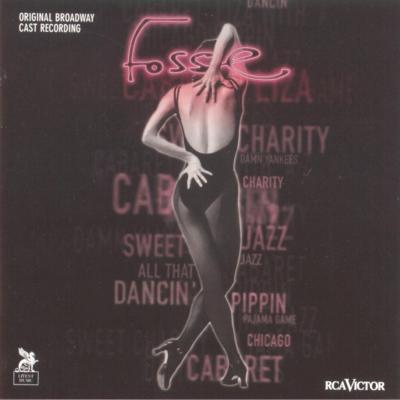
Fosse Album Cover

"Fosse" Soundtrack Lyrics

Movie • 1999

Track Listing


"Fosse (Original Broadway Cast Recording)" Soundtrack Description

1999 TV commercial frame for the Broadway revue FOSSE, showcasing the hat-and-gloves silhouette
FOSSE — 1999 TV spot frame

Overview

Is it a “movie soundtrack”? Not in 1999. Fosse opened on Broadway (Broadhurst Theatre, Jan 14, 1999) as a three-act dance revue, then the stage production was filmed for PBS in 2002. The album here is the cast recording from the original Broadway company—think of it as a curated audio tour through Bob Fosse’s greatest hits, performed by a crack ensemble led by Ann Reinking and colleagues. (Masterworks Broadway; IBDB.)

The recording plays like a time machine: pre-rock standards, Broadway showtunes, big-band swing, and Fosse’s signature percussive jazz—all stitched into a continuous arc. Orchestrations (Tony-winning) keep the period colors authentic while letting numbers from Sweet Charity, The Pajama Game, Chicago, Dancin’, Pippin, Cabaret, and All That Jazz sit naturally side by side. Track sequencing mirrors the stage flow more than the filmed version. (Playbill; Wikipedia.)

TV spot still: ensemble in black-and-white costumes with bowler hats
Signature palette: black-and-white, hats, gloves, angles

Questions & Answers

Was there a 1999 Fosse movie?
No. 1999 is the Broadway revue and cast album. A filmed version for PBS aired in January 2002.
Who conceived the revue and who guided the Fosse style?
Conceived by Richard Maltby Jr., Chet Walker, and Ann Reinking; Gwen Verdon served as artistic advisor.
What label issued the album and when?
RCA Victor (BMG); U.S. release April 13, 1999. Runtime ≈ 78:43.
Where was it recorded?
The Hit Factory, Studio A (New York City), Jan 24–25, 1999.
What did it win at the Tonys?
Fosse won Best Musical and Best Orchestrations (Ralph Burns & Doug Besterman), plus Best Lighting Design; multiple acting/directing noms.
How does the PBS film differ from the album?
The TV cut reshuffles focus and features Ben Vereen; some numbers play longer or are rebalanced for camera.
Is this a “various artists” set?
Yes—an original Broadway company album; featured vocalists include Valarie Pettiford and Jane Lanier among others.

Notes & Trivia

  • Ann Reinking is credited as co-director/co-choreographer; Chet Walker reconstructed Fosse choreography, with Gwen Verdon advising.
  • Andy Blankenbuehler—later choreographer of Hamilton—appears in the original company.
  • The show’s orchestration team won the very first Tony in the “Best Orchestrations” category (introduced in 1997; Fosse won in 1999).
  • “Sing, Sing, Sing” is split into two album tracks, reflecting the extended Act III tap showcase.
  • The filmed version (PBS, 2002) was released on DVD shortly after broadcast.

Genres & Themes

Big-band swing → propulsion, precision, virtuoso tap (e.g., “Sing, Sing, Sing”). Show-tune classicism → polish and subtext (Cole Porter, Kander & Ebb). Jazz-dance minimalism → isolations, syncopated hips, angular lines; the less you move, the sharper the point. Cabaret grit → irony and sexuality (from Cabaret, Sweet Charity). Pop detours → Neil Diamond’s “Crunchy Granola Suite” reframed as kinetic ensemble vocabulary.

TV spot montage: bowler hats, chair work, and glove pops in rapid edits
Movement grammar: hats, chairs, glove pops, broken angles

Tracks & Scenes

"Life Is Just a Bowl of Cherries" — Valarie Pettiford (from Big Deal)
Where it plays: Act I opener on album; a cool, off-center welcome that states Fosse’s wry worldview.
Why it matters: Understated swing and sly phrasing—tone is set without fanfare.

"Bye Bye Blackbird" — Valarie Pettiford (from Liza with a Z)
Where it plays: Early Act I; vocalist bathed in spot, band punches precisely.
Why it matters: Vocal jazz as character—control, control, control.

"Big Spender" — Jane Lanier & company (from Sweet Charity)
Where it plays: Act I core number; chorus in a hard line, minimal steps, maximum stare.
Why it matters: Fosse’s economy—still, sardonic bodies read louder than choreography fireworks.

"From This Moment On" — ensemble duet (from Kiss Me, Kate)
Where it plays: Mid-Act I; athletic pas de deux quoting Fosse’s 1953 film choreography.
Why it matters: Historical bridge—how his screen style seeded the later stage language.

"Steam Heat" — trio (from The Pajama Game)
Where it plays: Act II; derby hats and stylized shuffles, jazz-hands as punctuation.
Why it matters: The “Fosse 101” demonstration: clean shapes, restraint, humor.

"I Gotcha" — Shannon Lewis (from Liza with a Z)
Where it plays: Act II showstopper; aggressive isolations foregrounded by a prowling vocal.
Why it matters: Weaponized sexuality with comic bite—often cited as a crowd-roar moment.

"Rich Man’s Frug" — ensemble (from Sweet Charity)
Where it plays: Act II; mod cocktail of poses, fractured walks, and “the Frug” sections.
Why it matters: Geometry as satire—status games played through angles.

"Mein Herr" — ensemble (from Cabaret)
Where it plays: Act III; chair work and razor-edged articulation.
Why it matters: Iconic chair vocabulary—danger and seduction in the same eight counts.

"Nowadays / Hot Honey Rag" — ensemble (from Chicago)
Where it plays: Late Act II / Act III bridge; orchestral snap with vaudeville DNA.
Why it matters: Showbiz sheen over cynicism—the Fosse paradox in one medley.

"Mr. Bojangles" — soloist (from Dancin’)
Where it plays: Act III; hat-and-cane homage drifting into elegy.
Why it matters: Precision softens into memory; the line between tribute and character.

"Manson Trio" — trio (from Pippin)
Where it plays: Act III; a tight, sinister groove led by the “Leading Player.”
Why it matters: Minimalism reads as menace; a master-class in micro-gesture.

"Sing, Sing, Sing" — full company (from Dancin’)
Where it plays: Act III closer; on the album split into Part 1 and Part 2.
Why it matters: Tap marathon and stamina test—Fosse spectacle without clutter.

Note: The PBS film (2002) reshapes some timings and features Ben Vereen in several showcase moments; the album reflects the Broadway flow.

Music–Story Links

The revue’s “story” is style: numbers are sequenced to chart Fosse’s evolution—film roots (Porter’s “From This Moment On”), nightclub intimacy (“Blackbird”), factory-floor comedy (“Steam Heat”), then cynical showbiz mirrors (Cabaret, Chicago). The album preserves that arc: orchestration colors and drum books walk you through eras without narration. When the band opens “Sing, Sing, Sing,” you hear lineage—Goodman’s swing retooled into Broadway propulsion.

TV commercial still: rapid tap flurries from the 'Sing, Sing, Sing' finale
Finale energy: “Sing, Sing, Sing” as endurance art

How It Was Made

Conception & staging: Richard Maltby Jr., Chet Walker, and Ann Reinking built a bookless survey of Fosse’s work; Gwen Verdon advised. Numbers draw from Fosse’s stage, film, and TV credits. (Masterworks Broadway; Wikipedia.)

Music team: Orchestrations by Ralph Burns and Doug Besterman (Tony winners); music arrangements by Gordon Lowry Harrell; musical director Patrick S. Brady. (Playbill; IBDB.)

Recording: The cast album was recorded at The Hit Factory (NYC) on Jan 24–25, 1999; released by RCA Victor/BMG on Apr 13, 1999. MusicBrainz confirms date, barcode, and total length; Discogs notes the studio/dates.

Filmed version: Matthew Diamond’s capture aired on PBS’ Great Performances in Jan 2002 and reached DVD shortly thereafter. LA Times reviewed the broadcast and its emphasis on Ben Vereen.

Reception & Quotes

“An album of Fosse… hard-working but oddly affectless… yet those 45 seconds are famous.” Ben Brantley, The New York Times
“Vereen dominates a sentimentalized Fosse.” Los Angeles Times
“A living museum of angles, hips, and hats.” CurtainUp

The show itself won Best Musical and Best Orchestrations at the 1999 Tony Awards; the filmed version drew mixed notices but widened access to the staging.

Additional Info

  • Album artist of record: “Original Broadway Cast of Fosse.” Label: RCA Victor (BMG).
  • Runtime: ~78:43; 21 tracks; barcode 090266337927.
  • Recording location/dates: The Hit Factory, Studio A; Jan 24–25, 1999.
  • Key featured performers on album include Valarie Pettiford, Jane Lanier; ensemble includes future Tony-winning choreographer Andy Blankenbuehler.
  • Stage awards: Tony—Best Musical; Best Orchestrations (Burns & Besterman); Best Lighting (Andrew Bridge).
  • PBS air date: Jan 23, 2002; DVD followed (Image Entertainment distribution).
  • Numbers span sources from Pippin to All That Jazz, including TV pieces like the Bob Hope special.

Technical Info

  • Title: Fosse (Original Broadway Cast Recording)
  • Year: 1999 (album); 2002 (PBS filmed stage version)
  • Type: Broadway revue cast album (various composers/lyricists)
  • Conceived by: Richard Maltby Jr., Chet Walker, Ann Reinking; artistic advisor Gwen Verdon
  • Orchestrations: Ralph Burns & Doug Besterman (1999 Tony winners)
  • Music supervision/arrangements: Gordon Lowry Harrell; Music Director: Patrick S. Brady
  • Label: RCA Victor (BMG); U.S. release Apr 13, 1999
  • Recorded: The Hit Factory, NYC — Jan 24–25, 1999
  • Length / Tracks: ~78:43; 21 tracks
  • Notable numbers: “Life Is Just a Bowl of Cherries,” “Big Spender,” “Steam Heat,” “I Gotcha,” “Mein Herr,” “Nowadays/Hot Honey Rag,” “Sing, Sing, Sing”

Canonical Entities & Relations

SubjectRelationObject
Fosse (Original Broadway Cast Recording)is soundtrack toFOSSE (1999 Broadway revue)
Ralph Burns & Doug BestermanorchestratedFOSSE (Broadway)
Gordon Lowry Harrellarranged / supervised music forFOSSE (Broadway)
Ann Reinking; Richard Maltby Jr.; Chet Walkerconceived/directedFOSSE (Broadway)
Gwen Verdonserved asArtistic advisor on FOSSE
RCA Victor (BMG)released1999 cast recording
Broadhurst TheatrehostedFOSSE Broadway run (1999–2001)
PBS Great Performancesbroadcastfilmed version (2002)

Sources: Masterworks Broadway; IBDB; Playbill; Wikipedia; MusicBrainz; Los Angeles Times; PBS Great Performances; Discogs.

November, 09th 2025


A-Z Lyrics Universe

Lyrics / song texts are property and copyright of their owners and provided for educational purposes only.