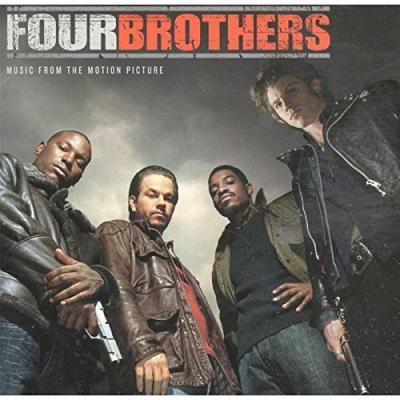
"Four Brothers" Soundtrack Lyrics
Movie • 2005
Track Listing
Jackson 5
Marvin Gaye
Four Tops
The Temptations
Marvin Gaye
The Temptations
The Undisputed Truth
The Temptations
Marvin Gaye
The Temptations
Grover Washington, Jr.
The Miracles
Marvin Gaye
"Four Brothers (Music from the Original Motion Picture)" Soundtrack Description
Overview
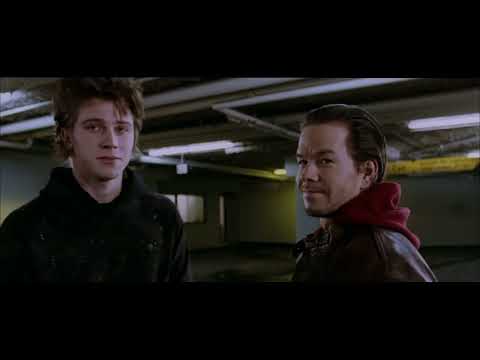
What happens when a revenge thriller leans on Motown to do the moral heavy lifting? Four Brothers answers with a jukebox of Detroit soul, a few razor-edged rock cues, and a muscular David Arnold score. The music doesn’t decorate the story; it sets tempo and spine—grief, swagger, and the city’s cold resolve.
Two pillars hold it up. First, an authoritative crate of classic Motown—Temptations, Marvin Gaye, Four Tops—grounding the film in place and history. Second, Arnold’s score, recorded on a large stage, supplies the steel: percussion forward, low brass and strings turning snow into tension. As Apple Music’s album page notes, the compilation arrived via Motown/UMG in late August 2005; AllMusic separately indexes the score release the following month. Variety called the film an “old-school” urban Western; the soundtrack wears that badge.
Questions & Answers
- Who composed the score?
- David Arnold, whose album-length score release followed the film’s August 2005 opening.
- What song opens and closes the film?
- Marvin Gaye’s “Trouble Man” plays over the opening credits and returns for the final scene.
- Which recurring Motown track underscores grief?
- The Temptations’ “I Wish It Would Rain,” used as a refrain—including a pivotal bathroom scene.
- Is there a separate score album in addition to the Motown-heavy compilation?
- Yes. The needle-drop compilation and Arnold’s original score were issued as distinct releases.
- Does the movie feature local Detroit rap alongside Motown?
- Yes—Blade Icewood’s “Ride Out” and Eastside Chedda Boyz’ “Oh Boy” appear as background cues.
- Are all film songs on the commercial OST?
- No. Several cues (e.g., Jefferson Airplane’s “Somebody to Love,” Porcupine Tree’s “Shallow”) are heard in the film but absent from the OST.
- Who handled music supervision?
- Paul Stewart served as music supervisor.
Notes & Trivia
- “Trouble Man” does double duty: opener and closer—a conscious nod to 1970s blaxploitation grammar (per Wikipedia and Marvin Gaye discography entries).
- AllMusic lists the Four Brothers score with a September 2005 release and a 37-minute runtime, recorded at Paramount’s Stage M and Signet Sound.
- Apple Music dates the Motown compilation to August 23, 2005 with 13 tracks under Motown/UMG.
- Detroit rap appears in-world: Blade Icewood and Eastside Chedda Boyz surface as ambient location music.
- SoundtrackCollector confirms separate labels: Motown/Universal for the compilation; Varèse Sarabande for Arnold’s score.
Genres & Themes
Motown classic soul → family & place. Temptations/Four Tops grooves anchor the brothers to Detroit—music as home address and moral compass.
Blaxploitation textures → code & cool. Marvin Gaye’s Trouble Man palette signals old-school honor codes beneath a modern revenge plot.
Symphonic action score → cold pressure. Arnold’s low brass, ostinati, and snare figures translate snowstorms and street chases into pulse and propulsion.
Local rap → on-the-ground realism. Tracks like “Ride Out” and “Oh Boy” place scenes in 2000s Detroit, not an anonymous backlot.
Tracks & Scenes
“Trouble Man” — Marvin Gaye
Scene: Main titles at {00:00} and the final scene/roll-out near the end (non-diegetic).
Why it matters: frames the film with 1970s cool and moral consequence—Singleton tips his hat to blaxploitation lineage.
“I Wish It Would Rain” — The Temptations
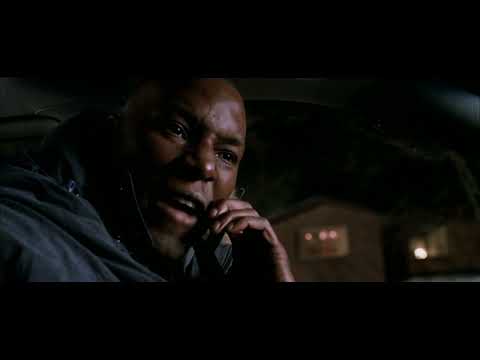
Scene: Bobby retreats to the bathroom, overwhelmed in his mother’s house; the song carries the moment (non-diegetic).
Why it matters: flips macho posture into raw grief; the lyric hook (“a man ain’t supposed to cry”) stings against action-hero bravado.
“Smiling Faces Sometimes” — The Undisputed Truth
Scene: Cops linger in a bar after Jack is killed; the track plays in-world (diegetic, jukebox/bar system).
Why it matters: a song about deception underlines corruption and shifting loyalties.
“Shallow” — Porcupine Tree
Scene: Briefly heard as source music in the film (not included on the OST). Exact placement varies by cut/edition; used as background texture.
Why it matters: adds a harder rock edge amid soul cues; a time-stamp of 2005 radio rock.
“Oh Boy” — Eastside Chedda Boyz
Scene: Background in neighborhood ambience (diegetic); a local Detroit staple heard as texture.
Why it matters: authenticates setting with homegrown rap rather than generic library cues.
“Ride Out” — Blade Icewood
Scene: Background in a street/party environment (diegetic).
Why it matters: brings contemporary Detroit street rap into the frame, sharpening place and era.
“Papa Was a Rollin’ Stone” — The Temptations
Scene: Used within the film (non-diegetic placement).
Why it matters: its brooding bassline and questions about fathers echo the Mercer boys’ own family knots.
“‘T’ Plays It Cool” — Marvin Gaye
Scene: Heard in film/album rotation (non-diegetic needle-drop).
Why it matters: sly, walking-bass tension cue that suits low-key surveillance beats and late-night drives.
“Shoot Out” — David Arnold (score)
Scene: The house-siege firefight in the snow (non-diegetic score).
Why it matters: percussion stabs and ostinati shape geography and threat during the film’s signature action scene.
“Officer Down” — David Arnold (score)
Scene: Bar-side confrontation that ends with Lt. Green’s death (non-diegetic score).
Why it matters: tragic, minor-key descent; sets stakes and resets the brothers’ mission from payback to survival.
“Iceman” — David Arnold (score)
Scene: Frozen-lake showdown (non-diegetic score).
Why it matters: slow-building menace to a bare-knuckle finish; rhythm locks to breath and boot-scrape on ice.
Music–Story Links
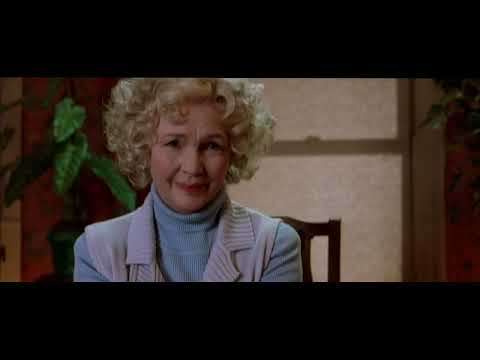
When Bobby cracks in private and “I Wish It Would Rain” unfurls, the film lets soul music say what the Mercer brothers won’t. “Smiling Faces Sometimes” plays while a dirty-cop thread tightens—lyrics about false friends reflecting the plot. “Trouble Man” bookends the story, turning Detroit soul into a moral frame: swagger with a price tag. And when Arnold’s “Iceman” hits, melody gives way to muscles; score, not song, takes the wheel for the final reckoning.
How It Was Made
Composer: David Arnold. Large-room recording (Paramount Stage M/Signet) gives the action cues headroom and punch (AllMusic). The palette favors tight rhythmic cells, low brass, and drum kit over synth bombast—closer to procedural grit than superhero sheen.
Music supervision: Paul Stewart. The brief blends Motown catalog (Motown/UMG release) with Detroit rap one-offs and a few rock ringers, balancing licensing costs with place authenticity. The breath between needle-drops lets Arnold’s cues carry exposition and kinetic beats.
Reception & Quotes
“Usually potent and consistently enjoyable… an old-school urban-Western.” Variety
“Wants basically to be an entertainment… [and] makes the point that people of different races may belong to the same family.” Roger Ebert
“On paper… a stark, compelling morality tale in the form of a vigilante movie.” The A.V. Club
Album availability: the 13-track Motown compilation is widely streaming; the Arnold score album was issued separately and remains available via catalog outlets (SoundtrackCollector, AllMusic).
Additional Info
- The film repeatedly reprises “I Wish It Would Rain,” turning a 1967 lament into a 2005 leitmotif.
- Jefferson Airplane’s “Somebody to Love” and Porcupine Tree’s “Shallow” are heard in-film but not on the OST.
- Marvin Gaye’s “Trouble Man” also scores other films (e.g., Se7en), but here it bookends the narrative.
- Detroit locals (Blade Icewood, Eastside Chedda Boyz) are used as diegetic texture rather than montage wallpaper.
- Label split: Motown/UMG issued the needle-drops; Varèse Sarabande handled the score.
- Several score track titles appear on album but are not in the final cut—common with cue assemblies.
- Timestamps can shift slightly across TV/streaming edits; placements above reflect theatrical sequencing.
Technical Info
- Title: Four Brothers (Music from the Original Motion Picture)
- Year: 2005
- Type: Compilation soundtrack + separate original score
- Composer: David Arnold
- Music Supervision: Paul Stewart
- Key placements (selected): “Trouble Man” (open/close); “I Wish It Would Rain” (bathroom scene); “Smiling Faces Sometimes” (bar after Jack’s death)
- Release context: Film released Aug 12, 2005 (US); OST issued Aug 23, 2005; score issued mid-September 2005
- Labels: Motown/UMG (compilation); Varèse Sarabande (score)
- Availability: Compilation widely streaming; score available on CD/digital catalog
Canonical Entities & Relations
| Subject | Relation | Object |
|---|---|---|
| John Singleton | directed | Four Brothers (2005) |
| David Arnold | composed | Four Brothers (Score from the Motion Picture) |
| Motown / UMG | released | Four Brothers (Music from the Original Motion Picture) compilation |
| Varèse Sarabande | released | Four Brothers original score album |
| Paul Stewart | served as | Music Supervisor (film) |
| Marvin Gaye | performed | “Trouble Man” |
| The Temptations | performed | “I Wish It Would Rain” |
| The Undisputed Truth | performed | “Smiling Faces Sometimes” |
| Blade Icewood | performed | “Ride Out” (in-film) |
| Eastside Chedda Boyz | performed | “Oh Boy” (in-film) |
| Paramount Pictures | distributed | Four Brothers |
Sources: Apple Music; AllMusic; SoundtrackCollector; IMDb; Wikipedia; WhatSong; SoundtrackINFO; Variety; Roger Ebert; The A.V. Club; Pitchfork; Metal Underground.
November, 09th 2025
A-Z Lyrics Universe
Cynthia Erivo Popular
Ariana Grande Horsepower
Post Malone Ain't No Love in Oklahoma
Luke Combs Good Riddance (Time of Your Life)
Green Day Bye Bye Bye
*NSYNC You're the One That I Wan
John Travolta & Olivia Newton-John I Always Wanted a Brother
Braelyn Rankins, Theo Somolu, Kelvin Harrison Jr. and Aaron Pierre The Power of Love
Frankie Goes to Hollywood Beyond
Auli’i Cravalho feat. Rachel House MORE ›