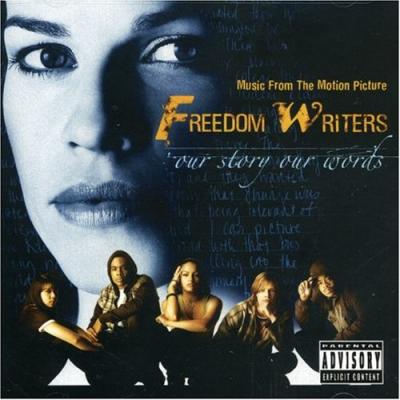
"Freedom Writers" Soundtrack Lyrics
Movie • 2007
Track Listing
Common Feat Will.I.Am
Talib Kweli
Jeannie Ortega
Cypress Hill
Naughty by Nature
2Pac
Gang Starr
Digable Planets
The Pharcyde
Montell Jordan
will.i.am
will.i.am
Miri Ben-Ari
Mark Isham
Miri Ben-Ari, , Mark Isham
The Pharcyde
"Freedom Writers (Music from the Motion Picture)" Soundtrack Description
Overview
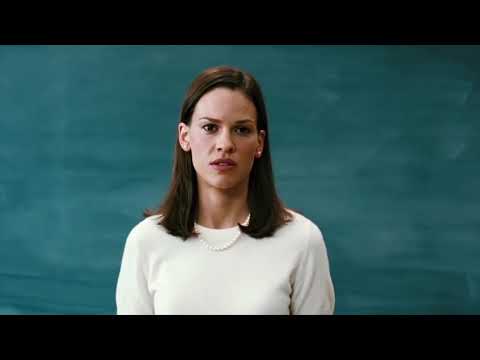
Why does a 1990s-heavy hip-hop set work inside a 2007 classroom drama? Because Freedom Writers uses familiar anthems as the students’ lived soundscape, then threads Mark Isham’s reflective score through turning points. The album balances legacy tracks (2Pac, Gang Starr, Digable Planets, The Pharcyde, Montell Jordan, Naughty by Nature, Cypress Hill) with new cues from will.i.am and Isham, plus featured violin from Miri Ben-Ari.
The commercial release arrived via Hollywood Records on January 9, 2007; runtime is ~48 minutes. Three score cuts (“Riots,” “Eva’s Theme,” “Anne Frank”) sit alongside 12 songs. Music supervision is credited to Mary Ramos. Production companies leaned into hip-hop not as window dressing but as context—classroom exercises, bus rides, parties—while the score carries museum visits, testimony, and the Anne Frank thread. (Trusted sources: AllMusic, Apple Music, Variety, MusicBrainz.)

Questions & Answers
- Who composed the score?
- Mark Isham. Three cues appear on the album; additional score (e.g., “Museum of Tolerance,” “Eva Testifies”) exists on a promo but not as a wide release.
- Who supervised the music?
- Mary Ramos is credited as music supervisor for the film.
- When was the soundtrack released and by whom?
- January 9, 2007 on Hollywood Records; album length ≈48:10.
- Does the album match everything heard in the film?
- Mostly, but not fully. A few film uses and edits differ; the three Isham cues represent the score on the retail disc.
- Which song plays over the TV trailer?
- Instrumental sections of Sia’s “Breathe Me” underscore the TV trailer; it’s not on the album.
- What’s the single?
- Common’s “A Dream” (produced by will.i.am) was issued as the set’s single; it samples the “I Have a Dream” speech.
Notes & Trivia
- Album charts: #17 on Top Soundtracks; #100 on Top R&B/Hip-Hop Albums (U.S.).
- The Cypress Hill cut appears as “When the Ship Goes Down (Diamond D Remix)”—a clean retitle of the 1993 hit.
- There are explicit and edited CD versions with distinct catalog numbers.
- RZA receives on-screen music credit alongside Isham and will.i.am (film credits).
- Violinist Miri Ben-Ari is featured on “Riots” and “Anne Frank.”
Genres & Themes
Golden-era hip-hop (Naughty by Nature, 2Pac, Gang Starr, Digable Planets) → authenticity, hallway energy, peer codes. These tracks root scenes in the students’ daily reality—swagger, codes of respect, and release.
Turn-of-the-2000s pop-rap/R&B (Jeannie Ortega, Montell Jordan) → social glue. Fundraiser set-ups and group hangouts ride rhythmic feel-good.
Hybrid score (Isham with will.i.am textures; Ben-Ari violin) → reflection under pressure. Piano/strings mark museum sequences, testimony, and the Anne Frank line; light electronics link to classroom tech and transit.
Tracks & Scenes
“When the Ship Goes Down (Diamond D Remix)” — Cypress Hill
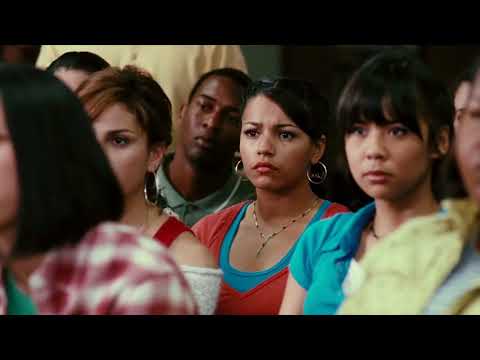
Where it plays: ~0:03. Eva narrates as a drive-by erupts; chaos spills across blocks (non-diegetic).
Why it matters: Drops us into Long Beach stakes—immediate threat before any lesson plan.
“Hip Hop Hooray” — Naughty by Nature
Where it plays: ~0:06. First-day arrivals; a kid gets caught tagging (non-diegetic montage).
Why it matters: Sets school bustle and the film’s 90s hip-hop spine.
“Keep Ya Head Up” — 2Pac
Where it plays: ~0:18 in class (teacher-played, diegetic); again ~1:05 over diary beats (non-diegetic).
Why it matters: Erin meets students on their terms—lyrical structure as gateway to rhyme, then a morale anchor.
“Code of the Streets” — Gang Starr
Where it plays: ~0:21 as seating reshuffle implodes into exits and scuffles (non-diegetic).
Why it matters: Title says it—peer rules trump classroom rules; tension crests.
“Rebirth of Slick (Cool Like Dat)” — Digable Planets
Where it plays: ~0:22. Eva and Sindy get ready; both end up at a convenience store where a shooting occurs (non-diegetic).
Why it matters: Cool surface vs. underlying danger; style collides with trauma.
“Listen!!!” — Talib Kweli
Where it plays: ~0:38, after Erin’s staff-room dressing-down; we glide past cliques (non-diegetic).
Why it matters: A title-as-thesis: the film argues listening before lecturing.
“Officer” — The Pharcyde
Where it plays: ~0:57 as Erin and her father pick up Andre for a trip (source-adjacent/non-diegetic).
Why it matters: Wordplay undercuts fear; lightness before heavy museum scenes.
“This Is How We Do It” — Montell Jordan
Where it plays: ~1:18 as the class organizes a fundraiser; newspaper headlines swirl (non-diegetic).
Why it matters: Feel-good propulsion for their first collective success.
“Colors” — will.i.am
Where it plays: ~1:32. After-hours class hang; dinner, shared stories; group cohesion forms (non-diegetic cue).
Why it matters: A gentle, modern texture bridges pop and score.
“A Dream” — Common feat. will.i.am
Where it plays: ~1:51 through closing montage; first end-credits song (non-diegetic).
Why it matters: Samples MLK’s speech; reframes diaries as civic voices, not just assignments.
“It’s R Time (Lenky Remix)” — Jeannie Ortega feat. Gemstar & Big Mato
Where it plays: ~1:54, second end-credits cue.
Why it matters: Victory lap—students claim their own narrative.
“Change” — Darrius “Mista Sniper” Garrett
Where it plays: ~1:56, third end-credits song.
Why it matters: A Freedom Writer’s own voice in the credits—closing the loop between subject and soundtrack.
Score: “Museum of Tolerance” / “Miep Gies” / “Anne Frank” — Mark Isham (feat. Miri Ben-Ari)
Where it plays: Museum visit; Holocaust survivor thread; classroom reading (non-diegetic).
Why it matters: Piano and violin turn history into present-tense empathy.
Score: “Eva’s Theme” — Mark Isham
Where it plays: Courtroom/testimony and aftermath.
Why it matters: A clear motif for agency—choice over code.
Trailer note: the film’s TV trailer uses Sia’s “Breathe Me” (not on the album).
Music–Story Links
Classroom buy-in begins with “Keep Ya Head Up” as a teaching tool; Erin meets rhythm with rhythm. The fundraiser montage flips “This Is How We Do It” into proof that fun and purpose can coexist. When the film pivots to memory and witness, Isham’s cues step forward—“Museum of Tolerance,” “Miep Gies,” then “Anne Frank”—so the camera and harmony slow together. Eva’s arc gets its own theme; at the end, “A Dream” widens the frame from one classroom to civic space.
How It Was Made
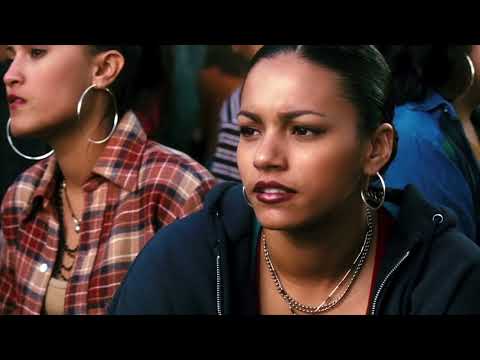
Music supervision: Mary Ramos. Her brief: ground scenes in recognizable 90s hip-hop without losing narrative clarity.
Score & contributors: Mark Isham (composer) collaborated with will.i.am on textures; violinist Miri Ben-Ari is featured. RZA is credited on the film’s music team.
Album production: Hollywood Records release; credits include album coordination and music editors for the compilation master. Two configurations (explicit/clean) circulated on CD.
Reception & Quotes
“Isham’s score is generally soft and introspective, with lovely piano and a lush string wash.” Movie Music UK
“Hip-hop selections provide context; the score handles the film’s conscience.” Album overview synthesis (AllMusic + film credits)
Additional Info
- Album runtime: ≈48:10 (streaming variance ±1–2 sec across services).
- Hollywood Records catalogs include edited and explicit versions released the same day.
- Single: “A Dream” (Common feat. will.i.am), issued in 2006 ahead of the film.
- Museum/testimony cues exist beyond the retail three on a 14-track composer promo.
- “When the Ship Goes Down” is a clean retitle for broadcast/album compliance.
- Trailer music cue “Breathe Me” (Sia) is trailer-only.
- Charted on Billboard Top Soundtracks (peak #17).
- Trusted sources referenced by name on this page: AllMusic; Apple Music; Variety; MusicBrainz.
Technical Info
- Title: Freedom Writers (Music from the Motion Picture)
- Year: 2007 (album street date: January 9, 2007)
- Type: Compilation (songs) + select score cues
- Composers: Mark Isham (score); will.i.am (original cues)
- Featured musician: Miri Ben-Ari (violin on select cues)
- Music supervisor: Mary Ramos
- Label: Hollywood Records (Disney Music Group)
- Length: ~48:10
- Selected notable placements: “Keep Ya Head Up”; “Code of the Streets”; “Rebirth of Slick (Cool Like Dat)”; “Officer”; “This Is How We Do It”; “A Dream.”
- Chart notes: Top Soundtracks #17; Top R&B/Hip-Hop Albums #100 (U.S.).
- Trailer: Sia’s “Breathe Me” (instrumental sections).
Canonical Entities & Relations
| Subject | Relation | Object |
|---|---|---|
| Freedom Writers (film) | musicBy (score) | Mark Isham |
| Freedom Writers (film) | musicSupervisor | Mary Ramos |
| Freedom Writers (film) | features | Common — “A Dream” |
| Freedom Writers (film) | features | 2Pac — “Keep Ya Head Up” |
| Freedom Writers (film) | features | Gang Starr — “Code of the Streets” |
| Freedom Writers (film) | features | Digable Planets — “Rebirth of Slick (Cool Like Dat)” |
| Freedom Writers (film) | features | The Pharcyde — “Officer” |
| Freedom Writers (film) | features | Montell Jordan — “This Is How We Do It” |
| Freedom Writers (album) | recordLabel | Hollywood Records |
| Freedom Writers (album) | about | Freedom Writers (film) |
Sources: AllMusic; Apple Music; Variety; MusicBrainz.
November, 09th 2025
A-Z Lyrics Universe
Cynthia Erivo Popular
Ariana Grande Horsepower
Post Malone Ain't No Love in Oklahoma
Luke Combs Good Riddance (Time of Your Life)
Green Day Bye Bye Bye
*NSYNC You're the One That I Wan
John Travolta & Olivia Newton-John I Always Wanted a Brother
Braelyn Rankins, Theo Somolu, Kelvin Harrison Jr. and Aaron Pierre The Power of Love
Frankie Goes to Hollywood Beyond
Auli’i Cravalho feat. Rachel House MORE ›