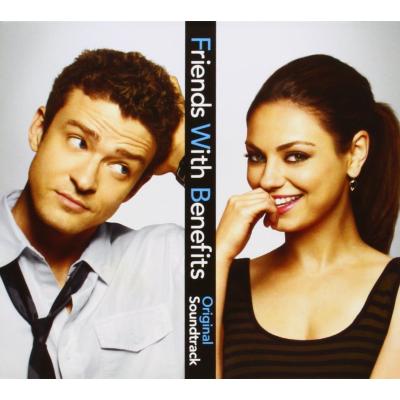
"Friends With Benefits" Soundtrack Lyrics
Movie • 2011
Track Listing
Philip Steir feat. Steppenwolf
Fitz and the Tantrums
G. Love and Special Sauce
Ray Quinn feat. Ultra Love
Grant Lee Phillips
Max & Simon
Peter Conway
Dyke & The Blazers
Double 0 Zero
Tal & Acacia
Kris Kross
Rogue Wave
Janelle Monae feat. Big Boi
Greg Laswell
Semisonic
Foster the People
"Friends With Benefits (Original Soundtrack)" Soundtrack Description
Overview
A rom-com that mocks rom-coms needs songs that can wink and still land feelings. The official album Friends With Benefits (Original Soundtrack) delivers 15 cuts that toggle between big-city swagger, roof-top euphoria, and late-night doubt. It’s built around set-piece cues — the Times Square flash-mob and a public confession — and smaller scene beds that keep the banter moving.
Beyond the album, the film uses more than thirty licensed tracks. That split matters: the compilation sequences a clean 52-minute listen (Madison Gate Records), while the movie’s full music DNA runs wider. For credits and timing, Apple Music, Discogs, IMDb and WhatSong are reliable cross-checks (named here as trusted sources).
Questions & Answers
- Who supervised the music?
- Wende Crowley served as music supervisor; Spring Aspers is credited as executive in charge of music.
- What label released the soundtrack?
- Madison Gate Records issued the 15-track album in July 2011.
- Why don’t all the movie’s songs appear on the album?
- Licensing scope and runtime: the film uses 30+ cues; the retail set curates 15 representative tracks.
- Is there a score album?
- No separate score release; source/score cues are by Halli Cauthery and Ryan Perez-Daple alongside the licensed songs.
- What’s the flash-mob song?
- “New York, New York (FWB Remix)” by Ray Quinn featuring Ultra Love — the Times Square dance anchor.
- What plays over the big reconciliation?
- Semisonic’s “Closing Time” underscores the public confession and the pivot back to romance.
Notes & Trivia
- The official album runs 15 tracks; the film features 30+ songs (some album-only, some film-only).
- Janelle Monáe’s “Tightrope” scores the “mountain top” rooftop reveal — a motif of momentum and nerve.
- Grant-Lee Phillips covers The Cure’s “Boys Don’t Cry,” used for a post-fight emotional cooldown.
- “Jump” (Kris Kross) is diegetic: Jamie hits play on her phone; the pair clown around to it.
- Trusted sources referenced: Apple Music, Discogs, IMDb, WhatSong.
Genres & Themes
Funk & old-school R&B → playfulness, competitive banter. Dyke & The Blazers and Steppenwolf’s remixed thump power games, photoshoots, and party rhythm.
Indie pop/rock → intimacy undercut by wit. Rogue Wave, Greg Laswell, Grant-Lee Phillips: melodic restraint for hard conversations and aftermaths.
Hip-hop & pop-rap → city sheen. Nicki Minaj’s club bounce marks post-work bar rituals and early chemistry.
Anthems & standards (remixed) → set-piece spectacle. The Times Square flash-mob and the final public plea rely on instantly recognizable hooks.
Tracks & Scenes
“L.O.V.” — Fitz and The Tantrums
Where it plays: Break-up prologue where both leads are dumped; brisk, brassy punctuation. Non-diegetic. {~00:02}
Why it matters: Sets the film’s tempo and its anti-rom-com stance from frame one.
“Girls Fall Like Dominoes” — Nicki Minaj
Where it plays: Jamie takes Dylan out for a first drink after work; roof-deck party energy. Source/foreground in bar mix. {00:10–00:11}
Why it matters: Establishes New York pace and Jamie’s social ease.
“Tightrope” — Janelle Monáe
Where it plays: Jamie sneaks Dylan to a rooftop “mountain top.” Non-diegetic lift. {~00:13–00:14}
Why it matters: Swagger for a budding partnership — risk with a grin.
“New York, New York (FWB Remix)” — Ray Quinn feat. Ultra Love
Where it plays: Times Square flash-mob. Diegetic performance track in-world. {~00:15}
Why it matters: Meta-rom-com gag executed at street scale; a city-as-orchestra moment.
“Booty Call” — G. Love & Special Sauce
Where it plays: Sex-rules montage as friends become “benefits.” Non-diegetic. {~00:36}
Why it matters: Keeps the pact light, cheeky, and clearly physical.
“Let a Woman Be a Woman (And a Man Be a Man)” — Dyke & The Blazers
Where it plays: Outdoor basketball game beat. Diegetic PA/scene bed. {~00:41}
Why it matters: Vintage funk swagger for competitive teasing and chemistry.
“Love’s Gonna Getcha” — Tal & Acacia
Where it plays: Jamie date with Parker after the “no-strings” pact cracks. Non-diegetic. {~00:49}
Why it matters: Irony in the title telegraphs that rules won’t hold.
“Jump” — Kris Kross
Where it plays: Jamie plays it on her phone; they jump around, laughing. Diegetic. {~01:05}
Why it matters: Childlike relief valve; friendship resurfaces mid-complication.
“This Too Shall Pass” — Rogue Wave
Where it plays: Love scene after boundaries blur. Non-diegetic. {mid-film}
Why it matters: The lyric stance frames denial giving way to attachment.
“Take a Bow” — Greg Laswell
Where it plays: Rooftop fight about pride and pretense; Jamie walks out. Non-diegetic. {~01:15}
Why it matters: A cool-headed comedown; space to hear each stubborn beat.
“Boys Don’t Cry” — Grant-Lee Phillips (The Cure cover)
Where it plays: Post-fight separation and travel beats; Dylan calls home, waits at the airport. Non-diegetic. {~01:29–01:34}
Why it matters: Classic sentiment, stripped; the film stops joking long enough to ache.
“The Safety Dance” — Men Without Hats
Where it plays: Magazine photoshoot chaos. Non-diegetic bed. {~01:27}
Why it matters: Retro bounce for an industry-satire set piece.
“Hey, Soul Sister” — Train
Where it plays: Heard in the in-movie rom-com gag and again for Dylan & Jamie’s first real date. Source/non-diegetic mix. {~00:27 & coda}
Why it matters: Earnest pop to underline sincerity after all the snark.
“Closing Time” — Semisonic
Where it plays: Dylan’s public plea: “I want my best friend back.” Non-diegetic; then into credits with “Magic Carpet Ride (Philip Steir Remix)”. {~01:42 → 01:44}
Why it matters: A 1998 radio staple repurposed as a closer — crowd knows it, characters do too.
Other notable cues: “Paradise Dreaming” (airport & boat-plan calls), “Such a Colorful World” (plane to L.A./beach house), “Pumped Up Kicks” (Dylan making out when his sister calls), “Tomorrow” (jet-ski), “Life’s a Party” (party montage).
Music–Story Links
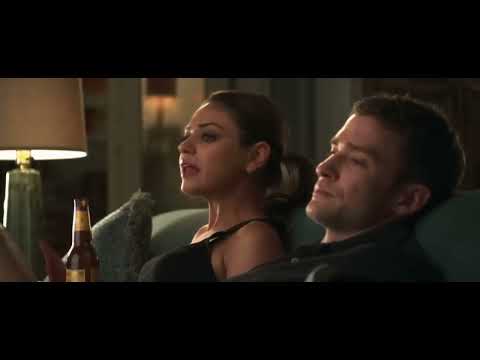
Flash-mob bravado (“New York, New York”) is Jamie’s move — public, theatrical. Private shifts use indie beds: Laswell for the rupture, Phillips for the reckoning. “Jump” breaks tension by regressing into a joke; friendship briefly outruns romance. The final switch back to sincerity works because the film swaps irony for plain pop — “Closing Time” — and lets the characters say exactly what they feel.
How It Was Made
Director Will Gluck leaned into needle-drops as punchlines and pivot points. Wende Crowley’s supervision steers between catalog familiarity (Semisonic, Kris Kross) and fresh textures (Rogue Wave, Fitz and The Tantrums, Janelle Monáe). Madison Gate packaged the album; Cauthery and Ryan Perez-Daple handled source/score cues that smooth transitions and build montages.
Reception & Quotes
“Breezy, speedy and funny… chemistry to spare.” The New York Times
“Good dialogue, well-delivered at a fast clip.” Roger Ebert
“Predictable but buoyed by a charismatic cast.” Variety
The soundtrack’s split — a tidy retail album vs. a larger in-film library — mirrors the movie’s mix of crowd-pleasers and sly deep cuts.
Additional Info
- Album: 15 tracks; film uses 30+ songs (several not on the OST).
- Flash-mob cue is a bespoke “FWB Remix” of “New York, New York.”
- Album date: mid-July 2011; some stores list July 18 (digital) vs July 19 (press).
- End-credits handoff: “Closing Time” → “Magic Carpet Ride (Philip Steir Remix).”
- Scene timings above reflect on-screen order; minor edits vary by platform.
Technical Info
- Title: Friends With Benefits (Original Soundtrack)
- Year: 2011
- Type: Various-artists soundtrack (companion to licensed source/score cues)
- Director (film): Will Gluck
- Music Supervision: Wende Crowley; Executive in Charge of Music: Spring Aspers
- Source/Score Cues: Halli Cauthery; Ryan Perez-Daple
- Label: Madison Gate Records
- Release context: U.S. theatrical release July 22, 2011; album mid-July 2011
- Selected key placements: “L.O.V.” (break-ups); “Tightrope” (rooftop reveal); “New York, New York (FWB Remix)” (flash-mob); “Booty Call” (sex-rules montage); “Take a Bow” (rooftop fight); “Boys Don’t Cry” (separation); “Closing Time” (public confession)
Canonical Entities & Relations
| Will Gluck | directed | Friends With Benefits (2011) |
| Wende Crowley | music supervised | Friends With Benefits (2011) |
| Madison Gate Records | released | Friends With Benefits (Original Soundtrack) |
| Ray Quinn feat. Ultra Love — “New York, New York (FWB Remix)” | underscores | Times Square flash-mob |
| Semisonic — “Closing Time” | underscores | Public confession / finale |
| Grant-Lee Phillips — “Boys Don’t Cry” | underscores | Post-fight separation |
| Fitz and The Tantrums — “L.O.V.” | underscores | Opening break-ups |
| Janelle Monáe — “Tightrope” | underscores | Rooftop reveal |
Sources: Apple Music; Discogs; IMDb; WhatSong; Wikipedia (film); The Playlist; Variety; The New York Times; Roger Ebert.
November, 09th 2025
A-Z Lyrics Universe
Cynthia Erivo Popular
Ariana Grande Horsepower
Post Malone Ain't No Love in Oklahoma
Luke Combs Good Riddance (Time of Your Life)
Green Day Bye Bye Bye
*NSYNC You're the One That I Wan
John Travolta & Olivia Newton-John I Always Wanted a Brother
Braelyn Rankins, Theo Somolu, Kelvin Harrison Jr. and Aaron Pierre The Power of Love
Frankie Goes to Hollywood Beyond
Auli’i Cravalho feat. Rachel House MORE ›