
"Funny Face" Soundtrack Lyrics
Musical • 1996
Track Listing
"Funny Face (Original Motion Picture Soundtrack) — 1996 Verve CD" Soundtrack Description
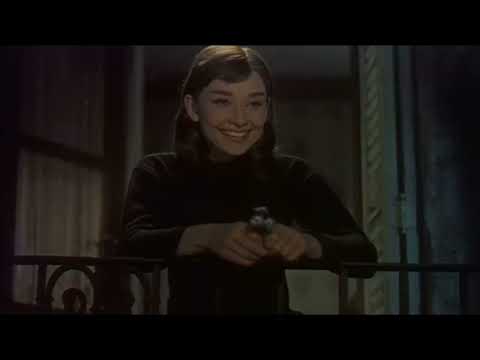
Overview
How can a soundtrack be both Paris postcard and jazz-club cool? Funny Face does it by fusing George & Ira Gershwin standards with new film songs by Roger Edens, then wrapping the lot in Adolph Deutsch’s Technicolor studio sheen. The 1996 Verve CD reissue restored this 1957 classic to circulation for modern listeners, putting Kay Thompson’s “Think Pink!” next to Fred Astaire’s elegant readings and Audrey Hepburn’s intimate “How Long Has This Been Going On?”.
The film shares a title with the 1927 Broadway musical but uses a different story and only a handful of stage numbers; that distinction matters when you’re evaluating what’s on the album. Verve’s 1996 disc presents the original LP program, while the later 60th-anniversary edition resequenced cues to match on-screen order and added alternates. (AllMusic’s capsule points out Edens’ heavy hand in new material; Verve, Discogs, and Apple’s metadata confirm label/date details.)

Questions & Answers
- What exactly is the 1996 release?
- Verve’s CD reissue of the 1957 soundtrack album (original LP program); rights credit to The Verve Music Group.
- How does the film relate to the 1927 stage show?
- Different plot; only a few Gershwin songs carry over. The album is built from film vocals plus Deutsch’s underscore bridges.
- Who sings on the album?
- Fred Astaire, Audrey Hepburn, and Kay Thompson, supported by Adolph Deutsch’s orchestra.
- Which songs are newly created for the film?
- Roger Edens wrote “Think Pink!”, “Bonjour, Paris!”, and “On How to Be Lovely” (lyrics by Leonard Gershe) for the movie.
- Is there a version that follows screen order?
- The 2017 60th-anniversary reissue resequenced cues and added alternates/outtakes.
- Is this a jazz record or a show album?
- Both—Verve production values with classic show writing: Gershwin standards interpreted by Hollywood voices, arranged by Van Cleave/Alexander Courage/Conrad Salinger.
- Where can I verify credits and editions?
- AllMusic for review; Verve/Apple Music for label/date; Discogs for matrix/edition details; IMDb/Wikipedia for song use in-film.
Notes & Trivia
- Richard Avedon contributed concept images; Astaire’s character is loosely based on him.
- Kay Thompson’s Maggie Prescott (a Diana Vreeland–like editor) detonates the movie’s signature opener, “Think Pink!”.
- Hepburn sings her own vocals; “How Long Has This Been Going On?” became her calling-card ballad on the album.
- The 2017 Verve anniversary edition adds alternates for most key numbers and restores screen order.
- Only four songs overlap with the 1927 stage score; the rest are recontextualized or newly written for the film.
Genres & Themes
Gershwin songbook glamour → urbane romance, witty rhyme, and choreography-ready phrasing.
Studio-orchestra swing → lush reeds/brass cushion fashion montages and travelogues.
Editorial pastiche → magazine-world satire-as-musical decree (“Think Pink!”) that weaponizes jingles and slogans.
Left Bank jazz tinge → light rhythm sections under Paris visuals; non-diegetic cool rather than club grit.
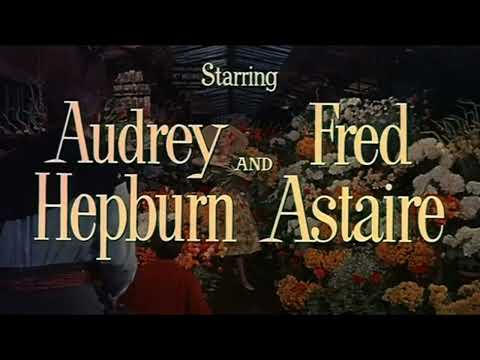
Tracks & Scenes
“Think Pink!” — Kay Thompson
Where it plays: Opening magazine-office sequence as Editor Maggie Prescott declares a color diktat; full chorus and quick-cut fashion gags.
Why it matters: Satire that sets the film’s rhythm and humor before romance enters.
“How Long Has This Been Going On?” — Audrey Hepburn
Where it plays: Early in the story, Jo processes unexpected affection back at the bookshop; intimate, near-whisper delivery.
Why it matters: Human-scale counterweight to the editorial spectacle; Hepburn’s signature vocal on the album.
“Funny Face” — Fred Astaire
Where it plays: Darkroom/set-up sequence as Dick frames Jo’s offbeat beauty; Astaire croons to camera and subject.
Why it matters: Title tune as mission statement: sell the “new look” as personality, not perfection.
“Bonjour, Paris!” — Astaire, Thompson, Hepburn
Where it plays: Split-montage travelogue as the trio explores the city in parallel, converging at the Eiffel Tower.
Why it matters: A city-symphony number; orchestration doubles as tourist map.
“Clap Yo’ Hands” — Thompson & Astaire
Where it plays: Comic duet—posing, posturing, and sly syncopations amid fashion-world business.
Why it matters: Thompson’s showmanship meets Astaire’s precision; a study in timing.
“He Loves, She Loves” — Fred Astaire
Where it plays: Quiet garden interlude; camera drifts lightly while the melody floats.
Why it matters: The film’s most graceful breath; harmony as reconciliation.
“On How to Be Lovely” — Hepburn & Thompson
Where it plays: Mentor–protégé duet with tongue firmly in cheek; etiquette lessons as a musical wink.
Why it matters: Feminine gaze, self-aware—two philosophies of “poise” collide playfully.
“Let’s Kiss and Make Up” — Fred Astaire
Where it plays: Umbrella-and-cape solo as Dick tries to fix what he broke.
Why it matters: Classic Astaire showmanship; a miniature within the narrative.
Album notes: The 1996 Verve CD follows the historical LP program; the 2017 anniversary edition restores screen sequence and adds alternates for core cues.
Music–Story Links
Editorial decree → identity: “Think Pink!” isn’t just a song; it’s the machine that will shape Jo’s image. The title tune reframes “beauty” as asymmetry—funny as desirable. “He Loves, She Loves” softens the camera’s gaze into companionship; “On How to Be Lovely” debates performance vs. authenticity. And “Bonjour, Paris!” externalizes the film’s thesis: curiosity first, fashion second.
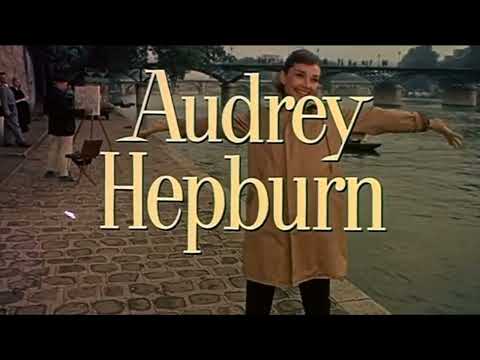
How It Was Made
Composer credits split between the Gershwins (carryover standards) and Roger Edens (new film numbers), with lyrics by Ira Gershwin and Leonard Gershe (for Edens’ songs). Adolph Deutsch conducts; arrangements/orchestrations by Van Cleave, Alexander Courage, and Conrad Salinger knit danceability with cinematic color. Norman Granz produced the album for Verve; Richard Avedon’s photography shaped the marketing as much as the film’s look.
Reception & Quotes
Contemporary reviews praised style and performances; later coverage keeps returning to “Think Pink!” and the Paris travelogue. The album remains a compact primer on mid-century studio-musical craft.
“The real moving force behind the movie is its producer, Roger Edens.” AllMusic (William Ruhlmann)
“A timeless and elegant musical feast.” Rotten Tomatoes consensus (via film profiles)
“Hepburn’s wardrobe and the montage of ‘Bonjour, Paris!’ define the film’s enduring allure.” San Francisco Chronicle
Additional Info
- 1996 Verve CD credits: ℗ 1996 The Verve Music Group; original recordings 1956–57.
- 2017 anniversary reissue adds eight alternates/outtakes; tracks resequenced to match on-screen order.
- New film songs (“Think Pink!,” “Bonjour, Paris!,” “On How to Be Lovely”) are by Roger Edens (lyrics: Leonard Gershe), not stage-source Gershwin only.
- Album personnel include arrangers Van Cleave, Alexander Courage, Conrad Salinger; orchestra conducted by Adolph Deutsch.
- Avedon’s imagery appears on album art; his visual concept informs the “Funny Face” number.
Technical Info
- Title: Funny Face (Original Motion Picture Soundtrack)
- Year: 1996 Verve CD reissue (original album 1957; recordings 1956)
- Type: Film soundtrack (vocals + studio orchestra)
- Songs by: George Gershwin & Ira Gershwin (select numbers); Roger Edens (music) & Leonard Gershe (lyrics) for new film songs
- Score/Conductor: Adolph Deutsch
- Arrangers: Van Cleave; Alexander Courage; Conrad Salinger
- Label: Verve (The Verve Music Group)
- Notable placements (on screen): “Think Pink!” (editorial opener); “How Long Has This Been Going On?” (bookshop ballad); “Bonjour, Paris!” (city montage); “He Loves, She Loves” (garden); “Let’s Kiss and Make Up” (umbrella solo); “‘S Wonderful” (duet)
- Later edition: 2017 Verve/UME 60th-anniversary expanded, resequenced release
Canonical Entities & Relations
| Subject | Relation | Object |
|---|---|---|
| Verve (The Verve Music Group) | released | Funny Face (Original Motion Picture Soundtrack) — 1996 CD |
| George Gershwin | composed | select songs used in the film/album |
| Ira Gershwin | wrote lyrics for | select songs used in the film/album |
| Roger Edens | composed | new film numbers (“Think Pink!,” “Bonjour, Paris!,” “On How to Be Lovely”) |
| Leonard Gershe | wrote lyrics for | Edens’ new numbers |
| Adolph Deutsch | conducted | studio orchestra / underscore cues |
| Fred Astaire | performed | lead vocals/dances on multiple tracks |
| Audrey Hepburn | performed | lead and duet vocals (“How Long Has This Been Going On?”, “‘S Wonderful,” etc.) |
| Kay Thompson | performed | “Think Pink!,” “Clap Yo’ Hands,” duet features |
Sources: AllMusic (review & credits); Verve/Apple Music (1996 CD metadata); Discogs (release history & editions); IMDb Soundtracks; Wikipedia (film & soundtrack overviews); San Francisco Chronicle.
November, 09th 2025
A-Z Lyrics Universe
Cynthia Erivo Popular
Ariana Grande Horsepower
Post Malone Ain't No Love in Oklahoma
Luke Combs Good Riddance (Time of Your Life)
Green Day Bye Bye Bye
*NSYNC You're the One That I Wan
John Travolta & Olivia Newton-John I Always Wanted a Brother
Braelyn Rankins, Theo Somolu, Kelvin Harrison Jr. and Aaron Pierre The Power of Love
Frankie Goes to Hollywood Beyond
Auli’i Cravalho feat. Rachel House MORE ›