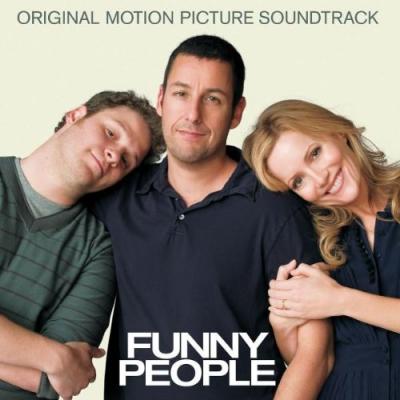
"Funny People" Soundtrack Lyrics
Movie • 2009
Track Listing
Paul McCartney
Coconut Records
Robert Plant And The Strange Sensation
James Taylor
Warren Zevon
Adam Sandler
Neil Diamond
Andrew Bird
Adam Sandler
Coconut Records
Maude Apatow
Warren Zevon
Ringo Starr
John Lennon
"Funny People (Original Motion Picture Soundtrack)" Soundtrack Description
Overview
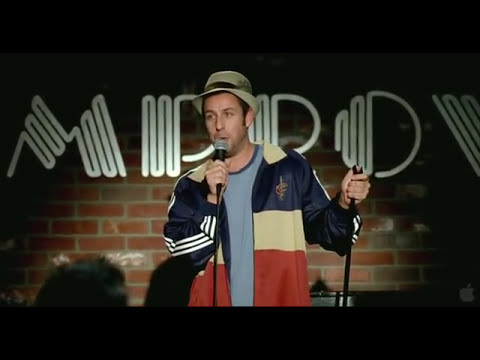
What does a midlife crisis sound like when the protagonist is a famous comedian? In Funny People, it’s equal parts classic singer-songwriter comfort and stark mortality ballads. The album balances Paul McCartney, James Taylor, Wilco, Warren Zevon, Robert Plant, and Ringo Starr with in-world performances by Adam Sandler and a wry family cameo: Maude Apatow singing “Memory.” The tone swings from arena-sized nostalgia to intimate, diegetic confession—exactly the film’s arc.
The soundtrack (Concord, July 28, 2009) was assembled to feel like George Simmons’s private playlist: a little “dad rock,” a little hospice courage (“Keep Me in Your Heart”), and a few cracked onstage renditions—some tender, some intentionally awkward. Concord’s album notes credit executive producer Judd Apatow and album producer/music supervisor Jonathan Karp; contemporaneous coverage from Pitchfork and PopMatters underlined the Lennon-McCartney-Plant axis and Sandler’s live covers as the set’s talking points.
Questions & Answers
- Who handled original score vs. songs?
- Score duties are credited to Michael Andrews and Jason Schwartzman; the album is a various-artists set curated with Concord and music supervisor Jonathan Karp.
- When did the album come out and on which label?
- July 28, 2009 on Concord.
- Are Adam Sandler’s vocals on the album?
- Yes—his in-film performances include a live cover of John Lennon’s “Real Love” and a brief in-character original (“George Simmons Soon Will Be Gone”).
- Any family cameos on the record?
- Yes. Maude Apatow sings “Memory” (with Larry Goldings), reflecting an in-story household moment.
- Is this mostly non-diegetic music?
- A mix. Several songs are diegetic (performed on stage or in rooms); others play as scene-scoring.
- What’s the album’s tonal center?
- Reflective, singer-songwriter material offset with late-career rock icons and mortality-tinged ballads—very much the film’s emotional register.
Notes & Trivia
- The CD/streaming lineup includes two Coconut Records cuts—Jason Schwartzman’s indie project—tying the score and song worlds together.
- Wilco’s “Jesus, Etc.” appears in a 2008 live take with guest violinist Andrew Bird.
- Two Warren Zevon tracks (“Keep Me in Your Heart,” “Numb as a Statue”) frame the film’s illness storyline with unvarnished truth.
- Album production notes list Jonathan Karp as album producer/music supervisor; Apatow served as executive producer of the soundtrack.
- Discographical pages show multiple editions (CD/digital), but no separate score album was commercially issued.
Genres & Themes
Singer-songwriter canon → intimacy and reckoning (James Taylor, Paul McCartney, Neil Diamond).
Legacy rock & post-Beatles → fame’s aftertaste and memory politics (Robert Plant, Ringo Starr, John Lennon demos).
Indie/alt textures → present-tense melancholy and wryness (Wilco feat. Andrew Bird; Coconut Records).
Diegetic confessionals → stand-up-as-song, characters singing in-room (Sandler; Maude Apatow).
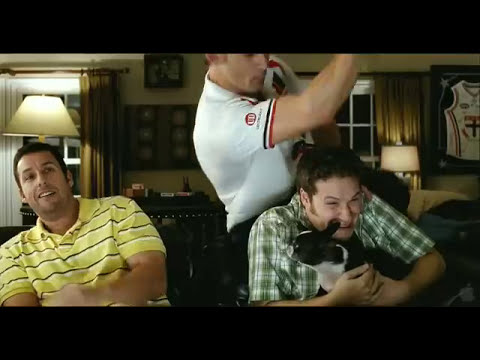
Tracks & Scenes
“Great Day” — Paul McCartney
Where it plays: Early montage establishing George’s routine and the film’s bittersweet optimism (non-diegetic).
Why it matters: A compact, buoyant opener; the cheer reads double when you know what’s coming.
“All the King’s Horses” — Robert Plant & The Strange Sensation
Where it plays: Transitional scene work as George begins recalibrating relationships (non-diegetic).
Why it matters: Mid-tempo reflection from a rock icon mirrors George’s fame hangover.
“Carolina in My Mind” (Live) — James Taylor
Where it plays: A reset between comic sets, used as a warm, familiar blanket (non-diegetic, live recording).
Why it matters: Nostalgia as coping mechanism; the live ambiance keeps it honest.
“Keep Me in Your Heart” — Warren Zevon
Where it plays: Illness-related stretch when George confronts mortality (non-diegetic).
Why it matters: One of cinema’s most clear-eyed goodbye songs underscores the film’s hardest truth.
“Real Love” — Adam Sandler (John Lennon cover)
Where it plays: Onstage performance in-scene (diegetic), George trying to connect without a punchline.
Why it matters: Vulnerability displacing schtick; a rare straight read from a character built on bitwork.
“We (Early Take)” — Neil Diamond
Where it plays: Domestic space beat as George reaches for steadier ground (non-diegetic).
Why it matters: Unvarnished cut from a legend; the “early take” quality fits the film’s rough-draft life choices.
“Jesus, Etc.” (Live Summer ’08) — Wilco feat. Andrew Bird
Where it plays: Night exterior/interior montage bridging separate character paths (non-diegetic).
Why it matters: Lilt and ache in one; strings trace the film’s melancholy pulse.
“George Simmons Soon Will Be Gone” — Adam Sandler
Where it plays: Brief in-story bit (diegetic), a mordant, self-aware jingle from George’s POV.
Why it matters: A joke that stings—gallows humor as autobiography.
“I Am Young” — Coconut Records
Where it plays: Ira’s subplot beats and LA drift (non-diegetic).
Why it matters: Indie fizz for the apprentice storyline; bridges generations inside one soundtrack.
“Memory” — Maude Apatow & Larry Goldings
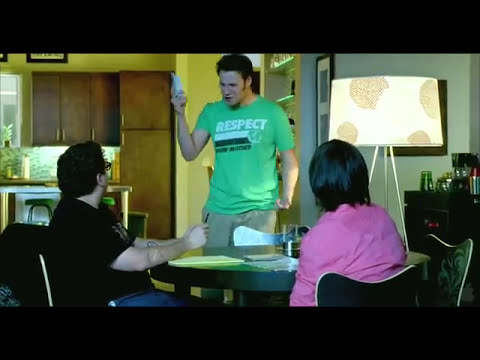
Where it plays: In-home performance (diegetic), a family scene that undercuts George’s celebrity armor.
Why it matters: Everyday music—small, sincere—contrasts with the arena-sized names elsewhere.
“Photograph” — Ringo Starr
Where it plays: Reflection montage tied to fame, footage, and what’s left behind (non-diegetic).
Why it matters: Pop elegy about looking back; the lyric frame is almost too on-the-nose, which is the point.
“Watching the Wheels” (Acoustic Demo) — John Lennon
Where it plays: Late-film exhale as choices settle (non-diegetic).
Why it matters: A demo’s intimacy fits the film’s final thesis: step off the carousel and own your time.
Music–Story Links
Fame is loud; reckoning is quiet. Live, diegetic songs turn George into a person rather than a persona (“Real Love”). Catalog choices act as commentary: Zevon’s farewell is empathy, not manipulation; Lennon’s demo plays like a diary; Starr’s “Photograph” frames memory as evidence. The indie cuts track the mentee’s lane—Jason Schwartzman’s fingerprints (Coconut Records) give Ira his own sound. Result: two lives, one playlist, converging on decency.
How It Was Made
Album production lists Judd Apatow (executive producer) and Jonathan Karp (album producer/music supervisor). The film’s score credits go to Michael Andrews and Jason Schwartzman; the latter’s band Coconut Records contributes two cuts, tightening the concept. Press at the time noted Jon Brion’s involvement producing Sandler’s cover sessions. The label partner is Concord.
Reception & Quotes
Coverage centered on the high-profile catalog and the uneasy charm of Sandler’s live numbers. PopMatters and Pitchfork both flagged the Lennon/McCartney/Ringo axis and the Wilco/Bird performance as the album’s selling points.
“A tastefully curated dad-rock set... plus Sandler’s earnest covers.” Pitchfork
“The Sandler tracks tilt the balance, for better and worse.” PopMatters
“Concord’s release executive-produced by Apatow with Jonathan Karp.” Concord
Additional Info
- Release date: July 28, 2009 (Concord).
- Digital/streaming editions mirror the 14-track CD lineup.
- Discogs entries confirm sequencing and artist credits; Spotify/Apple Music provide timings.
- No separate commercial score album; the film’s orchestral material remains unreleased.
- The Playlist cataloged 30+ songs used in and around the film beyond the album’s 14 tracks.
Technical Info
- Title: Funny People (Original Motion Picture Soundtrack)
- Year: 2009
- Type: Various-artists soundtrack (select diegetic & non-diegetic songs)
- Score: Michael Andrews; Jason Schwartzman
- Album EP / Supervisor: Judd Apatow (EP); Jonathan Karp (album producer/music supervisor)
- Label: Concord
- Selected notable placements: “Keep Me in Your Heart,” “Real Love” (live), “Jesus, Etc.” (Live), “Photograph,” “Watching the Wheels” (Acoustic Demo)
Canonical Entities & Relations
| Subject | Relation | Object |
|---|---|---|
| Concord | released | Funny People (Original Motion Picture Soundtrack) |
| Judd Apatow | executive produced | soundtrack album |
| Jonathan Karp | album producer / music supervised | Funny People (2009) |
| Michael Andrews | composed | score for the film |
| Jason Schwartzman | composed | additional score; contributed songs as Coconut Records |
| Adam Sandler | performed | “Real Love” (live); “George Simmons Soon Will Be Gone” |
| Maude Apatow & Larry Goldings | performed | “Memory” (from Cats) |
Sources: Concord; Pitchfork; PopMatters; IMDb; Discogs; Wikipedia; Apple Music.
November, 09th 2025
A-Z Lyrics Universe
Cynthia Erivo Popular
Ariana Grande Horsepower
Post Malone Ain't No Love in Oklahoma
Luke Combs Good Riddance (Time of Your Life)
Green Day Bye Bye Bye
*NSYNC You're the One That I Wan
John Travolta & Olivia Newton-John I Always Wanted a Brother
Braelyn Rankins, Theo Somolu, Kelvin Harrison Jr. and Aaron Pierre The Power of Love
Frankie Goes to Hollywood Beyond
Auli’i Cravalho feat. Rachel House MORE ›