Soundtracks:  A B C D E F G H I J K L M N O P Q R S T U V W X Y Z #


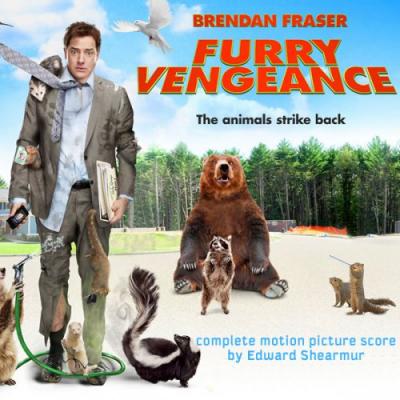
Furry Vengeance Album Cover

"Furry Vengeance" Soundtrack Lyrics

Movie • 2010

Track Listing


"Furry Vengeance (2010) — Music & Soundtrack Overview"

Furry Vengeance official trailer frame with Brendan Fraser besieged by forest animals, hinting at slapstick cues and upbeat needle-drops
Furry Vengeance — Official Trailer (2010)

Overview

Can an eco-slapstick comedy run on mixtape energy? Furry Vengeance answers with bright, radio-familiar needle-drops and a cartoon-precise orchestral score. Edward Shearmur’s music underlines gags with brisk, bouncy writing (stingers, woodwinds, percussion “pratfalls”), while the songs skew recognizable—Vampire Weekend’s “A-Punk,” ELO’s “Don’t Bring Me Down,” Chic’s “Le Freak,” Sousa’s “Washington Post March”—to punch scene transitions with instant associations.

No commercial “various artists” album shipped; placements are documented in credits and listings, with Shearmur credited as composer. IMDb and Variety confirm the music department roles; Wikipedia consolidates the song list. Think of the soundtrack as two lanes: score doing timing-and-impact work for physical comedy; songs supplying quick character/context signals (corporate smarm, suburban party vibes, kids’-movie pep).

Trailer frame showing suburban build site against forest, matching the film’s bright, comic score palette
Score first, gags second — a timing engine for slapstick

Questions & Answers

Who composed the score?
Edward Shearmur.
Is there an official soundtrack album?
No commercial “songs” album; select score compilations circulate online. The film’s song list is documented via credits.
Who supervised the music?
Patrick Houlihan is listed as music supervisor in trade/credit sources.
Any notable end-credits music bit?
Yes — the cast lip-syncs “Insane in the Membrane/Insane in the Brain” during the credits.
What well-known songs appear?
“A-Punk” (Vampire Weekend), “Don’t Bring Me Down” (ELO), “Le Freak” (Chic), “Surrender” (Ben Lee), “Washington Post March” (Sousa), among others.
What’s the music’s job here?
Score = timing and gag punctuation; songs = instant mood/context flips for chases, parties, and montage.

Notes & Trivia

  • IMDb’s soundtrack page lists a period “Gavotte” arranged/performed by Jeff Cardoni with Katisse Buckingham — a tongue-in-cheek classical needle-drop used for contrast.
  • Multiple cues credited to Transcenders appear as covers/versions in the film’s listings.
  • The end-credits lip-sync gag is widely noted by fan indexes and credits watchers.
  • No official OST: fans reconstructed playlists from credits and databases.

Genres & Themes

Orchestral slapstick (score) → stingers, pizzicato, brisk woodwinds; precise hit-points for physical comedy.

Indie/alt pop → teen/“hip” sheen for school/party beats (“A-Punk”).

Classic rock & disco → instant comic swagger or irony (“Don’t Bring Me Down,” “Le Freak”).

March/polka & novelty → deliberate mismatch humor (Sousa; novelty cues) for “serious” moments gone silly.

Trailer montage of parties and chases, matching the soundtrack’s quick-switch from indie pop to disco and marches
Quick-switch grammar — indie pop ↔ disco ↔ marches

Tracks & Scenes

“A-Punk” — Vampire Weekend
Where it plays: Upbeat montage early in the film (non-diegetic).
Why it matters: Contemporary indie sparkle that frames the movie’s kid-friendly energy.

“Don’t Bring Me Down” — Electric Light Orchestra
Where it plays: Comic set-piece/montage stretch (non-diegetic).
Why it matters: Classic-rock stomp used as swagger undercut — confidence before chaos.

“Le Freak” — Chic
Where it plays: Party/celebration beat (source/non-diegetic mix as cutaway).
Why it matters: Disco euphoria as sight-gag accelerant.

“Surrender” — Ben Lee
Where it plays: Lighter interlude around family beats (non-diegetic).
Why it matters: Soft reset that humanizes the Sanders family between gags.

“Washington Post March” — John Philip Sousa
Where it plays: Pomp-turned-punchline moment (source-style).
Why it matters: Formal march against undignified visuals — classic mismatch joke.

“Cotton-Eyed Joe” — The Goodtime Stringband (version)
Where it plays: Rustic/folksy gag interlude (source-style).
Why it matters: Lean-in to the film’s rural setting for comic color.

“Insane in the Membrane / Insane in the Brain” — Transcenders (Cypress Hill cover)
Where it plays: End-credits lip-sync by the cast (diegetic-on-camera gag).
Why it matters: Curtain-call joke that doubles as a kid-friendly nod to a 90s staple.

Song appearances are sourced from on-screen credits and aggregated listings; precise timestamps vary by cut/territory.

Music–Story Links

The movie needs fast tonal pivots: from “developer confidence” to “nature strikes back” and back again. Songs do the quick signaling (indie pep, disco bravado, pomp turned silly); Shearmur’s score handles impact—hit-points for falls, sprays, and chase beats. The end-credits cover turns a villain-vs-animals premise into a cast “we’re fine” wink.

Trailer shot of suburban cul-de-sac blown up by animal hijinks, matching the score’s stingers and pratfall rhythm
Pratfall meter — score lands the laughs

How It Was Made

Composer: Edward Shearmur. Music supervision credited to Patrick Houlihan in trade/credit references; additional music and song clearances include contributions by Transcenders and catalog licensors. Several score recordings were produced with a large studio ensemble; crew listings show dedicated music editors, scoring mixer, contractor, and preparation staff.

Reception & Quotes

Reviews were rough on the film overall, but the soundtrack cues are widely cataloged and easy to recognize.

“Music: Edward Shearmur; music supervisor: Patrick Houlihan.” Variety
“Songs include ‘A-Punk,’ ‘Don’t Bring Me Down,’ ‘Le Freak,’ ‘Surrender’…” Wikipedia
“End credits: cast lip-syncs ‘Insane in the Membrane.’” MediaStinger

Additional Info

  • No official various-artists album; song list verified via credits aggregators.
  • Jeff Cardoni & Katisse Buckingham are credited with a cheeky classical “Gavotte” arrangement used in the film.
  • Transcenders’ cues appear as versions/covers tied to well-known tracks.
  • Critical notes highlight “A-Punk” as the film’s “hippest” placement.
  • Score-only compilations (unofficial) circulate online; an official retail score release isn’t broadly documented.

Technical Info

  • Title: Furry Vengeance
  • Year: 2010
  • Type: Feature film — comedy (songs + original score)
  • Composer: Edward Shearmur
  • Music Supervision: Patrick Houlihan (per trade/credit sources)
  • Selected notable placements: Vampire Weekend — “A-Punk”; Electric Light Orchestra — “Don’t Bring Me Down”; Chic — “Le Freak”; Ben Lee — “Surrender”; Sousa — “Washington Post March”; Cypress Hill cover by Transcenders — “Insane in the Brain” (credits)
  • Album status: No official various-artists album; placements documented via film credits and databases

Canonical Entities & Relations

SubjectRelationObject
Edward Shearmurcomposedoriginal score for Furry Vengeance (2010)
Patrick Houlihanmusic supervisedFurry Vengeance (credits/trade listings)
Vampire Weekendperformed“A-Punk” (featured in film)
Electric Light Orchestraperformed“Don’t Bring Me Down” (featured in film)
Chicperformed“Le Freak” (featured in film)
Transcendersperformedcover versions incl. “Insane in the Brain/Membrane” (credits gag)
Summit EntertainmentdistributedFurry Vengeance

Sources: Variety; IMDb; Wikipedia; MediaStinger; KQED Arts.

November, 09th 2025


A-Z Lyrics Universe

Lyrics / song texts are property and copyright of their owners and provided for educational purposes only.