Soundtracks:  A B C D E F G H I J K L M N O P Q R S T U V W X Y Z #


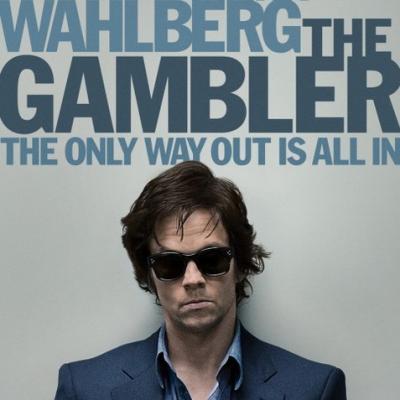
Gambler, The Album Cover

"Gambler, The" Soundtrack Lyrics

Movie • 2014

Track Listing


"The Gambler (Music From The Motion Picture)" Soundtrack Description

The Gambler 2014 official trailer still of Mark Wahlberg as Jim Bennett at the blackjack table
The Gambler — official trailer still, 2014

Overview

What does a self-destructive professor hear when he decides to double down on ruin? This album answers with curated source cuts—soul, indie, reggae-dub, torch songs, and late-night electronica—sequenced to mirror the film’s seven-day countdown. It’s a songs-only release from Republic Records; the original score exists in the film but not on the retail album.

The curation comes straight from the filmmaking team: director Rupert Wyatt spearheaded the source choices alongside collaborators, aiming for tracks that feel like “genius” voices arguing in Jim Bennett’s head. The result: M83’s widescreen synths at the table, Dinah Washington in a strip club haze, Pulp on campus, Easy Star All-Stars nodding to money and time. IndieWire and The Washington Post both singled out the soundtrack’s punch, and The Playlist filed it among the year’s notable compilations.

Trailer frame showing Jim Bennett driving at night, matching the soundtrack’s nocturnal tone
Night-driving mood the album leans into

Questions & Answers

Is the official album a score or a song compilation?
Compilation. The retail release collects 15 songs used in the film; the Jon Brion/Theo Green score is not issued as a separate official album.
Who handled the music curation/supervision?
Director Rupert Wyatt led source selection with key input from Theo Green and Clint Bennett.
Which track opens the film?
“That Glow” — St. Paul & The Broken Bones, over early driving shots and credits.
What plays during the climactic gambling run?
M83’s “Outro,” swelling across the last minutes of the big game.
What’s the standout campus cue?
Pulp’s “Common People,” heard as Amy walks the grounds, underlining class and distance.
Which classic torch song turns up?
Dinah Washington’s “This Bitter Earth,” used during a strip-club passage to shade Jim’s spiral.

Notes & Trivia

  • The album’s label is Republic Records; it arrived mid-December 2014 to align with the film’s U.S. release window.
  • Wyatt explicitly framed the picks as a “genius” playlist for Jim—older legends beside modern auteurs.
  • Multiple M83 cuts (“Another Wave From You,” “Outro”) bracket key gambling sequences for continuity.
  • Marching-band snippets (“LSU Drum Cadence”; “War Chant”) punctuate the day-marker structure.
  • Score in film by Jon Brion and Theo Green; only source songs made the commercial album.

Genres & Themes

  • Neo-soul & retro R&B → appetite and risk. St. Paul & The Broken Bones, Dinah Washington: pleasure as prelude to bad decisions.
  • Indie/alt & Britpop → class friction. Pulp’s “Common People” underlines the gulf between Jim and his students.
  • Reggae-dub reworks → money/time as traps. Easy Star All-Stars literalize the film’s obsession with cashflow and deadlines.
  • Ambient-epic electronica → compulsion. M83’s pads and surges mirror the intoxication of the bet and the comedown after.
Trailer still of campus walkway echoing the Britpop and indie selections
Campus and city spaces framed by Britpop/indie cues

Tracks & Scenes

“That Glow” — St. Paul & The Broken Bones
Where it plays: ~00:03, opening credits while Jim drives. Non-diegetic.
Why it matters: sets swagger and heat before the table work begins; soul grit telegraphs appetite and risk.

“Vive L’Amour” — Phi Mu Alpha Sinfonia Fraternity
Where it plays: ~00:17 over the “7 days” title card. Non-diegetic bumper.
Why it matters: an ironic, collegiate flourish that tees up the countdown device.

“Don’t Think Twice, It’s Alright” — Billy Bragg
Where it plays: ~00:26, post-class drive to his mother’s. Non-diegetic.
Why it matters: a fatalist shrug in song form; Jim keeps moving instead of changing course.

“Crucify Your Mind” — Rodriguez
Where it plays: ~00:29 at the parking garage pickup (“6 days” appears). Non-diegetic.
Why it matters: the lyric stance mirrors Jim’s self-mythologizing—and denial.

“This Bitter Earth” — Dinah Washington
Where it plays: ~00:37 in the strip club (“5 days”). Source-like ambience in-scene.
Why it matters: velvet melancholy against neon grime; the title says the quiet part loud.

“Money (feat. Gary ‘Nesta’ Pine & Dollarman)” — Easy Star All-Stars
Where it plays: ~00:38 as Jim gets Neville’s call. Non-diegetic.
Why it matters: on-the-nose and effective; the groove mocks how every choice is collateralized.

“Common People” — Pulp
Where it plays: ~00:51 as Amy walks campus (“4 days”). Non-diegetic.
Why it matters: class lecture by other means; the song frames Jim’s distance from ordinary stakes.

“Poor People” — Alan Price
Where it plays: ~00:54 after Jim/Amy’s desert talk; later inside a casino. Non-diegetic.
Why it matters: Price’s acerbic bite undercuts Jim’s grandiosity.

“Another Wave From You” — M83
Where it plays: ~00:58, blackjack time-lapse. Non-diegetic.
Why it matters: repeating swells mirror incremental bets; trance over calculus.

“Time (feat. Ranking Joe)” — Easy Star All-Stars
Where it plays: ~01:01 at the bus stop (“3 days”). Non-diegetic.
Why it matters: the countdown’s drum; deadlines become a character.

“Sunny” — Ayo
Where it plays: ~01:03, Jim turns on the radio during a storm. Diegetic (in-car).
Why it matters: ironic sunshine while everything darkens; a quick breather before the next sink.

“Creep” — Scala & Kolacny Brothers
Where it plays: ~01:13, Jim and Amy argue at the university. Non-diegetic.
Why it matters: choral glass on sandpaper; turns a spat into an obituary for self-regard.

“Chopin Etude Op.10 No.3” — Charles Roland Berry (performance)
Where it plays: ~01:15 while Lamar trains; Jim lays out terms. Non-diegetic classical needle-drop.
Why it matters: technical perfection scored against moral corner-cutting.

“LSU Drum Cadence” — LSU Tiger Marching Band
Where it plays: ~01:25 as the last day begins. Non-diegetic.
Why it matters: martial pulse → zero hour; the film’s metronome clicks loudest here.

“Outro” — M83
Where it plays: ~01:29 over the end of the big game. Non-diegetic.
Why it matters: grand catharsis without triumph; waves crash whether you win or break even.

“Good Time Man” — Discognosis
Where it plays: ~01:31 at a Heritage Day party. Source-style atmosphere.
Why it matters: cheap celebration vs. expensive debts; mood as camouflage.

“Demon Host” — Timber Timbre
Where it plays: ~01:35 during a Lamar/Jim talk. Non-diegetic.
Why it matters: campfire-eerie restraint for a high-stakes bargain.

“Hurry Up, We’re Dreaming” — M83
Where it plays: ~01:44 as Jim runs through the streets. Non-diegetic.
Why it matters: forward motion as ideology; he chases air and calls it escape.

“Airwaves” — Ray LaMontagne
Where it plays: ~01:46 into the credits. Non-diegetic.
Why it matters: gentle postscript; after the noise, a voice that sounds like consequence.

Music–Story Links

  • Countdown grammar: Short cues (“Vive L’Amour,” marching cadences) punctuate the on-screen day markers; songs become chapter headings.
  • Compulsion curve: M83’s pieces escalate from observational (“Another Wave From You”) to operatic (“Outro”), mapping the bet’s dopamine arc.
  • Class & pose: “Common People” reframes a hallway walk as thesis—who gets to risk and why it looks different from above.
  • Self-myth vs. reality: Rodriguez and Dinah Washington pull Jim between martyr pose and lived cost.
Trailer still of Jim sprinting through Los Angeles streets underscored by M83
Motion as mantra: the M83-driven sprint

How It Was Made

Score: Jon Brion and Theo Green composed the original score heard in the film (no commercial score album). Compilation/selection: Rupert Wyatt led source music picks with Theo Green and Clint Bennett involved across supervision/editing. Album: Republic Records issued a 15-track songs compilation to market.

Trusted sources: Film Music Reporter, Variety, DiscDish interview.

Reception & Quotes

Critical response to the film was mixed, but the needle-drop playlist drew consistent praise. The Playlist placed it among 2014’s notable soundtrack releases.

“The soundtrack is full of gems.” The Washington Post
“Source cuts chosen like a ‘genius’ mixtape for Jim Bennett.” Director Rupert Wyatt, interview

Additional Info

  • The album leans heavily on source; none of the Brion/Green score cues appear on the retail release.
  • Two Easy Star All-Stars selections (“Money,” “Time”) mirror the script’s obsession with debt clocks.
  • Multiple campus and athletics cues (Pulp; LSU/FSU cadences) knit school life to gambling logistics.
  • End-credits handoff to Ray LaMontagne gives a human-scale epilogue after maximalist M83.
  • Streaming storefronts list 15 tracks; additional in-film songs not on the album appear across party and sports scenes.

Technical Info

  • Title: The Gambler (Music From The Motion Picture)
  • Year: 2014 (album & U.S. release)
  • Type: Compilation soundtrack (songs; no commercial score album)
  • Score composers (film): Jon Brion; Theo Green
  • Music curation/supervision: Rupert Wyatt with Theo Green and Clint Bennett
  • Label: Republic Records (digital release mid-Dec 2014)
  • Selected notable placements: “Outro” (final game); “Common People” (campus); “This Bitter Earth” (strip club); “Money” (call from Neville); “Airwaves” (credits)
  • Availability: Apple Music, Spotify, and other digital platforms

Canonical Entities & Relations

EntityRelationEntity
The Gambler (2014 film)directed byRupert Wyatt
Jon Brionco-composed score forThe Gambler (2014)
Theo Greenco-composed score forThe Gambler (2014)
Rupert Wyattcurated source music forThe Gambler (2014)
Clint Bennettmusic editor/supervision onThe Gambler (2014)
Republic RecordsreleasedThe Gambler (Music From The Motion Picture)
M83performed“Another Wave From You”; “Outro”
Dinah Washingtonperformed“This Bitter Earth”
Pulpperformed“Common People”

Sources: The Washington Post; The Playlist; Film Music Reporter; Wikipedia; DiscDish interview; Apple Music; Spotify; IMDb; SoundtrackRadar.

What could be more interesting of … no, not interesting – more attractive, than easy money? Hardly anyone would have refused the opportunity to enrich themselves in an instant, by chance, and at the same time, who would agree to risky scam? The answer is simple: the player. Those who cannot imagine his or her life without risk, without greed and without tickling own nerves. The hero of this motion picture walks on the edge. He used to be lucky, used that money from card games themselves jump into his pockets – and not that he got relaxed, rather, simply believed in the lucky star. But there comes a time when the pockets are empty, when Fortune launches its wheel so that his teeth are completely knocked out. Then begins the most interesting part. It is fascinatingly that, despite the catastrophic situation on the verge of failure, the film is full of jokes and funny scenes and moments when the hero openly enjoys life, though literally is one-step afar from death, because his life is at stake. That will be the soundtrack – on the brink of a foul, which does not interfere with enjoying what is happening, seeing everything as one big adventure in which a chance of winning is one in a million, but he still possesses this chance. Sound engineers came very toughly to love line – it's nice to see, or rather to hear how a story about forbidden love of student to a teacher with a double life is reflected in the music. Dinah Washington perfectly reflects with vocals in This Bitter Earth her personal opinion to the crazy life. The collection opens with St. Paul & Broken Bones with the That Glow product and we would like to draw particular attention to the track Outro, which is one of the final ones.

November, 09th 2025

"The Gambler": more info on IMDb, Wikipedia
A-Z Lyrics Universe

Lyrics / song texts are property and copyright of their owners and provided for educational purposes only.