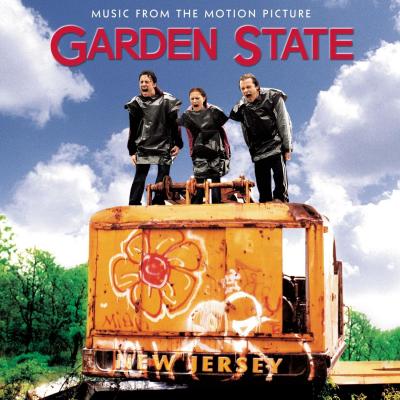
"Garden State" Soundtrack Lyrics
Movie • 2004
Track Listing
Coldplay
The Shins
Zero 7
The Shins
Colin Hay
Thievery Corporation
Cary Brothers
Remy Zero
Nick Drake
Simon & Garfunkel
Iron & Wine
Frou Frou
Bonnie Somerville
Chad Fisher
"Garden State: Music From the Motion Picture" Soundtrack Description
Overview
Can a mixtape steer a movie’s heart? Garden State answers with a resounding yes. Zach Braff’s hand-picked compilation turns indie staples into narrative signposts—less wallpaper, more steering wheel. The set leans on intimate folk, downtempo electronica, and gently luminous rock to track Andrew Largeman’s thaw from medicated numbness to messy feeling.
Two choices define its character: canon-building legacy cuts (Simon & Garfunkel, Nick Drake) and then-new discoveries (The Shins, Iron & Wine, Zero 7). The Shins’ “one-song-will-change-your-life” needle-drop became a generational in-joke and a sincere promise. According to the Recording Academy, the album later won the Grammy for Best Compilation Soundtrack, and it went platinum in the U.S.—rare validation for a director-curated “mix CD” that doubled as a rite of passage.
Questions & Answers
- Why did this soundtrack feel like a mixtape, not a studio compilation?
- Because it was curated like one: Braff sequenced songs that scored his script’s emotions and pursued clearances to preserve that order and mood.
- Which single moment defined its pop-culture legacy?
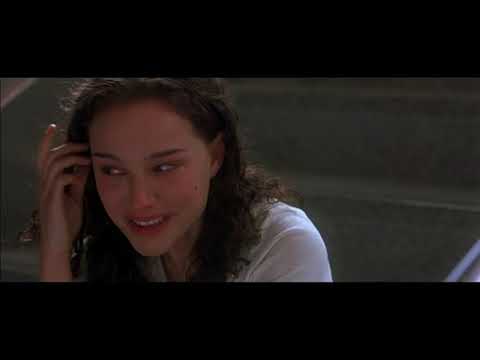
- Natalie Portman’s headphones hand-off of The Shins’ “New Slang,” a meta cue about music as an intervention.
- Did the trailer music match the film?
- Partly. The trailer used The Postal Service’s original “Such Great Heights”; the film/album use Iron & Wine’s hushed cover.
- Is there a “final cue” people still associate with the ending?
- Frou Frou’s “Let Go” surges under the airport decision, then the credits move to Bonnie Somerville’s “Winding Road.”
- Who supervised the music behind the scenes?
- Amanda Scheer-Demme and Buck Damon handled music supervision; Braff produced the compilation.
- Was it only indie rock?
- No. Downtempo (Zero 7, Thievery Corporation), 70s folk, and singer-songwriter cuts broaden the palette.
- Did all featured songs make the album?
- No. Several source and background cues (e.g., Alexi Murdoch’s “Orange Sky”) appear in the film but not on the OST.
Notes & Trivia
- The plane “panic” dream uses a Hindu alarm-clock prayer, not a commercial song.
- The Shins have two tracks here; one is introduced on screen via headphones.
- The soundtrack helped propel Hotel Café–scene artists like Cary Brothers to wider notice.
- A 20th-anniversary concert at L.A.’s Greek Theatre reunited several contributors.
- Zero 7’s placement soundtracks a spin-the-bottle sequence—tranquil music against chaotic behavior.
Genres & Themes
70s folk & baroque pop (Simon & Garfunkel, Nick Drake): steadiness and memory—older textures frame Andrew’s return to childhood spaces.
Indie folk (Iron & Wine, Colin Hay, Cary Brothers): private, close-mic’d voices; interior monologues made audible.
Downtempo / trip-hop-tinged electronica (Zero 7, Thievery Corporation): a hovering calm that undercuts parties, errands, and “quests,” emphasizing limbo over action.
Post-Britpop luminance (Coldplay): early montage propulsion that suggests lift while the character feels groundless.
Tracks & Scenes
"Don't Panic" — Coldplay
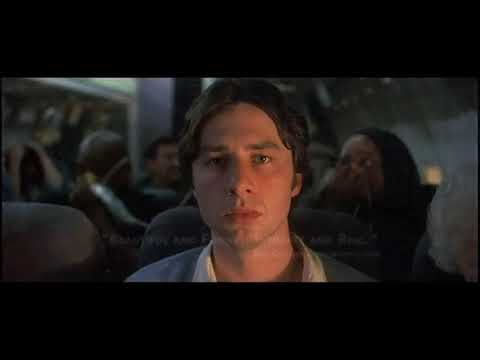
Where it plays: Very early, over the film’s opening stretch as Andrew disengages from L.A. and heads home; non-diegetic.
Why it matters: Bright tone over melancholy images establishes the film’s irony—life looks “beautiful” while he feels numb.
"New Slang" — The Shins
Where it plays: Doctor’s waiting room. Sam puts headphones on Andrew—diegetic (on her player), then blooms; early first act.
Why it matters: The film’s thesis: the right song can puncture armor. It seeds their chemistry and the movie’s music-as-medicine credo. (Entertainment Weekly referenced this as the album’s signature moment.)
"Caring Is Creepy" — The Shins
Where it plays: Late-night ride/roam sequences as Andrew begins to move through town; non-diegetic.
Why it matters: Its whistling eeriness mirrors the first glimmers of freedom and unease—movement without direction.
"In the Waiting Line" — Zero 7
Where it plays: Mark’s house party, including a slow, woozy spin-the-bottle interlude; largely non-diegetic but heard as ambient party music.
Why it matters: The narcotic lull contrasts reckless behavior; the lyric’s “everyone’s saying different things” fits Andrew’s social vertigo.
"Fair" — Remy Zero
Where it plays: Intimate conversation where Andrew finally articulates feeling—pre-romantic confession; non-diegetic.
Why it matters: A rasped, swelling chorus that tips a scene from awkward to honest; a hinge between isolation and connection.
"I Just Don’t Think I’ll Ever Get Over You" — Colin Hay
Where it plays: A reflective passage as Andrew sits with the past (childhood home; headspace); non-diegetic.
Why it matters: A sober check on grief and regret; the song’s plain language fits the film’s unvarnished self-reckoning.
"One of These Things First" — Nick Drake
Where it plays: Mid-film life-errands montage and quiet transitional beats; non-diegetic.
Why it matters: Catalog of “could-have-beens” matches a 26-year-old’s inventory of misfires; gently re-anchors the film in older folk lineage.
"Lebanese Blonde" — Thievery Corporation
Where it plays: A late-film dash into a big-box store during the “quest”; non-diegetic.
Why it matters: Slick sitar-laced glide over suburban fluorescent aisles—cool surface over absurd momentum.
"The Only Living Boy in New York" — Simon & Garfunkel
Where it plays: The “infinite abyss” quarry scene—ponchos, rain, a scream into the void; non-diegetic.
Why it matters: Loneliness voiced as hope. The cue reframes cliché into communal catharsis.
"Such Great Heights" — Iron & Wine
Where it plays: A tender, low-light moment between Andrew and Sam; non-diegetic.
Why it matters: The cover slows an electronic original to heartbeat pace, aligning with the film’s shift from distance to vulnerability.
"Let Go" — Frou Frou
Where it plays: The airport choice—crescendo into emotional commitment; non-diegetic.
Why it matters: “There’s beauty in the breakdown” lands as a mission statement; the cue has become shorthand for the film’s ending.
Also heard (not on the OST album):
"Orange Sky" — Alexi Murdoch (between “New Slang” and the Colin Hay cue, in-film only).
Hindu prayer “Vakratunda Mahakaya” (plane dream via alarm clock).
"Whitey" — Everlast and "Hey Lil’ Momma" — Sho-Shot AllStars (party background).
"Adelita" — Francisco Tárrega (Mark’s guitar; home video sequence).
Trailer callouts: The Postal Service’s original “Such Great Heights” and Travis’s “Love Will Come Through.”
Music–Story Links
Andrew’s arc maps to sonic temperature: cold clarity (“Don’t Panic”) → tentative warmth (Colin Hay, Nick Drake) → shared presence (“Fair,” Iron & Wine) → decisive release (“Let Go”). The film literalizes this in the headphones scene: intimacy enters through a single earbud, then spills into score. Thievery Corporation and Zero 7 score “quests” and parties with dreamlike detachment, flagging how action can feel suspended until emotion catches up. Simon & Garfunkel’s placement ties youthful myth-making to a mid-20s coming-of-age, letting a 1970 track articulate a 2004 catharsis.
How It Was Made
Zach Braff assembled songs as a script-scoring mix and pursued clearances to preserve those beats. Music supervision came from Amanda Scheer-Demme and Buck Damon, with studio exec support for licensing. The album itself was released by Epic Records with Fox Music involvement and credited Braff as compilation producer. Iron & Wine’s acoustic Postal Service cover, Shins placements, and a late-scene Frou Frou crescendo were editorial keystones chosen for character beats rather than chart calculus. Trusted sources like Pitchfork and Entertainment Weekly have since chronicled how those choices defined the film’s voice.
Reception & Quotes
Critics debated whether the cues over-explain emotion or unlock it. Fans—then and now—responded to discovery: the soundtrack functioned as a gateway to 70s folk and early-’00s indie.
“Memorable and evocative, if sometimes too on-the-nose.” Pitchfork
“The mix that started it all.” Entertainment Weekly
“Woodstock for elder millennials.” The Guardian
“A cultural time capsule—hopeful and bittersweet.” SFGATE
Availability: The album is widely available digitally and on CD; vinyl editions and anniversary reissues have circulated. A 20th-anniversary concert reiterated the compilation’s enduring pull.
Additional Info
- Grammy: Best Compilation Soundtrack (47th Awards).
- RIAA: Platinum; sales surpassed 1.3 million in the U.S.
- Trailer music differs from film cues (Postal Service vs. Iron & Wine; Travis single not in film).
- Background source at the party includes Everlast and Sho-Shot AllStars—absent from the album.
- “Vakratunda Mahakaya” (Ganesh prayer) is the airplane-dream source.
- Chad Fischer contributed additional score elements; his work also ties to Braff’s TV collaborations.
- Big-box “quest” sequence’s sleek lounge cut (“Lebanese Blonde”) became a fan gateway to Thievery Corporation.
- 20th-anniversary Greek Theatre concert gathered The Shins, Iron & Wine, Frou Frou, and more for a full-album live tribute.
Technical Info
- Title: Garden State: Music From the Motion Picture
- Year: 2004 (album release August 10, 2004)
- Type: Various-artists compilation soundtrack
- Compilation Producer: Zach Braff
- Music Supervision: Amanda Scheer-Demme; Buck Damon
- Label: Epic Records; Fox Music involvement
- Notable Placements: “New Slang” (headphones scene); “Only Living Boy in New York” (quarry); “Let Go” (airport decision); “In the Waiting Line” (party); “Lebanese Blonde” (store caper)
- Accolades: Grammy (Best Compilation Soundtrack)
- Film context: Written/directed by Zach Braff; Fox Searchlight release; running time 102 minutes
Canonical Entities & Relations
| Subject | Relation | Object |
|---|---|---|
| Zach Braff | produced | Garden State: Music From the Motion Picture (album) |
| Zach Braff | wrote & directed | Garden State (film) |
| Amanda Scheer-Demme | supervised | Music (film) |
| Buck Damon | supervised | Music (film) |
| Epic Records | released | Garden State soundtrack |
| Fox Music | partnered on | Soundtrack release |
| The Shins (music group) | performed | “New Slang”; “Caring Is Creepy” |
| Frou Frou (Imogen Heap & Guy Sigsworth) | performed | “Let Go” |
| Iron & Wine (Sam Beam) | performed | “Such Great Heights” (cover) |
| Simon & Garfunkel | performed | “The Only Living Boy in New York” |
| Thievery Corporation (Rob Garza, Eric Hilton) | performed | “Lebanese Blonde” |
| Zero 7 | performed | “In the Waiting Line” |
| Greek Theatre (Los Angeles) | hosted | 20th-anniversary concert (Mar 29, 2025) |
Sources: Recording Academy; Entertainment Weekly; Pitchfork; The Guardian; IMDb Soundtracks; Discogs; MusicBrainz; Consequence; SFGATE; Apple Music.
November, 09th 2025
A-Z Lyrics Universe
Cynthia Erivo Popular
Ariana Grande Horsepower
Post Malone Ain't No Love in Oklahoma
Luke Combs Good Riddance (Time of Your Life)
Green Day Bye Bye Bye
*NSYNC You're the One That I Wan
John Travolta & Olivia Newton-John I Always Wanted a Brother
Braelyn Rankins, Theo Somolu, Kelvin Harrison Jr. and Aaron Pierre The Power of Love
Frankie Goes to Hollywood Beyond
Auli’i Cravalho feat. Rachel House MORE ›