Soundtracks:  A B C D E F G H I J K L M N O P Q R S T U V W X Y Z #


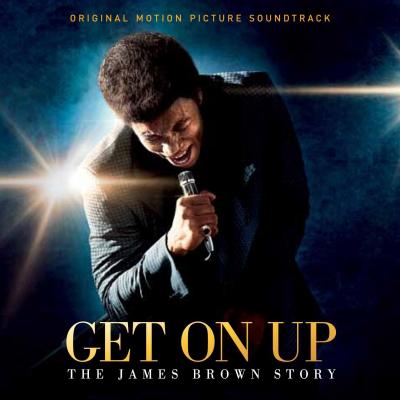
Get on Up Album Cover

"Get on Up" Soundtrack Lyrics

Movie • 2014

Track Listing


"Get On Up: The James Brown Story (Original Motion Picture Soundtrack)" Soundtrack Description

Get On Up official trailer still with Chadwick Boseman as James Brown in performance stance
Get On Up — trailer frame, 2014

Overview

How do you bottle James Brown’s hurricane—without losing the sweat? The film leans on original James Brown masters and live cuts while Thomas Newman’s score threads scene changes and reflection. The official album focuses on Brown’s recordings (with several unreleased live performances) and a handful of newly produced arrangements from The Underdogs; the film’s internal rhythm comes from the blasts of “Sex Machine,” “Cold Sweat,” “I Feel Good,” and the cape-drenched “Please, Please, Please.”

Unlike jukebox-biopics that mimic bands in the studio, this one privileges the real tapes: Brown’s voice is the text, with Newman supplying connective tissue. Music supervision (Budd Carr and Margaret Yen) keeps chronology legible while allowing out-of-time bursts for impact. Universal Music Enterprises issued the companion album on July 29, 2014, just ahead of the U.S. theatrical release.

Trailer still highlighting stage lights and band silhouettes, matching the film’s performance-first soundtrack strategy
Performance-first approach — originals and live cuts lead

Questions & Answers

Who composed the original score?
Thomas Newman composed the score; his cues bridge Brown’s performance set-pieces.
Who supervised the music?
Budd Carr and Margaret Yen handled music supervision; they were GMS Award nominees for this film.
What’s on the official album?
Primarily James Brown recordings (studio hits and previously unreleased live tracks), plus several new arrangements produced by The Underdogs.
When was the soundtrack released?
Late July 2014 in the U.S. (Universal/UMe); it coincided with the film’s August rollout.
Does the film use the real James Brown vocals?
Yes. Boseman performs on screen, but the film uses Brown’s masters for the songs.
Any awards attention for the album/music team?
The album was Grammy-nominated for Best Compilation Soundtrack; Carr and Yen earned a Guild of Music Supervisors nomination.

Notes & Trivia

  • Mick Jagger served as an executive music producer alongside producing the film.
  • The soundtrack includes live cuts like “Please, Please, Please,” “Night Train,” and “I Got the Feelin’.”
  • The Boston Garden sequence dramatizes Brown’s real 1968 concert the night after Dr. King’s assassination.
  • New arrangements on the album were produced by The Underdogs to stitch eras and scenes.
  • The music edit/sound team took a Golden Reel (MPSE) award for musical sound editing.

Genres & Themes

Funk & soul standards → agency, control, command; the groove is Brown’s character arc.

Live performance energy → community and spectacle; the T.A.M.I. Show and arena moments function as emotional truth-telling.

Contemporary production glue (The Underdogs) → continuity across decades without sanding off grit.

Reflective score (Thomas Newman) → memory, aftermath, and the cost of that relentless drive.

Trailer still with spotlighted mic and band risers, evoking James Brown’s stagecraft and tight band cues
Spotlight, cues, release — the band is a character

Tracks & Scenes

“Please, Please, Please” — James Brown (Live)
Where it plays: Recreated T.A.M.I. Show sequence with the cape routine.
Why it matters: the birth of the stage myth; the cape gag becomes a shorthand for Brown’s control over pathos and spectacle. (Trusted sources: Wikipedia film/album, VEVO/T.A.M.I. footage)

“Get Up (I Feel Like Being A) Sex Machine” — James Brown
Where it plays: Performance montage and late-career touring passages.
Why it matters: call-and-response as leadership model; Brown conducts the band like a drill sergeant.

“I Got You (I Feel Good)” — James Brown
Where it plays: Performance set-pieces and radio-montage beats.
Why it matters: pure dopamine; the film uses it as a pop shorthand for Brown’s crossover moment.

“Cold Sweat, Pt. 1” — James Brown
Where it plays: Rehearsal/show build-ups in the funk turn era.
Why it matters: horn stabs and vamp lock in the movie’s explanation of “on-the-one” groove logic.

“It’s a Man’s Man’s Man’s World” — James Brown (Live)
Where it plays: Reflective cross-cuts during personal fallout.
Why it matters: croon vs. command; the score backs off to let the lyric frame consequence.

“Say It Loud – I’m Black and I’m Proud” — James Brown
Where it plays: Activist chapter; recording/performance beats around the late-’60s sequences.
Why it matters: the film’s clearest political text; groove as public speech.

“Night Train” — James Brown (Live)
Where it plays: Early-career road montage and TV-era staging (T.A.M.I. echo).
Why it matters: geography-as-groove; band tightness equals access.

“Soul Power” — James Brown
Where it plays: Late-film performance vignette.
Why it matters: a victory lap cut; Brown’s band machine at full bore.

Trusted sources referenced in placements: IMDb Soundtracks, Apple Music album page, Wikipedia film/soundtrack entries, Variety review notes, Universal’s clips/trailer channel.

Trailer cue note: Marketing trailers mix Brown hits with editorial stings; not every trailer needle maps to the album sequencing.

Music–Story Links

The T.A.M.I. Show recreation (“Please, Please, Please”) cements the myth of endurance and ritual (the cape) that the movie keeps testing in private life scenes. “Say It Loud” is positioned as a pivot from self-definition to communal address. “Cold Sweat” and “Sex Machine” sequences explain Brown’s “on the one” philosophy; in-dialogue scenes about fines, cues, and precision are heard in those vamps. When Newman’s score surfaces, it’s afterglow—what’s left when the band stops and the man is alone.

Trailer still of concert audience with spotlight flare, underscoring the film’s crowd-as-chorus idea
Crowd-as-chorus — the movie treats the audience like a partner

How It Was Made

Composer: Thomas Newman. Music Supervision: Budd Carr & Margaret Yen. Executive Music Producer: Mick Jagger. The Underdogs produced/arranged several new versions to glue eras and transitions. The music editorial/sound team (including Curt Sobel and colleagues) received MPSE recognition, reflecting the heavy lift of blending archival masters, live recreations, and score.

Album strategy: Universal/UMe released a James Brown–forward compilation (studio + unreleased live) to mirror the film’s performance-first design rather than a “score album with snippets.”

Reception & Quotes

Critics largely credited the soundtrack approach—real Brown recordings up front—with the film’s electricity.

“Boseman triumphs… a sturdy, performance-driven take on the Godfather of Soul.” Variety
“Oscar-worthy embodiment; the music is the argument.” TIME

The album earned a Grammy nomination for Best Compilation Soundtrack; the supervisors were GMS nominees. Availability is broad on streaming and physical formats.

Additional Info

  • Soundtrack release: July 29, 2014 (U.S.).
  • Label credit: Universal Music Enterprises (UMe); Apple Music lists Universal Records/UMG catalog administration.
  • Discogs credits show detailed arranging/production notes (e.g., Jerry Hey horn work; legacy arrangers like Fred Wesley, Pee Wee Ellis on specific tracks).
  • The Boston 1968 concert sequence is a documented historical event the film dramatizes.
  • Universal’s official channels host multiple clips (T.A.M.I. behind-the-scenes, extended previews) used in promotion.

Technical Info

  • Title: Get On Up: The James Brown Story (Original Motion Picture Soundtrack)
  • Year: 2014 (album July 29; U.S. theatrical August 1)
  • Type: Compilation of original James Brown masters + unreleased live cuts; select newly produced arrangements
  • Composer (score): Thomas Newman
  • Music Supervision: Budd Carr; Margaret Yen
  • Executive Music Producer: Mick Jagger
  • Label: Universal Music Enterprises (UMe) / Universal Records (UMG catalog)
  • Selected notable placements: “Please, Please, Please” (Live); “Get Up (I Feel Like Being A) Sex Machine”; “I Got You (I Feel Good)”; “Cold Sweat, Pt. 1”; “It’s a Man’s Man’s Man’s World” (Live); “Say It Loud – I’m Black and I’m Proud”; “Night Train” (Live); “Soul Power”.

Canonical Entities & Relations

SubjectVerbObject
Thomas Newmancomposedoriginal score for Get On Up (2014)
Budd Carrmusic-supervisedGet On Up
Margaret Yenmusic-supervisedGet On Up
Mick Jaggerexecutive-producedmusic for Get On Up
Universal Music EnterprisesreleasedGet On Up soundtrack (2014)
James Brownperformedsongs featured on the soundtrack
Tate TaylordirectedGet On Up
Universal PicturesdistributedGet On Up (film)

Sources: Wikipedia (film & soundtrack); IMDb (Soundtracks & credits); Apple Music; Discogs; The Numbers; Variety; TIME.

It happens that the film uses a music background of a single direction. Sometimes they have completely or fully instrumental music accompaniment. It happens also that some style prevails, or some singer performed a huge piece of soundtrack. But this film has surpassed many. It has the entire soundtrack of one singer – James Brown. Nearly fully one style only – funk (I Got You (I Feel Good) or Night Train (Live)). Some songs are like jazz (as, for example, Mother Popcorn, Pt. 1) and there are a couple of soul songs, but the aforementioned funk holding palm among all that is collected here. The film, for which James Brown sang, is about James Brown and for active promotion of James Brown. It tells the story of a man who went to his success ambitiously, through the prism of music, regardless of obstacles and achieved success. You cannot succeed in another way in this life. If people spit on your back, it means that you're ahead. If people say bad things behind you – you must know that you are on your way to prosperity. If all talk behind, it still means that you're doing a right thing. So if you've got a lot of hatred from others, it is only because you are the undisputed leader, and they afraid of you horribly, as hell, to tremble in their knees. Who knows, maybe they urinate at night because of fear? And the film proves completely this statement that if you want to succeed, then you have to forget about enemies and to do what is good for you. And if you're a professional along with it, you will definitely achieve success. Henry Ford, for example, launched his factory only after 4 complete failures. Only fifth attempt was successful. A creator of the Barbie doll could not sell her idea to anyone for 10 years! Strive for and you will achieve!

November, 09th 2025

More about 'Get on Up', an American biographical drama film about the life of singer James Brown: IMDb, Wikipedia
A-Z Lyrics Universe

Lyrics / song texts are property and copyright of their owners and provided for educational purposes only.