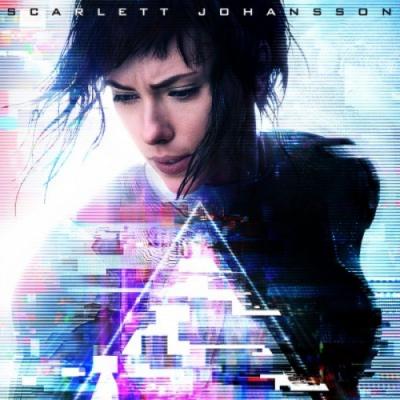
"Ghost in the Shell" Soundtrack Lyrics
Movie • 2017
Track Listing
Kenji Kawai
Johnny Jewel
Boys Noize
DJ Shadow
Above & Beyond
IO Echo
Tricky
Ki:Theory
Johnny Jewel
Gary Numan
Johnny Jewel
"Ghost in the Shell (Music Inspired by the Motion Picture)" Soundtrack Description
Overview
Can a cyberpunk detective story wear both couture club music and austere concert hall pieces? This version does. The commercial release is a various-artists set—Ghost in the Shell (Music Inspired by the Motion Picture)—featuring Johnny Jewel, Boys Noize, DJ Shadow & Nils Frahm, IO Echo, Tricky, Gary Numan, and two bookend cuts built from Kenji Kawai’s iconic Utai
(“Reawakening”), including a Steve Aoki remix. Source: Apple Music
In the film, that album’s sleek electronics sit alongside diegetic cues inside the world (Yakuza-club tracks, storefront radio, a butcher-stall chest-rumbler), classical quotes (Mozart’s D-minor Piano Concerto; Debussy’s “Au clair de lune”), and an original score credited to Clint Mansell and Lorne Balfe. Planned score-album details surfaced during release week, but only the “inspired by” compilation arrived commercially. Source: Film Music Reporter; IMDb Soundtracks
Questions & Answers
- What’s the official retail album?
- Ghost in the Shell (Music Inspired by the Motion Picture)—12 tracks, March 31, 2017, credited to Paramount Pictures Corporation. Source: Apple Music
- Who composed the film score?
- Clint Mansell and Lorne Balfe share on-screen composer credit. Source: Film credits summary
- Why is there no widely released score album?
- Lakeshore/Paramount score plans were noted publicly, but a commercial score release did not materialize; only the “inspired by” compilation released broadly. Source: Film Music Reporter
- Which trailer song most people know?
- Ki:Theory’s cover of Depeche Mode’s “Enjoy the Silence,” used prominently in marketing. Source: YouTube / SoundCloud posts
- Is Kenji Kawai’s choral motif present?
- Yes—“Utai IV: Reawakening” appears twice on the compilation, including Steve Aoki’s remix; it also plays over the end credits in-film. Source: Apple Music; WhatSong
- Does the film use classical music diegetically?
- Yes—Mozart’s Piano Concerto No. 20 (K.466) and “Au clair de lune” are used in-story. Source: IMDb Soundtracks; WhatSong
Notes & Trivia
- The compilation’s opening and closing tracks are Kenji Kawai’s “Utai IV: Reawakening” (Aoki remix and original), tying the remake to the 1995 anime’s sonic DNA. Source: Apple Music
- Marketing leaned on Ki:Theory’s “Enjoy the Silence” cover—an earworm that’s not part of the score. Source: YouTube / SoundCloud
- Press screenings and reviews referenced the Mansell/Balfe score as
techno-ominous
andgorgeous
. Source: Variety; WIRED - Track listings show multiple Johnny Jewel pieces (“The Hacker,” “Free Fall,” “The Key”), framing the city’s chrome-and-glass mood. Source: Apple Music / Discogs
Genres & Themes
Analog synth noir → identity drift. Johnny Jewel’s glassy arpeggios and pad swells mirror memory fog—sleek, haunted.
Industrial/EDM edges → body as hardware. Boys Noize and DJ Shadow/Nils Frahm add serrated rhythm—steel on steel during action passages.
Heritage motifs → lineage & ritual. Kawai’s Utai
threads the remake to Oshii’s film—ceremony within neon.
Classical citations → cultured surfaces. Mozart/Debussy appear diegetically to sell power, poise, and mise-en-scène polish.
Tracks & Scenes
“Utai IV: Reawakening (Steve Aoki Remix)” — Kenji Kawai & Steve Aoki
Where it plays: Featured on the album; trailers/TV spots leaned on this as the franchise hand-off motif.
Why it matters: Refracts Kawai’s wedding-chant harmony through big-room EDM—old ritual, new chassis. Trusted source: Apple Music
“Enjoy the Silence” — Ki:Theory
Where it plays: Trailer cut that defined the campaign’s mood (not score).
Why it matters: Depeche Mode’s ache, retuned for chrome melancholia. Trusted source: YouTube/SoundCloud posts
“The Hacker” — Johnny Jewel
Where it plays: Compilation cut associated with the film’s net-run imagery; used in promotional materials and scene-adjacent playlists.
Why it matters: Midnight-blue arpeggios for surveillance and drift. Trusted source: Apple Music
“Scars” (feat. Nils Frahm) — DJ Shadow
Where it plays: Part of the compilation’s mid-tempo tension suite.
Why it matters: Shadow’s rhythm grammar + Frahm’s piano minimalism = cyber-noir glue. Trusted source: Apple Music; Pitchfork tracklist
“Cathryn’s Peak” — Boys Noize
Where it plays: Compilation energy hit; club-adjacent feel that complements the Yakuza club sequence’s sound world.
Why it matters: Metallic pulses echo the film’s hardware fetish. Trusted source: Apple Music
“Aokigahara Forest” — IO Echo
Where it plays: Dreamy interstitial on the album.
Why it matters: Vapor trail between chases—humanity trying to surface. Trusted source: Apple Music
“Bed of Thorns” — Gary Numan
Where it plays: Album cut; pairs with the film’s interiorized trauma beats in tone.
Why it matters: Legacy synth voice speaking to a legacy property. Trusted source: Apple Music; Pitchfork tracklist
“Escape” — Tricky
Where it plays: Album cut issued as a single during rollout.
Why it matters: Hiss, whisper, and menace—street-level paranoia. Trusted source: Pitchfork
“Maths (Cobra Effect Remix)” — deadmau5
Where it plays: Yakuza-club sequence—Batou waits at the bar as he pings Major via mind-comms. Diegetic/club source.
Why it matters: Surgical side-chain and clicky synths match the scene’s strobe-and-chrome geography. Trusted source: WhatSong
“Ohayo Baby” — Tim & Puma Mimi
Where it plays: Informant meet during a tense exchange; city-street color. Diegetic source.
Why it matters: Tokyo-Swiss pop oddity that fits this film’s pan-Asian soundscape. Trusted source: Soundtrakd / credited-songs listings
“Hulchal Aour Sargarmee” — Manjeet Amar
Where it plays: Butcher-stall visit when Batou grabs meat for the strays. Diegetic.
Why it matters: Everyday radio cut that grounds the city’s market rhythms. Trusted source: WhatSong
“Piano Concerto No. 20 in D Minor, K.466 (III)” — W.A. Mozart
Where it plays: As source for the robotic geisha performance/ambassador scene; also noted across credits pages. Diegetic performance.
Why it matters: Cold elegance—old mastery scored into new bodies. Trusted source: IMDb Soundtracks; WhatSong
“Au clair de lune” — trad., performance credited as Simona Castilli
Where it plays: Dr. Osmond plays his daughter’s recording to the ambassador. Diegetic.
Why it matters: Sentiment on tape in a world that edits memories. Trusted source: WhatSong; IMDb Soundtracks
End-credits note: Kawai’s “Utai IV: Reawakening” (original) is documented at credits’ end; several additional street/club cues (e.g., “Acchi Kocchi,” “Damas”) are credited in databases but are not on the retail compilation. Source: WhatSong; Soundtrakd
Music–Story Links
Electronics frame the Major’s post-human tactility—beats as moving parts. When the city breathes (butcher stall, alley dogs, club floor), diegetic cues do the world-building: radio cuts and lounge grooves make the pan-Asian megapolis feel lived-in. Kawai’s Utai
returns at the end like a ritual—after all the tech, a chant about the self that refuses to be overwritten.
How It Was Made
Score vs. compilation. Mansell and Balfe are credited on the feature; a score album was discussed publicly during release week, but only the “inspired by” set was officially issued at the time. Source: Film Music Reporter; VGMdb notes
Compilation curation. Paramount’s release assembles club, synth-noir, and industrial names (Johnny Jewel, Boys Noize, DJ Shadow & Nils Frahm, Tricky, Gary Numan), plus Steve Aoki’s rework of Kawai’s Utai
. Source: Apple Music; Pitchfork
Trailer identity. Marketing widely synced Ki:Theory’s “Enjoy the Silence,” which primed audiences for a moody, slowed-pulse aesthetic distinct from the in-film diegetic cues. Source: YouTube/SoundCloud
Reception & Quotes
“Stylish, techno-ominous score.” Variety
“Gorgeous … pulsing like a Tangerine Dream nightmare.” WIRED
Reviews were mixed on the movie but consistently praised the audiovisual sheen—score texture, compilation curation, and the callback to Kawai’s motif. Trusted sources: Variety; WIRED
Additional Info
- Album identity: Ghost in the Shell (Music Inspired by the Motion Picture)—12 tracks, 39 minutes; ℗ 2017 Paramount Pictures Corporation. Source: Apple Music
- Key contributors (album): Johnny Jewel (3 tracks), Boys Noize, DJ Shadow feat. Nils Frahm, Above & Beyond, IO Echo, Tricky, Gary Numan, Kenji Kawai (2 tracks). Source: Apple Music; Discogs
- End credits: “Utai IV: Reawakening” (original) documented at ~1:38:xx. Source: WhatSong
- Not on the album but in-film: deadmau5 “Maths (Cobra Effect Remix),” Tim & Puma Mimi “Ohayo Baby,” Manjeet Amar “Hulchal Aour Sargarmee,” plus classical pieces. Source: WhatSong; Soundtrakd; IMDb Soundtracks
Technical Info
- Title: Ghost in the Shell (Music Inspired by the Motion Picture)
- Year: 2017 (album & film)
- Type: Various-artists compilation (plus in-film original score by Clint Mansell & Lorne Balfe)
- Composers (film score): Clint Mansell; Lorne Balfe
- Label (album): Paramount Pictures Corporation (digital release)
- Selected notable placements: Ki:Theory “Enjoy the Silence” (trailer); Kenji Kawai/Steve Aoki “Utai IV: Reawakening (Remix)” (promo; album); DJ Shadow feat. Nils Frahm “Scars”; Boys Noize “Cathryn’s Peak”; deadmau5 “Maths (Cobra Effect Remix)” (club scene); Tim & Puma Mimi “Ohayo Baby”; Mozart K.466; “Au clair de lune.”
Canonical Entities & Relations
| Subject | Relation | Object |
|---|---|---|
| Paramount Pictures Corporation | released | Ghost in the Shell (Music Inspired by the Motion Picture) (2017) |
| Clint Mansell | composed score for | Ghost in the Shell (2017 film) |
| Lorne Balfe | composed score for | Ghost in the Shell (2017 film) |
| Kenji Kawai | wrote | “Utai IV: Reawakening” (album; end-credits usage) |
| Steve Aoki | remixed | “Utai IV: Reawakening” (album opener) |
| Johnny Jewel | contributed | “The Hacker,” “Free Fall,” “The Key” (album) |
| DJ Shadow & Nils Frahm | contributed | “Scars” (album) |
| Boys Noize | contributed | “Cathryn’s Peak” (album) |
| deadmau5 | featured in film | “Maths (Cobra Effect Remix)” (club) |
| Wolfgang Amadeus Mozart | featured in film | Piano Concerto No. 20 (K.466), III (diegetic) |
Sources: Apple Music; Film Music Reporter; IMDb Soundtracks; WhatSong; Soundtrakd; Pitchfork; Variety; WIRED; YouTube/SoundCloud (trailer music).
This film is already on release and nearly broke its budget for 6 days of official running in the US (the budget is 110 million dollars). The protagonist that wants to find out who she is and is almost a perfect killing machine is Scarlett Johansson. She is most known for her other sci-fi action movies like ‘Avengers’, ‘Captain America’, ‘Lucy’, ‘Iron Man’, and ‘Lost In Translation’ with Bill Murray. The antagonist is a well-known French actress Juliette Binoche. Stepping aside from the technical part and going closer to an emotional one, we must say that this must be the most spectacular film in terms of visual part of this year. The technologies are so advanced that they allow creating such vivid pictures with fantastic filling in every frame. Sometimes it is though that a film was completely made using the computing power and only some parts of it were actually filmed on camera. Needless to say that the most attractive part of the film – the ‘as if’ naked body of Scarlett Johansson – is totally computer-modeled. Someone call this oeuvre a ‘re-considered Lucy’ with much more sci-fi, shooting, and slender body of the main heroine. Someone, who goes deeper (and we are amongst them), sees nothing similar to Lucy except the presence of Mrs. Johansson in the main part. This is a very nice and thorough vision of the eponymous Japanese manga. It is attractive from all sides, as it has a deep riddle, a fancy attractive beauty, lots of shooting, latest sci-fi toys, brisk storyline, and many heavy visual elements. The most part of the soundtrack does not have lyrics, as they are instrumental. Having lyrics are a few: Bed of Thorns by Gary Numan, Ki:Theory’s Enjoy the Silence, which is the remake of Depeche Mode’s song, and Utai IV: Reawakening (Steve Aoki Remix) by Kenji Kawai.November, 09th 2025
Find movie profile and read user reviews on IMDb and Rotten TomatoesA-Z Lyrics Universe
Cynthia Erivo Popular
Ariana Grande Horsepower
Post Malone Ain't No Love in Oklahoma
Luke Combs Good Riddance (Time of Your Life)
Green Day Bye Bye Bye
*NSYNC You're the One That I Wan
John Travolta & Olivia Newton-John I Always Wanted a Brother
Braelyn Rankins, Theo Somolu, Kelvin Harrison Jr. and Aaron Pierre The Power of Love
Frankie Goes to Hollywood Beyond
Auli’i Cravalho feat. Rachel House MORE ›