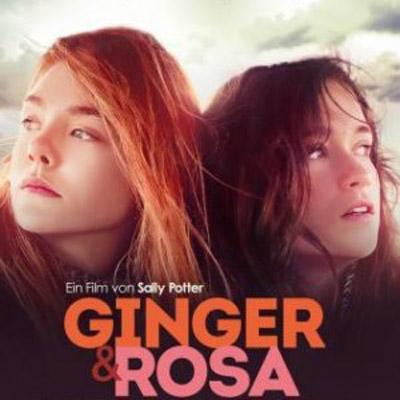
"Ginger & Rosa" Soundtrack Lyrics
Movie • 2013
Track Listing
Count Basie
Chubby Checker
Charlie Parker's All Stars
Franz Schubert
Little Richard
Sidney Bechet
Duke Ellington and his Orchestra
Thelonious Monk
Thelonious Monk
Dave Brubeck Quartet
The Shadows
Miles Davis
Django Reinhardt
Les Paul
Christina Hendricks
"Ginger & Rosa (Music in the Film)" Soundtrack Description
Overview
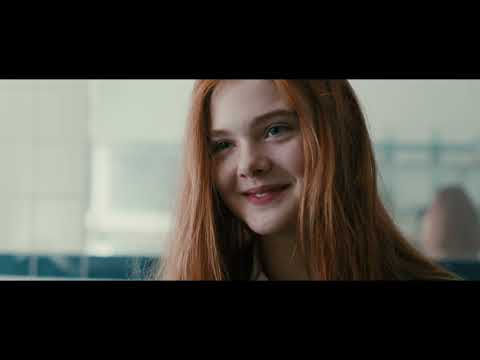
How do you score a teenage friendship cracking under a nuclear-age sky? Sally Potter keeps it spare and era-true: modern jazz classics, American R&B/rock ’n’ roll singles, and a few classical pieces. Instead of a wall-to-wall score, curated recordings do the heavy lifting—club cool for bravado, blues ballads for fallout, and lithe piano for private thought.
There was no wide commercial soundtrack album; the film relies on licensed recordings (Dave Brubeck Quartet, Miles Davis, Thelonious Monk, Charlie Parker, Count Basie, Chubby Checker, The Shadows, Sidney Bechet, Django Reinhardt) sequenced against 1962 London. The result feels like needle-dropped diary entries. (British Film Institute notes the 2012 UK release; A24 handled the US rollout in 2013.)
Genres & Themes
- Modern jazz (Brubeck, Davis, Monk, Parker) — cool surfaces vs. internal turmoil; improvisation mirrors volatile loyalties.
- R&B/early rock (Chubby Checker, Little Richard) — kinetic release; youth ritual colliding with consequence.
- Big-band swing (Count Basie) — adult-world polish that the teenagers imitate—and resist.
- Instrumental pop & surf (The Shadows) — teenage swagger; streetlight romance with an edge.
- Classical piano (Schubert, duo-piano) — domestic intimacy; a quieter grammar for reflection.
Tracks & Scenes
"Take Five" — The Dave Brubeck Quartet
Where it plays: Ginger puts a record on her bedroom Dansette; Rosa drifts in and out (diegetic, at-home listening).
Why it matters: The 5/4 sway reads as adolescent poise—measured cool before everything tilts.
"Blue in Green" — Miles Davis
Where it plays: Non-diegetic introspection between arguments and reconciliations.
Why it matters: Hollowed-out melancholy; the soundtrack’s most intimate color wash.
"I Don’t Stand a Ghost of a Chance (take 5)" — Thelonious Monk
Where it plays: Non-diegetic bridge cue under late-night reflection.
Why it matters: Monk’s voicings lend bittersweet ambiguity to Ginger’s competing loyalties.
"The Man I Love" — Thelonious Monk
Where it plays: Non-diegetic cue as romantic ideal collides with adult compromise.
Why it matters: A standard, re-harmonized—love reconfigured, not erased.
"Bird Gets the Worm (Take 1)" — Charlie Parker All-Stars (with Miles Davis)
Where it plays: Jazzy archival-flavored montage (non-diegetic).
Why it matters: Nervy bebop lines match the film’s political and personal jitters.
"L’il Darlin’" — Count Basie
Where it plays: Source-adjacent social setting (dance/gathering vibe).
Why it matters: Effortless swing codes adult sophistication—everything Ginger wants to grow into, and to escape.
"Pony Time" — Chubby Checker
Where it plays: Diegetic youth-dance energy, radio/party context.
Why it matters: Teen ritual as rhythm—fun that curdles when trust breaks.
"Take the ‘A’ Train" — Duke Ellington
Where it plays: Non-diegetic city-movement montage.
Why it matters: Big-band locomotion; the city carries them faster than they can think.
"Petite Fleur" — Sidney Bechet
Where it plays: Gentle interlude in a domestic space (source/non-diegetic interchange).
Why it matters: Delicate tone = temporary ceasefire.
"Apache" — The Shadows
Where it plays: Streetwise teen sequences (source).
Why it matters: A swaggering instrumental that frames bravado before the fall.
"Body and Soul" — Django Reinhardt
Where it plays: Quiet recollection beat, needle-drop style.
Why it matters: Nostalgic warmth counterbalances the story’s sting.
"All of Me" — Les Paul
Where it plays: Source needle-drop in a lighter moment.
Why it matters: Wit and bounce—comic relief before the next rupture.
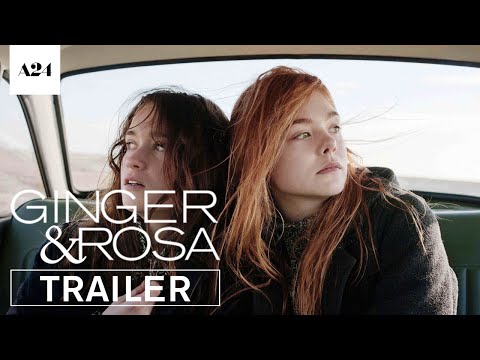
Trailer cue: “Take Five” is prominently used in marketing cuts. Major outlets also noted the film’s reliance on Monk, Davis, and Parker over trad-jazz protest staples (Thinking Faith).
Music–Story Links
- Improvisation as ethics: jazz solos echo the teens’ “try it and see” choices; beautiful, risky, sometimes wrong.
- Diegetic honesty: when Ginger drops the needle on “Take Five,” the room hears what she feels—measured control slipping into syncopation.
- Standards, re-read: Monk’s treatments of love songs underline the film’s question: what does love owe anyone?
How It Was Made
Music supervision is credited to Amy Ashworth. Potter’s curation favors modern jazz over the folk/protest canon typically associated with early-1960s CND culture—an intentional tilt that gives the film a cooler, private temperature. No single composer is billed for an original score; period masters and a handful of pop/classical cues carry the narrative.
Reception & Quotes
Coverage regularly singled out the recordings’ narrative precision.
“The jazz soundtrack (John Coltrane, Thelonious Monk, Charlie Parker) adds texture without sentimentality.” Rotten Tomatoes critics’ capsule
“Ginger plays Brubeck’s ‘Take Five’ at home; Davis, Monk and Parker comment on the action.” Thinking Faith
Festival and release context are documented by the British Film Institute and A24’s trailer/press materials.
Questions & Answers
- Is there an official soundtrack album?
- No—there isn’t a widely released commercial OST; the film licenses period recordings.
- Who handled music supervision?
- Amy Ashworth is credited as music supervisor.
- What’s the most clearly diegetic placement?
- “Take Five” plays from Ginger’s record player in her bedroom.
- Why so much jazz instead of folk or protest songs?
- Potter leans on modern jazz to mirror inner states rather than organize crowds; it’s mood over manifesto.
- Which labels/artists dominate the sound?
- Atlantic/Columbia-era jazz (Brubeck, Davis, Monk), plus swing (Basie), R&B/rock (Checker, Little Richard), and instrumental pop (The Shadows).
- Was this an A24 release?
- Yes in the US (2013). The film premiered and released in the UK in 2012.
Notes & Trivia
- “Take Five” appears both on-screen (diegetic) and in marketing.
- Critics frequently contrasted the jazz choices with the era’s protest-song expectations.
- The film’s UK premiere: September 2012 (TIFF); US release followed in March 2013.
- Many cues are classic masters; clearances lean on catalogue mainstays rather than bespoke covers.
Additional Info
- Licensing pattern: teen spaces = diegetic singles; reflective beats = non-diegetic jazz ballads.
- Availability: individual tracks are on streaming services; no single official album compiles them.
- Scene indexing: verified script passages and reputable reviews confirm key placements (“Take Five” and modern-jazz emphasis).
- Era accuracy: selections align with 1950s–early-’60s recordings that would plausibly spin in 1962 London.
- Classical interludes: duo-piano Schubert selections surface as genteel counterpoint to teen volatility.
Technical Info
- Title: Ginger & Rosa (music in film)
- Year: 2012 (UK/World); US release 2013
- Type: Needle-drop soundtrack (no wide OST album)
- Primary recorded artists: Dave Brubeck Quartet; Miles Davis; Thelonious Monk; Charlie Parker; Count Basie; Duke Ellington; Chubby Checker; Little Richard; The Shadows; Sidney Bechet; Django Reinhardt; Les Paul
- Music supervision: Amy Ashworth
- Distributors: Artificial Eye (UK); A24 (US)
- Release context: TIFF premiere Sept 7, 2012; UK release Oct 19, 2012; US release Mar 15, 2013
- Album status: No official commercial compilation; tracks available individually on major platforms
Canonical Entities & Relations
| Subject | Relation | Object |
|---|---|---|
| Sally Potter | wrote & directed | Ginger & Rosa (film) |
| Amy Ashworth | music supervised | Ginger & Rosa (film) |
| Dave Brubeck Quartet | performed | “Take Five” (diegetic placement in film) |
| Miles Davis | performed | “Blue in Green” (non-diegetic in film) |
| Thelonious Monk | performed | “I Don’t Stand a Ghost of a Chance”; “The Man I Love” (non-diegetic) |
| Charlie Parker All-Stars | performed | “Bird Gets the Worm (Take 1)” (non-diegetic) |
| Count Basie | performed | “L’il Darlin’” (source-adjacent) |
| Chubby Checker | performed | “Pony Time” (diegetic) |
| A24 | distributed (US) | Ginger & Rosa (2013 US release) |
| British Film Institute | documented | Ginger & Rosa (UK release) |
Sources: British Film Institute; Rotten Tomatoes; Thinking Faith; A24 (official trailer); Metacritic credits.
November, 09th 2025
Read about Ginger & Rosa, a 2012 drama film written and directed by Sally Potter: IMDb, WikipediaA-Z Lyrics Universe
Cynthia Erivo Popular
Ariana Grande Horsepower
Post Malone Ain't No Love in Oklahoma
Luke Combs Good Riddance (Time of Your Life)
Green Day Bye Bye Bye
*NSYNC You're the One That I Wan
John Travolta & Olivia Newton-John I Always Wanted a Brother
Braelyn Rankins, Theo Somolu, Kelvin Harrison Jr. and Aaron Pierre The Power of Love
Frankie Goes to Hollywood Beyond
Auli’i Cravalho feat. Rachel House MORE ›