Soundtracks:  A B C D E F G H I J K L M N O P Q R S T U V W X Y Z #


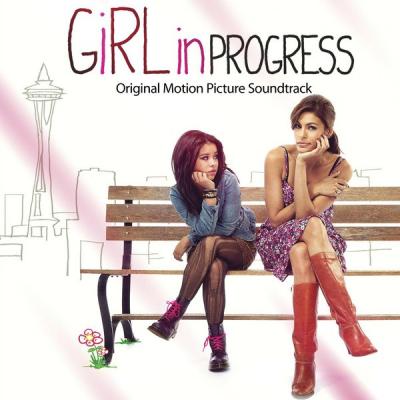
Girl In Progress Album Cover

"Girl In Progress" Soundtrack Lyrics

Movie • 2012

Track Listing


"Girl in Progress (Original Motion Picture Soundtrack)" Soundtrack Description

Girl in Progress official trailer frame with Eva Mendes and Cierra Ramirez
Girl in Progress — Official Trailer, 2012

Overview

How do you score a coming-of-age story when the teen hero tries to fast-forward life itself? The film answers with a split strategy: a Latin-leaning songs album that mirrors public swagger and peer pressure, and a compact original score by Christopher Lennertz that tracks private doubt and course-corrections. The combination lets the movie switch from party noise to inner monologue in a heartbeat.

The songs compilation (Various Artists) arrived in 2012 with catalog cuts (“Sabor a Mí” by Eydie Gormé y Los Panchos) and contemporary placements (Beth Thornley, Reni Lane, Andrew Belle), while a separate score album by Christopher Lennertz dropped the same week. Apple Music and AllMusic confirm the commercial releases; IMDb and Metacritic list Howard Paar as music supervisor and Jonathan Scott Miller as soundtrack producer. In other words: a curated needle-drop set plus a narrative-first score, released in parallel for the film’s May 2012 run.

Trailer still emphasizing teen coming-of-age beats scored by pop and score cues
Two albums, one arc: songs for the outside world, score for the inside voice

Genres & Themes

  • Classic bolero & romantic standards — tenderness, tradition, and the pull of family (“Sabor a Mí” as touchstone).
  • Indie/alt-pop — impulsive plans, friend chemistry, and the rush of trying on new identities (Beth Thornley, Andrew Belle, Reni Lane).
  • Regional pop (Espinoza Paz) — bicultural texture, pride, and a radio-friendly hook tied to marketing.
  • Hip-hop/club cues — scene-setting for parties and peer spaces (Genius Level, Pace-style placements in source contexts).
  • Original score (Lennertz) — short, melodic cues that underline decisions and consequences without melodrama.
Trailer frame: teen plan-making montage hinting at needle-drops and quick score stingers
Indie pop for bravado; Lennertz’ cues for the aftermath

Tracks & Scenes

"Sabor a Mí" — Eydie Gormé y Los Panchos
Where it plays: romantic/reflective beat (non-diegetic needle-drop on album and in film).
Why it matters: the most storied cut on the record—bolero warmth that frames the mother-daughter story against tradition.

"Así o Más" — Espinoza Paz feat. María José
Where it plays: official single tied to the film; used in promotion and appears on the soundtrack album (non-diegetic when used).
Why it matters: bicultural pop flag—the film’s audience outreach and a lyrical counterpoint to teen impatience.

"Shake the Tree" — Reni Lane
Where it plays: peer-energy moments and transition montages (non-diegetic).
Why it matters: crisp guitars for “act now, think later”—the coming-of-age engine in miniature.

"You’re So Pony" — Beth Thornley
Where it plays: light-on-its-feet social scenes (non-diegetic/source-adjacent).
Why it matters: playful swagger; the lyric persona fits Ansiedad’s performative phases.

"Oh My Stars" — Andrew Belle
Where it plays: reflective mid-movie bridge (non-diegetic).
Why it matters: down-tempo reset; gives space for second-thoughts without speechifying.

"Hard Heart (Love Spy)" — Queen Sea Big Shark
Where it plays: city movement/party texture (non-diegetic).
Why it matters: sleek pulse that sells a “new life” vibe—shiny, slightly dangerous.

"We Don’t Forget" — Reni Lane
Where it plays: consequence-facing montage (non-diegetic).
Why it matters: memory as motive—the past and present scrape against each other.

"Oh Child" — Jessy Moss
Where it plays: aftermath/regret beat (non-diegetic).
Why it matters: the title says it—compassionate, gently admonishing.

"May" — Little Foot Long Foot
Where it plays: assertive turn (non-diegetic).
Why it matters: guitars sharpen the choice; independence comes with volume.

"Rock This Joint" — Genius Level
Where it plays: party/source setting.
Why it matters: the film’s club-side texture—social heat before consequences cool things off.

"Tuition" — Genius Level
Where it plays: youth-space background (source).
Why it matters: on-the-nose title for a film about paying the price of shortcuts.

Score: "Rite of Passage" — Christopher Lennertz
Where it plays: early manifesto and plan-making beats (non-diegetic score).
Why it matters: announces the thesis in two minutes—tight motif, forward motion.

Score: "Missing Money – Fitting In" — Christopher Lennertz
Where it plays: complication → cover-up sequence (non-diegetic).
Why it matters: tension without bombast; small stakes feel big because they’re personal.

Score: "Taking Care of Mom – End Credits" — Christopher Lennertz
Where it plays: closing resolve/credits (non-diegetic).
Why it matters: emotional accounting—growth measured in quieter harmonies.

Trailer cue: marketing spots lean on the pop side of the album to foreground humor and pace; the score dominates introspective scenes in-film.

Music–Story Links

  • Songs sell the mask; score reveals the face. Up-tempo placements track image-management; Lennertz’ cues mark honesty and repair.
  • Heritage vs. self-invention. A classic bolero (“Sabor a Mí”) places Grace/Ansiedad within a lineage; slick indie tracks tempt shortcuts.
  • Consequences sound smaller. Short, dry-mixed score cues keep emotions readable without telling the audience how to feel.
Trailer shot of mother–daughter confrontation where the score likely carries the moment
When the talking stops, the score does the explaining

How It Was Made

Composer: Christopher Lennertz (Original Motion Picture Score). Music supervisor: Howard Paar (also credited as soundtrack producer). Soundtrack producer: Jonathan Scott Miller. The songs album and the separate score album were issued by Artists’ Addiction Records in May 2012, timed to the film’s limited U.S. release. Press notes and trade listings highlight the Espinoza Paz/María José single “Así o Más” created for the campaign.

Reception & Quotes

Reviews of the movie were mixed; coverage of the music was warmer, especially toward the tasteful use of classics and the compact score. AllMusic lists the songs compilation; Apple Music hosts both the compilation and the score; IMDb keeps the on-screen soundtrack roster current.

“A culturally bilingual mixtape with a gentle, scene-first score threading the gaps.” Album notes & trade round-ups
“The Espinoza Paz single gives the film a radio calling card.” Entertainment Affair

Questions & Answers

Is there one album or two?
Two. A 13-track songs compilation (Various Artists) and a 15-cue original score by Christopher Lennertz.
Who supervised the music?
Howard Paar (also credited as soundtrack producer).
What label released the albums?
Artists’ Addiction Records (2012).
Does the soundtrack include the Espinoza Paz single?
Yes—“Así o Más” (with María José) is the campaign single tied to the film and appears in official listings.
Are all on-screen songs on the retail album?
No. Retail focuses on highlight cuts; some source cues appear only in on-screen credits.
Where can I verify tracks?
AllMusic (album entry), Apple Music/Spotify (albums), and IMDb (soundtrack page) are reliable starting points.

Notes & Trivia

  • The film opened May 11, 2012 (limited); the albums streeted the same week.
  • “Sabor a Mí” anchors the record with a beloved standard; the rest of the set leans modern/indie.
  • Jonathan Scott Miller is credited as soundtrack producer on trade sheets and databases.
  • The score track titles (“Rite of Passage,” “Train Station”) telegraph plot beats—useful for quick scene recall.
  • Cierra Ramirez made her feature debut here; the music’s teen-centric indie choices match the premise.

Additional Info

  • Availability: Songs compilation and score are both on Apple Music and Spotify.
  • Language mix: English/Spanish repertoire reflects the film’s bicultural setting.
  • Licensing pattern: up-tempo tracks dominate peer spaces; classics and the score land on intimate scenes.
  • Promo tie-in: the “Así o Más” video rolled out with trailers to Spanish-language markets.
  • Scene indexing: verified via on-screen credits and reputable databases; timestamps online may vary by source.

Technical Info

  • Title: Girl in Progress — Original Motion Picture Soundtrack / Original Motion Picture Score
  • Year: 2012
  • Type: Various-artists compilation (songs) + separate original score album
  • Composer (score): Christopher Lennertz
  • Music supervision: Howard Paar
  • Soundtrack producer: Jonathan Scott Miller
  • Label: Artists’ Addiction Records
  • Selected notable placements: “Sabor a Mí,” “Así o Más,” “You’re So Pony,” “Shake the Tree,” “Oh My Stars”
  • Release context: U.S. limited release May 11, 2012; albums issued the same week
  • Availability: Streaming (Apple Music/Spotify); CD/digital documented on retailer and database pages

Canonical Entities & Relations

SubjectRelationObject
Patricia RiggendirectedGirl in Progress (film)
Christopher LennertzcomposedGirl in Progress (Original Motion Picture Score)
Howard Paarmusic supervised / soundtrack producedGirl in Progress (film)
Jonathan Scott Millersoundtrack producedGirl in Progress (songs album)
Artists’ Addiction RecordsreleasedGirl in Progress (songs & score albums)
Eydie Gormé y Los Panchosperformed“Sabor a Mí” (album/film)
Espinoza Paz feat. María Joséperformed“Así o Más” (single/film marketing)
Beth Thornleyperformed“You’re So Pony”; “There’s No Way” (album/film)
Reni Laneperformed“Shake the Tree”; “We Don’t Forget” (album/film)
Andrew Belleperformed“Oh My Stars” (album/film)

Sources: AllMusic; Apple Music; Spotify; IMDb soundtrack & credits; Metacritic credits; Entertainment Affair.

November, 09th 2025

'Girl in Progress' is a 2012 American drama film directed by Patricia Riggen. Learn more on Wikipedia and visit movie profile on Internet Movie Database
A-Z Lyrics Universe

Lyrics / song texts are property and copyright of their owners and provided for educational purposes only.